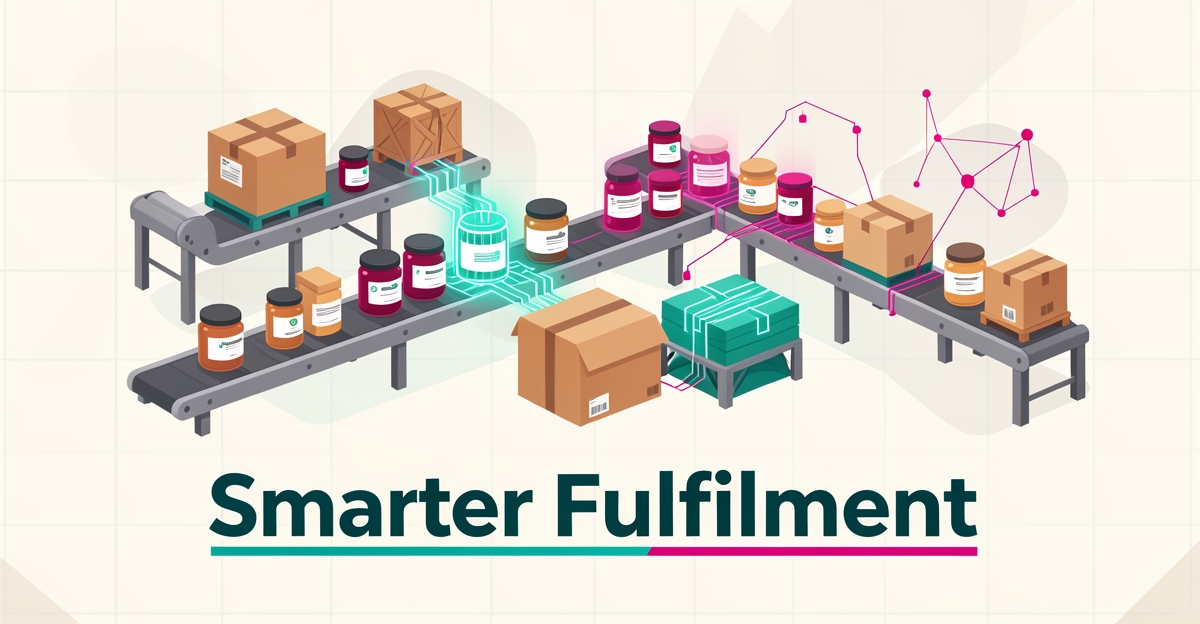
5 Signs You Need AI for Order Fulfillment in Your Specialty Food Business
Key Facts
- Businesses adopting AI-powered fulfillment commonly report meaningful reductions in operational costs, with some industry accounts citing figures as high as 40% according to industry insights
- Manual data entry errors are an early warning sign that AI workflow automation can address as noted by ShipStation
- AI-driven order verification systems can automatically flag duplicate orders before processing, reducing fulfillment errors and saving time and money
- Faster, more reliable fulfillment is widely associated with improved conversion and retention, though specific gains vary by business based on industry project accounts
- AI Employees from AIQ Labs typically cost around 80% less than an equivalent human hire while working 24/7/365 according to AIQ Labs' cost comparison model
- AI-powered warehouse automation can improve picking accuracy and increase throughput based on decades of warehouse automation expertise
Hire a team member that works 24/7 — for less than a part-time wage.
AI receptionists, SDRs, dispatchers and 99+ roles. Trained on your business, fully managed.
Not sure where to start? Ask our AI planner
Missed Delivery Windows and Duplicated Orders: Early Warning Signs of Fulfillment Breakdown
A single late delivery can undo months of careful brand building. For specialty food businesses, where freshness and timing are everything, missed delivery windows and duplicated orders are more than minor hiccups, they are early warning signs that your fulfillment process may be breaking down.
According to ShipStation, frequent missed delivery windows often signal deeper inefficiencies in order routing and fulfillment timing. When deliveries arrive late, customer trust erodes quickly, especially when products are perishable or time-sensitive.
AI-powered route optimization directly addresses this challenge. By analyzing real-time traffic, weather, and order data, AI systems can predict potential delays and adjust routes dynamically. This leads to more accurate delivery estimates and improved on-time performance, helping specialty food businesses protect both product quality and customer relationships.
Duplicated orders are another costly symptom of manual fulfillment processes. When staff enter orders by hand or manage multiple sales channels without automation, it becomes easy to create duplicate shipments. This not only wastes inventory but also increases shipping costs and creates confusion for customers.
AI-driven order verification systems can automatically cross-reference incoming orders against existing records, flagging potential duplicates before they are processed. As noted by ShipStation, this kind of automation reduces fulfillment errors and streamlines operations, saving both time and money.
Here are a few ways AI helps tackle these two critical issues:
- Real-time route optimization to avoid delays and improve delivery accuracy
- Automated order verification to catch and prevent duplicate shipments
- Cross-referencing of order data across multiple sales channels
- Predictive analytics to anticipate and mitigate potential fulfillment issues
The impact of these improvements is measurable. Businesses that implement AI-powered fulfillment solutions often see meaningful gains in on-time delivery rates and reductions in costly errors. Industry accounts suggest companies leveraging AI for distribution have reported operational cost reductions, in some cases cited as high as 40%, alongside improvements in customer satisfaction and retention. Your actual results will depend on your starting point and which workflows you automate first.
At AIQ Labs, we work with specialty food businesses to identify these early warning signs and rebuild the specific workflows causing the most damage. Whether it's integrating real-time route optimization or automating order verification, our approach focuses on practical, phased improvements that deliver measurable results at a fixed price.
If missed deliveries and duplicate orders are becoming routine, it's a clear signal that your fulfillment process needs a smarter, more resilient foundation. AI offers the tools to not only fix these issues but also to build a fulfillment operation that scales with your business and keeps customers coming back.
Manual Data Entry Errors and Inefficient Warehouse Operations: The Hidden Cost of Legacy Processes
Legacy order fulfillment quietly bleeds margin in specialty food businesses long before it shows up on a P&L. Manual data entry and slow warehouse workflows create the errors that trigger missed delivery windows, duplicated orders, and frustrated customers.
Relying on people to key order information, inventory updates, and shipping details is time-consuming and increases the risk of human error. Automated order fulfillment guidance notes that AI can automate data capture through optical character recognition and intelligent data extraction, improving accuracy and freeing staff for more strategic tasks. In practice, manual data entry errors are an early warning sign that AI workflow automation can address.
Inefficient warehouse operations compound the problem. Traditional picking, packing, and storage processes waste time and resources, lowering throughput when demand spikes. AI-powered warehouse automation, including robotic picking systems and optimized storage solutions, can streamline workflows, improve picking accuracy, and increase throughput. Warehouse automation expertise built over decades shows how automation streamlines repetitive tasks, reducing manual effort and accelerating workflows.
For specialty food teams, the shift from legacy processes to AI-driven fulfillment shows up in measurable operational gains. Teams that have leveraged AI and automation to optimize distribution commonly report cost reductions in efficiency-focused projects, alongside improved conversion from faster, more reliable fulfillment, though exact figures vary by operation.
AI workflow automation can target these pain points directly:
- OCR and intelligent data extraction to capture orders and inventory without re-keying
- Intelligent order verification to cross-reference data and flag duplicates before shipment
- Robotic picking and optimized storage to reduce labor waste and improve picking accuracy
- Real-time inventory sync across channels to prevent oversells and stockouts
AIQ Labs approaches these challenges through AI Workflow Builds that replace brittle manual steps with systems you own outright. The result is cleaner order and inventory data, fewer duplicated orders, and warehouse operations that scale with seasonal demand without proportional labor increases. On-time delivery rates improve as the system reduces error rates and accelerates processing times.
When manual entry errors and warehouse bottlenecks persist, they signal the need for automation that improves accuracy and throughput while preserving the quality standards specialty food customers expect.
Scaling Challenges and the Path Forward: How AI Enables Sustainable Growth Without Linear Cost Increases
Specialty food businesses often hit a growth ceiling not from lack of demand, but from fulfillment processes that can't scale efficiently. When order volumes rise, manual systems create bottlenecks that force a choice between sacrificing service quality or dramatically increasing labor costs, neither of which supports sustainable expansion. This scaling challenge is precisely where AI-powered automation transforms operational constraints into competitive advantages.
AI enables businesses to handle surging order volumes without proportional labor growth by automating repetitive, high-volume tasks across the fulfillment lifecycle. From intelligent order routing and real-time inventory synchronization to automated picking path optimization and shipping label generation, AI systems execute these workflows continuously and consistently. Unlike human teams that require breaks, shift changes, and overtime pay during peak periods, AI Employees operate 24/7/365 with consistent accuracy, allowing specialty food businesses to scale fulfillment capacity in direct response to demand rather than being limited by staffing availability. This capability directly addresses the fifth sign of needing AI: difficulty scaling operations due to manual fulfillment bottlenecks.
The financial impact of this scalability is substantial. Industry accounts of AI implementations in distribution and fulfillment describe significant long-term operational cost reductions through automation. These savings come from eliminating manual data entry errors, reducing expedited shipping costs caused by delays, minimizing labor overtime during peak seasons, and optimizing warehouse space utilization through better inventory turnover. For specialty food businesses operating with tight margins on perishable goods, this cost efficiency isn't just beneficial, it's often the difference between profitable growth and stagnant operations.
Beyond immediate cost savings, reliable AI-driven fulfillment directly increases customer lifetime value by building trust through consistency. When customers receive their specialty food orders accurately and on time, every single time, they're more likely to become repeat buyers and brand advocates. Reduced errors and improved delivery reliability foster stronger customer relationships that translate into higher retention rates and increased order frequency over time.
For specialty food SMBs looking to pilot this transformation without overhauling their entire operation, AIQ Labs' Start Monthly model with AI Employees offers a low-risk entry point. By deploying a single AI fulfillment agent to automate specific workflows, such as order verification, inventory updates, or shipping notifications, businesses can validate AI's impact on their scaling challenges with minimal upfront investment. AI Employees typically run at around 80% less than the cost of an equivalent human hire, and the model includes build, training, tool integrations, monitoring, and continuous improvements, allowing businesses to pause or adjust as they validate results before considering a broader AI Operating System across their fulfillment operations.
Still paying for 10+ subscriptions that don’t talk to each other?
We build custom AI systems you own outright. No vendor lock-in. Full control.
Not sure where to start? Ask our AI planner
Frequently Asked Questions
How do I know if missed deliveries are a sign I need AI for fulfillment?
Can AI actually stop duplicate orders in specialty food?
Is manual data entry really costing my specialty food business money?
What kind of cost savings do specialty food businesses see with AI fulfillment?
Will AI help me scale during peak seasons without hiring more people?
Does AI fulfillment improve customer lifetime value?
From Fulfillment Friction to Seamless Scale
When missed delivery windows, duplicated orders, and manual data entry errors become routine, they signal more than operational hiccups, they reveal a fulfillment process straining against its own limits. For specialty food businesses where freshness and precision define the brand, these breakdowns carry real costs: eroded customer trust, wasted inventory, and overtime bills that eat into already-thin margins. The path forward doesn't require ripping out your entire operation overnight. It starts with identifying which bottleneck, route optimization, order verification, or warehouse automation, will deliver the fastest return, then deploying targeted solutions that scale with your growth. At AIQ Labs, we help specialty food businesses make this transition through AI Workflow Builds and managed AI Employees that integrate with your existing systems. If you're ready to move from reactive fixes to proactive fulfillment, take the two-minute Fit Check at aiqlabs.ai/apply to map your highest-ROI automation opportunity, then book a free 30-minute strategy call.
Make AI your competitive advantage — not just another tool.
Strategy, implementation and ongoing optimization. One partner, end to end.
Not sure where to start? Ask our AI planner