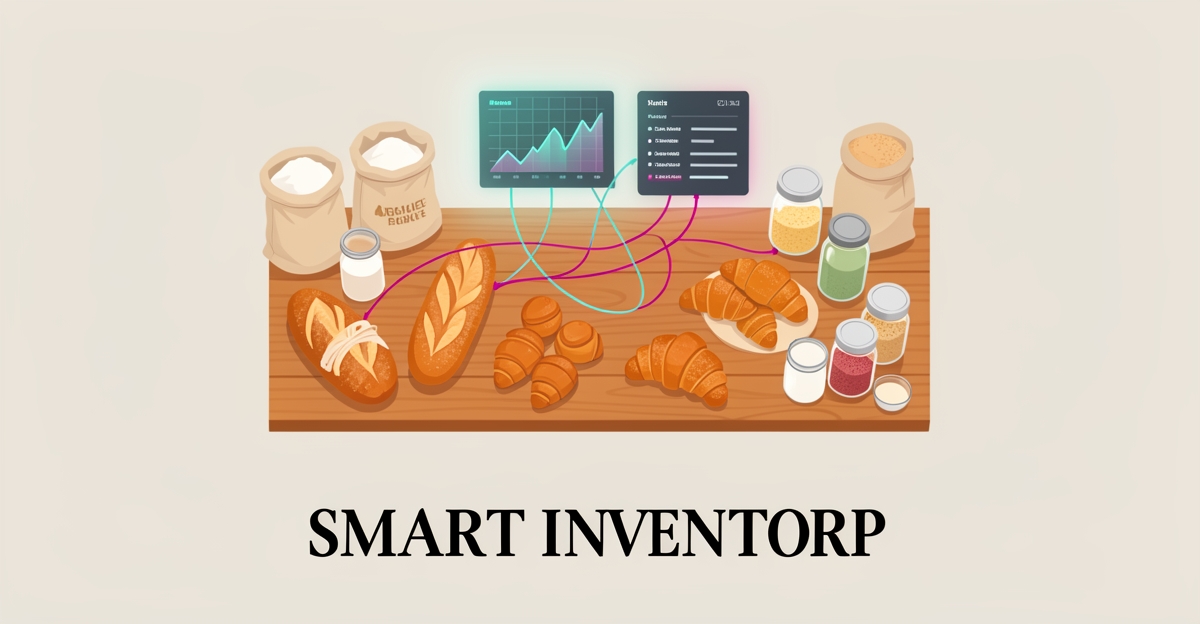
5 Signs Your Bakery Cafe Needs AI for Inventory & Ingredient Tracking
Key Facts
- Manual inventory processes are a leading driver of daily food waste in bakeries, eroding already-thin profit margins.
- Overordering perishables in manual systems routinely consumes a meaningful share of the monthly ingredient budget.
- Manual recipe scaling introduces ingredient variance that compounds into significant monthly waste.
- AI-driven forecasting, fed by POS sales, weather, and seasonality, is typically far more accurate than manual planning.
- Automating inventory tasks commonly recovers hours of management time per day, per location.
- Predictive reordering sharply reduces stockout incidents compared with manual counts.
- Bakeries that automate inventory typically see measurable waste reduction within the first six months.
Hire a team member that works 24/7 — for less than a part-time wage.
AI receptionists, SDRs, dispatchers and 99+ roles. Trained on your business, fully managed.
Not sure where to start? Ask our AI planner
The Hidden Cost of Manual Inventory in Bakeries
The hidden cost of manual inventory in bakeries extends far beyond the time spent on spreadsheets and visual checks. Manual processes lead to daily food waste and inventory variances that directly erode thin profit margins. These inefficiencies create a cycle of reactive waste control where spoilage is only addressed after ingredients expire, and stockouts trigger costly emergency supplier runs. For a typical mid-sized bakery, management spends hours every day on production planning, inventory checking, recipe scaling, and scheduling, labor that AI can automate with higher accuracy.
- Ingredient spoilage from overordering quietly consumes a meaningful share of the monthly ingredient budget in manual systems.
- Bakeries relying on manual counts typically experience recurring stockout incidents each month, disrupting production and increasing costs.
- Manual recipe scaling calculations introduce ingredient variance that adds up to hundreds of dollars in monthly waste in a typical bakery.
This reactive approach fails to leverage predictive insights that could prevent waste before it occurs. AI-driven systems transform this dynamic by integrating POS data, weather forecasts, and supplier lead times to forecast demand far more accurately than manual methods. By automating reordering and production scheduling, bakeries recover hours of daily management time while cutting waste and stockouts. The shift from guessing games to predictive optimization isn't just about technology, it's about reclaiming profitability in an industry where precision determines survival. AIQ Labs builds custom inventory tracking solutions that own this transformation end-to-end, turning hidden costs into measurable gains.
5 Warning Signs You’re Ready for AI
Bakeries and cafes operate on razor-thin margins, where small inefficiencies quickly erode profitability. Chronic spoilage, frequent stockouts, and inaccurate forecasting aren't just operational headaches, they're clear signals that manual inventory systems are failing. Recognizing these warning signs early allows owners to act before waste and labor costs spiral out of control.
One of the most telling signs is persistent ingredient spoilage coupled with chronic overordering. Manual tracking often leads to ordering too much of perishable items like dairy, fruit, or specialty flours, which expire before use. Bakeries using manual processes routinely lose a meaningful share of their monthly ingredient budget to overordering, and daily food waste rates climb as a result. This dual problem of excess inventory and waste directly impacts the bottom line, turning ingredients into avoidable losses.
Another critical indicator is recurring stockouts that trigger emergency supplier runs. When key ingredients like eggs, yeast, or sugar run out mid-production, bakeries face rushed orders, premium shipping fees, and disrupted schedules. Bakeries with manual systems typically see several stockout incidents per month, each requiring costly last-minute solutions. These reactive measures not only inflate costs but also strain supplier relationships and increase operational fragility.
Inaccurate demand forecasting further compounds these issues, leaving bakeries guessing rather than planning. Manual production planning typically misses the mark on a meaningful share of decisions, leading to both overproduction, wasting ingredients and labor, and underproduction, missing sales and disappointing customers. AI-driven systems close this gap by analyzing weather patterns, local events, and historical trends to produce forecasts you can actually plan around.
Labor drain from manual processes is another silent profit killer. In a typical bakery, managers spend hours daily on inventory counting, recipe scaling, and production planning. That adds up to tens of thousands of dollars per year in labor that AI can automate with greater precision and consistency. Recovering this time allows owners and managers to focus on growth, customer experience, and team development instead of administrative firefighting.
Finally, disconnected data systems create dangerous blind spots that undermine decision-making. When POS, production, and ordering platforms don't communicate, staff must manually reconcile spreadsheets, increasing the risk of errors. For example, a baker might believe there's enough chocolate for a batch only to discover mid-recipe that inventory counts were wrong, a scenario caused by fragmented data silos. AI integration unifies these streams, providing real-time visibility and eliminating the guesswork that leads to costly mistakes.
Addressing these signs isn't about adopting technology for its own sake, it's about building resilience in a volatile market. AI-powered inventory systems transform reactive chaos into predictable control, reducing waste, preventing stockouts, and freeing up valuable time. For bakery cafes ready to move beyond spreadsheets and intuition, the next step is a clear assessment of where AI can deliver the fastest impact. AIQ Labs helps owners identify these high-value opportunities through a free strategy call that maps current bottlenecks and outlines a practical path forward. This isn't a sales pitch, it's a working session focused on finding real, measurable wins. If there isn't a clear opportunity, we'll say so. The goal is clarity, not commitment.
How AI Transforms Bakery Inventory and Forecasting
AI transforms bakery inventory from a reactive guessing game into a predictive, data-driven process by unifying POS sales, weather patterns, and supplier lead times into a single intelligent system. Instead of reacting to spoilage or stockouts after they happen, AI anticipates demand shifts, like the bump in bread sales on rainy days or the two-week lead-up to Valentine’s Day surges, and automatically adjusts ingredient orders and production schedules. This shift eliminates dangerous blind spots caused by fragmented data across tools like FlexiBake, Toast POS, or spreadsheets, where manual reconciliation creates errors that halt production mid-batch.
The operational impact is measurable and immediate. AI-driven forecasting is typically far more accurate than manual planning, directly reducing overordering and waste. Bakeries using these systems commonly report meaningful food waste reductions within the first six months, with the biggest gains coming from pinpointing top waste categories. Recipe scaling errors drop sharply, saving hundreds of dollars in monthly ingredient waste while ensuring consistent product quality. Real-time tracking via smart scales and sensors cuts physical counting time, freeing up hours daily per location for strategic tasks instead of administrative churn.
Beyond waste reduction, AI optimizes the entire production workflow. Automated scheduling reduces oven idle time, increasing daily capacity without added labor. Stockout incidents fall sharply as the system triggers reorders based on real-time usage and supplier lead times, choosing between bulk pricing and fast delivery dynamically. Order fulfillment accuracy improves, slashing remake costs tied to every botched batch. For bakeries still relying on manual counts and intuition, these gains aren’t incremental, they redefine what’s possible in perishable inventory management. AIQ Labs builds custom systems that integrate these capabilities directly with existing POS and production tools, turning inventory from a cost center into a precision-operated advantage.
From Manual to AI: A Practical Implementation Path
Transitioning from manual tracking to AI-powered inventory management doesn’t require a complete overhaul, it starts with understanding your current workflow and building from there. Many bakery cafes begin by auditing how inventory is currently counted, recorded, and shared across systems, often discovering that production planning, sales data, and supplier orders live in disconnected tools like FlexiBake, Square, or spreadsheets. This fragmentation creates blind spots where staff assume ingredients are sufficient, only to find shortages mid-batch, leading to waste or rushed reorders. Manual processes typically produce inventory accuracy variances that directly contribute to overordering and spoilage.
Once data silos are mapped, the next step is connecting AI to existing platforms such as your POS, production software, or accounting tools to create a unified data stream. AIQ Labs specializes in building custom integrations that pull real-time sales, usage, and supplier data into a single intelligent system, eliminating manual reconciliation and enabling predictive decision-making. From there, you define reorder points and lead times based on historical usage and supplier reliability, allowing the system to automatically generate purchase orders when stock dips below threshold. This automation cuts the hours per week typically spent on supplier coordination in manual systems, freeing up management for higher-value tasks. Studies of AI-driven tracking consistently show sharp reductions in stockout incidents and overordering.
With purchase orders automated, real-time usage tracking becomes possible through smart scales or sensor integration with mixers, ovens, or prep stations, comparing actual ingredient consumption against recipe specs to catch variances immediately. This precision slashes recipe scaling errors, saving significant ingredient costs over time. Staff training focuses on interpreting alerts, verifying counts, and trusting the system’s recommendations, shifting their role from data entry to exception handling. Finally, continuous monitoring ensures the AI adapts to seasonal trends, weather impacts, and shifting demand, refining forecasts and reorder logic over time. Bakeries that follow this path often recover hours of daily management time and see food waste drop within months, turning inventory from a liability into a controlled, optimized process.
Still paying for 10+ subscriptions that don’t talk to each other?
We build custom AI systems you own outright. No vendor lock-in. Full control.
Not sure where to start? Ask our AI planner
Frequently Asked Questions
What are the signs my bakery needs AI inventory tracking instead of spreadsheets?
How much money is manual inventory management actually costing my bakery?
Can AI really predict bakery demand better than my manager's experience and intuition?
How long does it take to switch from manual tracking to an AI inventory system, and will it disrupt production?
What results have bakeries actually seen after implementing AI inventory systems?
Will AI inventory tools work with my existing bakery software like FlexiBake or Toast POS?
Turn Inventory Chaos Into Predictable Profit
Manual inventory tracking in bakeries isn’t just tedious, it’s silently draining profits through daily food waste, recurring stockouts, and hours of management time lost to spreadsheets and guesswork. These inefficiencies compound, turning perishable ingredients into avoidable losses and pulling owners away from growth-focused work. AI-driven systems change this by unifying POS data, weather patterns, and supplier timelines to forecast demand accurately, automatically triggering reorders and optimizing production schedules. The result? Less waste, fewer stockouts, and management time reclaimed for strategic work like menu innovation or team development. For bakery cafes ready to move beyond reactive fixes, the path forward starts with clarity. AIQ Labs offers a free strategy call to map your current bottlenecks and identify where AI can deliver the fastest, most measurable impact, no obligation, just a working session focused on real wins. Schedule your free 30-minute strategy call to see if there’s a clear opportunity to turn inventory from a cost center into a precision-operated advantage. Prefer to start smaller? Explore our AI Workflow Builds to rebuild the one workflow that costs you most, or see how AI Employees can handle ordering coordination and admin alongside your team.
Make AI your competitive advantage — not just another tool.
Strategy, implementation and ongoing optimization. One partner, end to end.
Not sure where to start? Ask our AI planner