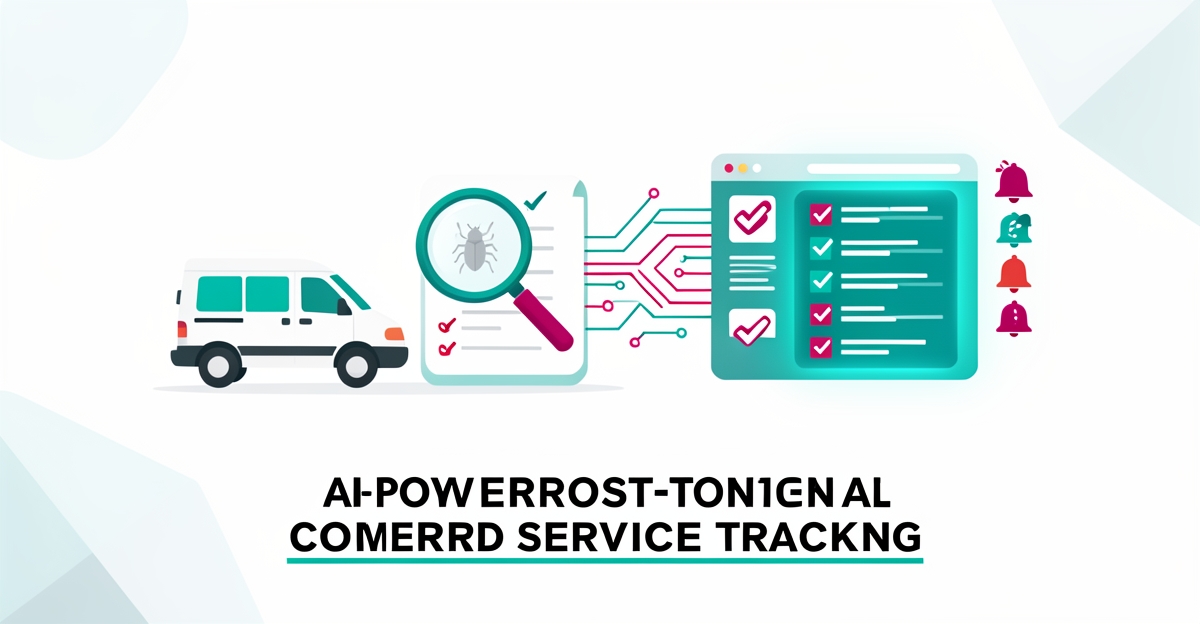
5 Signs Your Bed Bug Extermination Business Needs AI for Service Tracking
Key Facts
- AI-powered predictive maintenance can reduce unplanned downtime by roughly 35% according to industry research
- Organizations using AI for asset management typically see around a 20% increase in asset uptime based on field service data
- Only 13% of organizations have the right governance in place to manage agentic AI per TechRadar analysis
- AI cannot compensate for fragmented operating models or conflicting sources of truth per PwC US expert insight
- Fragmented data systems prevent businesses from establishing operational discipline per recent study
- AI-powered service tracking ensures every service call is logged and every follow-up is triggered, per the AIQ Labs implementation framework
Hire a team member that works 24/7 — for less than a part-time wage.
AI receptionists, SDRs, dispatchers and 99+ roles. Trained on your business, fully managed.
Not sure where to start? Ask our AI planner
The Hidden Costs of Manual Service Tracking in Pest Control
Many bed bug extermination businesses still rely on spreadsheets, paper logs, or disconnected tools to track service calls, follow-ups, and treatment outcomes. This fragmented approach often leads to missed client check-ins, inconsistent reporting, and delayed responses, especially when technicians are juggling multiple jobs across different locations. Without a centralized system, it's easy for critical tasks to slip through the cracks, undermining both service quality and customer trust.
According to industry research, long response times and inconsistent follow-ups are among the top operational pain points in field service industries, directly contributing to customer dissatisfaction and repeat service gaps. When technicians forget to schedule a follow-up inspection or fail to log treatment details accurately, it creates uncertainty for both the team and the client. Over time, these small oversights erode confidence and increase the likelihood of clients seeking more reliable providers.
A recent study highlights that fragmented data systems prevent businesses from establishing operational discipline, making it difficult to track technician performance, service completion rates, or recurring infestation patterns. Without unified visibility, managers spend excessive time chasing down information instead of optimizing routes, allocating resources, or identifying trends in pest activity. This inefficiency not only increases labor costs but also limits the ability to scale service delivery effectively.
- Missed follow-ups due to manual tracking gaps
- Inconsistent reporting across technicians and jobs
- Delayed response times from poor task prioritization
- Fragmented data hindering decision-making
- Lack of accountability in service completion logs
These challenges are not just administrative, they directly impact revenue, reputation, and long-term client retention. AIQ Labs helps pest control businesses replace manual tracking with intelligent, automated systems that ensure every service call is logged, every follow-up is triggered, and every client receives consistent, timely communication, without adding administrative burden to field teams. If any of the five signs above sound familiar, an AI Workflow Build targeted at your most costly workflow is usually the fastest place to start.
How AI-Powered Service Tracking Solves These Challenges
AI-powered service tracking directly addresses the operational pain points that undermine service quality in pest control businesses. By automating field service logs, client check-ins, and task assignments, AI eliminates manual gaps that lead to missed follow-ups and inconsistent reporting. This ensures every job is documented in real time, creating a reliable audit trail that improves accountability across teams and locations.
The technology also reduces long response times by intelligently prioritizing urgent service requests and dynamically assigning tasks based on technician availability, location, and expertise. AI-driven workflow optimization can significantly cut delays in service delivery, helping businesses respond faster to customer needs and prevent small issues from escalating. Furthermore, AI integrates fragmented data from scheduling tools, CRM systems, and field reports into a unified operational view, enabling managers to make informed decisions quickly and maintain operational discipline.
- AI-powered predictive maintenance can reduce unplanned downtime by roughly 35%, keeping service equipment running longer and more reliably
- Organizations using AI for asset management typically see around a 20% increase in asset uptime, directly supporting consistent service delivery
- Only 13% of organizations currently have the right governance in place to manage agentic AI, highlighting a critical gap AIQ Labs helps bridge through structured implementation
By establishing clear, automated processes, AI-powered service tracking fosters the operational discipline needed to scale service quality without adding overhead. For pest control businesses, this means fewer missed appointments, more accurate reporting, and a stronger foundation for sustainable growth. Many operators start with AI Employees, managed AI receptionists, dispatchers, and follow-up coordinators that cost roughly 80% less than a human hire, before graduating to a fully connected operating layer.
Implementing AI Service Tracking: A Practical Framework
Moving from recognition to implementation requires a structured approach that respects the complexity of pest control workflows. Research shows that AI cannot compensate for fragmented operating models or conflicting sources of truth, making operational readiness the prerequisite for any successful deployment. The following framework translates industry best practices into actionable steps for bed bug extermination businesses.
Phase 1: Establish Your Operational Foundation
Before introducing AI, document every touchpoint in your service lifecycle, from initial inspection through post-treatment verification. Map your current field service logs, client communication protocols, and task assignment workflows. Identify where data lives today: paper forms, technician phones, dispatch spreadsheets, or CRM notes. This audit reveals the fragmented data that undermines accountability and creates the inconsistent reporting highlighted in our five warning signs.
- Standardize service codes for inspection, treatment, and follow-up visits
- Define required data fields for every job type (unit size, infestation level, treatment method)
- Create escalation triggers for missed follow-ups or unresolved callbacks
- Assign clear ownership for each workflow stage
Phase 2: Integrate AI with Existing Systems
Modern ERP platforms are integrating AI directly into business processes, enabling organizations to combine AI adaptability with enterprise-grade governance. For pest control operations, this means connecting AI service tracking to your scheduling, invoicing, and customer communication tools through APIs, not replacing them. AIQ Labs architects these integrations so your AI can read from and write to the systems your team already uses daily.
Phase 3: Deploy Predictive Maintenance for Equipment Reliability
Treatment equipment failures derail schedules and damage client trust. AI-powered predictive maintenance can reduce unplanned downtime by roughly 35% and increase asset uptime by around 20%. Instrument your heaters, sprayers, and monitoring devices with IoT sensors. Train models on your equipment's actual usage patterns, not generic benchmarks, to predict failures before they happen in the field.
Phase 4: Build Governance from Day One
Only 13% of organizations have adequate governance for agentic AI, yet governance determines whether AI amplifies operational discipline or creates new failure modes. Establish human-in-the-loop checkpoints for critical decisions: treatment plan approvals, chemical usage logging, and client communication escalations. Define audit trails that satisfy regulatory requirements and enable continuous improvement. AIQ Labs embeds these guardrails into every custom system we build, ensuring compliance scales with your automation.
The transition to AI-powered service tracking isn't a single project, it's a capability you build incrementally, measuring ROI at each stage. Start with the workflow causing the most missed follow-ups, prove the model, then expand. AIQ Labs' milestone-based payment model is built for exactly this: you pay in phases as each stage proves its value, and larger builds can be owned outright with no ongoing subscription dependency.
Why Custom AI Solutions Outperform Off-the-Shelf Software
Traditional service tracking in pest control often relies on spreadsheets, paper logs, or generic software that wasn't built for the nuances of field service workflows. These methods struggle to adapt to the specific demands of bed bug extermination, where timely follow-ups and precise task assignments are critical. As a result, businesses face delays, inconsistent documentation, and missed opportunities to improve service quality.
Off-the-shelf solutions frequently lack the flexibility to integrate with industry-specific tools or scale with growing operational needs. They often require costly workarounds or force companies to adjust their processes to fit the software, rather than the other way around. This rigidity limits long-term efficiency and can create data silos that hinder decision-making.
Custom AI systems, by contrast, are designed around your exact workflows, automating field service logs, client check-ins, and task assignments in a way that aligns with how your team actually works. Unlike generic platforms, they eliminate the need for manual data chasing and reduce human error in reporting. This tailored approach ensures that every service visit is tracked, followed up on, and documented consistently.
AIQ Labs builds these systems from the ground up, giving you full ownership and control without vendor lock-in or ongoing subscription dependencies. With custom development, you're not just buying a tool, you're gaining a scalable asset that evolves with your business. This matters as agentic AI adoption accelerates, yet only 13% of organizations have the right governance in place to manage such systems effectively.
By owning your AI infrastructure, you avoid the pitfalls of fragmented tools and maintain a single source of truth across operations. This foundation supports not only better service tracking but also future expansions into predictive maintenance or automated dispatching. As noted in industry insights, AI cannot compensate for fragmented operating models or conflicting sources of truth, making unified, custom-built systems essential for sustainable impact. For businesses ready to connect everything, scheduling, dispatch, follow-ups, reporting, an AI Operating System built in phases and owned outright is the endgame.
Still paying for 10+ subscriptions that don’t talk to each other?
We build custom AI systems you own outright. No vendor lock-in. Full control.
Not sure where to start? Ask our AI planner
Frequently Asked Questions
What are the main signs that my bed bug extermination business needs AI for service tracking?
How does AI-powered service tracking reduce missed follow-ups in pest control businesses?
Can AI really improve response times for bed bug treatment requests?
What kind of ROI can I expect from implementing AI for equipment maintenance in my pest control business?
Why should I choose a custom AI system over off-the-shelf software for my pest control business?
Is governance really important when implementing AI in a small pest control business?
From Missed Follow-Ups to Market Leadership: Your Next Move
Recognizing the signs is only the first step. If missed follow-ups, inconsistent reporting, or fragmented data are undermining your service quality, the path forward isn't more spreadsheets, it's intelligent automation that works while your team is in the field. AI-powered service tracking transforms these operational gaps into competitive strengths, ensuring every client receives timely communication and every treatment is documented with precision. The businesses that act now, establishing proper governance and unified data foundations, will define the service standards of tomorrow. At AIQ Labs, we build custom AI systems specifically for pest control workflows, giving you full ownership of tools that evolve with your business. Ready to close the gap between where you are and where you could be? Start with our two-minute Fit Check at https://aiqlabs.ai/apply, then join us for a free 30-minute strategy call at https://aiqlabs.ai/book to map your highest-impact automation opportunity.
Make AI your competitive advantage — not just another tool.
Strategy, implementation and ongoing optimization. One partner, end to end.
Not sure where to start? Ask our AI planner