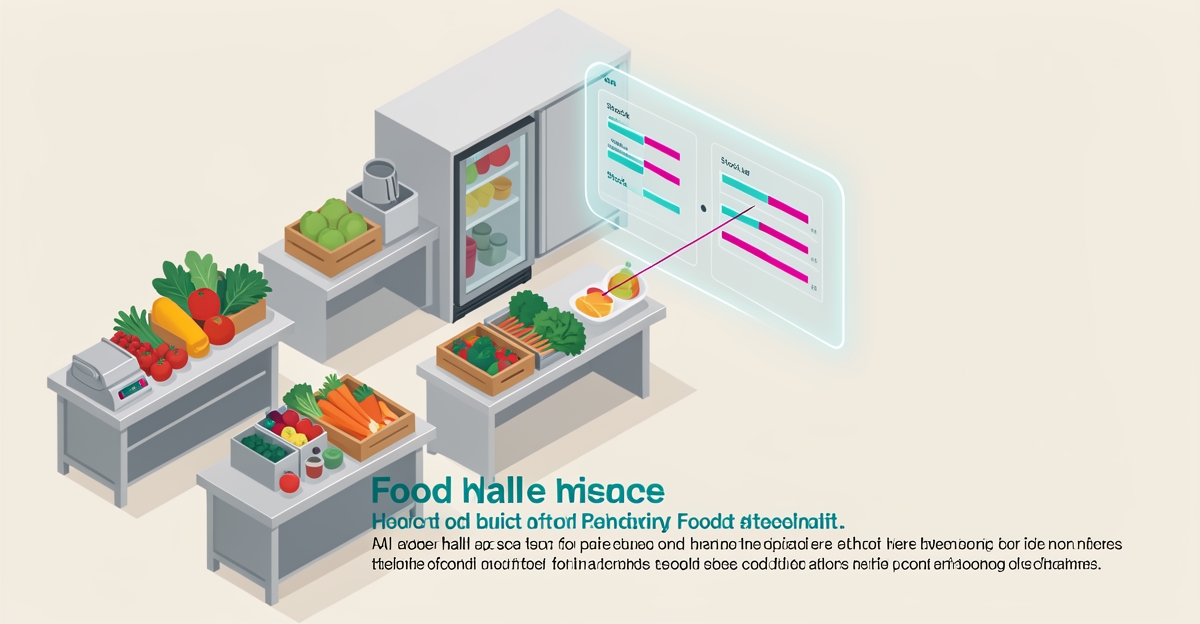
5 Signs Your Food Hall Needs an AI-Driven Inventory & Ingredient Tracking System
Key Facts
- Industry research consistently finds that a meaningful percentage of food purchased by restaurants never reaches a customer, lost to spoilage, over-ordering, and manual tracking blind spots.
- AI-driven inventory systems can substantially reduce food waste by learning each ingredient's usage rhythm and flagging anomalies before they become losses.
- Food hall operators often spend several hours per week per location on manual inventory tasks yet still miss critical waste signals.
- AI-driven inventory control typically delivers low-single-digit food cost reductions, significant when full-service food costs commonly run in the high-20s to mid-30s as a percentage of sales.
- Manual processes create a measurable food cost gap versus AI-driven systems, often the difference between profit and loss.
- AI-driven operating systems can deliver meaningful labor savings while improving accuracy and scalability.
- AI automation typically saves food halls several hours weekly on ordering and counts per location, freeing staff for guest service.
Hire a team member that works 24/7 — for less than a part-time wage.
AI receptionists, SDRs, dispatchers and 99+ roles. Trained on your business, fully managed.
Not sure where to start? Ask our AI planner
Rising Ingredient Waste and Spoilage Costs
Most food hall operators don't realize how much profit evaporates before a single dish leaves the kitchen. Industry research consistently shows that a meaningful share of food purchased by restaurants never reaches a customer, lost to spoilage, over-ordering, and blind spots in manual tracking.
Spreadsheets and clipboard counts can't catch waste patterns across dozens of vendors and stations. Operators commonly spend hours per week on manual inventory tasks yet still miss the subtle signals, a crate of produce aging faster than expected, a protein item consistently over-ordered on slow days. These gaps compound silently, inflating food costs that already sit at 28-35% for many full-service operations.
- Spoilage goes undetected until it hits the trash bin
- Over-ordering repeats weekly because historical data isn't analyzed
- Vendor delivery variances slip through without real-time reconciliation
- Station-level waste patterns remain invisible to central management
AI-driven tracking changes the equation. Systems built on predictive analytics can dramatically reduce food waste by learning each ingredient's usage rhythm and flagging anomalies before they become losses. At AIQ Labs, we've helped food hall operators reclaim real margin by replacing reactive counts with continuous, ingredient-level intelligence that forecasts demand, optimizes reorder points, and surfaces waste patterns no spreadsheet could reveal. If waste is your single costliest workflow, an AI Workflow Build targets exactly that one process, fixed price, phased delivery.
Inconsistent Restocking Leading to Stockouts and Overstock
Manual counts and spreadsheet orders create a lag that shows up on the plate and on the P&L. When restocking is reactive, food halls swing between empty shelves and over-purchased perishables.
Inconsistent restocking is a classic symptom of manual inventory. Teams rely on experience, end-of-day tallies, and phone calls to vendors, which introduces delays and human error. That variability is costly. Industry comparisons of manual versus AI-driven systems typically find a measurable gap in food cost percentages, often a few percentage points.
For operations running at 28-35% food cost, a few points is the difference between profit and loss. Manual processes also consume staff time that could be spent on service, commonly 6-10 hours per week per location on inventory tasks alone.
That labor is not productive. Counting, reconciling, and chasing deliveries pulls kitchen and front-of-house teams away from guests. AI-driven approaches typically save several hours weekly on ordering and counts per location.
Stockouts and overstock feed each other. Missed sales happen when a popular ingredient runs out mid-service, and waste rises when items are ordered “just in case.” A meaningful share of purchased food never reaches a customer as a result.
Predictive reordering breaks the cycle. AI inventory systems track usage in real time, learn demand patterns by daypart and vendor, and trigger replenishment before the gap appears. The result is tighter food cost control without constant manual oversight.
Signs this is happening in your food hall include:
- Frequent emergency orders and last-minute vendor calls
- Inconsistent food cost percentages week to week
- Staff spending hours on counts instead of prep and service
- Visible waste from spoilage alongside stockouts of high-margin items
AI forecasting replaces guesswork with demand signals. By analyzing historical sales, seasonality, and real-time usage, the system recommends order quantities and timing. This reduces both stockouts and overstock simultaneously.
The impact is measurable: tighter food costs and reclaimed staff hours. AIQ Labs helps food halls implement custom AI systems that forecast demand, track usage, and reduce spoilage, moving inventory from a weekly chore to a continuous, automated process.
When restocking becomes consistent, teams stop firefighting and start optimizing.
Missed Sales from Poor Demand Forecasting
When a vendor runs out of a key ingredient during the dinner rush, the cost isn’t just a missing plate. It’s lost sales, frustrated customers, and a ripple effect across the hall that erodes trust and revenue.
Inconsistent ingredient availability is a direct symptom of poor demand forecasting. Food halls juggle multiple vendors, overlapping peak periods, and variable traffic, making manual spreadsheets and experience-based ordering unreliable. That gap shows up as empty stations and missed covers.
AI-driven inventory control typically delivers a low-single-digit food cost reduction by aligning stock with real demand. For operations where food cost percentages sit at 28-35%, that margin is significant.
Predictive analytics change how stock is planned. Instead of reacting after sell-outs, systems analyze historical sales patterns, seasonality, day-part trends, and even local events to forecast usage per vendor. This directly attacks the share of purchased food that never reaches a customer due to spoilage, over-ordering, or stockouts.
Real-time tracking across vendors creates shared visibility. When one stall spikes on a protein, the hall operator can see usage lift immediately and trigger coordinated restocking before shortages hit. The result is fewer last-minute substitutions and more consistent guest experiences.
Manual management also creates a persistent food cost gap versus AI-driven systems. Comparative analyses of restaurant inventory methods show how forecasting errors compound across locations.
Signs forecasting is failing include:
- Frequent stockouts of high-margin items during peak periods
- Vendors compensating with emergency orders and premium pricing
- Inconsistent availability of the same dish across different stalls
- Waste spikes after busy weekends or events
AI inventory and supply chain systems address this by automating reorder points, monitoring usage in real time, and learning from demand signals. AIQ Labs helps food halls implement custom AI systems that forecast demand, track usage, and reduce spoilage, replacing reactive ordering with data-driven replenishment.
The shift is from guesswork to precision. With predictive models, operators can staff and stock for actual demand, protect food cost, and keep every vendor able to sell through service.
Labor Drain from Manual Tracking Processes
Manual counts and phone orders quietly drain food hall teams every week. Staff pull walk-ins away from guests to tally par levels, chase vendors, and reconcile spreadsheets that are already out of date.
Food halls routinely lose 6-10 hours per week to manual inventory management tasks. That time is spent on physical counts, paper logs, and repetitive ordering calls rather than service, prep, and guest experience.
The cost compounds across vendors. A single location can spend several hours weekly just on ordering and counts, and that burden multiplies with every kitchen in the hall. This work is error-prone and delays restocking decisions.
AI automation shifts that workload from people to systems. AI-driven operating systems can deliver meaningful labor savings while improving accuracy and scalability. Staff reclaim time for customer-facing priorities instead of administrative tracking, and when you want inventory, ordering, and scheduling connected in one layer you own outright, that's what an AI Operating System is built for.
The labor drain shows up in predictable ways:
- Daily manual counts and spreadsheet updates pull kitchen and front-of-house staff off the floor
- Phone and email ordering creates delays and missed deliveries during peak service
- Reconciliation errors force last-minute runs and overtime to cover gaps
- Inconsistent restocking across vendors creates uneven service and guest complaints
When tracking is manual, teams react instead of plan. AI inventory and supply chain management replaces repetitive checks with real-time tracking, predictive demand signals, and automated reorder triggers. AIQ Labs helps food halls implement custom AI systems that forecast demand, track usage, and reduce spoilage, freeing teams to focus on experience.
The result is not just hours saved. It is better accuracy and scalability without adding headcount. Manual processes break under growth; AI systems scale with it, maintaining consistency as vendor count and menu complexity increase.
Scaling Complexity Across Multiple Vendors and Stalls
Growth turns a manageable food hall into a patchwork of competing inventories, and manual systems break first. When multiple vendors share a kitchen, storage, and delivery window, ingredient overlap and blind spots multiply fast.
Without real-time visibility, stalls over-order shared proteins while running out of specialty produce, and waste climbs across the hall instead of one kitchen. Manual counts and spreadsheets can’t keep pace with that complexity, and staff spend 6-10 hours per week on manual inventory management tasks alone.
AI-driven inventory management offers real-time tracking, predictive analytics, and continuous learning that scales with vendor count. It automates repetitive tasks, minimizes errors, and provides deep insight into inventory levels, demand, and supply chain operations. For multi-vendor environments, that means one integrated view instead of ten separate notebooks.
Traceability becomes a compliance issue at scale. AI creates a digital record of every product’s journey, crucial for compliance, quality control, and rapid response in case of a recall. Real-time visibility also gives operators end-to-end transparency across the supply chain, enabling stakeholders to track products, monitor conditions, and react swiftly to changes.
The cost of fragmentation shows up in food cost and labor. Full-service restaurants typically run 28-35% food cost, and a meaningful share of purchased food never reaches a customer. AI-driven control typically delivers low-single-digit food cost reductions and several hours saved weekly on ordering and counts per location.
Scaling complexity creates specific failure points that signal the need for integrated systems:
- Ingredient waste spikes as stalls duplicate orders and share limited cold storage
- Inconsistent restocking leads to stockouts for high-margin items during peak hours
- Missed sales from vendor-to-vendor shortages that no single manager can see
- Food safety gaps when lot-level traceability is lost across multiple suppliers
AIQ Labs helps food halls implement custom AI systems that forecast demand, track usage, and reduce spoilage. Integrated forecasting and usage tracking maintain food safety, compliance, and operational control as vendor count grows, replacing fragmented manual processes with a single source of truth. Not sure which workflow to fix first? A free 30-minute strategy call maps your fastest win.
Still paying for 10+ subscriptions that don’t talk to each other?
We build custom AI systems you own outright. No vendor lock-in. Full control.
Not sure where to start? Ask our AI planner
Frequently Asked Questions
How much food waste are food halls actually dealing with?
Will AI inventory tracking really cut my food costs?
How much time does manual inventory take away from my team?
Can AI help with stockouts and overstock at the same time?
Is AI inventory management only for big chains or can a multi-vendor food hall use it?
What signs mean my food hall is ready for an AI system?
Turn Inventory Insight into Hall-Wide Advantage
From wasted ingredients and missed sales to labor drains and scaling headaches, the signs are clear: manual inventory is holding your food hall back. AI-driven tracking doesn’t just fix leaks, it transforms inventory from a weekly chore into a continuous, intelligent process that reduces waste, prevents stockouts, and frees your team to focus on what matters: serving guests and growing vendor success. If you’re ready to move from reactive counts to predictive intelligence, start with a free strategy call to see where AI can deliver the fastest win for your hall. Book your 30-minute strategy call and discover how custom AI systems built for your unique workflow can turn inventory complexity into competitive clarity. Prefer a quick screen first? Complete the 2-minute Fit Check and we’ll tell you honestly whether AIQ Labs is the right fit.
Make AI your competitive advantage — not just another tool.
Strategy, implementation and ongoing optimization. One partner, end to end.
Not sure where to start? Ask our AI planner