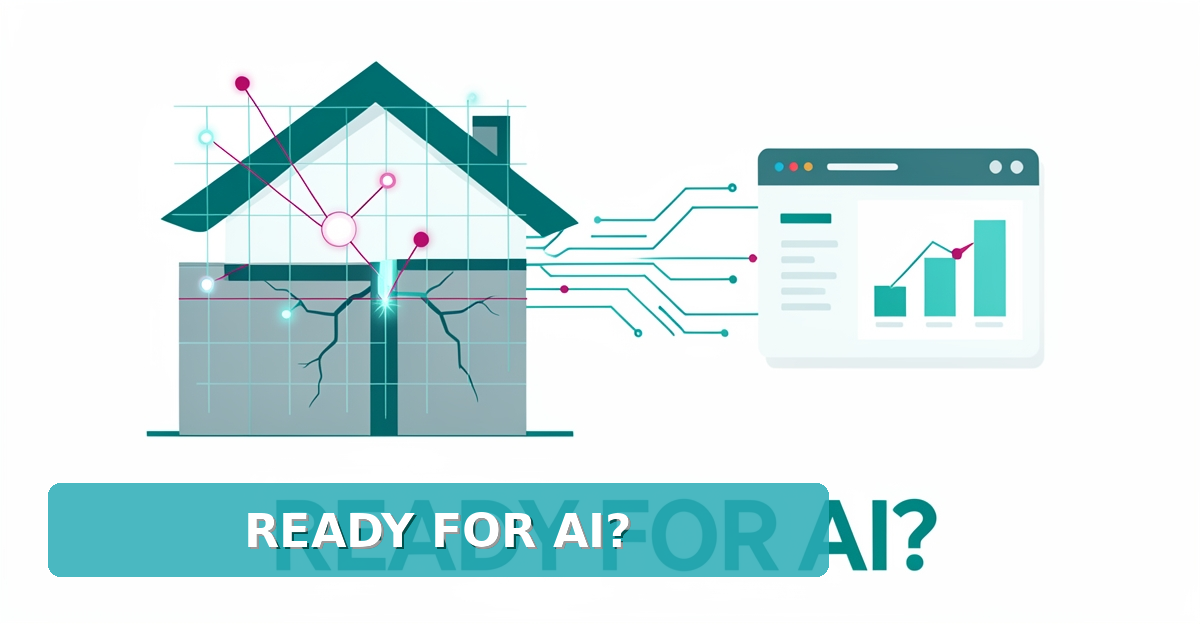
5 Signs Your Foundation Repair Business Is Ready for AI Automation
Key Facts
- Large enterprises are increasingly consolidating fragmented SaaS stacks into unified data platforms so AI agents can act on a single source of truth.
- The half-life of professional skills continues to shrink, which makes continuous learning a core part of any AI rollout.
- Enterprise AI shifts operations from "people pushing buttons" to "agents driving outcomes" across tools and teams.
- Open connection standards like the Model Context Protocol (MCP) let AI connect to many data sources and tools without a custom integration for each one.
- Many CIOs are consolidating SaaS applications as AI-era value shifts toward centralized data.
- AIQ Labs has deployed 200+ multi-agent systems and runs 4 live SaaS products daily, automation is its core business, not a side offering.
Hire a team member that works 24/7 — for less than a part-time wage.
AI receptionists, SDRs, dispatchers and 99+ roles. Trained on your business, fully managed.
Not sure where to start? Ask our AI planner
The Foundation Repair Automation Gap
The shift from manual operations to AI-powered automation isn't just about adopting new tools, it's a fundamental rethinking of how foundation repair businesses function. Many teams still rely on disconnected apps for scheduling, quoting, and customer communication, creating friction that slows response times and increases errors. This app-centric approach means data is trapped in silos, forcing staff to manually transfer information between systems, which consumes valuable time and increases the risk of miscommunication.
As enterprises move from manual operations to agent-orchestrated workflows, the limitations of traditional software become clear. The shift involves moving from "people pushing buttons" to "agents driving outcomes," where routine work is coordinated across tools by intelligent systems rather than requiring constant human intervention. For foundation repair businesses, this means scheduling appointments, generating quotes, and following up with customers can happen without toggling between multiple platforms.
The evolution from basic chatbots to autonomous workers marks a critical turning point in operational efficiency. Where chatbots merely answer questions, autonomous AI agents can complete entire workflows, from initial inquiry to job scheduling and payment follow-up, with minimal human handoffs. Open standards like the Model Context Protocol make this practical, letting AI connect to CRM, scheduling, and payment systems through a common interface instead of a custom integration for every tool. Businesses that continue to rely on fragmented, app-first workflows risk falling behind as competitors adopt integrated, agent-driven operations that reduce manual effort and improve consistency. AIQ Labs' workflow builds help foundation repair companies find where these manual bottlenecks exist and rebuild the one workflow that costs the most, at a fixed price and in phases.
Five Readiness Signals Backed by AI Research
Most foundation repair businesses don't have an AI problem, they have a readiness problem. The difference between a pilot that stalls and automation that scales comes down to five signals that show up in your dispatch board, estimate pipeline, and follow-up queue every day.
Organizations that successfully adopt AI typically start by assessing current skillsets and aligning AI vision with business goals. For foundation repair, that means asking whether your crew schedulers, estimators, and project managers can articulate the workflow they'd hand to an AI dispatcher tomorrow.
- Centralized data: Customer history, soil reports, crew availability, and material costs live in one system, not scattered across spreadsheets, texts, and a whiteboard in the shop
- Process maturity: Your estimate-to-contract workflow follows consistent steps every time, with documented exceptions rather than tribal knowledge
- Team adaptability: Field supervisors and office staff already use mobile apps for daily logs and photo documentation without resistance
- Executive buy-in: Ownership has allocated budget and defined success metrics for automation beyond "save time"
- Pilot-ready workflows: A single, high-volume process like after-hours lead capture or warranty follow-up can run in parallel with human operators for 30 days
The architectural shift matters as much as the checklist. Enterprises are moving from application-centric models, where data sits trapped behind dozens of interfaces, to data-centric architectures where autonomous agents act directly on a unified core. Foundation repair companies running on disconnected tools for CRM, scheduling, and accounting face the same consolidation pressure that's pushing large enterprises toward unified data platforms.
AIQ Labs uses this exact framework during initial consultations to identify automation opportunities in scheduling, quotes, and customer communication. The businesses that clear all five signals don't just pilot AI, they deploy AI employees that handle dispatch, qualification, and follow-up as reliably as their best project manager, at a fraction of the cost of a human hire.
From Readiness to Real Automation
Recognizing readiness is only half the battle, the real value comes from translating those signals into concrete action. For foundation repair businesses, the path forward involves three critical shifts: centralizing your data, adopting workflow-first thinking, and implementing responsible agentic frameworks.
Start by moving away from fragmented, application-centric operations. Unified data platforms have taken hold across large enterprises precisely because AI agents require direct access to centralized business information. For a foundation repair company, this means consolidating customer histories, inspection photos, soil reports, and scheduling data into a single source of truth rather than scattering them across disconnected apps.
Next, embrace the shift from app-first to workflow-first operations. Work no longer happens inside individual applications, it flows through automated workflows that span your CRM, scheduling tools, and communication platforms. Instead of your team manually entering data between systems, AI agents orchestrate the entire customer journey from initial quote request to final invoice.
Implementation requires a structured approach:
- Audit your current data landscape to identify where customer information, project specs, and communication logs currently live
- Map one high-value workflow, such as quote generation or appointment scheduling, that crosses multiple systems
- Deploy AI agents using standardized protocols like MCP (Model Context Protocol) that connect once to your existing tools rather than requiring custom integrations for each
- Establish governance guardrails ensuring human oversight for critical decisions like structural assessments and pricing approvals
The workforce component matters as much as the technology. "People, not prompts, are what matters most in the AI era" is a common refrain in workforce research, and the half-life of professional skills keeps shrinking. Your team needs continuous learning to work alongside AI agents effectively, shifting from task execution to exception management and quality oversight.
AIQ Labs approaches this transition through a readiness framework that evaluates your data maturity, process documentation, and team adaptability before writing a single line of code. Whether you need an AI Dispatcher to coordinate crawl space inspections or a Quote Specialist to generate estimates from uploaded photos, the implementation begins with centralizing your operational data and redesigning workflows around outcomes rather than applications. For businesses ready to go further, an AI Operating System connects everything into one operating layer, built in phases and owned outright.
The businesses that succeed treat AI not as a software purchase but as an operational transformation, one where centralized data and agent-orchestrated workflows replace the patchwork of apps that currently slow your growth.
Still paying for 10+ subscriptions that don’t talk to each other?
We build custom AI systems you own outright. No vendor lock-in. Full control.
Not sure where to start? Ask our AI planner
Frequently Asked Questions
How do I know if my foundation repair business is actually ready for AI automation?
Will AI replace my dispatchers and estimators?
What's the difference between the chatbot on my website and AI automation?
Why do I need to centralize my data before AI can work?
How long does it take to implement AI automation in a foundation repair business?
Do I need to replace my current software to use AI agents?
Your Foundation Repair Business Is Already Showing the Signs, Now What?
If your foundation repair business has centralized data, mature processes, an adaptable team, executive buy-in, and pilot-ready workflows, you're not just ready for AI automation, you're positioned to outperform competitors still juggling disconnected apps and manual handoffs. These five signals indicate you can move beyond pilots to deploy AI employees that handle dispatch, quoting, and follow-up as reliably as your best project manager, while scaling without adding headcount. The next step is to validate your readiness with a focused assessment. Start the Fit Check, a two-minute evaluation that leads to a free 30-minute strategy call where an AI engineer maps your biggest bottleneck and identifies high-ROI automation opportunities. No obligation, just clarity. Start the Fit Check to see where AI can deliver real impact in your scheduling, quotes, and customer communication.
Make AI your competitive advantage — not just another tool.
Strategy, implementation and ongoing optimization. One partner, end to end.
Not sure where to start? Ask our AI planner