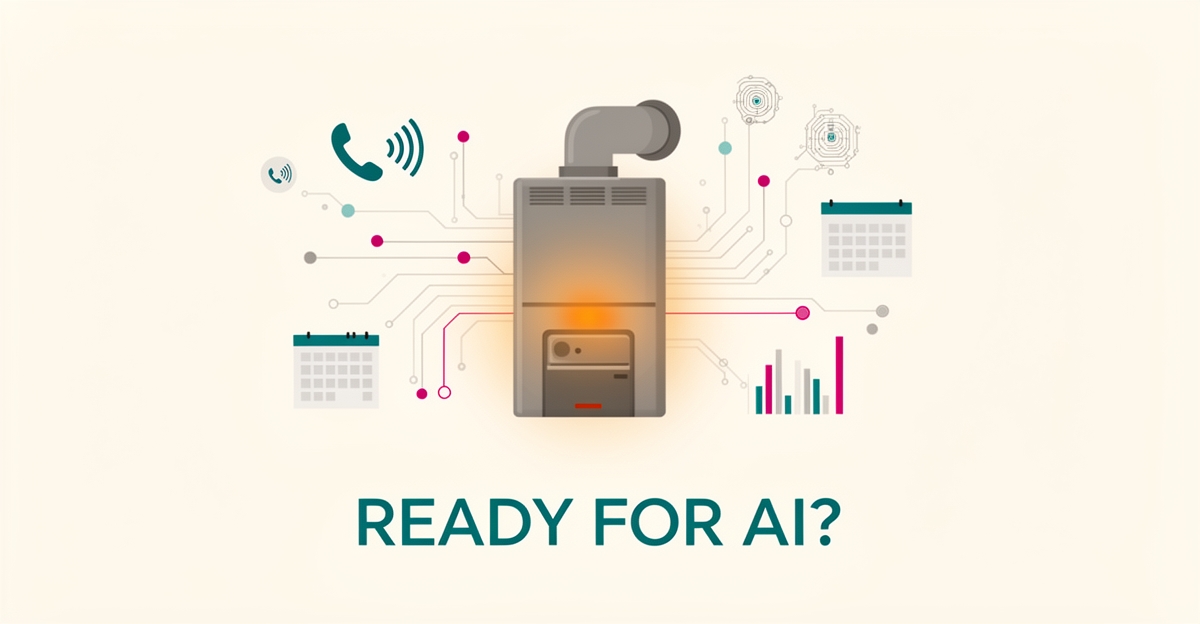
5 Signs Your Furnace Repair Business Is Ready to Go AI-First
Key Facts
- Furnace repair diagnostic time typically runs 30 to 60 minutes according to industry guidance
- Simple furnace repairs can take another 30 to 90 minutes based on service data
- Preventive maintenance is widely credited with catching the large majority of potential winter failures per heating experts
- Furnace replacement costs typically range from $3,000 to $8,000 including installation
- Well-maintained furnaces can reduce heating bills by roughly 10-15% through efficiency gains
- AIQ Labs has deployed 200+ multi-agent systems and runs 4 live SaaS products daily as of late 2026
- Furnace lifespan is typically 15-20 years with proper care per HVAC industry standards
Hire a team member that works 24/7 — for less than a part-time wage.
AI receptionists, SDRs, dispatchers and 99+ roles. Trained on your business, fully managed.
Not sure where to start? Ask our AI planner
The Hidden Cost of Running a Manual Furnace Repair Operation
The furnace repair industry faces mounting pressure during peak seasons, where diagnostic calls typically take 30 to 60 minutes followed by repairs ranging from 30 to 90 minutes, creating relentless scheduling chaos. This operational reality strains manual systems as demand surges, leading to delayed responses and frustrated customers waiting in the cold.
Furnace repair diagnostic time typically runs 30 to 60 minutes, with simple furnace repairs taking another 30 to 90 minutes, compounding inefficiencies when technicians juggle multiple calls. Without streamlined processes, businesses struggle to maintain consistent service quality amid rising call volumes.
- Inconsistent service tracking obscures maintenance history and repair outcomes
- Fragmented data systems prevent real-time visibility into technician performance
- Manual scheduling fails to optimize travel time or emergency response priorities
- Customer complaints about response times escalate during peak demand periods
- Operational bottlenecks limit scalability without proportional staff increases
These challenges reveal a critical gap: growing demand collides with manual processes that cannot scale efficiently. AIQ Labs helps furnace repair businesses assess this readiness gap through a free two-minute Fit Check that pinpoints where automation can resolve scheduling friction, standardize service quality, and transform reactive operations into proactive, customer-centric workflows.
The 5 Readiness Signals: From Missed Calls to Fragmented Data
Furnace repair businesses often hit a breaking point where manual processes can no longer keep pace with demand. When service calls surge during peak winter months and technicians struggle to coordinate schedules, it's a clear sign the operation has outgrown spreadsheets and paper logs. According to industry guidance, furnace repair diagnostic time typically runs 30 to 60 minutes, with simple repairs taking another 30 to 90 minutes, creating intense scheduling pressure that manual systems can't reliably manage. This operational strain directly impacts customer satisfaction and team efficiency.
Inconsistent service tracking is another critical indicator that AI readiness has been reached. Without standardized processes for documenting maintenance history, repair outcomes, and parts usage, businesses lose valuable insights and risk repeating diagnostic work. Industry guidance emphasizes that detailed service histories, including installation dates and past repairs, are essential for effective furnace maintenance, yet many HVAC companies still rely on fragmented notes or technician memory. This lack of standardization not only reduces efficiency but also undermines quality assurance efforts that customers increasingly expect.
Customer complaints about response times, communication gaps, or uneven service quality further signal that manual operations are failing to scale. When feedback consistently highlights delays in emergency response or confusion about service timelines, it reflects systemic breakdowns in coordination and information sharing. Established heating companies stress fast response times and long-term reliability, benchmarks that are difficult to maintain without integrated systems that ensure every team member has access to real-time job details and customer history. These pain points reveal where AI-driven automation could bring consistency and accountability.
Finally, complex scheduling across multiple technicians and disconnected data systems create operational friction that AI cannot resolve without a strong foundation. Managing emergency calls, preventive maintenance schedules, and technician availability becomes exponentially harder as the business grows, especially when customer, scheduling, and financial data live in separate platforms. As TechRadar's analysis warns, AI cannot compensate for fragmented operating models or conflicting sources of truth. Before investing in AI, furnace repair businesses must first unify their data streams and establish reliable processes, because AI amplifies both efficiency and dysfunction equally. Only with a single source of truth can AI truly optimize dispatch, predict maintenance needs, and enhance the customer experience at scale. For businesses ready to assess their operational maturity, AIQ Labs offers a free two-minute Fit Check, followed by a free 30-minute strategy call to map your biggest bottlenecks and identify high-ROI automation opportunities.
Fix Your Foundation First: Why Data and Systems Come Before AI
Before deploying AI, furnace repair businesses must first ensure their operational foundation can support it. Jumping into AI without addressing core data and system weaknesses leads to stalled initiatives and wasted investment. TechRadar analysis confirms that fragmented systems and conflicting sources of truth prevent AI from delivering value, no matter how advanced the technology.
Many HVAC companies operate with customer records scattered across spreadsheets, paper logs, and disconnected software, making it impossible to build a reliable single source of truth. This fragmentation undermines critical functions like service history tracking, which industry maintenance guidance identifies as essential, reviewing installation dates, service records, and repair history for every customer interaction is something manual systems struggle to do consistently.
Without clean, integrated data, AI cannot accurately predict maintenance needs, optimize dispatch, or personalize customer communication. Businesses should audit data quality, consolidate service histories, and verify that their ERP or field-service platform can support AI integration. Only then can they move forward with confidence, knowing their foundation is ready to scale. For businesses assessing their readiness, AIQ Labs offers a free Fit Check to evaluate operational maturity and recommend a clear, phased transformation plan, then a free 30-minute strategy call to work through the details.
What AI-First Looks Like in a Furnace Repair Business
Imagine a furnace repair business where every call is answered instantly, schedules optimize themselves, and customers receive proactive maintenance reminders before their systems fail. This isn't a futuristic fantasy, it's the reality of AI-first operations, and it's more accessible than most HVAC business owners realize.
In an AI-first furnace repair business, the transformation touches every aspect of operations. Industry analysis confirms that modern ERP platforms are evolving into intelligent execution platforms that embed AI directly into business processes, creating a foundation for these advanced capabilities.
AI dispatchers and receptionists handle incoming calls 24/7, eliminating the traditional bottleneck of missed calls during peak heating season. When a customer's furnace fails on a cold winter night, the AI system immediately assesses the urgency, checks technician availability, and schedules the appropriate response, all without human intervention. This capability is crucial when you consider that furnace repair diagnostics typically take 30 to 60 minutes, making efficient scheduling essential for maximizing technician productivity. AIQ Labs' AI Employees cover receptionists, dispatchers, SDRs, and 99+ other managed roles, typically at roughly 80% less cost than a human hire.
Predictive maintenance scheduling represents another leap forward. Instead of waiting for customers to call when their furnace breaks down, AI systems analyze usage patterns and historical data to predict when maintenance will be needed. This proactive approach aligns with industry guidance that preventive maintenance catches most potential winter failures before they leave customers in the cold.
The contrast between traditional and AI-first operations becomes clear when examining key business functions:
- Emergency Response: Traditional businesses use first-come, first-served dispatch, while AI systems optimize response based on severity, location, and available resources
- Customer Communication: Manual follow-ups versus automated, personalized notifications about service appointments, maintenance reminders, and system status updates
- Service Quality: Inconsistent human processes versus standardized AI-driven protocols that ensure every customer receives the same high level of service
- Data Management: Disparate systems with conflicting information versus unified platforms with real-time synchronization
AI Employees like HVAC Dispatchers and Service Coordinators can be deployed in weeks, not months, transforming operations without the lengthy implementation timelines associated with traditional software. These AI team members integrate with existing systems, learning your business processes and customer preferences to deliver increasingly sophisticated support. For the workflow that costs you the most, AI Workflow Builds rebuild it at a fixed price, in phases.
The financial implications are equally compelling. While furnace replacement costs typically range from $3,000 to $8,000, the operational efficiencies gained through AI-first transformation can significantly impact your bottom line by reducing missed opportunities, optimizing technician utilization, and improving customer retention.
AIQ Labs has deployed 200+ multi-agent systems and runs 4 live SaaS products daily, so we've seen firsthand how furnace repair businesses transform when they embrace AI-first operations. The technology doesn't replace human expertise, it amplifies it, allowing your team to focus on complex repairs and customer relationships while AI handles the routine tasks that consume valuable time and resources.
Your Phased Path to AI-First: Assess, Pilot, Scale
If your furnace repair business is seeing high call volumes during peak seasons, inconsistent service tracking, or rising customer complaints about response times, these are clear signs you're ready for an AI-first approach. According to industry analysis, AI ambitions stall when weak foundations undermine scale, governance, and execution readiness, making a structured assessment essential before implementation.
Begin with an AI readiness assessment to score your operational maturity across call handling, service documentation, scheduling efficiency, and data integration. AIQ Labs offers a free two-minute Fit Check followed by a free 30-minute strategy call to evaluate your current systems, identify high-ROI automation opportunities, and map a tailored transformation plan with no obligation. This discovery phase ensures you start from a position of strength, not guesswork.
From there, launch a pilot in one high-impact workflow, such as AI-powered call answering or intelligent dispatch, to prove value quickly. AI-driven dispatch optimizes routing by factoring in travel time, technician skills, and emergency priority, so every call is captured during peak heating seasons. Once validated, scale the solution across departments using flexible payment models: Start Monthly for ongoing support, Build in Milestones for phased delivery, or Own It Outright for full system ownership. For businesses that want everything connected over time, AI Operating Systems build one connected operating layer in phases, owned outright. This step-by-step approach minimizes risk while building sustainable AI capability that grows with your business.
Still paying for 10+ subscriptions that don’t talk to each other?
We build custom AI systems you own outright. No vendor lock-in. Full control.
Not sure where to start? Ask our AI planner
Frequently Asked Questions
What are the key signs that my furnace repair business is ready for AI transformation?
How long does furnace repair diagnostic work typically take, and why does this matter for AI readiness?
Can AI really help reduce missed calls in my furnace repair business?
What preventive maintenance benefits can AI provide for furnace repair businesses, and how does this impact customer outcomes?
Do I need to fix my data systems before implementing AI, or can AI work with my current fragmented setup?
What does a phased AI implementation look like for a furnace repair business, and how do I minimize risk?
From Readiness to Results: Your AI-First Furnace Repair Journey Starts Now
Recognizing the signs, high call volumes, inconsistent tracking, customer frustration, scheduling chaos, and fragmented data, is the first step toward transforming your furnace repair business. AI doesn't replace your expertise; it amplifies it by handling routine tasks, optimizing dispatch, enabling predictive maintenance, and ensuring consistent service quality. The real opportunity lies in building on a solid foundation: unifying your data, streamlining workflows, and then layering in AI that scales with your growth. AIQ Labs helps you assess where you stand, pilot high-impact changes like AI-powered call answering or intelligent dispatch, and expand only what proves valuable. Take the first step with a free two-minute Fit Check, followed by a no-obligation 30-minute strategy call to map your bottlenecks and uncover your highest-ROI automation opportunities, because the coldest nights deserve the warmest, most reliable service.
Make AI your competitive advantage — not just another tool.
Strategy, implementation and ongoing optimization. One partner, end to end.
Not sure where to start? Ask our AI planner