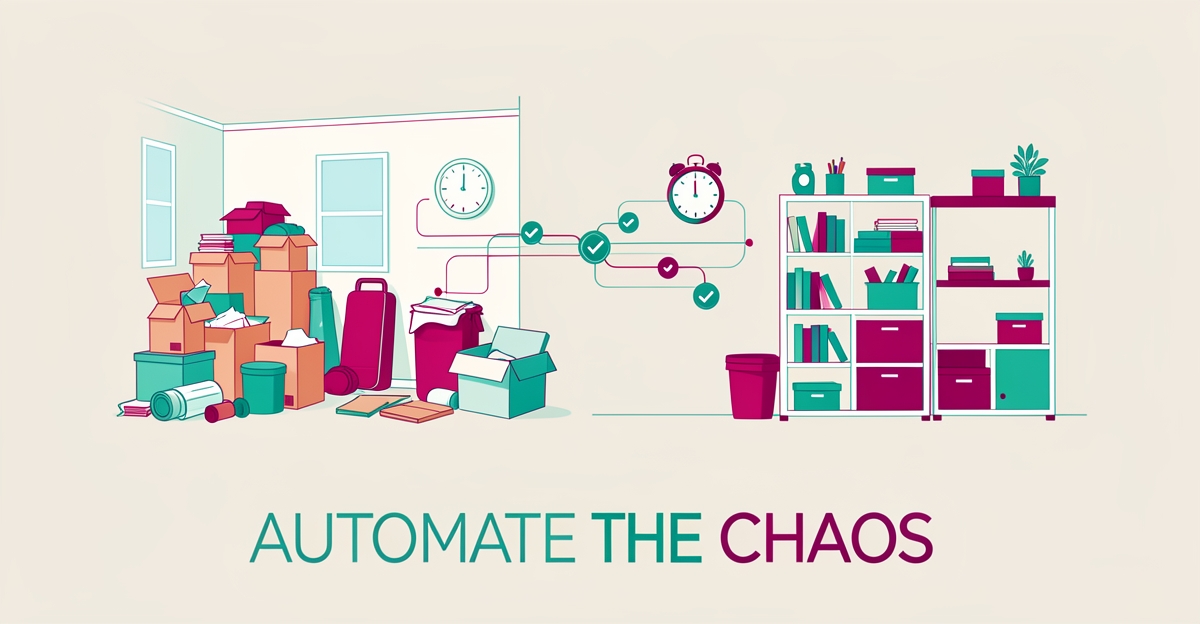
5 Signs Your Hoarding Cleanup Business Needs AI-Powered Workflow Automation
Key Facts
- Industry analyses consistently suggest that the majority of sustainable hoarding cleanup revenue comes from professional referral sources, not direct consumer leads.
- Most initial hoarding calls typically come from family members, not the resident, callers who are often distressed and provide fragmented details.
- 24/7 AI call answering can capture the large share of after-hours leads that human-only coverage misses.
- Hoarding cleanup projects typically carry high per-job value, so even a handful of missed calls each month represents significant forgone revenue.
- Hoarding disorder affects millions of people in the US, with some research estimating prevalence in the single-digit percentage range of the population.
Hire a team member that works 24/7 — for less than a part-time wage.
AI receptionists, SDRs, dispatchers and 99+ roles. Trained on your business, fully managed.
Not sure where to start? Ask our AI planner
Inconsistent Job Documentation and Missed Client Details
A single missed detail from a family member's frantic call can derail an entire hoarding cleanup project before it starts. When your intake process relies on scattered notes and memory, critical information about the property, safety hazards, or client expectations falls through the cracks.
The stakes are higher in hoarding cleanup than in standard cleaning services. Industry call-handling research consistently finds that most initial hoarding calls come from family members, not the person living in the home. These callers are often distressed, provide fragmented details, and may not have full visibility into the scope of the situation.
Without a standardized intake system, your team pieces together job details from voicemails, text messages, and hastily scribbled notes. This fragmentation leads to inaccurate job scoping, misallocated resources, and awkward follow-up conversations where you ask the same questions twice. For projects that often run into four or five figures, these errors directly impact your bottom line.
Inconsistent documentation creates cascading operational failures. When one team member captures details differently than another, you end up with:
- Incomplete property assessments that require return visits
- Mismatched crew assignments based on underestimated job complexity
- Lost client context that damages trust with referral sources
- Delayed follow-ups that let high-value jobs slip away
The referral-driven nature of hoarding cleanup amplifies this problem. Industry analyses suggest that the majority of sustainable revenue comes from professional referral sources like caseworkers, attorneys, and property managers. When you fumble client details or miss follow-up commitments, you risk damaging relationships that generate consistent business.
AI-powered workflow automation solves this by capturing every inquiry in a structured format from the first point of contact. Whether a family member calls at 2 PM or 2 AM, the system logs detailed intake information, flags urgent safety concerns, and routes the job to the right team member. A 24/7 AI receptionist can capture the after-hours leads that human-only coverage misses, ensuring no opportunity disappears because your office was closed.
AIQ Labs builds custom intake workflows that standardize how your team captures client details, property conditions, and special requirements. The system integrates with your existing tools, creating a single source of truth for every job. Instead of chasing down scattered notes, your team accesses complete client profiles that include communication history, photos, and scope details. See how managed AI staff work on AIQ Labs' AI Employees page.
When documentation becomes automatic and consistent, your estimators quote accurately, your crews arrive prepared, and your follow-up happens on schedule. That reliability turns one-time family inquiries into long-term referral partnerships.
After-Hours Lead Loss and 24/7 Inquiry Gaps
A hoarding cleanup inquiry that arrives at 9 p.m. on a Friday is rarely a casual one. These are emotionally charged, time-sensitive calls, and when no one picks up, the caller simply dials the next company on the list. For an industry built on urgency and trust, that unanswered ring is one of the most expensive sounds in the business.
The scale of the loss is significant. Industry call-handling research suggests that 24/7 AI call answering can capture the large majority of after-hours leads, leads that would otherwise go to competitors with better phone coverage. Given that hoarding cleanup projects typically carry high per-job value, even a handful of missed monthly calls can represent tens of thousands of dollars in forgone revenue.
What makes this gap especially costly is who tends to call. Most initial hoarding calls come from family members, often reaching out late in the evening or on weekends after a crisis has surfaced. These callers rarely leave voicemails. They keep dialing until someone answers with empathy and a clear next step.
The stakes are compounded by the industry's referral-driven economics. Hoarding cleanup is fundamentally a B2B referral business built on relationships with adult protective services caseworkers, hospital discharge planners, estate attorneys, probate courts, property management companies, and insurance adjusters. In fact, industry analyses consistently find that the majority of sustainable hoarding cleanup revenue comes from professional referral sources rather than direct consumer leads. When those referral partners call after hours and reach a dead line, the damage extends beyond one lost job, it erodes the very relationships that sustain the business.
Relying on human-only coverage creates predictable failure points:
- Evenings and weekends go uncovered, exactly when family members are most likely to reach out
- Overflow during busy periods sends high-value inquiries to voicemail
- Referral partners lose confidence when their calls aren't answered promptly
- Inquiries that do get captured lack consistent logging, so follow-ups slip through the cracks
This is where AI-powered call handling and workflow automation change the math. A 24/7 AI voice agent answers every call with a natural, empathetic conversation, qualifies the inquiry, books appointments, and logs each job into your scheduling system, so nothing sits in a voicemail inbox waiting for Monday. At AIQ Labs, tailored automation workflows ensure every inquiry is logged, prioritized, and assigned efficiently, closing the gap between the moment a call comes in and the moment your team acts on it.
If your phone rings into silence after hours, that silence is already costing you revenue.
Delayed Task Prioritization and Assignment Bottlenecks
Manual job triage creates a dangerous lag between intake and action in hoarding cleanup. When dispatch relies on spreadsheets and memory, high-urgency cases wait while lower-priority jobs move forward.
Hoarding cleanup is fundamentally a B2B referral business built on relationships with adult protective services caseworkers, hospital discharge planners, estate attorneys, probate courts, property management companies, and insurance adjusters. Industry analyses consistently show that the majority of sustainable revenue comes from professional referral sources, not direct consumer leads. A delayed response risks that referral trust.
The intake profile adds pressure. Call-handling research finds most initial hoarding calls come from family members, often in crisis. With millions of people in the US affected by hoarding disorder, and some research estimating prevalence in the single-digit percentage range of the population, demand is consistent and emotionally charged. High per-job project value means each missed or slow assignment has real financial impact.
Manual prioritization fails because urgency is not always obvious from a form. A property with safety hazards, imminent eviction, or a hospital discharge deadline needs immediate technician assignment, while a consultation can wait. Without real-time ranking, teams default to first-in-first-out or whoever calls the dispatcher last.
AI-powered workflow automation changes the assignment logic from reactive to predictive. Jobs are logged automatically at intake, enriched with referral source, client risk signals, and historical job data, then ranked by need using real-time data and predictive modeling. This ensures high-urgency cases are surfaced first and matched to the right crew.
Operational benefits show up quickly in scheduling and documentation:
- Automatic job logging from calls, forms, and referral emails with no manual re-entry
- Dynamic prioritization based on urgency signals, location, crew availability, and project value
- Predictive assignment that anticipates supply and labor needs from historical patterns
- Audit-ready documentation for referral partners and compliance
Data-driven decision making is crucial in hoarding cleanup operations. By analyzing historical data, cleaning technicians can identify trends and predictable outcomes that help formulate superior strategies for tackling cluttered environments. Data-driven insights support better crew routing and capacity planning.
This is the core of AIQ Labs' AI Workflow Builds: we rebuild the one workflow that costs you the most, intake, dispatch, or follow-up, at a fixed price, in phases. The result is every job logged, prioritized, and assigned efficiently, reducing bottlenecks without adding headcount.
Reactive Operations Instead of Predictive Planning
Hoarding cleanup teams often scramble for supplies mid-job and reassign crews after overloads hit. That reactive rhythm is expensive when projects typically carry high per-job value and most sustainable revenue comes from professional referral sources.
Without foresight, operations depend on memory and last-minute calls. Crews arrive short on protective gear, disposal bags, or specialty tools. Documentation lags, so the next job starts with guesswork instead of a clear plan.
Predictive planning replaces that scramble with data. AI-driven data analytics review historical job logs, square footage, contamination levels, and disposal volumes to surface repeatable patterns. Teams can see which neighborhoods, property types, and referral partners drive heavier workloads.
Predictive modeling turns those patterns into action. The system forecasts demand windows, crew hours, and supply burn rates before the week begins. Resource allocation shifts from reactive to prepared.
Data-driven decision making is crucial in hoarding cleanup operations. By analyzing historical data, cleaning technicians can identify trends and predictable outcomes that help formulate superior strategies for tackling cluttered environments. That insight reduces delays and protects client trust.
With millions of people in the US affected by hoarding disorder, demand is steady but uneven. Reactive operations miss the peaks and over-prepare for the valleys. AI models learn seasonality and referral cycles, so staffing and inventory match reality.
AIQ Labs helps implement tailored automation workflows that ensure every job is logged, prioritized, and assigned efficiently. The approach fits a connected AI Operating System built in phases and owned outright, not generic chatbots.
Signs a business is stuck in reactive mode:
- Supply orders placed after crews report shortages on site
- Crew schedules changed daily because incoming calls spike unexpectedly
- No visibility into which referral sources drive the largest or most complex jobs
- Post-job documentation completed days later, erasing usable data
When documentation is inconsistent, predictive models have nothing to learn from. Consistent job logging creates the foundation for forecasting. AI then advises on replenishing supplies in advance based on projected needs identified through historical data.
The result is calmer dispatch, fewer emergency purchases, and crews equipped for the work they actually face. Operations move from firefighting to planning, and client satisfaction improves because timelines hold.
Scaling Limitations Due to Manual Process Dependency
Hoarding cleanup businesses often hit a growth ceiling when they rely on manual processes to manage jobs, invoices, and client communication. As project volume increases, inconsistent documentation and task delays become more frequent, leading to missed follow-ups and billing errors. These inefficiencies prevent teams from taking on more work without adding staff, creating a direct cap on revenue potential.
AI-powered workflow automation resolves these scaling limitations by standardizing job logging, prioritizing urgent cases, and assigning tasks based on real-time availability and expertise. Invoice processing, intake data entry, and follow-up scheduling that once consumed coordinator hours can run automatically, accelerating month-end close and eliminating late payment fees. Intelligent data extraction and validation also cut routine operational errors, ensuring every job detail is captured accurately from initial inquiry to final billing.
By automating repetitive administrative tasks, hoarding cleanup businesses free up skilled technicians and coordinators to focus on client-facing work and complex job planning. This shift allows companies to handle more projects without proportional headcount increases, turning manual bottlenecks into scalable, AI-driven operations. AIQ Labs helps implement these tailored workflows so every job is logged, prioritized, and assigned efficiently, without requiring constant oversight or manual intervention.
Still paying for 10+ subscriptions that don’t talk to each other?
We build custom AI systems you own outright. No vendor lock-in. Full control.
Not sure where to start? Ask our AI planner
Frequently Asked Questions
How much revenue do hoarding cleanup businesses typically lose from missed after-hours calls?
Why are family members the most common callers for hoarding cleanup services, and how does that affect intake?
What share of sustainable hoarding cleanup revenue comes from professional referral sources?
How does AI-powered workflow automation reduce operational errors in hoarding cleanup businesses?
Can AI help hoarding cleanup businesses scale without hiring more staff?
What is the average value of a hoarding cleanup project, and why does accurate job scoping matter?
Turn Operational Gaps into Growth Opportunities
From missed after-hours calls and inconsistent documentation to reactive scheduling and scaling limits, the signs are clear: manual processes are holding your hoarding cleanup business back. Each gap, whether it's a delayed response to a family member in crisis or a crew arriving unprepared due to poor job logging, directly impacts client trust, referral relationships, and revenue. AI-powered workflow automation doesn't just patch these issues; it transforms how you operate by capturing every inquiry accurately, prioritizing urgent jobs intelligently, and freeing your team to focus on what matters most, delivering compassionate, efficient service. The result? Fewer errors, stronger referral partnerships, and the capacity to take on more work without proportional overhead. If you're ready to see where AI can make the biggest impact in your operations, start with AIQ Labs' free 2-minute Fit Check, then book a free 30-minute strategy call. AIQ Labs has deployed 200+ multi-agent systems and helps hoarding cleanup businesses like yours identify high-ROI automation opportunities tailored to your specific workflows, so you can grow with confidence, not guesswork. Questions? Reach the team at [email protected].
Make AI your competitive advantage — not just another tool.
Strategy, implementation and ongoing optimization. One partner, end to end.
Not sure where to start? Ask our AI planner