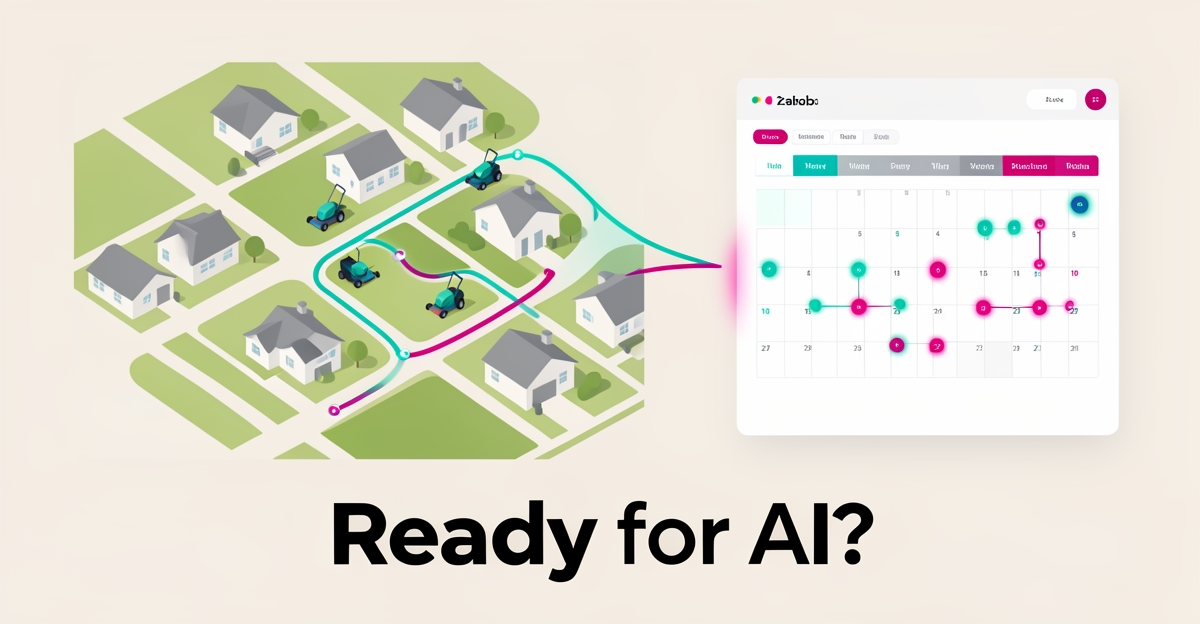
5 Signs Your Lawn Care Business Is Ready for AI-Driven Maintenance Scheduling
Key Facts
- Manual scheduling commonly wastes a meaningful share of drive time, directly fueling higher costs and lost billable hours according to industry research
- Automated invoicing is typically the fastest ROI win, with payback often measured in weeks rather than months based on automation analysis
- Route optimization can cut fuel costs meaningfully while eliminating zigzag scheduling across service areas industry efficiency studies show
- Automated seasonal reminder campaigns recover revenue that manual follow-ups typically miss automation case data suggests
- Full automation stacks typically pay for themselves within a single season, then generate pure operational advantage per industry benchmarks
- Hundreds of thousands of landscaping businesses compete in the U.S., making operational efficiency critical for survival market analysis indicates
Hire a team member that works 24/7 — for less than a part-time wage.
AI receptionists, SDRs, dispatchers and 99+ roles. Trained on your business, fully managed.
Not sure where to start? Ask our AI planner
The Hidden Cost of Manual Scheduling in a Crowded Industry
The U.S. landscaping market is fiercely competitive, with hundreds of thousands of businesses vying for clients, making operational efficiency not just an advantage but a necessity for survival. Yet many lawn care companies still rely on manual scheduling methods that silently erode profitability through avoidable inefficiencies. These processes create significant operational drag, where crews spend excessive time on the road not serving customers, but navigating poorly planned routes.
Industry research suggests that a substantial share of drive time, often in the range of 15–30%, is wasted due to inefficient manual route scheduling, translating to higher fuel costs, increased vehicle wear, and lost billable hours. This isn't just about saving minutes, it's about reclaiming productive capacity that could be used for additional jobs, customer follow-ups, or business development. As a business grows, these inefficiencies compound: more clients mean more complex scheduling variables, and manual systems struggle to adapt quickly to changes in weather, labor availability, or last-minute cancellations.
The hidden costs extend beyond fuel and time. Reactive scheduling, where jobs are booked or rescheduled ad hoc, leads to inconsistent service follow-ups, missed opportunities for seasonal upsells, and delayed estimate responses that frustrate potential clients. During peak seasons, workload spikes can overwhelm dispatchers relying on spreadsheets or whiteboards, resulting in overbooked crews, underutilized equipment, and dissatisfied customers. Without dynamic adjustment capabilities, businesses lose revenue not from lack of demand, but from an inability to match supply with opportunity in real time.
For lawn care businesses experiencing these pain points, such as crews frequently backtracking across service areas, estimators spending hours on site visits that could be automated, or seasonal reminder campaigns falling through the cracks, the signs point to a critical threshold: manual processes are no longer scaling with growth. At this stage, AI-driven maintenance scheduling isn't a luxury; it becomes a strategic requirement to maintain service quality, control costs, and capture the full value of every client interaction. [AIQ Labs](/workflow-builds) helps businesses identify these exact workflow bottlenecks and rebuild them into custom automation systems that turn scheduling from a liability into a competitive advantage.
The 5 Red Flags: From Seasonal Spikes to Inconsistent Follow-Ups
Your lawn care business might be losing thousands of dollars annually to hidden operational inefficiencies, and you wouldn't even know it. The difference between struggling operations and thriving ones often comes down to five specific warning signs that signal it's time for AI-driven scheduling.
The first red flag is watching your crews zigzag across town instead of following optimized routes. Manual route planning wastes a significant share of drive time, translating directly into fuel costs and lost billable hours. With meaningful fuel savings possible through route optimization, this inefficiency alone often justifies automation investment.
Inconsistent estimate follow-up represents the second critical warning sign. When you're manually tracking dozens of quotes while managing daily operations, leads inevitably slip through the cracks. Businesses implementing automated follow-up sequences typically see improved conversion rates, and automated seasonal reminder campaigns alone can recover revenue that manual follow-ups routinely miss.
The third indicator is struggling to manage seasonal workload swings without losing customers. Spring brings overwhelming demand while winter creates revenue droughts, and manual systems can't adapt quickly enough. AI-driven platforms dynamically adjust service schedules based on weather patterns, customer preferences, and crew availability, maintaining engagement year-round rather than losing clients to competitors during off-seasons.
Manual invoicing and payment collection form the fourth red flag. If you're spending evenings creating invoices or chasing payments, you're experiencing a problem with a surprisingly fast solution. Automated invoicing typically delivers payback within a few weeks, making it one of the quickest ROI wins available.
The final warning sign is hitting a growth ceiling where adding customers means proportionally adding administrative staff. This scalability trap prevents many lawn care businesses from expanding beyond a certain size. Companies leveraging AI automation commonly report saving dozens of hours per month, time that translates directly into capacity for more clients without more overhead.
These five signals share a common thread:
- Quantifiable costs that compound monthly
- Manual processes consuming owner time on repetitive tasks
- Revenue opportunities lost to inconsistency or slow response
- Growth constrained by administrative capacity rather than market demand
Businesses generating between $150,000 and $5 million in annual revenue typically see the strongest returns from addressing these bottlenecks. AIQ Labs specializes in building custom workflow automation systems that integrate directly with your existing scheduling, CRM, and invoicing tools, creating a unified operational system you own outright rather than another subscription dependency. For most businesses, the payback period for comprehensive automation lands within a single season.
How AI-Driven Scheduling Actually Works: Weather, Clients, and Crews in Real Time
Dynamic scheduling stops lawn care businesses from reacting to the day and starts letting the day run itself. When weather shifts, crews get reassigned, and clients get notified before a problem appears, the whole operation moves faster and costs less.
AI-driven maintenance scheduling continuously ingests live weather data, client service history, and crew capacity to rebuild routes in real time. Instead of static weekly plans, the system adjusts mow windows around rain forecasts, soil conditions, and growth cycles. That real-time adjustment reduces wasted drive time, which industry research on landscaping automation shows can account for a large share of manual route scheduling inefficiency.
Route optimization is the most visible payoff. Algorithms cluster jobs by geography, equipment needs, and time windows, then sequence stops to cut mileage and fuel burn. A use-case analysis for lawn care companies notes meaningful fuel savings through route optimization, with payback on a full automation stack typically arriving within a season.
Client preferences are built into the model, not added later. The system learns preferred days, gate codes, pet notes, and service add-ons, then respects those constraints while still optimizing the route. Automated seasonal reminder campaigns use that profile to re-engage customers at the right moment for aeration, fertilization, or leaf removal. Automation case data points to meaningful revenue recovery from automated seasonal reminder campaigns alone.
Labor availability closes the loop. Crew skills, certifications, truck capacity, and real-time location feed the scheduler, so assignments match who is available and qualified. When a call-out happens, the AI rebalances the day without manual dispatcher work.
In practice, AI-driven scheduling works as a continuous feedback loop:
- Weather monitoring triggers service postponements and rescheduling before crews leave the yard
- Client preference profiles drive personalized timing, communication tone, and upsell offers
- Crew capacity and location data enable instant re-routing and load balancing across teams
- Automated estimate follow-up sequences keep new leads warm without manual chasing
This is where AI workflow and task automation moves beyond a scheduling app. With [AIQ Labs' workflow builds](/workflow-builds), the same multi-agent orchestration behind 200+ deployed systems, and four live SaaS products the company runs daily, can be applied to lawn care operations, connecting weather feeds, CRM records, and dispatch tools into one owned system.
The result is fewer missed visits, less fuel burn, and more consistent revenue through the seasons.
The ROI Math: Time Saved and Fast Payback
Lawn care owners often underestimate how much time manual scheduling eats into their week, until they see the numbers. Automating key processes like routing, estimates, follow-up, and invoicing commonly saves businesses dozens of hours per month, according to industry research. At typical labor rates, that time translates into thousands of dollars in monthly operational value, a direct boost to capacity or profitability without adding staff.
For most small to mid-sized lawn care businesses, this efficiency gain creates a rapid return on investment. Automated invoicing often pays back within weeks, while full automation stacks typically pay back within a single season. After that point, the time savings become pure operational advantage.
Consider how manual versus AI-automated workflows compare across critical functions:
- Route planning shifts from time-consuming, error-prone manual efforts to automated, optimized sequences that cut wasted drive time substantially.
- Estimate generation moves from manual calculations and delays to rapid, accurate pricing using satellite data and pre-built models.
- Customer follow-up evolves from reactive and inconsistent outreach to proactive, automated nurturing sequences that improve lead conversion.
- Invoicing transforms from manual, error-prone billing to streamlined, accurate processing that accelerates payment collection.
These improvements don't just save time, they create scalability. Businesses generating $150,000 to $5 million annually consistently report that automation enables them to handle more jobs, improve customer retention through timely seasonal reminders, and recover revenue from re-engagement campaigns that manual follow-ups miss. For lawn care companies ready to move beyond manual bottlenecks, the math is clear: AI-driven scheduling isn't an expense, it's a catalyst for sustainable growth. To explore how these gains apply to your specific operations, start with a free strategy call to map your biggest automation opportunity.
Your Implementation Roadmap: Start with Your Biggest Time Sink
The fastest way to fail at AI adoption is trying to automate everything at once. The smarter play is a staged rollout that targets your single biggest bottleneck first, proves ROI quickly, and builds momentum from there.
Step one: audit your week and name the time sink. Track where hours actually go for one full week, scheduling, quoting, invoicing, follow-ups. For most lawn care businesses between $150,000 and $5 million in revenue, manual route planning is the culprit, wasting a meaningful share of drive time, according to industry automation research.
Step two: match the automation to the pain. If scheduling chaos tops your list, route optimization is the proven starting point, it's often the quickest path to ROI through fuel savings and tighter sequencing. If cash flow is the issue, automated invoicing and autopay typically pays for itself in a matter of weeks. Choose one workflow, not five.
Your rollout checklist looks like this:
- Pick the single workflow consuming the most hours
- Select the automation built specifically for that task
- Integrate it with your existing CRM and accounting tools
- Train every team member who touches the process
- Review performance monthly and adjust
Step three: integrate before you delegate. A scheduling tool that doesn't talk to your CRM or accounting software just creates a new silo. Step four is training, automation fails when crews and office staff don't trust or understand the system. Budget real time for onboarding, not a single walkthrough.
Step five is measurement. Track hours saved, fuel costs, and follow-up conversion rates against your pre-automation baseline. The benchmark data is encouraging: automation in this industry commonly saves businesses dozens of hours per month, with full payback typically arriving within a season, per the same industry analysis.
This phased approach mirrors how AIQ Labs structures engagements: rebuild the one workflow that costs the most at a fixed price, prove results, then expand into a full [AI operating system](/ai-operating-systems) you own outright. If you want help identifying which workflow to attack first, the [two-minute Fit Check](/apply) leads to a free 30-minute strategy call where an AI engineer maps your biggest bottleneck, and if there isn't a clear win, they'll tell you that too.
Still paying for 10+ subscriptions that don’t talk to each other?
We build custom AI systems you own outright. No vendor lock-in. Full control.
Not sure where to start? Ask our AI planner
Frequently Asked Questions
What are the main signs that my lawn care business needs AI-driven scheduling?
How much time can AI-driven scheduling actually save my lawn care business each month?
What's the typical payback period for investing in AI automation for my lawn care business?
Can AI scheduling really help me recover lost revenue from seasonal reminder campaigns?
Is route optimization really worth the effort, or is it just a small tweak?
I'm worried about integrating AI tools with my existing software, will it create more complexity?
From Bottleneck to Competitive Edge
Manual scheduling is quietly costing lawn care businesses time, fuel and revenue, from crews zigzagging across town and wasting a significant share of drive time, to missed estimate follow-ups and seasonal churn that compounds as you grow. The five red flags covered here aren't just operational annoyances; they are quantifiable costs that limit scalability and erode margin in a crowded industry. AI-driven maintenance scheduling changes the dynamic by continuously adjusting routes around weather, client preferences and crew capacity, automating follow-ups and invoicing, and turning seasonal spikes into steady engagement. The pattern is consistent across the industry: businesses in the $150K to $5M range typically save substantial time each month through automation, with payback often arriving within a single season. Start by auditing your week, pick one time sink, usually routing or invoicing, and prove ROI before expanding. If you want a clear map of your biggest automation win, start the two-minute Fit Check at [aiqlabs.ai/apply](/apply) for a free 30-minute strategy call with an AI engineer, no pitch, just a working session on your operations.
Make AI your competitive advantage — not just another tool.
Strategy, implementation and ongoing optimization. One partner, end to end.
Not sure where to start? Ask our AI planner