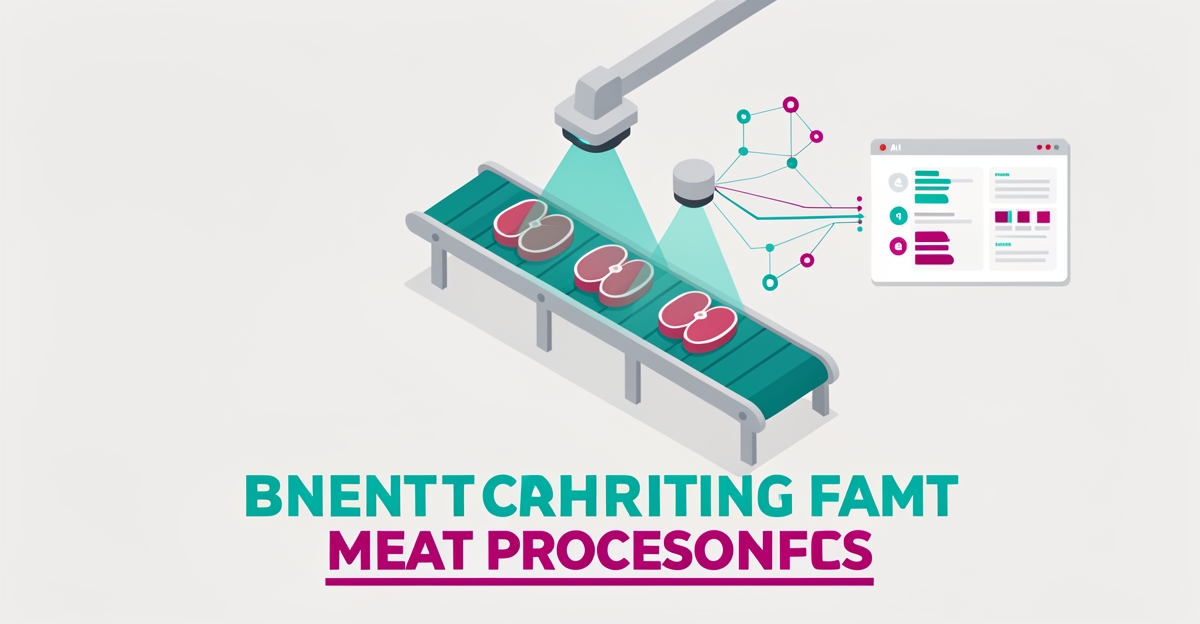
5 Signs Your Meat Processing Plant Is Ready for AI Integration
Key Facts
- AI-powered vision systems are widely used in meat processing to catch defects faster and more consistently than manual inspection alone
- Real-time monitoring paired with AI recommendations helps teams adjust line operations faster than periodic manual checks allow
- Predictive maintenance is a proven approach for reducing unplanned downtime in food manufacturing, with many plants reporting meaningful reductions within the first year
- Major meat processors have publicly credited AI-driven analytics with measurable yield gains in recent years
- AI-guided sorting and trimming tools are increasingly used to reduce waste on target cuts
- AIQ Labs has deployed 200+ multi-agent systems and runs 4 live SaaS products daily
Hire a team member that works 24/7 — for less than a part-time wage.
AI receptionists, SDRs, dispatchers and 99+ roles. Trained on your business, fully managed.
Not sure where to start? Ask our AI planner
Spotting the Readiness Signals: From Inconsistent Records to Recurring Quality Issues
Meat processing plants often overlook the subtle signs that indicate they're primed for AI transformation. These aren't just operational hiccups, they're clear signals that current systems are struggling to keep pace with modern demands. Recognizing these indicators early allows plant leaders to move beyond reactive fixes and toward strategic, technology-driven improvements.
One of the most telling readiness signals is inconsistent record-keeping across shifts, lines, or departments. When data is fragmented, handwritten, or entered sporadically, it becomes nearly impossible to establish the reliable, standardized inputs AI systems require for accurate analysis. Plants with patchy documentation often miss trends in yield, waste, or equipment performance that AI could otherwise uncover and act upon. AI-driven platforms with HACCP compliance features can typically generate timestamped digital records and pre-populate audit packages, turning a chronic weakness into a streamlined strength.
Recurring quality defects, such as inconsistent trim, contamination risks, or packaging flaws, also point to AI readiness. Manual inspection, while essential, is prone to fatigue, distraction, and subjective judgment, especially during high-speed production. AI-powered vision systems, by contrast, analyze products in milliseconds and flag defects with consistent precision across every shift. Facilities using such systems commonly report meaningful reductions in discard levels, directly linking better quality control to measurable yield improvements.
Manual process bottlenecks further reveal where AI can deliver immediate impact. Tasks like repetitive data entry, manual yield calculations, or shift-handover logging consume valuable labor hours and introduce variability. When workers spend excessive time on these routine activities, they have less capacity for higher-value problem-solving. AI augmentation doesn't replace workers, it frees them, shifting labor from reactive firefighting to proactive optimization. This is also where AI Employees come in: managed AI staff that handle the repetitive coordination work, scheduling, dispatching, logging, so your people don't have to.
A lack of real-time data visibility is another critical indicator. Without live insights into line speed, equipment health, or yield performance, managers operate on delayed information, making timely interventions nearly impossible. Real-time monitoring paired with AI recommendations enables faster adjustments, reduces queues, and keeps production flowing smoothly, something manual checks simply can't match at scale.
Finally, labor-intensive repetitive tasks such as continuous equipment monitoring or manual inventory counts signal that a plant is ready for smarter automation. These activities are not only tedious but also prone to human error over time. AI systems can take over condition monitoring and inventory tracking, while predictive maintenance helps reduce unplanned downtime. When these pains align, it's not just about adopting AI, it's about removing the barriers that have been holding the plant back. Start the Fit Check to see if your plant is ready for the next step.
Why These Signs Matter: The Operational and Financial Impact of AI Readiness
Spotting readiness signals is only useful if those signals translate into measurable operational gain. In meat processing, the signs that trigger an AI readiness assessment are the same pain points where AI delivers the fastest, most defensible returns.
When record-keeping is inconsistent and quality issues recur, AI-powered vision closes the gap between detection and action. Plants using vision systems commonly report fewer discards and better yield protection, and real-time monitoring compounds that effect by letting teams act on AI recommendations immediately rather than at the end of a shift.
Predictive maintenance turns chronic downtime into a controllable cost. Food manufacturers deploying predictive analytics typically report meaningful reductions in unplanned downtime within the first year, and in a plant running on thin margins, every avoided hour of stopped production protects both labor costs and throughput.
Yield and consistency improvements are already proven at scale. Major processors have publicly credited AI-driven analytics with measurable carcase yield gains in recent years, and AI-guided sorting is increasingly used to reduce trim waste on target cuts. The pattern is consistent: the plants that see returns are the ones that fixed their data foundations first.
These gains only materialize when data, processes, and culture are ready. That is why an AI readiness assessment focuses on the foundations that enable the outcomes above:
- Data infrastructure and consistent digital record-keeping to feed vision and predictive models
- Process maturity in quality control and maintenance to capture baseline variability
- Cultural openness to data-driven decision making and real-time alerts
Addressing readiness converts operational weaknesses into advantages, fewer discards, faster lines, and predictable uptime, rather than layering technology onto fragile workflows. AIQ Labs approaches this through a Workflow Build: we rebuild the one workflow that costs you the most, at a fixed price, in phases, so improvements land where they pay back first.
How AIQ Labs Assesses and Acts on Readiness: From Evaluation to Custom Implementation
AIQ Labs begins every engagement with a 2-minute Fit Check to ensure AI integration aligns with your plant's unique operational reality. From there, a free 30-minute strategy call digs into data infrastructure, process maturity, and cultural readiness, identifying gaps like inconsistent record-keeping or recurring quality issues that signal where AI can deliver the most immediate impact. This diagnostic phase is foundational, because plants with fragmented data systems or manual quality control often see the highest returns from targeted AI interventions.
We then design pilot projects focused on high-value, low-risk workflows, like automated defect detection on cutting lines or predictive maintenance for critical slicing equipment, using our Build in Milestones model. This phased approach lets you approve and pay for each phase as it ships, stopping anytime while retaining full ownership of everything built so far. By integrating AI outputs directly with existing MES and SCADA systems, we create a unified operational view that enables faster, data-driven decisions without disrupting current workflows. For plants ready to go further, an AI Operating System connects those workflows into one operating layer you own outright.
Throughout implementation, we prioritize true ownership and seamless adoption, no vendor lock-in, no black-box solutions. Our team manages change through role-specific training and continuous performance monitoring, ensuring AI becomes a trusted part of daily operations. With 200+ multi-agent systems deployed and 4 live SaaS products we run ourselves every day, AIQ Labs acts as your end-to-end partner, transforming readiness signals into measurable gains in yield, consistency, and operational resilience.
Still paying for 10+ subscriptions that don’t talk to each other?
We build custom AI systems you own outright. No vendor lock-in. Full control.
Not sure where to start? Ask our AI planner
Frequently Asked Questions
What are the top signs that my meat processing plant is ready for AI integration?
Can AI-powered vision systems reduce discard levels in meat processing?
Can AI really improve line speed in meat processing plants?
What kind of downtime reduction can predictive maintenance achieve in meat processing?
Will AI replace my workers in the meat processing plant?
How does AIQ Labs assess if my plant is ready for AI?
From Readiness Signals to Real Results: Your Next Move
If inconsistent records, recurring defects, manual bottlenecks, blind spots in real-time data, or labor-heavy routines sound familiar, your plant isn't behind, it's ready. These aren't just operational headaches; they're clear indicators that AI can deliver measurable returns where you need them most. The question isn't whether AI works in meat processing, it's whether your operation has the data infrastructure, process maturity, and cultural openness to capture those gains. AIQ Labs starts every engagement with a readiness conversation, evaluating exactly where AI will deliver the fastest, most defensible return before any technology gets deployed. If you're seeing two or more of these signs in your facility, the next step is straightforward: take the 2-minute Fit Check to map your biggest bottleneck and identify high-impact automation opportunities, no obligation, just clarity on what's possible. Prefer to talk it through? Book a free 30-minute strategy call or reach the team at [email protected].
Make AI your competitive advantage — not just another tool.
Strategy, implementation and ongoing optimization. One partner, end to end.
Not sure where to start? Ask our AI planner