5 Signs Your Microbrewery Needs AI for Inventory and Supply Chain
Key Facts
- AI-driven demand forecasting typically reduces overstock and stockouts by meaningfully cutting both excess inventory and production interruptions
- A typical 15-barrel brewery can spend 15-20 hours weekly on manual inventory tasks, a recurring labor cost that compounds year after year
- IoT sensors in fermentation tanks can track 20+ variables per batch, supporting tighter environmental control and better yields
- Phased implementations let breweries approve and pay per milestone, keeping risk low while proving ROI on the first workflow
- Automated quality alerts catch temperature and humidity drift before ingredients like hops and yeast degrade
- Real-time data analytics are increasingly used across brewing operations to reduce energy consumption and waste
Hire a team member that works 24/7 — for less than a part-time wage.
AI receptionists, SDRs, dispatchers and 99+ roles. Trained on your business, fully managed.
Not sure where to start? Ask our AI planner
The Hidden Cost of Manual Inventory in Microbreweries
The daily grind of manual inventory tracking in a microbrewery often starts with a clipboard and ends with costly surprises. Head brewers spend hours walking the facility, recording grain levels and hop temperatures in notebooks or disconnected spreadsheets, a process that can consume 15-20 hours weekly for a typical 15-barrel operation. This fragmented approach means data is frequently outdated by the time it reaches purchasing decisions, creating a reactive cycle where shortages and excess stock become the norm rather than the exception.
This inefficiency carries a tangible financial burden. The labor alone devoted to manual tracking represents thousands of dollars in avoidable annual costs for a 15-barrel brewery, money that could instead be reinvested into recipe development or taproom enhancements. Beyond labor costs, the lack of real-time visibility leads directly to stockouts that halt production and over-purchasing of perishable ingredients like hops and yeast, which degrade quickly and contribute to waste. These issues are compounded when breweries rely on multiple disconnected tools, one system for scheduling, another for sales, requiring manual data transfers that introduce errors and delay critical insights.
The consequences extend beyond immediate costs to impact long-term resilience and quality. Without accurate, real-time inventory data, brewers cannot anticipate seasonal demand shifts or optimize vendor orders, leading to inconsistent batch quality and missed opportunities for cost savings. Manual systems also hinder scalability, as the time required for inventory management grows linearly with production volume, trapping breweries in a cycle of inefficiency that stifles growth. For operations aiming to move beyond survival mode, the hidden cost of manual processes isn't just an accounting line, it's a barrier to consistent brewing and sustainable profitability.
How AI Transforms Brewery Supply Chains with Real-Time Intelligence
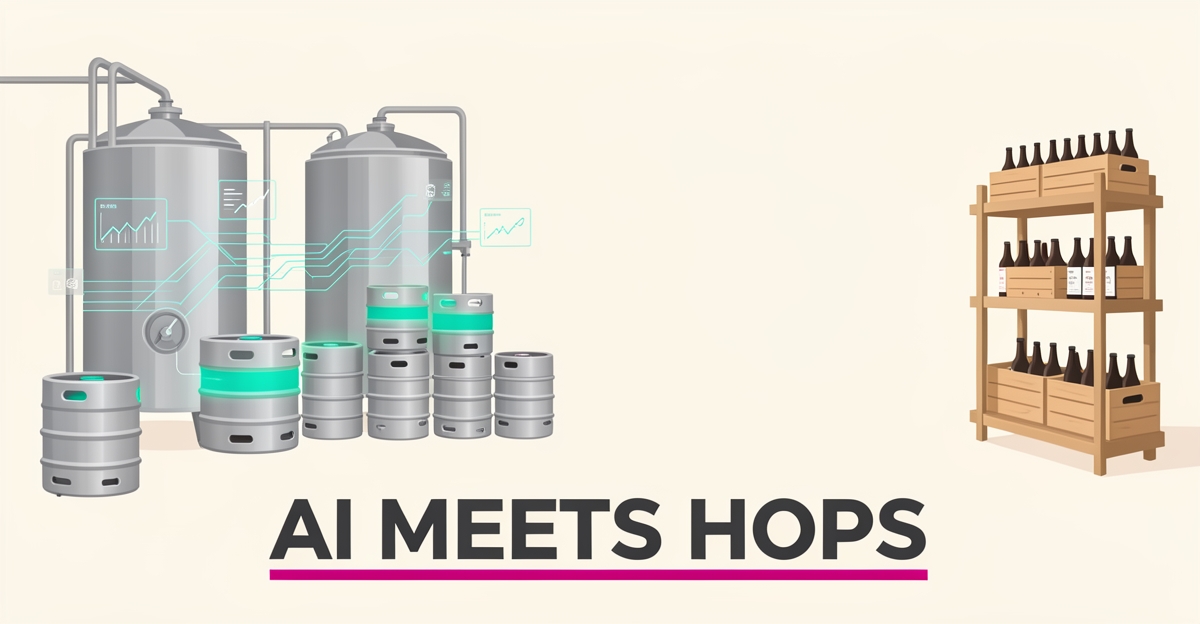
Real-time intelligence transforms brewery supply chains from reactive firefighting to proactive optimization. By installing smart sensors in grain silos, hop storage, and yeast units, breweries gain continuous visibility into inventory conditions, feeding live data into an AI system that learns consumption patterns and production cycles. This foundation enables predictive demand planning, automated procurement, and proactive quality alerts, turning inventory management into a strategic advantage. AI-driven demand forecasting directly addresses the chronic shortages and excess that plague manual systems, typically reducing both overstock and stockouts in operations that adopt it. The shift from reactive to proactive operations means breweries can anticipate ingredient needs before production schedules demand them, eliminating costly rush orders and spoilage.
Smart sensors can track 20+ variables in fermentation tanks, including temperature, pH, and gravity, supporting yield improvements through precise environmental control. When storage conditions drift outside optimal ranges, the AI system immediately alerts the head brewer, preventing quality degradation before it impacts the finished product. This proactive monitoring contrasts sharply with manual checks that often miss subtle variations until batches are already compromised. Automated purchase order generation further streamlines procurement, using live inventory levels and production forecasts to trigger orders only when needed, while AI analyzes vendor performance data to optimize supplier selection based on price, quality, and delivery reliability.
For microbreweries struggling with inconsistent tracking or excessive time spent on manual counts, this data-driven approach delivers measurable efficiency gains. A typical 15-barrel brewery allocates 15-20 hours weekly to inventory tasks that AI could automate, skilled labor that can be redeployed toward innovation and customer engagement rather than spreadsheet reconciliation. AIQ Labs rebuilds the one workflow that costs the most through AI Workflow Builds, ensuring sensor data flows seamlessly into existing brewery management platforms for unified operational control. The result is a supply chain that doesn't just react to problems, it prevents them before they occur, protecting margins and ensuring consistent product quality year-round.
From Reactive Firefighting to Proactive Control: The AI Implementation Path
Reactive firefighting is expensive when grain silos run empty mid-batch and hop cold storage is overstuffed with fading inventory. Microbreweries stuck in manual loops lose margin to stockouts, over-purchasing, and inconsistent ingredient tracking every week.
A low-risk path starts with visibility, not a full overhaul. Sensor installation and data centralization create the foundation for predictive control without disrupting brew schedules. This phased approach follows the Build in Milestones model, letting breweries approve and pay per phase while keeping everything built so far.
The first milestone is instrumenting storage. Weight, temperature, and humidity sensors go into grain silos, hop storage, and yeast refrigeration units for real-time monitoring. Data flows into a centralized AI system that learns consumption patterns, seasonal variations, and production cycles, replacing clipboards and hours-old spreadsheets with live decision data.
From that foundation, automation scales quickly and measurably.
- Centralize sensor data into one AI platform to learn usage and production cycles
- Set automated quality alerts for temperature and humidity drift before ingredients degrade
- Enable AI-generated purchase orders based on live inventory and scheduled brew runs
- Optimize vendor selection using pricing, quality ratings, and delivery history analysis
Breweries that move from reactive to proactive see quantifiable gains: less overstock, fewer stockouts, and lower rush-order and spoilage costs. For most production-scale operations, the labor savings alone, 15-20 hours weekly of tracking work that AI can automate, meaningfully offset the cost of the system, with returns typically becoming measurable within the first year to 18 months depending on production volume.
The economic case is clear when manual labor is accounted for. A typical 15-barrel brewery allocates 15-20 hours weekly to tracking tasks AI can automate. AI shifts that cost from repetitive checks to technology maintenance and subscription fees.
AIQ Labs helps implement AI-powered inventory systems that forecast demand, manage suppliers, and ensure consistent brewing operations year-round. The phased rollout keeps risk low while building proactive control into daily operations. Teams gain data-driven decision making instead of constant firefighting, and the system scales as production grows. For breweries ready to connect inventory, production, and sales into one layer, an AI Operating System extends the same phased, owned-outright approach across the whole operation.
Once the first workflow proves ROI, expansion to fermentation monitoring, predictive maintenance, and procurement optimization follows the same milestone structure.
Still paying for 10+ subscriptions that don’t talk to each other?
We build custom AI systems you own outright. No vendor lock-in. Full control.
Not sure where to start? Ask our AI planner
Frequently Asked Questions
How much time does manual inventory tracking actually cost a microbrewery?
How much does it cost to implement AI inventory management in a small brewery?
Can AI really prevent stockouts and over-purchasing of ingredients like hops and yeast?
Will AI replace my head brewer's judgment and hurt the artisanal quality of our beer?
What are the signs my brewery has outgrown manual inventory systems?
How long does it take to roll out an AI inventory system without disrupting brewing?
Brew Smarter, Not Harder: Your Next Step From Firefighting to Control
Manual inventory is quietly draining margin in microbreweries, hours of clipboards and spreadsheets, stockouts that halt production, and perishable hops and yeast wasted to over-purchasing. The warning signs are consistent: chronic shortages and surpluses, 15-20 hours weekly lost to tracking, inconsistent batch quality, and a supply chain that reacts instead of anticipates. Real-time sensors and AI change that dynamic by learning consumption patterns, triggering automated quality alerts, and generating purchase orders from live inventory and brew schedules. Start with visibility, not a full overhaul, instrument storage, centralize data, then layer automation in milestones you can approve and pay per phase. AIQ Labs helps microbreweries implement AI-powered inventory systems that forecast demand, manage suppliers, and protect consistent brewing year-round. See if your operation is a fit: start the two-minute Fit Check at https://aiqlabs.ai/apply and book your free 30-minute strategy call at https://aiqlabs.ai/book.
Make AI your competitive advantage — not just another tool.
Strategy, implementation and ongoing optimization. One partner, end to end.
Not sure where to start? Ask our AI planner