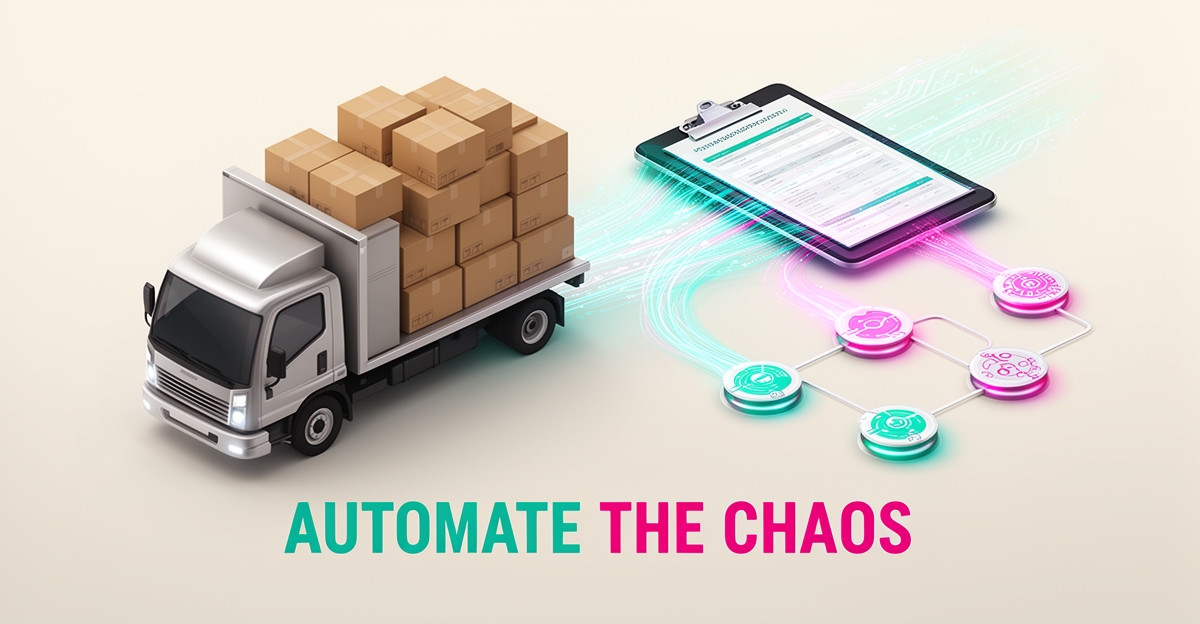
5 Signs Your Office Moving Business Needs AI for Workflow Automation
Key Facts
- Manual re-keying and repetitive tasks can drain a significant share of annual revenue for businesses using paper-based or siloed digital processes according to industry data
- Organizations leveraging AI-driven workflow automation typically report substantial reductions in error rates per research findings
- A majority of organizations have already automated at least one business function, with the global workflow automation market projected to grow steadily through 2030 based on market analysis
- Research on AI adoption suggests companies that redesign entire workflows around AI capabilities tend to outperform those merely optimizing individual tasks per a widely cited field experiment
- AI workflow automation enables agentic systems that can evaluate leads, enrich data from public records, and generate personalized follow-ups autonomously as demonstrated in intelligent automation use cases
- Most enterprises are actively using or planning to use low-code/no-code platforms for workflow automation, lowering the barrier to AI implementation per enterprise adoption trends
- Organizations implementing AI-powered workflows with clear governance and human-in-the-loop protocols report strong returns over multi-year horizons per AI workflow automation best practices
Hire a team member that works 24/7 — for less than a part-time wage.
AI receptionists, SDRs, dispatchers and 99+ roles. Trained on your business, fully managed.
Not sure where to start? Ask our AI planner
The Hidden Cost of Manual Chaos in Moving Operations
The hidden cost of manual chaos in moving operations isn't just about inconvenience—it's a direct drain on your bottom line. Missed appointments, documentation errors, and inconsistent client follow-ups are symptoms of a system that can't scale, and they're costing you more than you think. When teams spend hours re-keying data, chasing signatures, or correcting scheduling conflicts, that time translates into lost revenue and eroded trust.
Industry data suggests that manual re-keying and repetitive tasks can consume a meaningful share of annual revenue for businesses still relying on paper-based or siloed digital processes. For a moving company, this might look like duplicate data entry between intake forms, crew dispatch sheets, and billing systems—each handoff introducing risk of error and delay. These inefficiencies don't just slow you down; they actively undermine profitability by consuming resources that could be spent on growth or service improvement.
The operational toll extends beyond wasted time. Inconsistent follow-ups lead to no-shows and frustrated clients, while documentation errors result in incorrect inventory lists, billing disputes, or compliance risks. These aren't isolated mistakes—they're patterns that signal your processes have outgrown manual management. Competitors using AI-driven workflow automation typically see error rates drop substantially, turning what was once a liability into a competitive advantage.
- Missed appointments due to scheduling conflicts or poor communication
- Documentation errors in inventory lists, contracts, or invoices
- Inconsistent client follow-ups leading to lost opportunities
- Duplicate data entry across disconnected systems
- Time lost resolving preventable mistakes
The direction of the market is clear: a majority of organizations have already automated at least one business function, and intelligent automation is widely associated with significant cost reductions. For moving businesses still trapped in manual chaos, the gap isn't just about efficiency—it's about survival in a market where speed, accuracy, and client experience are non-negotiable. Every hour spent fixing preventable errors is an hour not spent building relationships, refining service, or capturing new market share. The question isn't whether you can afford to automate—it's whether you can afford not to.
Why Task Speed Isn't Enough: The Case for Workflow Redesign
Simply speeding up individual tasks like appointment scheduling or invoice processing with basic automation tools often leads to minimal gains and fails to address systemic inefficiencies. Research indicates that companies using AI solely to optimize isolated steps see little impact, barely moving the needle on overall performance. Industry studies confirm that task-level automation delivers only marginal improvements, leaving core workflow disruptions intact.
In contrast, businesses that redesign entire workflows around AI capabilities tend to see transformative results. A widely cited field experiment with hundreds of startups found that groups remapping their processes around AI-native execution discovered significantly more use cases and generated substantially higher revenue than those merely accelerating existing tasks. This research underscores that profitable AI implementation stems from process re-engineering, not technological speed alone.
For office moving businesses, this means reimagining workflows like client onboarding, crew dispatch, and post-move follow-up—not just digitizing paper checklists or speeding up calendar entries. Effective redesign eliminates redundant handoffs, enables parallel processing (such as generating quotes while verifying inventory), and shifts human effort toward exception handling and relationship-building. AI workflow automation thrives when treated as a foundational design challenge, allowing companies to uncover hidden opportunities and scale impact across departments. AIQ Labs' Workflow Builds rebuild the one workflow that costs your business the most—at a fixed price, in phases—so AI becomes a native part of operations rather than a superficial add-on. This approach drives sustainable efficiency gains and positions businesses to adapt as AI capabilities evolve.
From Rigid Rules to Intelligent Agents: What AI Automation Actually Does
Traditional automation operates on rigid "if-then" logic, executing predictable tasks like moving a file from one folder to another. However, it fails when exceptions arise or when inputs are unstructured, such as a client email describing a "fragile antique piano" that requires special handling.
In contrast, AI workflow automation utilizes machine learning (ML) and natural language processing (NLP) to interpret context, handle ambiguity, and make judgment calls. For a moving company, this means an AI system can read that same email and automatically categorize the request, assign it to a specialist team, and generate a specific packing protocol, whereas traditional automation might simply file the email or require manual intervention.
The shift toward intelligent automation is accelerating. According to industry research, a majority of organizations have already automated processes in at least one business function, with the global workflow automation market projected to keep expanding through 2030.
The evolution extends beyond simple classification to agentic AI systems capable of autonomous execution. Unlike standard workflows that follow a predefined blueprint, agentic AI allows systems to plan, execute, evaluate, and retry actions based on broader objectives. In a moving context, this means a system could evaluate a lead, determine it needs enrichment, fetch missing data from public records, generate a personalized follow-up email, and if the client does not respond, adjust the approach and try a different communication channel.
These systems manage complex multi-step processes while maintaining human oversight for exceptions:
- Evaluating leads and enriching data from public records
- Generating packing lists from inventory scans
- Coordinating crew logistics based on real-time availability
- Routing client inquiries to appropriate specialists
The impact of this technological shift is substantial. Research from monday.com indicates that most organizations report improved operational visibility after implementing automation, while IBM notes that AI agents can coordinate research, drafting, and review processes across multiple tools.
AIQ Labs builds these systems using multi-agent architectures that connect with existing CRMs, calendars, and communication platforms—with 200+ multi-agent systems deployed to date. This creates a hybrid operating model where routine execution is autonomous, but direction and validation remain human, ensuring that your office moving business maintains control while gaining efficiency.
By redesigning workflows around AI capabilities rather than simply speeding up existing tasks, businesses can achieve significant competitive advantages. As noted in recent studies, organizations that redesign workflows for AI tend to discover more use cases and outperform those that only optimize individual tasks.
A Practical Roadmap for Implementation Without Disruption
Begin by auditing your current workflows to pinpoint where manual tasks create the most friction, such as scheduling conflicts or documentation errors, rather than jumping straight to a technology solution. Many organizations struggle to identify which workflows to automate first, leading to scattered efforts that fail to scale per adoption research. Focus on high-impact, repetitive processes like client intake or invoice generation where AI can deliver immediate relief.
Next, leverage low-code platforms to bridge expertise gaps, allowing your team to design and test workflows visually without deep coding knowledge. With most enterprises actively using or planning to use low-code/no-code tools for automation, this approach democratizes AI implementation per enterprise adoption trends. Start small by building a sandbox pilot for one critical workflow—such as automated packing list generation from client emails—to validate the process safely before full deployment.
Finally, establish clear governance control points where human oversight is required, such as approving high-value quotes or handling exceptions, to maintain accountability and reduce risk. Once the pilot demonstrates success, scale incrementally—a phased approach is what AIQ Labs' Build in Milestones model is designed around, so each phase proves value before the next begins. This problem-first approach ensures AI enhances your operations without disrupting the core services your moving business relies on.
Building Competitive Advantage Before the Market Leaves You Behind
The window for competitive advantage is narrowing. With most executives viewing automation as a decisive edge and the market expanding steadily toward the end of the decade, moving businesses that delay risk falling permanently behind industry research suggests. Early adopters aren't just saving time—they're capturing outsized gains by redesigning workflows around AI rather than merely optimizing tasks per a widely cited field experiment.
Moving from pilot to transformation requires more than technology—it demands governance. Organizations that see strong returns from AI workflows embed clear control points, audit trails, and human-in-the-loop protocols to manage exceptions while scaling agentic systems AI workflow automation best practices confirm. Without these frameworks, internal friction grows and unauthorized "shadow" AI usage undermines trust and security organizational challenges data shows.
Success hinges on partnership. AIQ Labs guides businesses through the maturity curve—from pilots to embedded advantage—with three clear entry points: AI Employees for managed AI staff like receptionists, SDRs, and dispatchers at roughly 80% less cost than a human hire; Workflow Builds to rebuild your highest-cost workflow at a fixed price; and AI Operating Systems for a single connected operating layer you own outright. The path forward is clear: start with a focused pilot targeting your highest-friction workflow, establish governance from day one, and scale based on measurable outcomes. Those who act now won't just keep pace—they'll define the next standard in moving operations.
Still paying for 10+ subscriptions that don’t talk to each other?
We build custom AI systems you own outright. No vendor lock-in. Full control.
Not sure where to start? Ask our AI planner
Frequently Asked Questions
How do I know if my moving business is ready for AI workflow automation instead of just basic scheduling software?
What's the real difference between traditional automation and AI workflow automation for a moving company?
Is it true that just adding AI tools to our current scheduling process won't move the needle much?
What kind of ROI can a moving business realistically expect from AI workflow automation?
We don't have in-house AI expertise — can we still implement this without hiring a data science team?
How do we avoid the 'pilot purgatory' where automation projects stall before scaling?
Turn Chaos Into Competitive Momentum
The signs are clear: missed appointments, documentation errors, inconsistent follow-ups, duplicate data entry, and time lost fixing preventable mistakes aren't just operational headaches—they're profit leaks. The research consistently shows that businesses redesigning workflows around AI—not just speeding up tasks—outperform those that patch individual steps. For office movers still trapped in manual chaos, the cost of inaction is measured in lost trust, eroded margins, and widening gaps with competitors who are already automating intake, dispatch, and client communication with intelligent systems. The path forward doesn't require a massive overhaul. Start by auditing your highest-friction workflow—whether it's client onboarding or invoice generation—and run a focused pilot to validate impact. With the right partner, AI becomes a native part of your operations, not a brittle add-on, freeing your team to focus on relationships and growth. If you're ready to see where AI can create real, measurable value in your moving business, start with the 2-minute Fit Check, then book a free 30-minute strategy call to map your biggest bottleneck—no obligation, just clarity.
Make AI your competitive advantage — not just another tool.
Strategy, implementation and ongoing optimization. One partner, end to end.
Not sure where to start? Ask our AI planner