5 Signs Your STEM Camp Needs an AI-Driven Learning Dashboard
Key Facts
- Surveys of educators have found widespread belief that AI can improve student learning outcomes according to LinkedIn research
- Students using AI-powered study tools report significantly higher engagement with learning material according to Pearson data
- Pearson has reported that roughly 90% of students say they are likely or very likely to reuse AI-powered study tools per Pearson findings
- Pearson reported a sharp rise in AI study-tool sessions between fall 2023 and fall 2024 according to Pearson reporting
- AI tutoring tends to boost learning outcomes by increasing engagement and providing tailored feedback as noted in education research
- AI tutors tend to outperform traditional instruction when intentionally designed and aligned with pedagogy
Hire a team member that works 24/7 — for less than a part-time wage.
AI receptionists, SDRs, dispatchers and 99+ roles. Trained on your business, fully managed.
Not sure where to start? Ask our AI planner
When Spreadsheets Stop Telling the Real Story
By mid-session, most STEM camps already know which activities work. The problem is proving it, and doing so without spending Friday nights buried in spreadsheets.
When student progress lives in notebooks, instructor feedback lives in inboxes, and activity engagement lives in memory, decisions default to gut feel. That is where programs start losing ground.
Manual tracking creates three predictable blind spots:
- Student progress depends on who remembered to write it down, not on what actually happened.
- Instructor performance becomes visible only after a parent complaint or a strong review.
- Activity engagement gets judged by noise level, not by participation, completion, or learning signals.
The cost is not just administrative. It is instructional. Surveys of educators have found broad belief that AI can improve student learning outcomes, according to LinkedIn research. That matters because better outcomes depend on timely feedback, not end-of-session guesswork.
AI-driven tools also change how consistently students engage. Pearson has reported that students using AI-powered study tools show dramatically higher active reading rates, and roughly 90% say they are likely or very likely to use the tool again. For a STEM camp, that is the difference between hoping an activity landed and knowing it did.
Without a real-time dashboard, directors cannot see which robotics challenge is stalling, which coding module needs reinforcement, or which instructor needs support before week two. They also cannot spot patterns across groups, sessions, or age bands with any confidence.
That is why more programs are moving toward real-time analytics platforms that connect attendance, activity completion, and learner feedback in one place. AIQ Labs builds custom systems like this for education providers, typically through AI Workflow Builds that rebuild the one workflow costing you the most, at a fixed price and in phases, so staff stop chasing data and start acting on it.
Spreadsheets are fine for recordkeeping. They are much weaker as an early warning system. When a camp cannot see problems forming in real time, it usually finds out too late to fix them.
Five Data Signals That Demand an AI Dashboard
Five clear signals indicate when a STEM camp's current tracking methods fall short of supporting student success. Fragmented progress tracking makes it difficult to see individual growth patterns, especially when data lives in spreadsheets, paper logs, or disconnected apps. This lack of unity prevents educators from identifying learning gaps early or celebrating incremental wins. Surveys show broad educator confidence that AI can improve student learning outcomes, highlighting the role data-driven tools can play in closing these visibility gaps.
Uneven instructor impact often goes unnoticed without standardized metrics to compare facilitation quality across activities or sessions. When some instructors consistently drive higher engagement or concept mastery while others struggle, camps miss opportunities for targeted peer mentoring or professional development. AI-powered dashboards can surface these disparities by correlating instructor actions with student responses, enabling fair, evidence-based support. Students using AI-powered study tools report roughly 90% likelihood of reusing the tool, reflecting strong satisfaction when learning feels personalized and responsive.
Low activity engagement reveals itself through declining participation, rushed completions, or minimal interaction with hands-on projects, signs that content isn't resonating or challenge levels are misaligned. Without real-time feedback on which activities spark curiosity versus frustration, camps risk repeating ineffective designs. AI dashboards transform this guesswork into clarity by tracking time-on-task, interaction frequency, and learning signals from student inputs. Learners using AI-powered tools have shown markedly higher active reading rates, demonstrating how tailored experiences deepen involvement and persistence.
The inability to personalize learning paths leaves students either bored by review or overwhelmed by new concepts, undermining confidence and long-term interest in STEM. Fixed curricula ignore varying paces, prior knowledge, and learning styles, especially in diverse camp settings. AI excels here by continuously assessing performance and adjusting difficulty, hints, or activity type in real time, mirroring the adaptive logic seen in platforms like Pearson's AI study tools, which saw a sharp rise in AI sessions between fall 2023 and fall 2024 as students embraced individualized support.
Finally, a lack of predictive insights means camps react to problems after they've already impacted learning, such as noticing a student's disengagement only after they've stopped attending. AI dashboards shift this dynamic by forecasting trends like knowledge decay, motivation dips, or skill plateaus before they become critical. This foresight allows instructors to intervene with timely encouragement, alternative explanations, or peer collaboration, turning potential setbacks into teachable moments. For STEM camps aiming to move beyond anecdotal observation, these five signals point clearly toward adopting an AI-driven learning dashboard, not as a replacement for educators, but as a force multiplier for their expertise. AIQ Labs builds such custom analytics platforms, turning raw data into actionable intelligence that supports both student growth and instructional excellence.
How AI Dashboards Turn Camp Data Into Better Outcomes
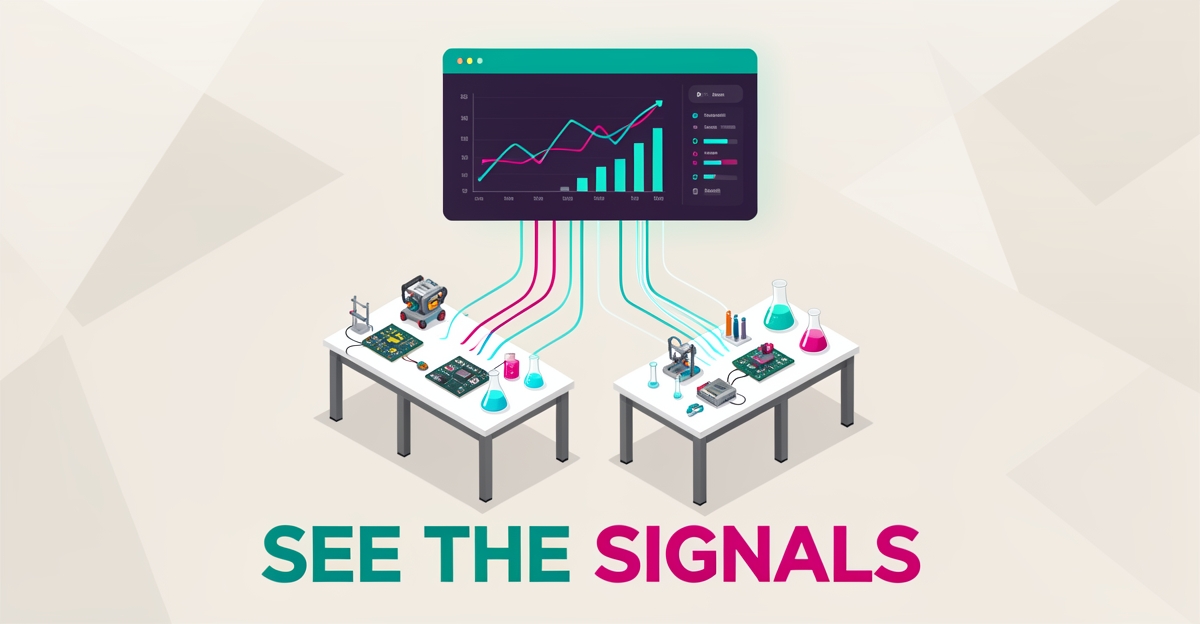
When a STEM camp shifts from intuition to evidence, every activity becomes a learning signal. AI-driven dashboards translate raw participation data into clear next steps for instructors, students, and program leaders alike. The result is a feedback loop that sharpens curriculum, surfaces struggling learners early, and rewards teaching practices that actually move the needle.
Research suggests that AI tutoring can boost learning outcomes by increasing engagement, providing tailored feedback, and supporting skills development. In practice, that means a dashboard can flag when a robotics team stalls on a specific concept, then recommend a targeted micro-lesson before frustration sets in. Pearson's data reinforces this: roughly 90% of students using AI-powered study tools say they're likely or very likely to use them again, and those tools are associated with substantially higher active reading rates.
Pedagogy alignment separates useful analytics from noise. Dr. Aviva Legatt notes that AI tutors tend to significantly outperform traditional instruction when intentionally designed, governed, and aligned with pedagogy. A well-architected dashboard reflects this principle, it surfaces metrics tied to learning objectives, not just vanity numbers like logins or time-on-platform. AIQ Labs applies this same design philosophy when building custom analytics platforms for education clients, ensuring every chart answers a pedagogical question.
Real-time monitoring creates compounding value across three dimensions:
- Student progress: mastery tracking against camp competencies, not just completion rates
- Instructor effectiveness: identifying which facilitation patterns correlate with deeper engagement
- Activity engagement: revealing which projects sustain curiosity versus which ones need redesign
The Microsoft Learn for Educators AI Technical Foundations Bootcamp demonstrates this model at scale, equipping faculty with hands-on experience using AI tools that support teaching and learning. STEM camps can adopt the same approach: instrument the learning environment, close the loop with instructors weekly, and iterate the program before the next cohort arrives.
From Insight to Implementation With a Custom AI Partner
Recognizing the need for data-driven tools is the first step; turning that insight into action requires a structured approach. Begin by assessing your camp's current readiness, evaluate existing systems, data collection practices, and staff comfort with technology to identify gaps and opportunities. This foundational step ensures any AI-driven dashboard aligns with your operational reality and learning objectives, avoiding misaligned investments.
Next, select tools that directly support your camp's specific goals, whether tracking skill mastery, measuring activity engagement, or evaluating instructor impact. Prioritize platforms offering real-time analytics, seamless integration with your current infrastructure, and customizable metrics, capabilities AIQ Labs delivers through its AI Workflow Builds and, for camps ready to go further, AI Operating Systems that connect everything into one layer you own outright. Implementation should follow a phased rollout: train staff using hands-on sessions and clear documentation, then monitor effectiveness through defined KPIs like student progress trends and engagement rates. Research shows roughly 90% of students using AI-powered study tools report being "likely" or "very likely" to use the tool again, underscoring the value of intuitive, supportive technology.
Finally, establish feedback loops to refine the dashboard based on instructor and student input, ensuring it remains a practical asset rather than an administrative burden. By partnering with a provider that emphasizes ownership, scalability, and ongoing optimization, such as AIQ Labs' Start Monthly, Build in Milestones, or Own It Outright payment models, you transform insight into sustainable improvement, empowering your camp to make confident, evidence-based decisions that enhance every learner's journey.
- Assess current technology readiness and data infrastructure
- Select AI tools aligned to specific camp goals and pedagogy
- Train staff and monitor effectiveness with defined KPIs
- Iterate based on feedback to optimize ongoing use
Still paying for 10+ subscriptions that don’t talk to each other?
We build custom AI systems you own outright. No vendor lock-in. Full control.
Not sure where to start? Ask our AI planner
Frequently Asked Questions
How do I know if my STEM camp has outgrown spreadsheets?
What specific signs indicate our instructors need better performance tracking?
Do AI learning dashboards actually improve student outcomes?
Will students actually use AI-powered learning tools, or is this just another tech fad?
How does an AI dashboard help with curriculum planning before problems become crises?
What should we look for when implementing an AI analytics platform for our camp?
Stop Guessing, Start Knowing: Your Camp's Data Is Ready to Work
The signs are hard to miss once you know what to look for: fragmented progress tracking, uneven instructor impact, activities you can't measure, students stuck on one-size-fits-all paths, and problems you only discover after they've done their damage. Any one of them means your camp is making decisions on gut feel, and with broad educator confidence in AI's potential to improve learning outcomes, the tools to fix it are no longer experimental. The path forward is practical: assess your current data infrastructure, choose tools aligned to your pedagogy, roll out in phases with clear KPIs, and refine based on instructor feedback. That's exactly the approach AIQ Labs takes when building custom, real-time analytics platforms for education providers, systems built in phases and owned outright, integrated with the tools your staff already use, so data becomes an early warning system instead of a Friday night spreadsheet session. Not sure where your camp stands? Start with the two-minute Fit Check at aiqlabs.ai/apply, then book a free 30-minute strategy call, a real working session with an AI engineer to map your biggest bottleneck. If there isn't a clear win, we'll tell you that too.
Make AI your competitive advantage — not just another tool.
Strategy, implementation and ongoing optimization. One partner, end to end.
Not sure where to start? Ask our AI planner