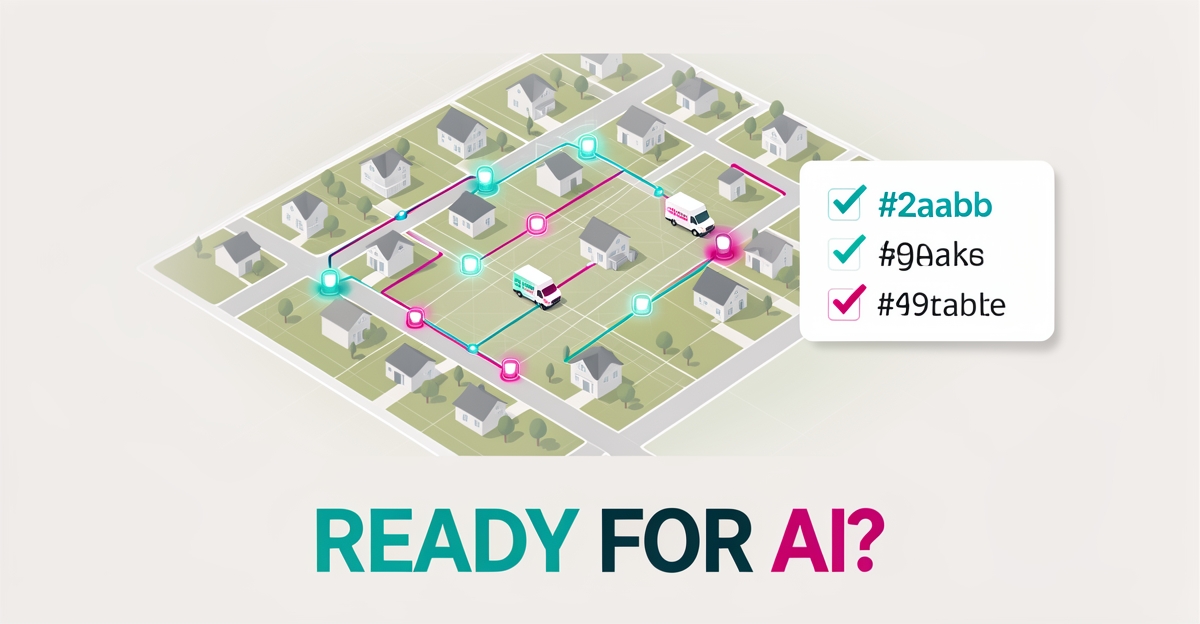
5 Signs Your Weed Control Business Is Ready for AI-Driven Field Scheduling
Key Facts
- Industry analyses consistently find that only a small minority of organizations have successfully deployed AI agents at scale, even as adoption projections keep climbing.
- Analyst research (including widely cited Gartner projections as of late 2026) suggests a large share of agentic AI projects get canceled due to unclear business value or missing risk controls.
- AI pattern recognition has documented limits: systems can perform near-perfectly on familiar data yet misclassify unfamiliar patterns entirely, which is why human-in-the-loop controls matter.
- If a human cannot explain the scheduling logic, it is unrealistic to expect an AI agent to execute it reliably.
- Overtime costs creeping above 15% of weekly payroll typically signal that manual scheduling is breaking down in field service operations.
- Most organizations struggle to be run by machines not because the AI tools are weak, but because the underlying processes are fragmented.
Hire a team member that works 24/7 — for less than a part-time wage.
AI receptionists, SDRs, dispatchers and 99+ roles. Trained on your business, fully managed.
Not sure where to start? Ask our AI planner
The Scheduling Pain Signals Weed Control Teams Can't Ignore
When your weed control teams are constantly firefighting scheduling conflicts, it's a clear sign manual processes are reaching their breaking point. Inconsistent routing, unexpected overtime, and delayed service requests aren't just daily frustrations, they're symptoms of fragmented data and human-dependent decision making that AI-driven field scheduling can resolve.
Without proper preparation, AI implementation risks scaling confusion rather than efficiency, particularly when decision ownership isn't clear and data flows are unreliable. For weed control businesses, this means evaluating whether scheduling logic is well-documented and if human operators can consistently explain current routing approaches before automation can deliver reliable results.
The most telling scheduling pain signals include technicians repeatedly backtracking between jobs, service requests sitting unresolved for more than 24 hours, and overtime costs creeping above 15% of weekly payroll. These issues stem from disconnected systems where field conditions, crew availability, and job priorities aren't synchronized in real time, a critical gap, because AI agents require a single source of truth to function effectively.
- Inconsistent routing causing technicians to drive past completed jobs to reach new ones
- High overtime linked to last-minute schedule changes and inefficient sequencing
- Delayed service requests due to manual dispatch bottlenecks
- Frequent customer complaints about missed or late appointments
- Crew idle time overlapping with rushed job completion elsewhere
When these patterns emerge, it indicates that scheduling decisions exist primarily in employees' heads rather than in documented, accessible processes, a fundamental barrier to AI success. The principle is simple: if humans cannot explain the scheduling logic, AI agents cannot execute it reliably. Addressing these pain points through AI-driven field scheduling transforms reactive firefighting into proactive, optimized operations that improve coverage and profitability.
Why AI Readiness Beats AI Hype for Field Operations
The AI industry has a dirty secret: most AI projects fail not because the technology is weak, but because the organization isn't ready for it. For weed control businesses eyeing AI-driven field scheduling, that distinction matters more than any feature list or demo.
Consider the gap between hype and reality. Adoption projections keep climbing, analysts expect agentic AI to be widespread across industries by 2028, yet as of late 2026, only a small fraction of organizations have deployed AI agents successfully. Even more sobering, Gartner has projected that a large share of agentic AI projects will be canceled by 2027 due to lack of clear business value or missing risk controls.
The lesson? Organizational readiness beats technical capability every time. The blunt version: most organizations are "structurally incapable of being operated by a machine", not because the tools don't exist, but because the underlying processes are a mess.
For a weed control operation, readiness looks less like buying software and more like answering hard questions:
- Data readiness: Do you have one reliable operational truth, or is customer info, service history, and route data scattered across disconnected systems?
- Decision readiness: Is it clear who decides what gets scheduled, rescheduled, or escalated to a human?
- Process readiness: Can your team actually explain why jobs are assigned the way they are today?
- Governance readiness: Would you have audit trails showing which decisions were automated and who was accountable?
That third question is the one that trips up most field service businesses. If a human cannot explain the logic, it is unrealistic to expect an agent to execute it. AI built on top of poorly documented, fragmented processes doesn't scale efficiency, it scales confusion at a speed the business cannot handle. A scheduling system trained on inconsistent manual dispatching will simply automate the inconsistency.
There's also a related risk worth naming: AI pattern recognition has real limits. Systems can score near-perfect accuracy on familiar data and still misclassify unfamiliar patterns entirely, which is why experienced practitioners insist on human-in-the-loop controls for critical decisions.
This is why a thoughtful approach matters. AIQ Labs begins every engagement with an AI readiness assessment, evaluating your current technology stack, data infrastructure, and team capabilities before recommending any automation. If your scheduling logic lives only in a dispatcher's head, the first step is documenting it, not deploying agents on top of it. For operations that want a managed path, our AI Employees handle dispatch and field coordination on that documented foundation.
A useful gut check: "If we disappeared tomorrow, is our data foundation and decision-making process documented well enough into a clear digital twin that a machine could replicate it, or does our business context only exist in our employees' heads?"
If your honest answer is the latter, that's not a reason to avoid AI. It's a sign you need a partner who will build readiness first, and only then let the technology do what it does best.
Five Readiness Checks Before Automating Field Routes
Before you automate a single route, you need to know whether your operation is actually ready for it. The stakes are real: as of late 2026, analyst research suggests most agentic AI projects still fail or get canceled due to unclear business value or missing risk controls, not because the models can't do the work.
The difference between success and failure almost always comes down to preparation. Here are the five readiness checks that determine whether AI-driven scheduling will optimize your weed control routes or simply automate your existing chaos.
Data readiness is the foundation. AI scheduling requires one reliable source of truth, accurate records of service locations, treatment histories, technician availability, and job completion status. If your crew leads track jobs on paper while your office uses a spreadsheet, that fragmentation will break any automation attempt.
Decision readiness means your scheduling logic exists outside of one person's head. Ask yourself: can you write down exactly how you decide which technician takes which route, which jobs get priority after rain delays, and when to escalate a scheduling conflict? If a human cannot explain the logic, an agent cannot execute it.
Process readiness requires honest evaluation of your current workflows. Map how a service request moves from initial call to completed treatment. Identify every manual handoff, every phone call confirmation, every whiteboard update. These are the friction points AI can eliminate, but only if you document them first.
Before moving forward, verify these operational markers:
- Your scheduling rules are written down and consistently followed
- Job completion data flows into a central system the same day
- You can measure current overtime hours and route inefficiencies
- Someone owns the decision of what gets automated versus escalated
Governance readiness matters more than most field service businesses expect. AI systems need audit trails and human oversight, especially when patterns get ambiguous. Pattern recognition can look flawless on familiar data and still fail on unfamiliar inputs, which is why human-in-the-loop controls are standard practice for critical decisions.
Finally, commercial readiness ties everything to margin. You should know exactly what inefficient routing costs you in fuel, overtime, and missed appointments, because that baseline is how you measure whether automation delivers real returns.
Businesses that pass these five checks are positioned to move quickly. AIQ Labs builds custom scheduling systems on exactly this kind of documented foundation, through focused Workflow Builds that rebuild the one workflow costing you the most, or a phased AI Operating System you own outright. Our two-minute Fit Check is designed to surface which of these readiness areas still need work before any build begins.
From Manual Dispatch to AI-Driven Field Scheduling
Manual dispatch works until growth makes it break. Inconsistent routes, overtime creep and delayed service requests are signals that scheduling logic has outgrown spreadsheets and phone calls.
Moving to AI-driven field scheduling starts with organizational readiness, not software. Without clear decision ownership, trusted data flows and operational accountability, AI can scale confusion at a speed the business cannot handle.
The first practical step is mapping decision ownership and trusted data sources. Teams document who approves routes, how exceptions are handled, and where the single source of truth lives for crews, equipment, weather and completed work. This creates the digital twin foundation that AI needs to operate safely.
From there, pilot a narrow high-volume workflow where ROI is obvious. A focused slice lets you prove value with measurable outcomes before expanding. Steps that reduce risk include:
- Map decision ownership across dispatch and field teams to understand how routing decisions are currently made
- Identify trusted data sources for each decision point and establish thresholds for human escalation
- Build a digital twin slice of just that process to prove it works in a measurable way
Data readiness is the foundation. Readiness frameworks consistently start with one reliable operational truth across all systems and clear ownership of what is automated versus escalated, and as of late 2026, most organizations still haven't crossed that line, which is why so many agentic AI projects stall.
Pattern recognition limits reinforce the need for human oversight. Systems can reach very high accuracy on familiar data yet fail completely on unfamiliar patterns, and small changes to inputs can produce confident but mistaken outputs. The takeaway is that there needs to be a human in the loop for reliable performance.
AIQ Labs supports this path through managed AI Employees for dispatch and field coordination, targeted Workflow Builds, and phased AI Operating Systems you own outright. The approach is deliberately conservative: start narrow, validate with real operations data, and expand gradually after proving success in limited scope. Custom systems learn service patterns and optimize scheduling for better coverage and profitability while keeping decision logic transparent and auditable.
With clear ownership, clean data and a contained pilot, weed control businesses can move from reactive manual dispatch to consistent, scalable field scheduling.
Still paying for 10+ subscriptions that don’t talk to each other?
We build custom AI systems you own outright. No vendor lock-in. Full control.
Not sure where to start? Ask our AI planner
Frequently Asked Questions
What are the signs my weed control business is ready for AI-driven scheduling?
Why do most AI scheduling projects fail?
Do I need to document my scheduling process before using AI?
What data do I need before automating field routes?
Can AI make scheduling decisions without human oversight?
How should a weed control business start with AI scheduling?
Stop Firefighting, Start Forecasting: Your Path to Smarter Scheduling
If your weed control teams are drowning in backtracking routes, mounting overtime, or delayed service requests, the issue isn’t just a scheduling headache, it’s a readiness gap. As analyst research consistently shows, most AI projects fail due to unclear processes or missing governance, not weak technology. AI won’t fix broken workflows; it will amplify them. But when you document your scheduling logic, centralize your data, and clarify decision ownership, you create the foundation where AI-driven field scheduling can truly optimize routes, reduce idle time, and improve coverage. The first step isn’t buying software, it’s assessing where your operation stands. Take the two-minute Fit Check to see which readiness areas need work before automation delivers real value. Then, book your free 30-minute strategy call to map your biggest bottleneck and explore how AIQ Labs can help you build a scheduling system that learns your patterns, not your chaos. Questions first? Reach us at [email protected].
Make AI your competitive advantage — not just another tool.
Strategy, implementation and ongoing optimization. One partner, end to end.
Not sure where to start? Ask our AI planner