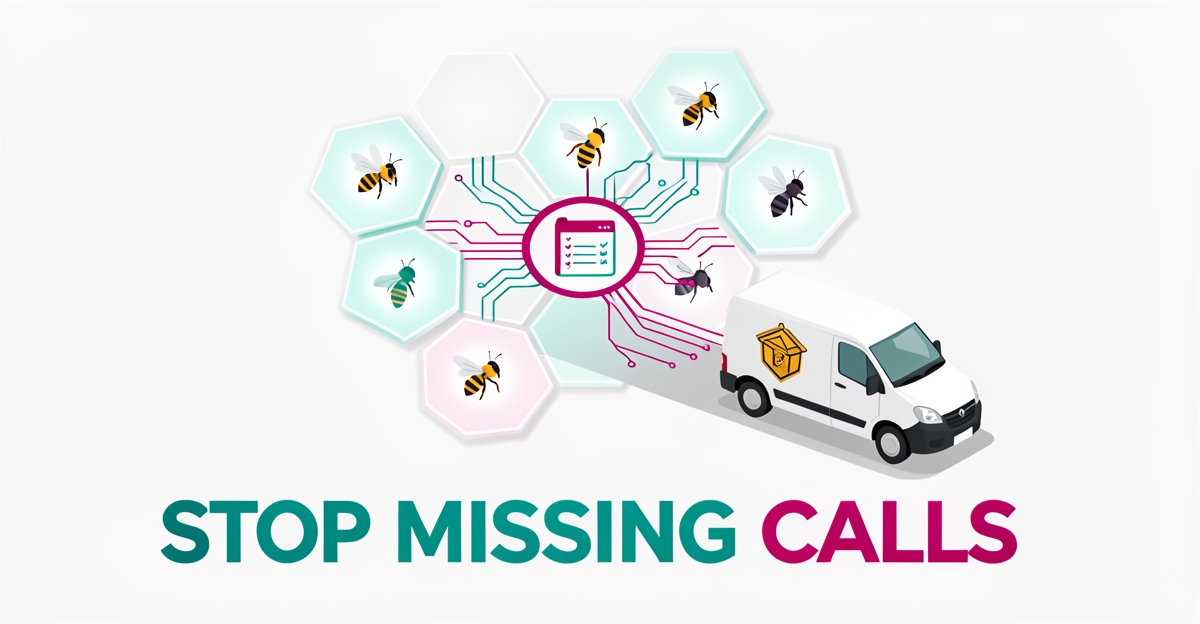
7 Signs Your Bee & Wasp Removal Business Needs AI for Service Tracking
Key Facts
- AIQ Labs has deployed 200+ multi-agent AI systems, demonstrating proven orchestration at production scale.
- AIQ Labs runs 4 live SaaS products daily, so its automation patterns are tested on real operations, not just client projects.
- AIQ Labs offers managed AI staff across 99+ roles, including receptionists, SDRs, and dispatchers, typically at roughly 80% less cost than a human hire.
- AI voice agents handle natural conversations with real-time recognition and can execute workflow steps mid-call.
- Three payment models fit different risk tolerances: Start Monthly, Build in Milestones, and Own It Outright.
- AIQ Labs' AI Workflow Builds rebuild the one workflow that costs the most, at a fixed price, delivered in phases.
- AI Operating Systems connect intake, dispatch, and customer communication into one owned operating layer, built in phases.
Hire a team member that works 24/7 — for less than a part-time wage.
AI receptionists, SDRs, dispatchers and 99+ roles. Trained on your business, fully managed.
Not sure where to start? Ask our AI planner
The Hidden Cost of Manual Dispatch Chaos
Every missed call in a bee and wasp removal business is revenue that never comes back. When a homeowner discovers a hive on their property, they call the first company that answers, and if nobody picks up, the job goes to a competitor before you even knew it existed.
That's the brutal math of emergency pest removal. The work is urgent, seasonal, and highly competitive, which means the window between a customer's call and their booking decision is measured in minutes, not days. Yet many operations still run dispatch through sticky notes, whiteboards, and a technician's voicemail inbox, creating blind spots that silently bleed revenue.
Consider the parallel from warehouse automation. In fulfillment systems, when a single component like a conveyor breaks down, the entire line usually has to stop, creating a backlog of orders and unhappy customers. A manual dispatch desk works the same way: it's a single point of failure. One dispatcher out sick, one phone left unanswered during a lunch break, and the whole pipeline of incoming jobs stalls, just when wasp season peaks.
The costs of these operational blind spots compound quietly:
- Missed or unreturned calls that convert directly into competitor bookings, with no record the lead ever existed
- Delayed technician dispatch that turns a same-day removal into a next-day apology call
- No real-time visibility into where crews are, which jobs are done, and which customers are still waiting for updates
- Double-booked time slots and wasted drive time that shrink the number of jobs each technician can complete per day
What makes this hard to fix is that none of these failures show up on a profit-and-loss statement. There's no line item called "jobs we never knew about." The damage only surfaces indirectly, flat revenue during peak season, technicians idling between jobs, and customers who never call back.
The fix is increasingly accessible. As of late 2026, a local service company can deploy internal booking and dispatch tools without enterprise-level investment, and the primary value lies not just in automation but in time savings, cost reduction, and improved coordination. The applied AI ecosystem has matured to the point where always-on intake and routing are standard capabilities, not experimental projects.
This is where AI-driven workflow automation changes the equation. Instead of a human dispatcher as the bottleneck, an AI system can answer every call, log each service request, assign the nearest available technician, and push real-time status updates to the customer, all without anyone touching a whiteboard. At AIQ Labs, this pattern has been proven across 200+ multi-agent systems deployed in the field, and the company runs 4 live SaaS products daily, so the automation patterns are tested on real operations before they ever reach a client.
The principle is simple. Every hour a call sits unanswered or a job sits undispatched is an hour of revenue at risk. Manual dispatch doesn't just slow you down, it makes your losses invisible, and invisible losses are the most expensive kind. For bee and wasp removal businesses, closing that gap is often the single fastest path to capturing revenue that was already coming your way.
Seven Red Flags Your Service Tracking Is Failing
Missed after-hours inquiries signal that your pest removal business is operating beyond manual capacity. When customers call outside business hours and receive no response, whether it's a late-night wasp nest emergency or a weekend bee swarm report, those leads often go to competitors who offer 24/7 availability. Every unanswered after-hours call is a booking you'll never know you lost.
Inconsistent follow-ups on service requests erode customer trust and repeat business. When technicians forget to check in after treatment or dispatch teams lose track of scheduled visits, clients perceive disorganization, even if the actual pest control work was effective. Manual tracking methods like spreadsheets or paper logs inevitably lead to human error. Without reliable triggers for post-service communication, businesses miss chances to upsell preventative plans or gather critical feedback.
Scheduling conflicts between technicians and client availability waste time and fuel while damaging professional reputation. Double-booked appointments or technicians arriving at incorrect addresses stem from siloed calendars and manual coordination, especially problematic during peak swarm seasons when demand fluctuates hourly. AI-driven dispatch eliminates these friction points by dynamically optimizing routes and technician assignments based on real-time location, skill set, and urgency.
Unresolved service tickets piling up in queues indicate a breakdown in workflow visibility. When completed jobs aren't marked as closed or follow-up actions aren't triggered, managers lack accurate data on team performance and workload distribution. This blind spot makes it impossible to identify bottlenecks, such as certain technicians consistently falling behind on paperwork or specific job types taking longer than estimated.
Technicians wasting time on administrative tasks instead of field work directly reduces service capacity and increases labor costs. When staff spend hours each day logging calls, updating job statuses manually, or chasing down missing information, fewer hours remain for actual pest removal, effectively shrinking your operational bandwidth without adding headcount. Automation of routine data entry and status updates frees technicians to focus on high-value activities like inspections and treatments, where their expertise delivers the most customer value.
Lack of real-time client communication leaves customers anxious and uninformed during service windows. Clients today expect proactive updates, such as technician arrival estimates, treatment progress notifications, or safety advisories, yet manual processes rarely support this level of engagement. When customers must call repeatedly for basic status updates, satisfaction drops and the likelihood of negative reviews rises.
Inability to scale during seasonal demand surges exposes the fragility of manual tracking systems. Bee and wasp removal businesses typically face sharp increases in requests during spring and summer months, overwhelming teams that rely on spreadsheets or shared calendars. Without intelligent workflow automation to handle intake spikes, prioritize emergencies, and redistribute workload dynamically, businesses either turn away revenue or compromise service quality through rushed jobs and overextended staff. Scalable AI systems absorb these fluctuations seamlessly, maintaining consistent response times and service standards year-round.
How AI Transforms Service Requests into Scheduled Jobs
Missed calls and delayed dispatch cost bee and wasp removal teams revenue every week. AI-driven workflow automation turns fragmented service requests into a closed-loop operation that captures, routes, and updates jobs in real time.
Instant capture removes the first leak. Voice and chat agents answer inbound calls 24/7/365, qualify the issue, and log the request without human handoff. The data flows directly into the dispatch system, eliminating manual entry and the follow-up gaps that create lost opportunities.
Intelligent assignment follows immediately. The system matches location, technician expertise, and current workload to the right job, then pushes the work order with maps, history, and safety notes. Real-time job status visibility keeps customers informed automatically, reducing status calls and improving trust.
Automation also scales with demand. Because modern AI agents handle unlimited simultaneous conversations, a surge in swarm-season calls no longer means a surge in missed opportunities, the intake layer simply absorbs the volume while your crew focuses on the work.
The practical mechanics AIQ Labs applies in field service deployments include:
- Instant lead capture from phone, web, and SMS with natural language intake
- Dynamic technician assignment based on proximity, skills, and live capacity
- Automated customer updates at booking, dispatch, arrival, and completion
- Real-time dashboard visibility for owners and crews
Flexibility matters as operations change. Modular automation can be reconfigured as routes, territories, and service offerings evolve, at a fraction of the cost of rigid, fixed systems. That adaptability is exactly what seasonal businesses need: the same system that handles a quiet November handles a packed June without retooling.
For bee and wasp removal, the result is fewer missed calls, faster first response, and a transparent customer experience that protects reputation during peak season. If you want to see how this looks in practice, AIQ Labs' AI Employees cover dispatcher and receptionist roles out of the box, and a targeted Workflow Build can rebuild the single leakiest workflow in your operation first.
From Reactive to Proactive: The Implementation Roadmap
Missed calls and delayed dispatches are the cost of staying reactive. Bee and wasp removal teams that wait for manual follow-ups lose jobs to faster competitors while technicians sit idle.
A phased rollout keeps operations running while AI takes over the repetitive tracking work. Start with a narrow workflow fix, prove value, then expand. The goal is proactive service tracking without a disruptive rebuild.
Phase one maps the current request-to-dispatch flow and installs an AI Employee for intake and scheduling. The agent answers calls, qualifies leads, books appointments, and updates the CRM in real time. Integration with existing tools happens via API connections to phone, calendar and dispatch software, so staff keep using familiar screens.
Phase two adds real-time assignment and client updates. The AI Employee monitors job status, reassigns technicians based on location and availability, and pushes SMS updates automatically. This reduces manual data entry and missed follow-ups that create lost opportunities.
Phase three scales to a full AI Operating System, one connected operating layer covering intake, dispatch, billing triggers, and reporting, built in phases and owned outright. AIQ Labs delivers this through three payment models: Start Monthly for teams that want low commitment, Build in Milestones for fixed-scope projects, and Own It Outright for businesses that want the system as a permanent asset with no ongoing licensing.
A practical roadmap looks like this:
- Audit and map the service request to completion workflow and identify the single highest-leak point
- Deploy one AI Employee for dispatch and scheduling with tool integrations and human-in-the-loop guardrails
- Measure response time, missed calls and technician utilization for 30 days before expanding to proactive client updates
- Scale to a connected operating layer with owned custom systems and continuous optimization
Businesses that move from reactive to proactive stop chasing missed opportunities and start controlling them. Implementation without disruption is possible when AI works alongside existing teams, learns from real operations, and delivers measurable ROI before long-term commitment.
Still paying for 10+ subscriptions that don’t talk to each other?
We build custom AI systems you own outright. No vendor lock-in. Full control.
Not sure where to start? Ask our AI planner
Frequently Asked Questions
How much revenue am I actually losing from missed calls?
Can AI really handle emergency pest removal dispatch without human oversight?
What happens during peak season when call volume spikes?
How long does it take to implement AI dispatch for a pest control business?
Will AI dispatch work with my existing scheduling software and CRM?
What's the actual ROI compared to hiring more dispatchers?
Stop Letting Swarm Season Slip Through the Cracks
The seven warning signs outlined above, from missed after-hours calls to seasonal scaling failures, all point to the same underlying problem: manual service tracking creates invisible revenue leaks that compound during your busiest months. When every missed call represents a job lost to a competitor and every delayed dispatch damages hard-earned trust, the operational gaps become existential threats to growth. The good news is that closing these gaps no longer requires enterprise-level investment or disruptive overhauls. The AI infrastructure needed to automate intake, dispatch, and customer updates is now accessible to local service businesses, with the primary value lying in time savings, cost reduction, and improved coordination. If you recognized your own operation in three or more of these red flags, the next step isn't a massive commitment, it's a conversation. AIQ Labs offers a two-minute Fit Check at the application page followed by a free 30-minute strategy call to map your specific bottleneck and identify whether an AI Dispatcher or workflow automation makes sense for your business. No pressure, no sales pitch, just clarity on whether you can capture the revenue that's currently slipping away.
Make AI your competitive advantage — not just another tool.
Strategy, implementation and ongoing optimization. One partner, end to end.
Not sure where to start? Ask our AI planner