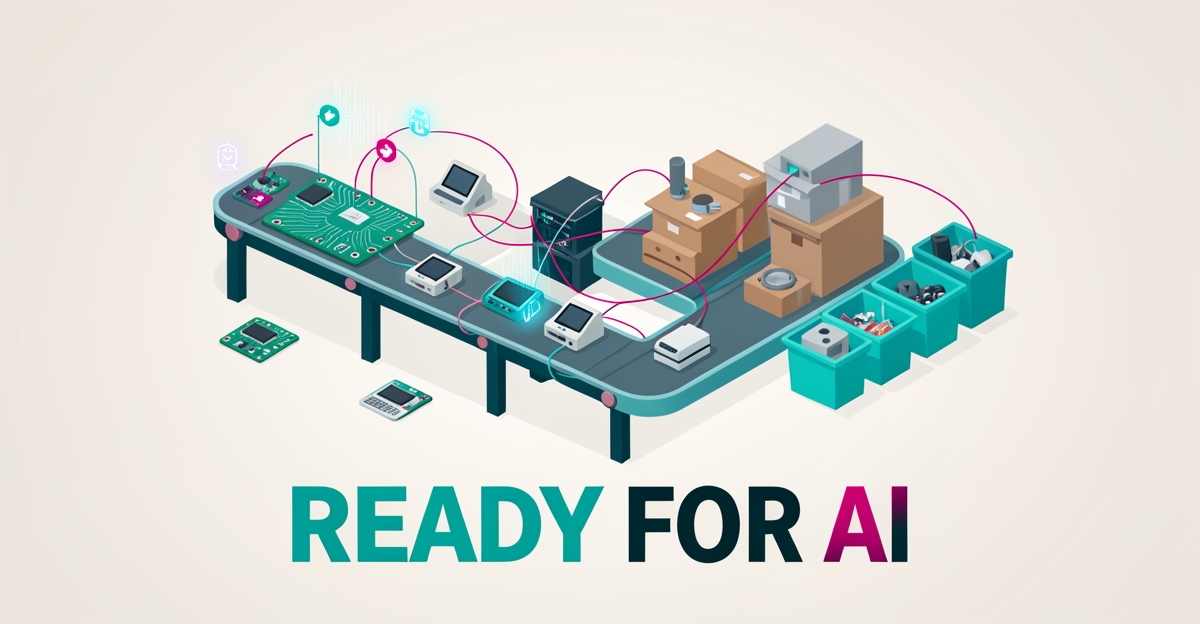
7 Signs Your E-Waste Recycling Company Is Ready for AI-Driven Workflow Automation
Key Facts
- Industry research estimates contamination in recycling streams adds roughly $150 million in inefficiencies annually according to industry research
- The AI in Waste Management market is projected to reach USD 28.4 billion by 2034 with a 30.8% CAGR per market analysis
- Waste sorting and segregation captured more than 38% of the AI waste management market value in 2025 as reported by industry data
- Software solutions commanded over 42.5% of the AI in Waste Management market revenue in 2023 per market research
- The AI in Recycling Automation market was valued at roughly USD 4.2 billion globally in 2024 per market analysis
- AI-driven process optimization is widely reported to improve throughput and reduce labor costs per market analysis
- AIQ Labs has deployed 200+ multi-agent systems and runs 4 live SaaS products of its own daily
Hire a team member that works 24/7 — for less than a part-time wage.
AI receptionists, SDRs, dispatchers and 99+ roles. Trained on your business, fully managed.
Not sure where to start? Ask our AI planner
The Hidden Cost of Manual E-Waste Operations
The e-waste tide is rising faster than operations can keep up. Manual processes that worked at smaller scale are now creating compliance risk and margin erosion.
Global municipal solid waste is projected to hit 3.4 billion tonnes by 2050, a 70% surge from current levels. For e-waste recyclers, that volume translates into more pickups, more data, and more chances for error. The pressure shows up first in the daily workflow.
Scheduling pickups remains a bottleneck when routes are built in spreadsheets and confirmed by phone. Tracking deliveries relies on handwritten logs and delayed updates, so customers wait for status and teams chase paperwork. Managing customer data across intake forms, certificates of destruction, and compliance reports creates duplicate entry and version confusion.
These friction points carry a measurable cost. Industry research estimates contamination in recycling streams adds roughly $150 million in inefficiencies annually. That figure reflects mis-sorted loads, rejected material, and rework that could be avoided with better visibility.
The operational reality for teams is even more personal:
- Missed compliance deadlines from incomplete chain-of-custody records
- Reactive customer service driven by lack of real-time pickup and delivery tracking
- Inability to scale without proportional headcount increases for dispatch, data entry, and reporting
AI adoption is accelerating for a reason. The AI in Waste Management market is projected to reach USD 28.4 billion by 2034, reflecting a CAGR of 30.8%. The AI in Recycling Automation market was valued at roughly USD 4.2 billion globally in 2024, with strong growth expected to continue.
Manual e-waste operations force human teams to absorb repetitive tasks that AI can own. When scheduling, tracking, and customer data management are automated, staff can focus on compliance, customer experience, and growth strategies. That shift is the core of AI Workflow Builds.
AIQ Labs works with SMBs to identify these exact bottlenecks and rebuild them as owned, production-ready systems. The goal is not hype, it is repetitive work removed and auditable data created. With trackable, auditable data that is easier to report and harder to fake, compliance becomes proactive instead of reactive.
The hidden cost is not just dollars lost to contamination. It is the capacity that never materializes because teams are tied to tasks machines can handle.
7 Signals Your Workflow Has Outgrown Manual Processes
Many e-waste recyclers still rely on manual workflows that create hidden friction across daily operations. When dispatchers spend more than four hours each day coordinating pickups through phone calls and emails, it signals that scheduling has outgrown human capacity. Industry analysis suggests this level of coordination effort correlates with missed service level agreements and operational bottlenecks that scale poorly as volume increases.
Customer data scattered across spreadsheets, CRM systems, and email threads prevents teams from acting on a single source of truth, leading to duplicate entries and missed follow-ups. Compliance reporting becomes a recurring burden when audit cycles require manual compilation of manifests, weights, and disposition records, processes that are not only time-consuming but prone to human error. These inefficiencies compound when pickup scheduling conflicts cause missed SLAs, damaging customer trust and triggering financial penalties under e-waste regulations.
Invoice and manifest errors frequently delay payments, disrupting cash flow and requiring rework that pulls staff from higher-value tasks. Reactive maintenance approaches result in unexpected equipment downtime, reducing throughput and increasing repair costs over time. Meanwhile, customers now expect real-time tracking of their e-waste shipments, a capability manual systems cannot deliver without significant custom development. Together, these seven signs indicate a workflow ready for AI-driven automation, where AI Employees can take over repetitive coordination, data entry, and monitoring tasks to free human teams for compliance, strategy, and customer experience improvements. Schedule a free 30-minute strategy call to assess which of these signals are impacting your operations and explore how AIQ Labs can build a custom system to resolve them.
How AI Automation Transforms E-Waste Operations End-to-End
The e-waste recycling floor is shifting from reactive sorting to predictive intelligence, and the market numbers confirm it. Industry analysis shows the AI in Waste Management market reaching USD 28.4 billion by 2034 on a 30.8% CAGR, with machine learning alone commanding 44.1% of market share in 2023. Waste sorting and segregation already captures more than 38% of market value, suggesting that automated classification isn't experimental, it's becoming the baseline.
- AI-powered sorting and segregation uses computer vision and robotics to identify plastics, metals, and circuit boards at line speed, cutting the contamination that industry research estimates costs the industry roughly $150 million annually
- Predictive maintenance agents monitor shredder vibration, conveyor belt tension, and baler hydraulics to schedule repairs before failure halts throughput
- Quality control models flag off-spec output in real time, letting operators adjust feed rates instead of reworking entire batches
- Process optimization engines balance material flow across dismantling, separation, and refining stages to maximize recovery yield per ton
Research confirms that AI-driven solutions automate repetitive tasks so human teams can focus on compliance, customer experience, and growth strategies. This is where AI Employees enter the operation: Dispatcher agents coordinate pickups 24/7 across time zones, Data Entry agents sync manifests to ERP systems without transcription errors, and Compliance agents auto-generate audit trails that satisfy R2, e-Stewards, and provincial reporting requirements. The software layer, already 42.5% of market revenue in 2023, becomes the connective tissue between physical sorting and regulatory proof.
AIQ Labs builds these multi-agent systems, 200+ deployed to date, integrating directly with dispatch platforms, accounting tools, and industry-specific ERPs so the automation lives inside existing workflows. The result: operators shift from chasing paperwork to negotiating offtake contracts, auditors find complete chains of custody without sampling, and the facility scales throughput without proportional headcount growth.
Implementation Roadmap: From Bottleneck to AI-Driven Workflow in 90 Days
The path to AI-driven workflow automation begins with a clear focus on your most pressing operational pain point. Start by identifying the single process that consumes the most time, generates the most errors, or creates the biggest bottleneck, whether it's scheduling pickups, tracking deliveries, or managing customer data. This targeted approach ensures your first AI implementation delivers measurable impact quickly, building confidence for broader adoption. Industry research supports starting with one critical workflow as the most effective way to prove value and scale AI initiatives successfully.
Next, conduct a thorough audit of your existing data and systems to determine what information is available, where it lives, and how it flows between tools like your CRM, scheduling software, or accounting platforms. This step reveals data gaps, integration needs, and the technical feasibility of AI automation for your chosen process. With this foundation, AIQ Labs rebuilds that one workflow at a fixed price through an AI Workflow Build, whether it's an AI-powered dispatcher optimizing pickup routes or an intelligent assistant updating inventory records in real time. The build is delivered in phases using the Build in Milestones model, allowing you to review and approve each stage before moving forward, ensuring alignment with your operational needs.
After development, the AI tool undergoes rigorous testing in a controlled environment to refine accuracy, fix edge cases, and validate performance against your key metrics. Once validated, deployment follows with user training, documentation, and performance monitoring setup, typically completed within 1-2 weeks. Finally, measure everything: track reductions in manual labor, error rates, and processing times to calculate ROI. Market analysis indicates that software solutions, like custom AI workflow tools, commanded over 42.5% of the AI in Waste Management market revenue in 2023, underscoring their growing value in operational transformation. This structured, step-by-step approach turns bottleneck processes into AI-driven advantages within 90 days, setting the stage for scalable, sustainable growth. And when you're ready to connect everything into one operating layer, an AI Operating System built in phases, and owned outright, extends the win across the whole business.
What E-Waste Leaders Gain When AI Handles the Repetitive Work
E-waste recycling leaders often find their teams bogged down in repetitive tasks that drain time and energy from higher-value work. When AI handles invoice processing, inventory tracking, and routine customer inquiries, human expertise shifts to strategic priorities like regulatory compliance and circular economy partnerships. Industry research shows automation reduces manual bottlenecks, allowing staff to focus on growth initiatives and customer experience.
The pattern across AIQ Labs' portfolio of 200+ deployed multi-agent systems is consistent: when AI takes over repetitive workflows, invoice cycles shorten, inventory surprises drop, and support ticket volume falls as routine inquiries resolve themselves. Market analysis attributes these outcomes to AI's ability to optimize sorting accuracy, predict demand, and resolve routine inquiries without human intervention. The result isn't job replacement, it's capacity multiplication.
- Human teams redirect focus to compliance strategy and audit readiness
- Staff build circular economy partnerships with manufacturers and refurbishers
- Leadership pursues growth initiatives like new service lines or market expansion
When repetitive work is automated, e-waste businesses gain the agility to scale sustainably while strengthening their environmental impact. Real-world implementations show AI excels at lead qualification and scheduling, freeing sales teams to engage high-value prospects.
To explore where AI could multiply your team's capacity without risk, start with the Fit Check, a free two-minute assessment that leads to a no-obligation 30-minute strategy call. AIQ Labs helps e-waste leaders identify high-ROI automation opportunities and map a clear path forward. If there isn't a clear win, we'll say so. This is how transformation begins: with clarity, not commitment.
Still paying for 10+ subscriptions that don’t talk to each other?
We build custom AI systems you own outright. No vendor lock-in. Full control.
Not sure where to start? Ask our AI planner
Frequently Asked Questions
How do I know if my e-waste recycling company is ready for AI workflow automation?
What specific operational gains can AI automation deliver for e-waste recyclers?
Is AI in e-waste recycling just about sorting, or does it help with other tasks too?
How long does it take to implement AI-driven workflow automation in an e-waste business?
Will AI automation replace my human team in e-waste recycling?
What makes AIQ Labs different from other AI vendors for e-waste automation?
Turning E-Waste Challenges into AI-Powered Advantage
The rising tide of e-waste doesn't just strain operations, it exposes where manual workflows are holding your business back. From scheduling bottlenecks and data silos to compliance risks and reactive service, these pain points aren't just inefficiencies; they're signals that your team's capacity is being consumed by tasks AI can own. When repetitive work like dispatch coordination, data entry, and audit trail generation is automated, human expertise shifts to what truly moves the needle: proactive compliance, strategic growth, and stronger customer relationships. AIQ Labs helps e-waste recyclers identify these high-impact bottlenecks and build owned, production-ready AI systems that eliminate manual labor while creating auditable, trackable data. The path forward starts with clarity, see where AI could multiply your team's capacity by taking the free two-minute Fit Check, then schedule a no-obligation 30-minute strategy call to explore your specific opportunity.
Make AI your competitive advantage — not just another tool.
Strategy, implementation and ongoing optimization. One partner, end to end.
Not sure where to start? Ask our AI planner