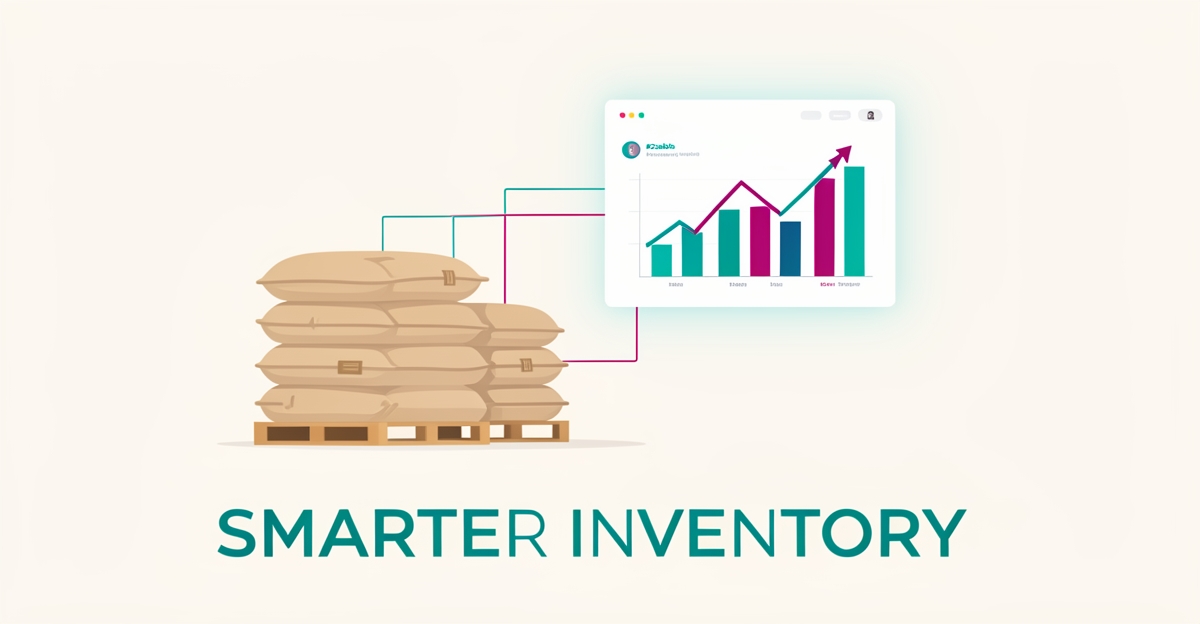
7 Signs Your Feed Business Needs an AI-Driven Inventory System
Key Facts
- AI-driven inventory optimization is associated with roughly 31% fewer stockouts and 22% less excess stock according to industry analysis
- Manual demand forecasting tends to produce error rates 20% to 50% higher than AI-powered approaches per industry analysis
- AI implementations typically draw on 12 to 24 months of historical sales data to identify seasonal trends per integration guidance
- Piloting AI on the top 20% of revenue-generating SKUs is a common way to validate results before scaling per implementation guidance
- Automated reordering benefits often materialize within weeks, while seasonal forecasting accuracy can take up to a year to fully develop per implementation timelines
- AI-powered inventory management forecasts demand, identifies slow-moving stock, and recommends corrective actions before inventory becomes a costly burden as noted by industry practitioners
Hire a team member that works 24/7 — for less than a part-time wage.
AI receptionists, SDRs, dispatchers and 99+ roles. Trained on your business, fully managed.
Not sure where to start? Ask our AI planner
The Hidden Costs of Manual Feed Inventory Management
The "stockout-waste paradox" hits feed businesses harder than almost any other industry — perishable raw materials, unpredictable seasonal spikes, and razor-thin margins turn traditional reactive planning into a daily gamble. When you're managing ingredients that degrade in weeks while demand swings wildly between planting and harvest seasons, spreadsheets and gut instinct don't just fall short; they actively drain working capital.
The financial toll is measurable: industry analysis of AI implementation outcomes associates AI-driven inventory optimization with a 31% reduction in stockouts and a 22% decrease in excess inventory. That's not incremental improvement — it's the difference between tying up capital in spoiling grain and having the right feed ready when farmers call.
- Perishable ingredients expire before manual reorder cycles catch up
- Seasonal demand spikes arrive faster than spreadsheet forecasts can adjust
- Thin margins amplify every dollar lost to waste or emergency shipping
- Supplier lead times vary wildly, making safety stock a guessing game
The hidden costs compound quietly. Emergency freight charges for last-minute soybean meal. Discounted write-offs on expired premixes. Lost contracts when a key customer's order goes unfilled during peak season. Many feed suppliers discover their "manageable" manual processes were quietly eating margin — capital that could fund growth instead of covering preventable losses.
Demand forecasting errors of 20-50% are common with manual methods, but AI-powered forecasting cuts that error rate dramatically by analyzing real-time sales velocity, weather patterns, and commodity trends simultaneously. The shift from reactive firefighting to predictive control doesn't just reduce waste — it frees your team to focus on customer relationships and strategic sourcing instead of daily inventory triage.
7 Operational Red Flags That Demand AI Intervention
Most feed businesses don't realize they're bleeding money until the damage is done. By the time a stockout hits or a warehouse overflows with unsold product, the financial impact is already locked in. The good news? These problems follow predictable patterns—and recognizing them early can save your operation from serious losses.
Here are seven operational red flags that signal your inventory management needs AI intervention:
1. Frequent stockouts of high-turn SKUs despite safety stock
If your best-selling products are constantly running out, even when you've set aside buffer inventory, your forecasting model is broken. According to industry analysis, businesses that adopt AI-driven inventory optimization see around a 31% reduction in stockouts. Traditional safety stock calculations can't account for real-time demand shifts, seasonal spikes, or supplier delays the way machine learning models can.
2. Dead stock tying up warehouse space and working capital
Slow-moving inventory isn't just taking up shelf space—it's locking up cash you could deploy elsewhere. Dead stock represents capital, space, and opportunity cost all at once. When inventory sits unsold for months, it becomes a liability instead of an asset. AI systems identify slow movers early and recommend corrective actions before they become write-offs.
3. Forecast accuracy below 70%
If your demand predictions are missing the mark by 30% or more, you're essentially guessing. Industry analysis suggests manual forecasting methods produce error rates 20% to 50% higher than AI-powered approaches. That gap translates directly into either stockouts or overstocking—both expensive outcomes.
4. Bullwhip effect amplifying supplier order volatility
Small changes in customer demand shouldn't trigger massive swings in your purchase orders. When they do, you're experiencing the bullwhip effect—a distortion that ripples backward through your supply chain and creates chaos. AI systems smooth out these fluctuations by analyzing real-time sales data instead of reacting to lagging indicators.
5. Spoilage/write-offs exceeding 3% of inventory value
For feed businesses dealing with perishable products, spoilage is a constant threat. If you're writing off more than 3% of inventory value annually, your replenishment timing is off. Automated systems trigger just-in-time orders that account for shelf life, supplier lead times, and transport windows—minimizing waste before it happens.
6. Replenishment decisions consuming 15+ hours/week of manual analysis
If your team spends more than two full workdays each week crunching numbers to decide what to reorder, that's time stolen from higher-value activities. AI-driven replenishment automates the analysis, generates purchase recommendations, and flags exceptions—freeing your team to focus on strategy instead of spreadsheets.
7. Inability to model 'what-if' scenarios for ingredient price shocks or demand surges
Can your current system answer questions like: What happens to our margins if corn prices jump 20%? How much buffer stock do we need if demand spikes 40% during planting season? If scenario planning requires manual Excel gymnastics, you lack the agility to respond to market volatility. Modern AI platforms simulate multiple scenarios instantly, giving you decision-ready insights in seconds.
- Stockouts persisting despite safety stock buffers
- Forecast errors exceeding 30% consistently
- Manual replenishment eating 15+ hours weekly
- Write-offs surpassing 3% of inventory value
These aren't just operational annoyances—they're symptoms of a systemic problem. Traditional inventory management relies on historical averages and static rules, but feed markets don't behave that way. Demand fluctuates with seasons, weather, commodity prices, and livestock cycles. Static models can't keep up.
Businesses that implement AI-driven inventory systems often see measurable improvements fast. According to implementation guidance, automated reordering delivers benefits within weeks, not months. The key is starting with clean data—ideally 12 to 24 months of sales history—and piloting the system on your top 20% of products by revenue before scaling across your full catalog.
At AIQ Labs, we build custom AI inventory systems that integrate directly with your existing ERP or accounting platform — whether that's a targeted Workflow Build that rebuilds the one inventory workflow costing you the most, or a fuller AI Operating System connecting your whole operation. You own the system outright—no subscription traps, no vendor lock-in.
The question isn't whether AI can improve your inventory management. The evidence says it can. The real question is how much longer you can afford to operate without it.
Why Feed Supply Chains Need Predictive, Not Reactive, Intelligence
Feed margins compress when inventory decisions lag reality by even a few days. Reactive planning keeps teams chasing stockouts after they happen and clearing overstock after it ages. Predictive intelligence closes that gap by turning live signals into replenishment actions before demand shifts.
Historical averaging treats last season as a promise. It misses the volatility that defines feed supply chains — weather swings, herd cycles, promotional spikes, and commodity price moves. AI-driven inventory optimization shifts management from guessing to decisions based on real-time data, spotting trends as they form.
Demand sensing replaces static reorder points with dynamic models. Systems ingest sales velocity, promotion calendars, weather patterns, and commodity trends to anticipate need, not just react to it. This approach enables just-in-time replenishment that accounts for supplier constraints and transport windows, reducing spoilage and obsolescence.
Data readiness determines accuracy. A step-by-step AI integration guide notes that ideally 12-24 months of sales data are required to identify seasonal trends. Clean, standardized data with consistent naming and error removal is essential; AI thrives on accurate, consistent data.
The payoff shows in operational metrics. Businesses adopting AI-driven optimization commonly report improved inventory turnover (around 19% in industry analyses) and fewer stockouts, with excess inventory falling by roughly 22%. Automated replenishment triggers minimize manual intervention and errors while improving product availability.
Predictive systems also build resilience. Instead of fighting fires, leaders can see around corners and make informed decisions. AI-powered inventory management can forecast demand, identify slow-moving stock, and recommend corrective actions before inventory becomes a costly burden.
Key signals a predictive engine continuously monitors:
- Sales velocity by SKU and location, with day-over-day change detection
- Promotion and pricing events, including planned and unplanned markdowns
- Weather and seasonality inputs that drive feed consumption patterns
- Supplier lead times, capacity constraints, and transport window availability
For feed suppliers, this means fewer stockouts of popular items and less capital tied up in dead stock. AIQ Labs builds custom AI solutions that forecast demand, manage stock levels, and optimize replenishment for feed suppliers, grounding models in the business's own historical data and real-time signals.
The shift is from reactive averaging to predictive orchestration. When inventory intelligence factors perishability, supplier constraints, and demand signals together, replenishment becomes proactive, cash flow improves, and service levels stabilize.
From Diagnosis to Deployment: A Phased Implementation Path
Moving from recognizing inventory challenges to deploying an effective AI solution requires a structured, evidence-based approach. Successful implementation hinges on phased rollout, starting with data quality and progressing through targeted pilots before full-scale integration. This method minimizes risk while building organizational confidence in the technology's value.
Phase 1 begins with auditing and standardizing data across mill and warehouse systems. This involves cleaning negative quantities, eliminating duplicate SKUs, and establishing consistent naming conventions—foundational steps emphasized in industry guidance as critical for AI accuracy. Without this groundwork, even advanced models will produce unreliable outputs, undermining trust in the system.
Phase 2 focuses on piloting the AI system on the top 20% of revenue-generating SKUs, a strategy commonly recommended as an effective starting point for rapid validation. The goal is a measurable reduction in stockouts within this high-impact segment, providing early proof of concept before broader rollout. This targeted approach allows teams to refine processes and demonstrate value without overwhelming operational capacity.
In Phase 3, automated reorder triggers are integrated with supplier APIs, enabling real-time replenishment based on AI-driven demand signals. Benefits such as reduced manual intervention and fewer ordering errors can be realized within weeks, according to implementation timelines documented in supply chain guidance. This phase transforms reactive ordering into proactive, data-informed workflows that align with supplier capabilities and lead times.
Finally, Phase 4 scales the system to incorporate seasonal forecasting models, which can take up to 12 months of historical data to reach full accuracy. During this phase, human-in-the-loop governance remains essential—ensuring that AI recommendations are reviewed and validated by experienced planners, particularly for high-risk or volatile items. This balance of automation and oversight supports sustainable adoption while preserving institutional knowledge. As the system matures, it evolves from a tactical tool into a strategic asset that continuously improves feed business resilience and responsiveness. For businesses ready to begin this journey, AIQ Labs offers a free 30-minute strategy call to map your specific inventory challenges and outline a phased path forward.
The Competitive Gap Widens Every Season You Wait
Every season you operate on spreadsheets and gut feel, competitors running AI-driven inventory pull further ahead — not because they work harder, but because their systems learn faster than yours can. Industry analysis associates these operations with up to 30% improvement in operational efficiency and inventory turnover, a gap that compounds with every ordering cycle. While you're reacting to last month's stockouts, they're optimizing next quarter's cash flow.
The math is unforgiving. AI-powered demand forecasting cuts prediction errors by 20–50% compared to manual methods, translating into roughly 31% fewer stockouts and 22% less excess inventory in industry analyses. That's not incremental improvement — it's a structural advantage that widens every season you wait. Industry practitioners describe it as the difference between fighting fires and predicting sparks.
- Competitors tie up less capital in safety stock while maintaining higher service levels
- Automated replenishment triggers eliminate the manual errors that cascade into delayed deliveries
- Real-time demand sensing adjusts orders before seasonal shifts hit your warehouse
- Cash flow compounds when inventory turnover improves year over year
This is where AIQ Labs changes the equation. We don't sell another SaaS subscription that locks you into someone else's roadmap. Our custom forecasting models are built on your historical data, your supplier constraints, your seasonal patterns — and with our Own It Outright model, you own the system outright. An AI Employee — a managed AI dispatcher or inventory coordinator — can deploy alongside your team, handling reorder optimization, supplier coordination, and exception management around the clock at a fraction of the cost of a human hire. No vendor lock-in. No per-seat licensing. Just an owned asset that pays for itself in reduced carrying costs and recovered sales.
The competitive gap isn't theoretical — it's measured in working capital your rivals deploy into growth while yours sits in overstock or walks out the door as lost sales. The Fit Check takes two minutes and identifies the highest-ROI starting point for your specific operation. Start the Fit Check → Free 30-Minute Strategy Call
Still paying for 10+ subscriptions that don’t talk to each other?
We build custom AI systems you own outright. No vendor lock-in. Full control.
Not sure where to start? Ask our AI planner
Frequently Asked Questions
How do I know if my feed business actually needs an AI inventory system?
Will AI inventory work with the messy data we already have?
Do we have to replace our whole ERP to start?
How much better is AI forecasting than spreadsheets?
How long does it take to see results from AI inventory?
Can AI help with perishable ingredients and seasonal spikes?
Stop Leaking Margin Every Harvest Season
The stockout-waste paradox isn't a seasonal inconvenience for feed businesses, it's a structural drain on working capital. When perishable ingredients expire before manual reorder cycles catch up and demand spikes outpace spreadsheet forecasts, the cost shows up as emergency freight, write-offs, and lost contracts. The seven red flags in this article — persistent stockouts despite safety stock, dead stock tying up cash, forecast error above 30%, bullwhip volatility, spoilage over 3%, 15+ hours weekly on replenishment analysis, and no scenario modeling — are symptoms of reactive planning in a market that demands predictive control. Businesses that shift to AI-driven inventory optimization commonly report measurable relief, including roughly 31% fewer stockouts and 22% less excess inventory according to industry analysis of AI implementation outcomes. At AIQ Labs we build custom AI inventory systems that forecast demand, manage stock levels and optimize replenishment for feed suppliers using your own historical data — and you own the system outright. Start the 2-minute Fit Check, then book a free 30-minute strategy call to map your highest-ROI starting point.
Make AI your competitive advantage — not just another tool.
Strategy, implementation and ongoing optimization. One partner, end to end.
Not sure where to start? Ask our AI planner