7 Signs Your Garbage Disposal Repair Business Needs AI for Work Order Management
Key Facts
- Most service businesses lack full visibility into where time and revenue are lost in manual dispatch workflows
- Delayed response times, lost work orders, and suboptimal routing are the three most common leaks in repair operations
- AI work order systems automate dispatch, optimize technician assignment, and deliver real-time job status
- A focused pilot on dispatch or scheduling typically delivers the fastest measurable improvement
- AIQ Labs has deployed 200+ multi-agent systems and runs 4 live SaaS products daily
Hire a team member that works 24/7 — for less than a part-time wage.
AI receptionists, SDRs, dispatchers and 99+ roles. Trained on your business, fully managed.
Not sure where to start? Ask our AI planner
The Hidden Costs of Manual Work Order Management
Most garbage disposal repair businesses don't realize how much revenue slips through the cracks every time a work order gets scribbled on a sticky note or buried in a spreadsheet. Manual dispatch, paper-based tracking, and endless phone-tag scheduling create invisible leaks that compound daily.
The core problem is visibility. When work orders live in inboxes, whiteboards, and someone's memory, you can't see where time and money are actually going. That blind spot translates directly into delayed response times, lost work orders, and technicians driving circles instead of fixing disposals.
- Delayed response times erode customer trust and invite negative reviews
- Lost or duplicated work orders mean missed revenue and wasted labor
- Suboptimal technician routing burns fuel and billable hours
- No real-time visibility into crew capacity or job status
- Inability to predict seasonal demand spikes or recurring failure patterns
This is exactly the gap AI closes. Modern AI systems automate dispatch, optimize routes, and match the right technician to the right job, the same pattern of accuracy, speed, and resource optimization that has transformed other operations-heavy industries. AIQ Labs helps service companies close this gap with managed AI Employees and custom AI Workflow Builds that automate dispatch, scheduling, and work order management end to end.
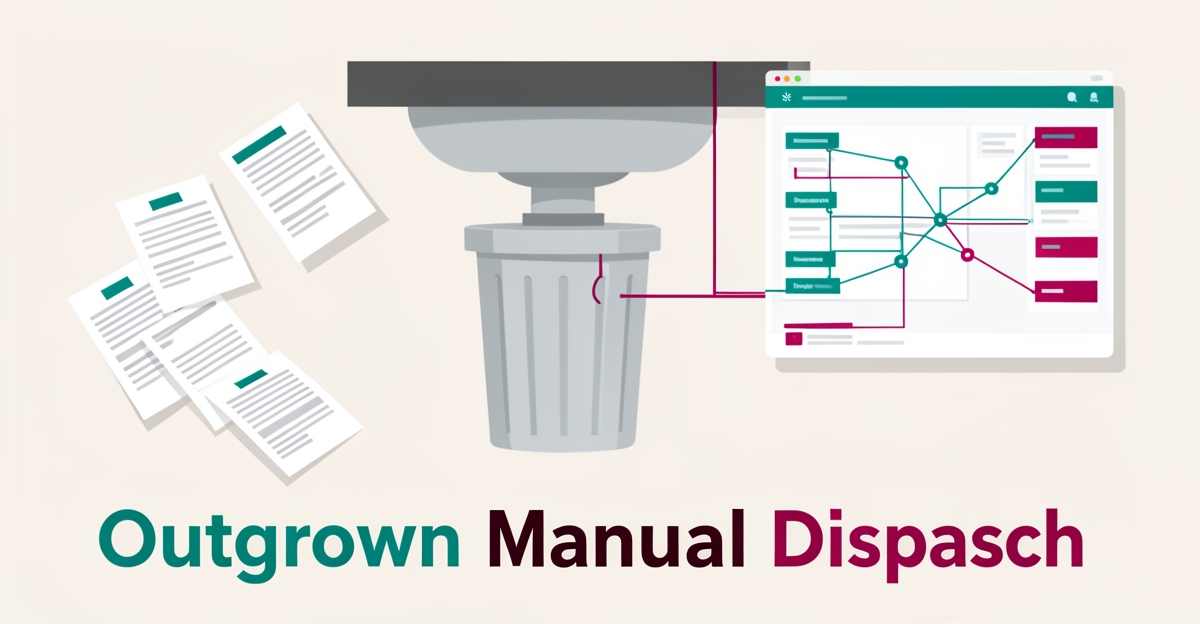
The 7 Warning Signs Your Operation Has Outgrown Manual Dispatch
You're not just behind on calls, you're losing money while technicians sit idle and customers grow frustrated. These seven warning signs reveal when manual work order management has hit its limits and AI-powered automation becomes essential.
1. Delayed response times. When service requests pile up and technicians aren't dispatched quickly, customers take their business elsewhere. Every hour of delay compounds revenue loss and erodes trust, and in a local market, a slow response is often the last chance a customer gives you.
2. Manual work order tracking. Without a centralized system, dispatchers rely on sticky notes, spreadsheets, or memory, leading to missed appointments, duplicate efforts, and technicians showing up unprepared. You can't fix what you can't see.
3. No predictive capability. When you can't anticipate service needs, you're always reacting instead of preparing. Traditional systems don't analyze failure patterns, seasonal trends, or usage data to anticipate when disposals will jam or leak. AI-driven forecasting can identify these signals before they become emergency calls.
4. Suboptimal technician assignment. Sending the nearest available tech instead of the most qualified one means repeat visits, incorrect parts, and frustrated customers. AI optimizes for skill, location, and workload, ensuring the right person arrives ready to fix the problem the first time.
5. Lack of real-time visibility. If you can't see which jobs are running late, which technicians are available, or which parts are en route, you're making decisions based on outdated information. This gap fuels inefficiencies across scheduling, inventory, and customer communication.
6. Inefficient resource allocation. Without data-driven insights, you overstaff slow periods and scramble during peaks. Trucks roll half-empty, technicians wait for calls, and overtime costs spike, all because scheduling relies on gut feeling instead of predictive analytics.
7. Poor customer communication. When clients can't get updates on arrival times or job status, they call repeatedly, tying up your lines and damaging your reputation. Automated status alerts and ETAs transform this experience, turning anxiety into confidence.
If these signs sound familiar, it's not a personnel problem, it's a process problem. AIQ Labs builds AI systems that automate dispatch, optimize technician assignment, and deliver real-time visibility, so you can respond faster, waste less, and keep customers coming back. Start the Fit Check to see where your operation stands, then book a free 30-minute strategy call to map your highest-impact automation opportunities.
What AI Actually Fixes in Work Order Management
Strip away the jargon and AI does three concrete things for a repair operation. First, it automates dispatch, matching technicians to jobs based on skill, location, and urgency instead of whoever answers the phone fastest. Second, it predicts demand, surfacing failure patterns and seasonal trends from your historical job data so you can staff and stock ahead of the rush. Third, it tracks every work order in real time, eliminating the manual bottlenecks where jobs get lost, duplicated, or forgotten.
The result is faster response times, fewer misassigned jobs, and higher first-time fix rates, all critical for customer retention in competitive local markets. Just as important, it removes the dependency on one dispatcher's memory. When the process lives in a system instead of someone's head, sick days and turnover stop being operational emergencies.
The economics are straightforward: fewer repeat visits, less idle time, and more billable hours per technician. For most service businesses, dispatch and scheduling are the workflows where labor waste concentrates, which is why AIQ Labs typically recommends rebuilding that one workflow first with a fixed-price AI Workflow Build, then scaling into a connected AI Operating System once the results are proven.
How to Implement AI Work Order Management Without Disrupting Your Business
Manual work orders create the exact delays customers complain about most. Garbage disposal repair businesses that stay paper-based lose visibility, speed, and technician utilization every day.
Start by mapping where work stalls today. Identify the specific pain points that cost you time and revenue, such as delayed response times and manual work order tracking. In most shops, the blind spot repeats in dispatch: nobody can say, with confidence, how long intake-to-rollout actually takes.
Pick one high-impact workflow to automate first. Dispatch or scheduling delivers the fastest measurable improvement. A focused pilot proves value without overhauling the entire business. AIQ Labs designs AI systems to automate service dispatch, appointment scheduling, and technician assignment, reducing downtime and boosting response times.
Integration must be seamless from day one. Connect the new system to existing CRM and billing tools so data flows automatically and staff keep their familiar interfaces. Deep two-way API integrations create a single source of truth and eliminate duplicate entry.
Train staff on the new process before go-live. Short, role-based sessions build confidence and reduce resistance. Monitor performance metrics closely during the first weeks and adjust workflows based on real usage.
Scale only after results are clear. Expand from dispatch to full work order management once the pilot shows faster response and better utilization.
A practical rollout path looks like this:
- Assess current pain points and measure baseline response and completion times
- Launch a pilot on dispatch or scheduling with integration to CRM and billing
- Train technicians and office staff, then monitor and optimize performance
- Scale to additional workflows using Start Monthly, Build in Milestones, or Own It Outright models
Low-risk entry points matter for SMBs. Start Monthly gives you a managed AI employee, a dispatcher or intake agent that works your queue, on a flat monthly plan that typically costs around 80% less than a human hire, with build, training, integrations, monitoring, and improvements included. Build in Milestones splits a workflow or department system into phases you approve and pay per phase. Own It Outright means the finished system is yours, no perpetual rental.
Your Next Step: Diagnose Your Biggest Bottleneck in 30 Minutes
Recognizing the signs is only half the battle. The real question is which bottleneck is costing you the most, and that answer is different for every shop.
Maybe it's the morning dispatch scramble. Maybe it's work orders falling through the cracks between your phone, your inbox, and a whiteboard. Whatever it is, the cost of that chaos compounds every week you leave it in place.
So here's a practical next step. Set aside 30 minutes this week and audit your own workflow:
- Time your intake-to-dispatch cycle, how many minutes pass between a customer call and a technician rolling?
- Count your touchpoints, how many times does a single work order get re-entered, forwarded, or re-explained?
- Track your misses, how many jobs last week were delayed, double-booked, or lost entirely?
- Estimate the cost, attach a dollar figure to each lost hour and each lost job.
That last number is the one that matters. Fixing the right bottleneck rarely costs more than ignoring it, and the longer a leak runs, the more it costs to patch.
If you want a second set of eyes on your diagnosis, start with the two-minute Fit Check, then book a free 30-minute strategy call with an AIQ Labs engineer. This is a working session, not a sales pitch, you'll map your biggest work order bottleneck, identify the highest-ROI automation opportunity, and get real numbers in writing.
And if there isn't a clear win for your business, we'll tell you that too. We take on a handful of new builds at a time, and an honest "not yet" beats a forced solution every time. Your diagnosis starts with 30 minutes, the fix starts whenever you're ready.
Still paying for 10+ subscriptions that don’t talk to each other?
We build custom AI systems you own outright. No vendor lock-in. Full control.
Not sure where to start? Ask our AI planner
Frequently Asked Questions
What is AI work order management for a repair business?
Which workflow should a repair business automate first?
How much does AI work order automation cost?
Will AI replace my dispatcher?
How do I know if my business is ready?
From Bottleneck to Breakthrough: Your Next Move
If you've recognized even a few of the seven signs we've covered, delayed response times, lost work orders, inefficient routing, or blind spots in crew capacity, it's clear your operation is ready for a smarter way forward. Manual processes aren't just inconvenient; they're actively draining revenue, frustrating customers, and holding back growth. The good news? AI-powered work order management doesn't require a complete overhaul to deliver real impact. By starting with a focused pilot, like automating dispatch or scheduling, you can begin measuring improvements in response time, first-time fix rates, and technician utilization within weeks. AIQ Labs helps garbage disposal repair businesses take that first step with a free two-minute Fit Check and a no-obligation 30-minute strategy call to map your biggest bottleneck and highest-ROI opportunity. Because the best time to fix a leak isn't when the floor is flooded, it's the moment you notice the first drip. Don't let manual dispatch be the drip you ignore.
Make AI your competitive advantage — not just another tool.
Strategy, implementation and ongoing optimization. One partner, end to end.
Not sure where to start? Ask our AI planner