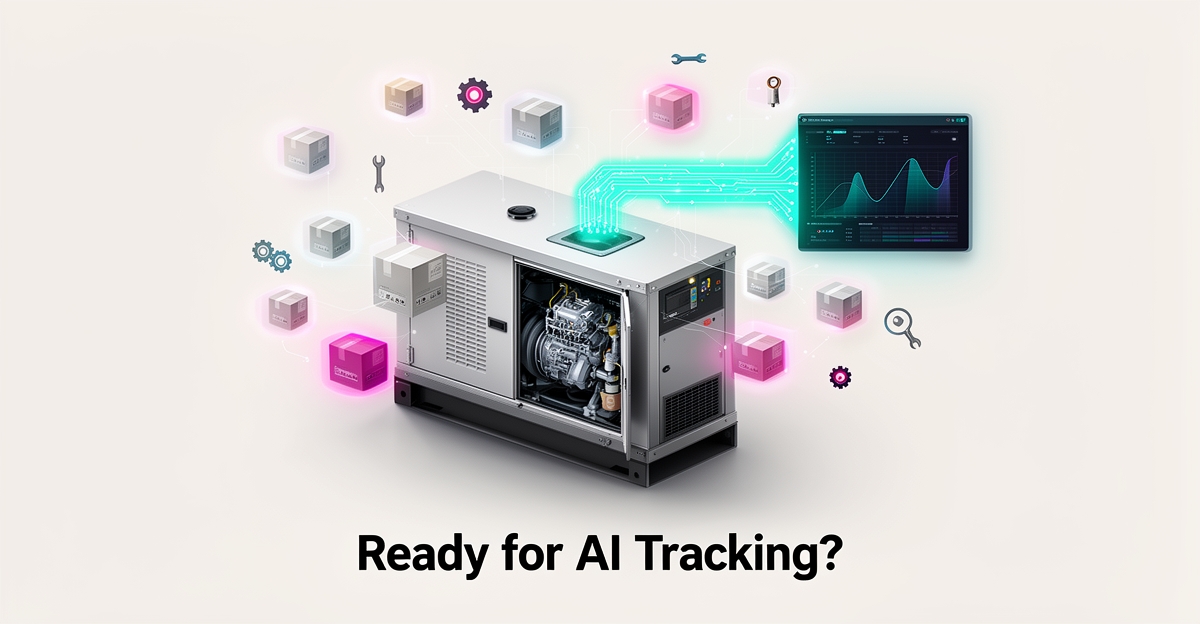
7 Signs Your Generator Repair Business Is Ready for AI-Driven Equipment Tracking
Key Facts
- Modern inventory platforms routinely manage tens of millions of SKUs across multiple locations, far beyond manual spreadsheet capabilities according to LinkedIn’s inventory management data
- Retailers adopting unified inventory management have reported significant labor savings and operating-cost reductions in published case studies as documented by Shopify
- AI-driven inventory forecasting can meaningfully reduce stockouts by analyzing usage patterns and seasonal demand per AI-enhanced inventory benchmarks
- Storage and data-pipeline optimization can substantially accelerate machine learning training times according to LinkedIn Learning
- AI-ready systems transform passive data storage into intelligent processing hubs using on-device GPUs and NPUs per TechRadar analysis
- Simulation-based maintenance scheduling creates virtual models of equipment degradation to optimize resource allocation before failures occur per maintenance optimization research
- A meaningful share of enterprise organizations remain stuck in experimental AI pilot phases without scaling according to Software Improvement Group
Hire a team member that works 24/7 — for less than a part-time wage.
AI receptionists, SDRs, dispatchers and 99+ roles. Trained on your business, fully managed.
Not sure where to start? Ask our AI planner
When Manual Parts Tracking Starts Costing You Downtime
A technician is standing in front of an open service truck, generator on the line, and the part that should be there isn't. That moment, repeated across a week, a month, a quarter, is where manual parts tracking quietly bleeds revenue from a generator repair business.
The core problem is that traditional inventory methods were never designed for the complexity of modern parts operations. Even the most disciplined spreadsheet or filing-cabinet approach struggles with the volume today's systems handle; inventory management platforms routinely manage vast product databases tagged with RFIDs, serial numbers, and barcodes, with tens of millions of SKUs managed through a single solution. Against that scale, manual counts and paper logs become a liability rather than a system.
The pain points tend to cluster in three areas:
- Stockouts on critical parts, without automatic reorder triggers based on stock quantity, fast-moving components run dry exactly when emergency calls spike.
- Multi-location inventory errors, when parts sit across a warehouse, service trucks, and satellite sites, no one reliably knows what's where, leading to duplicate orders and idle stock.
- Reactive maintenance scheduling, fixed, rule-based schedules ignore real usage and degradation patterns, so failures are discovered when equipment is already down.
The multi-location problem deserves special attention. As one retailer's omnichannel chief described it, constant inventory fluctuations and shifting demands made it "hard to reliably and accurately represent which stores had certain items in stock", a challenge that maps directly onto generator repair businesses juggling depot shelves and truck beds. Businesses that unified their inventory operations have reported meaningful relief: one widely cited retail case study describes significant weekly labor savings and double-digit operating-cost reductions from simplifying order management.
There's also a deeper structural shift happening. As Jiang Xue, Product Director at MINISFORUM, puts it, "AI turns passive enterprise storage into intelligent processing hubs." The filing-cabinet model, data stored, rarely used, gives way to systems that index, tag, and analyze data where it resides, closing the loop between what's on the shelf and what the business needs next. For parts tracking, that means the difference between recording inventory and actually acting on it.
The same logic applies to maintenance. Conventional scheduling relies on static, historical records and manual, rule-based decisions, while AI-driven approaches use dynamic, real-time data to model usage, degradation, and failure scenarios before they happen, according to operations research on maintenance optimization. Reactive repair becomes predictive planning.
If your team is losing hours to physical counts, quoting repair timelines without knowing part availability, or eating downtime costs because a reorder slipped through, those aren't growing pains, they're signals. This is precisely where tailored AI systems that track inventory in real time, like the workflow builds AIQ Labs delivers, help generator repair businesses prevent stockouts and reduce operational downtime. And if you're unsure whether the timing is right, a free 30-minute strategy call can map your biggest bottleneck and tell you honestly whether there's a clear win, no obligation, just clarity.
How AI-Driven Equipment Tracking Changes Operations
AI-driven equipment tracking transforms how generator repair businesses manage their operations by shifting from passive data storage to intelligent processing hubs. Modern systems increasingly integrate GPUs and neural processing units for on-device AI processing, reducing latency from sending data to remote cloud servers and creating closed-loop systems where data is generated, processed, and used within a single environment. Organizations are awash in data, much of it generated within their own walls and much more streaming in from outside, and AI turns this passive storage into active intelligence that drives decisions.
This approach enables real-time tracking of spare parts and equipment usage across multiple warehouse locations, with automatic reordering triggered when stock levels fall below predefined thresholds. Unlike traditional methods that rely on static historical records, AI-enhanced systems use dynamic, real-time data to predict maintenance needs and optimize resource allocation through comprehensive scenario analysis. Simulation models create virtual representations of real systems to experiment with different scenarios, evaluating trade-offs between maintenance frequency, duration, cost, quality, and reliability to optimize schedules and resource allocation.
For businesses managing complex inventories, AI-driven tracking provides significant operational improvements by reducing stockouts and excess inventory through predictive intelligence. Modern inventory management solutions operate at a scale far beyond what any manual system can match, providing real-time reporting of sales and deliveries with automatic reorder based on stock quantity. This shift from reactive to predictive analytics allows generator repair companies to move beyond traditional "filing cabinet" approaches to systems that autonomously manage inventory levels, predict equipment failures, and optimize resource allocation, all while reducing operational downtime through preventive maintenance schedules that adapt to actual usage patterns. AIQ Labs helps businesses implement these capabilities through AI Employees for day-to tracking and dispatch work, or a full AI Operating System when you want one connected layer across the whole business, built in phases and owned outright.
7 Readiness Signals for AI Inventory and Maintenance Automation
For generator repair businesses facing mounting operational pressures, recognizing the right moment to adopt AI-driven equipment tracking can mean the difference between reactive scrambling and proactive resilience. Several key signals indicate when inventory complexity, scheduling inefficiencies, and data fragmentation have reached a tipping point where intelligent automation delivers measurable relief.
When spare parts inventory grows beyond simple spreadsheets, tracking dozens of SKUs across multiple service vehicles or warehouse locations, it’s a clear sign that manual systems are straining under complexity. Modern inventory solutions operate at a scale far beyond human tracking capacityaccording to LinkedIn’s inventory management software category. For generator repair shops, this complexity directly impacts service speed: technicians wasting time searching for parts or making emergency supplier calls increase both labor costs and customer wait times.
Frequent stockouts of critical components, like voltage regulators or transfer switches, signal that reorder logic is failing. AI-driven forecasting reduces stockouts by analyzing usage patterns, seasonal demand, and lead times to trigger precise replenishmentper AI-enhanced inventory forecasting benchmarks. When stockouts repeatedly delay repairs, businesses not only lose revenue but risk reputational damage in time-sensitive scenarios like storm-related outages.
Maintenance scheduling that relies on fixed intervals or technician memory often results in either unnecessary servicing or missed failure warnings. Simulation-based scheduling, creating virtual models of equipment usage, degradation, and failure, optimizes resource allocation by testing countless scenarios before committing to real-world actionsas outlined in maintenance scheduling optimization research. This approach shifts maintenance from reactive fixes to predictive interventions, directly reducing unplanned downtime.
When data lives in silos, service logs in notebooks, parts lists in spreadsheets, maintenance histories in separate databases, gaining a unified operational view becomes nearly impossible. AI-ready systems transform passive storage into active processing hubs, enabling on-device analysis that reduces latency from cloud-dependent workflowsper insights on AI-ready NAS systems. For generator repair businesses, this means instantly correlating part usage with failure trends across fleets, informing smarter stocking decisions.
Rising operational costs without clear visibility into their source, whether from emergency freight for parts, overtime for delayed repairs, or excess inventory carrying costs, indicate a need for deeper cost attribution. Unified inventory management has produced significant labor savings and cost reductions in published retail case studiesas documented by Shopify. Generator repair businesses experiencing similar pressure points can apply these principles to labor-intensive tracking tasks.
Finally, when growth ambitions outpace current tracking capabilities, such as adding service territories or expanding generator brands serviced, scalability becomes a concern. AI systems designed for real production demands, built on production-ready frameworks rather than no-code limitations, offer the foundation to grow without proportional increases in administrative overhead. This readiness to scale, not just survive, marks a mature operational mindset primed for intelligent automation.
From Pilot to Production: A Practical Implementation Path
Moving from a pilot to a production-grade AI tracking system requires a disciplined, phased approach rather than a big-bang rollout. Research on maintenance optimization shows that successful implementations begin by defining clear objectives and performance indicators, then systematically collecting equipment usage data to understand real-world degradation patterns before any model is built. This foundation prevents the common trap of automating broken processes.
- Define objectives and scope with measurable KPIs tied to downtime reduction and parts availability
- Collect and analyze historical equipment data including usage cycles, failure modes, and maintenance costs
- Design and validate simulation models that replicate your specific generator fleet dynamics
- Run controlled experiments comparing predictive schedules against current reactive workflows
- Iterate by expanding data sources and refining model logic based on field results
This methodology mirrors how AIQ Labs structures its engagements, starting with a targeted Workflow Build that rebuilds the one workflow costing you the most, at a fixed price and in phases, then scaling toward a complete AI Operating System once value is proven. The Start Monthly model lets you deploy an AI Employee, a dispatcher, inventory clerk, or parts coordinator, for a flat monthly cost, typically around 80% less than a human hire, with build, training, integrations, and ongoing optimization included. For deeper infrastructure needs, the Build in Milestones approach splits a department automation project into phased deliverables where you approve and pay per phase, keeping everything built to date if priorities shift. Organizations ready for full ownership can pursue the Own It Outright path, a complete AI operating system with full code, agent, and data transfer upon completion. Storage and data-pipeline optimization can meaningfully accelerate ML trainingaccording to LinkedIn Learning, and unified inventory systems have produced significant labor savings in published case studiesdocumented by Shopify. The key is treating each phase as a validated learning loop, not a checklist item.
Still paying for 10+ subscriptions that don’t talk to each other?
We build custom AI systems you own outright. No vendor lock-in. Full control.
Not sure where to start? Ask our AI planner
Frequently Asked Questions
How does AI-driven equipment tracking reduce downtime for generator repair businesses?
What are the signs that manual parts tracking is costing my generator repair business money?
Can AI inventory systems really handle the scale of parts we manage across multiple service trucks and warehouse locations?
Will implementing AI tracking require us to overhaul our entire IT infrastructure or replace our existing tools?
What kind of ROI can we expect from AI-driven inventory and maintenance automation, and how long until we see results?
Is AI tracking only for large generator repair companies, or can small shops benefit too?
From Reactive Repairs to Proactive Resilience
When manual parts tracking starts costing you downtime, whether through stockouts on critical components, multi-location inventory errors, or reactive maintenance scheduling, it’s a clear signal that your generator repair business is ready for AI-driven equipment tracking. The article outlined seven readiness signals, from growing inventory complexity and frequent stockouts to siloed data and rising operational costs, all pointing to the need for intelligent automation. By shifting from passive data storage to active processing hubs, AI systems enable real-time tracking, predictive maintenance, and optimized resource allocation, directly reducing unplanned downtime and improving service speed. If you’re seeing these signs, the next step is clarity: start with a free two-minute Fit Check followed by a no-obligation 30-minute strategy call to map your biggest bottleneck and see if there’s a clear win. Book your strategy call to explore how tailored AI solutions can transform your operations without vendor lock-in or unnecessary complexity.
Make AI your competitive advantage — not just another tool.
Strategy, implementation and ongoing optimization. One partner, end to end.
Not sure where to start? Ask our AI planner