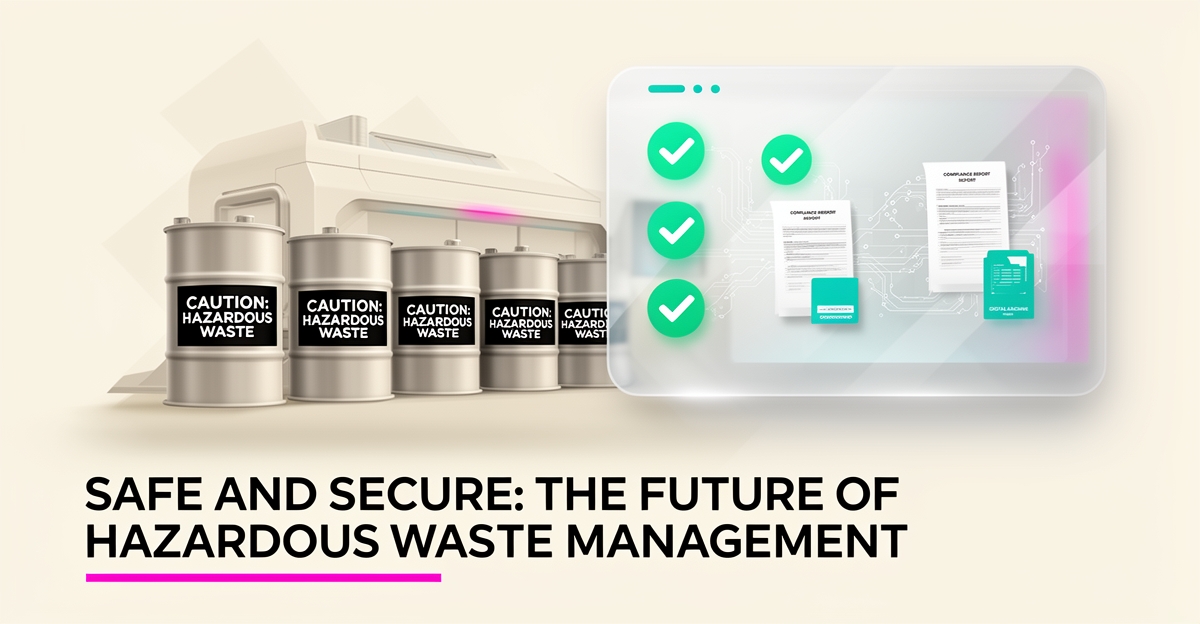
7 Signs Your Hazardous Waste Business Needs AI for Document & Compliance Tracking
Key Facts
- AI-powered compliance monitoring typically cuts reporting time dramatically by validating data against EPA limits in real time
- Automated waste classification substantially reduces manual entry errors and misrouting risk
- California can enforce penalties of up to $70,000 per violation per day for incomplete Annual Facility Reports, as of late 2026
- Federal RCRA violations can carry fines of $50,000 per day and, for knowing infractions, up to five years in prison
- The EPA's e-Manifest system is now the standard for hazardous waste shipments, with paper manifests largely phased out
- The global hazardous waste management market has been projected to grow from roughly $17.6 billion in 2024 toward the mid-$20 billions by 2030
Hire a team member that works 24/7 — for less than a part-time wage.
AI receptionists, SDRs, dispatchers and 99+ roles. Trained on your business, fully managed.
Not sure where to start? Ask our AI planner
The Compliance Countdown: Why Manual Tracking Is Costing You More Than You Think
Paper-based systems are a growing liability as regulators tighten enforcement into 2026 and beyond. The EPA's e-Manifest system is now the operational standard for hazardous waste shipments, and businesses still relying on manual tracking face escalating risks of non-compliance and costly penalties. California can enforce penalties of up to $70,000 per violation per day for incomplete Annual Facility Reports, while federal RCRA violations can carry fines of $50,000 per day and, for knowing infractions, up to five years in prison. These stakes transform document management from an administrative task into a critical operational safeguard.
Manual processes inherently increase exposure to avoidable errors that regulators actively penalize. Paper manifests are prone to illegible entries, lost documents, and delayed submissions, each creating compliance gaps that automated systems prevent. AI-powered compliance monitoring typically cuts reporting time substantially and reduces violation risk by enabling real-time validation against EPA limits. For hazardous waste businesses, this shift isn't just about efficiency; it's about eliminating preventable exposure to fines that can accumulate rapidly as deadlines approach.
The financial toll of manual tracking extends beyond penalties to operational inefficiencies that compound risk. Facilities using paper-based systems spend excessive hours on data entry, reconciliation, and report generation, time that could be redirected toward proactive compliance monitoring. AI automation can cut compliance documentation time significantly while improving accuracy in waste classification and permit tracking. As regulatory frameworks like EPR laws and CSRD-style reporting tighten across jurisdictions, businesses clinging to manual methods will find themselves increasingly unable to meet evolving documentation demands without AI-driven support. AIQ Labs helps hazardous waste operations transition from reactive paper trails to owned, auditable AI systems, starting with a single [workflow rebuild](/workflow-builds) or a full [AI operating system](/ai-operating-systems).
Where AI Delivers Measurable ROI in Hazardous Waste Documentation
AI transforms hazardous waste documentation from a reactive cost center into a predictable, audit-ready process by eliminating manual bottlenecks and human error. Modern AI systems automate manifest validation, cross-checking waste classifications against EPA and DOT regulations in real time, reducing classification errors and cutting processing time from hours to minutes. This precision prevents costly misrouting and helps ensure every shipment meets regulatory thresholds before leaving the facility.
Permit tracking and renewal workflows become proactive rather than crisis-driven, with AI agents continuously monitoring expiration dates across air quality, waste handler, and operating permits. These systems can compile renewal documentation well in advance, 60 days ahead is a common benchmark, flagging missing requirements and closing the compliance gaps that trigger penalties of up to $70,000 per violation per day in California. By maintaining a single source of truth for all regulatory deadlines, facilities avoid last-minute scrambles and associated operational disruptions.
Regulatory data extraction from manifests, shipping papers, and internal logs reaches near-perfect accuracy through AI-powered optical character recognition and natural language processing, pulling critical data points like waste codes, quantities, and generator IDs without manual re-entry. Facilities using these systems typically report much faster compliance reporting and far less time spent on documentation preparation, freeing staff to focus on exception handling rather than repetitive data transcription. The result is a controlled, traceable process where every compliance action leaves an auditable digital trail, turning documentation from a liability into a strategic advantage. The return comes from three places at once: avoided fines, reduced labor, and prevented operational shutdowns. AIQ Labs builds custom document automation systems that integrate with existing waste management software while ensuring full ownership and audit integrity.
- Automated manifest validation against EPA/DOT regulations
- Real-time permit tracking with advance renewal alerts
- AI-powered data extraction from waste documentation
- Continuous compliance monitoring with audit trail generation
- Human-in-the-loop oversight for critical classification decisions
This approach transforms compliance tracking into a measurable, scalable process where ROI emerges from both risk reduction and operational efficiency gains.
From Assessment to Ownership: How AIQ Labs Builds Your Custom Compliance AI System
Recognizing the warning signs is one thing, building a system that actually fixes them is another. For hazardous waste operators buried under manifests, permit renewals, and reporting deadlines, the implementation journey matters as much as the technology itself. The stakes are real: facilities can face penalties of up to $70,000 per violation per day for incomplete Annual Facility Reports in California, and federal RCRA violations can carry fines of $50,000 per day alongside potential prison time. A poorly planned rollout isn't just inefficient, it's a compliance risk in itself.
That's why the process starts with assessment, not software. The first step is identifying where manual processes create delays, errors, or regulatory exposure, typically in waste classification, manifest review, and reporting workflows. From there, the build maps every applicable requirement, from EPA e-Manifest obligations (paper forms have now been phased out) to EPR laws and CSRD-style reporting duties. Only then does system design begin.
Integration is the next hurdle, and often the biggest one. The industry's caution toward new technology is well-founded, and connecting AI with legacy infrastructure and existing safety protocols requires specialized expertise. AIQ Labs builds custom systems with deep two-way API integrations, allowing AI agents to connect with existing waste management software, ERP systems, and documentation workflows rather than forcing a rip-and-replace. These agents handle real tasks: continuously comparing incoming shipments against manifests to flag weight or composition discrepancies, and tracking permit and license expiration dates while compiling renewal documentation automatically.
Critically, none of this removes humans from the loop. AI decisions in hazardous waste management must be explainable and auditable to meet regulatory requirements, so deployment includes human-in-the-loop controls for critical decisions, complete audit trails, and configurable escalation when situations exceed AI authority. The time savings only hold when oversight structures are built in from day one.
The commercial model matters too, especially for SMBs without enterprise budgets. Rather than locking businesses into subscription dependencies, AIQ Labs offers three paths: Start Monthly for a single AI employee handling a defined compliance role, Build in Milestones for phasing a manifest or permit-tracking system with approval at each stage, and Own It Outright for a full compliance operating system with complete ownership of code, agents, and data. The build typically moves through four phases, discovery and architecture, development and integration, deployment and training, then ongoing optimization, with ROI tracking throughout. You can see how the pricing models compare at [aiqlabs.ai/pricing](/pricing).
The payoff justifies the discipline. Returns come from avoided fines, reduced downtime, and labor savings, and a single prevented EPA violation can often pay for the entire implementation. In an industry where the hazardous waste management market has been projected to grow from roughly $17.6 billion in 2024 toward the mid-$20 billions by 2030, operators who own their AI systems will be positioned to scale compliance capability as fast as the regulations evolve.
If you're ready to map your biggest documentation bottleneck, start with the two-minute Fit Check at [aiqlabs.ai/apply](/apply), then book a free 30-minute strategy call at aiqlabs.ai/book, a real working session with an AI engineer, and if there isn't a clear win, we'll tell you that too.
Still paying for 10+ subscriptions that don’t talk to each other?
We build custom AI systems you own outright. No vendor lock-in. Full control.
Not sure where to start? Ask our AI planner
Frequently Asked Questions
What are the biggest signs my hazardous waste business needs AI for compliance tracking?
How much does AI compliance tracking actually cost compared to the penalties?
Will AI compliance software work with my existing waste management systems?
How accurate is AI at classifying hazardous waste compared to manual review?
Do I lose control over compliance decisions if I automate with AI?
What's the status of the EPA's e-Manifest requirement?
Turn Compliance Chaos into Competitive Clarity
The hazardous waste industry stands at a pivotal moment: manual document tracking is no longer just inefficient, it's a growing liability with real financial and operational consequences. With the EPA's e-Manifest system now the norm and penalties for non-compliance climbing to $70,000 per violation per day in California, the cost of inaction is becoming impossible to ignore. AI-powered systems don't just reduce errors and cut reporting time, they transform compliance from a reactive burden into a proactive, auditable advantage. For businesses ready to move beyond paper trails and toward owned, intelligent systems that scale with regulation, the path forward starts with clarity. Take the two-minute Fit Check at aiqlabs.ai/apply, then schedule a free 30-minute strategy call with an AI engineer to map your biggest bottleneck and see if there's a clear win, no obligation, just insight.
Make AI your competitive advantage — not just another tool.
Strategy, implementation and ongoing optimization. One partner, end to end.
Not sure where to start? Ask our AI planner