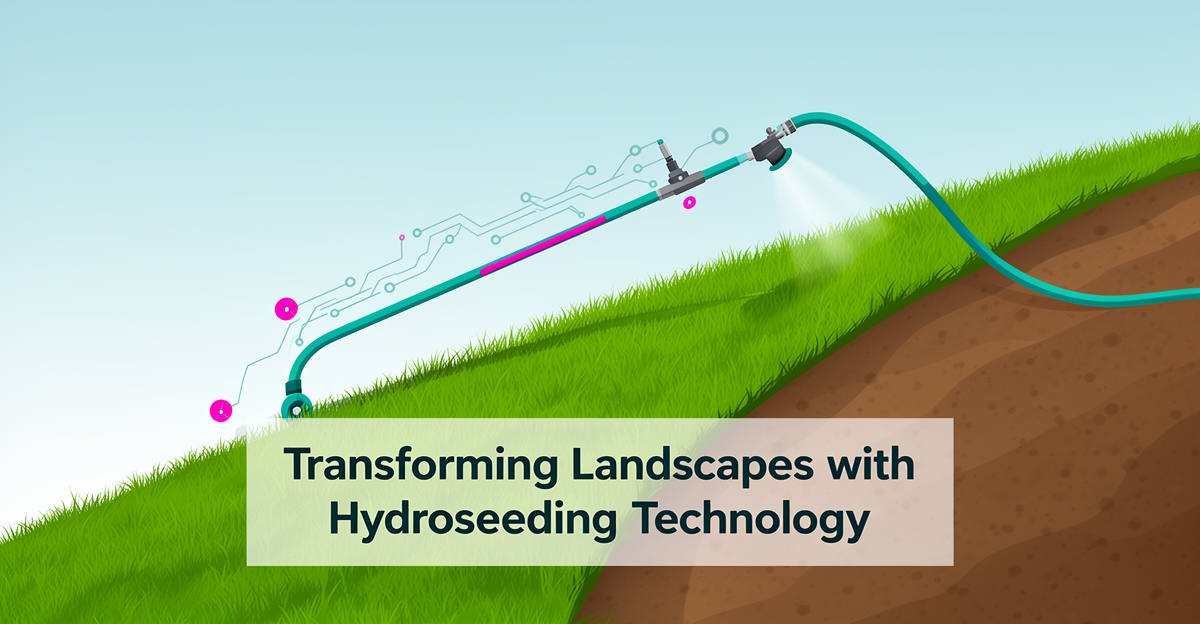
7 Signs Your Hydroseeding Business Is Ready to Adopt AI Automation
Key Facts
- Global hydroseeding market is forecast to reach roughly USD 2.48 billion by 2033 according to market forecasts
- The market is projected to grow at an 8.1% CAGR through 2033 from Growth Market Reports
- Hydroseeding typically costs $500–$900 per 1,000 sq ft vs sod at $1,500–$2,500 per Startupill insights
- High-end hydroseeding machines can pay for themselves within 6–12 months according to cost analysis
- Manual adjustments typically occur every 2–4 hours vs AI within minutes in comparable field operations
- AI predictive maintenance can forecast failures 2–6 weeks in advance per OS For Your Business
- Machine maintenance is typically checked every 100–150 operational hours per industry guidance
Hire a team member that works 24/7 — for less than a part-time wage.
AI receptionists, SDRs, dispatchers and 99+ roles. Trained on your business, fully managed.
Not sure where to start? Ask our AI planner
You’re Still Tracking Jobs with Spreadsheets and Paper Logs
You’re still tracking jobs with spreadsheets and paper logs, a practice that creates dangerous blind spots in job costing, material usage, and crew performance. When data lives in siloed spreadsheets or handwritten logs, it becomes nearly impossible to see real-time profitability or identify inefficiencies across projects. This fragmented approach forces teams to rely on delayed, inconsistent reporting, turning operational insights into guesswork rather than strategy. For a hydroseeding business managing multiple sites, material blends, and crew schedules, this lack of unified visibility directly impacts margins and scalability.
Manual data collection also slows response times to changing field conditions. In comparable field operations, manual adjustments typically occur every 2–4 hours based on testing schedules, far too slow for dynamic terrain or weather shifts that affect seed-to-mulch ratios and germination success. In hydroseeding, this lag leads to over-application of materials, uneven coverage, and costly rework, all of which erode profitability. Without real-time, sensor-driven adjustments, operators are left reacting to problems after they’ve already impacted job quality and timelines.
The cognitive load on experienced staff compounds these issues. When tribal knowledge lives in individual operators’ heads rather than systematized data, scaling becomes risky and training new hires inefficient. AIQ Labs’ AI Workflow Builds start by rebuilding the one workflow that costs you the most, often job tracking and material logging, so data flows seamlessly from field to office. Only then can a hydroseeding business move from guessing to knowing, and from surviving to scaling.
Equipment Downtime Is Eating Into Profits and Timelines
A single pump failure on a Friday afternoon can derail an entire week of scheduled jobs, turning a profitable contract into a scramble of rescheduling and apologies. For hydroseeding contractors running lean crews and tight margins, reactive maintenance isn't just an inconvenience, it's a direct hit to the bottom line that compounds with every passing season.
Most hydroseeding operations still rely on calendar-based maintenance schedules, checking pumps, hoses, and nozzles every 100–150 operational hours, or worse, waiting until a breakdown occurs mid-job. While this approach seems cost-effective on paper, it ignores the reality that equipment rarely fails on a convenient timeline. A clogged nozzle discovered at the start of a large commercial project or an engine failure during peak germination season creates cascading delays that manual scheduling struggles to absorb.
The cost of this reactive approach extends far beyond repair bills. Industry analysis indicates that high-end hydroseeding machines can pay for themselves within 6–12 months, but only when they're actually running. Every day of unplanned downtime pushes that ROI timeline further out while forcing crews into overtime, triggering penalty clauses in contracts, and damaging hard-earned client relationships. When your business model depends on hitting narrow weather windows and coordinating with construction schedules, you cannot afford to operate in reaction mode.
This is where AI-powered predictive maintenance changes the equation. By analyzing vibration patterns, temperature variations, and performance trends from sensor data, AI systems can identify equipment showing early signs of degradation and predict failures 2–6 weeks in advance. Instead of discovering a worn impeller when it seizes, you receive an alert that allows you to schedule repairs during planned downtime or between projects.
The shift from reactive to predictive operations offers several immediate advantages:
- Extended equipment lifespan through timely interventions before minor issues cascade into major failures
- Optimized parts inventory, as you order components based on actual wear patterns rather than keeping expensive spares on shelves
- Protected revenue during peak season, when predictive maintenance prevents breakdowns during your most profitable weeks
- Reduced cognitive load on operators, who can focus on application quality rather than listening for unusual engine sounds
Implementing this level of foresight requires more than just installing sensors; it demands a connected approach to data integration and workflow redesign. At AIQ Labs, we help hydroseeding contractors assess their current equipment telemetry and maintenance logs to determine if they're ready for this transition. Through AI Operating Systems, built in phases and owned outright, we identify which machines would benefit most from predictive monitoring and phase in automation without disrupting active projects.
If your team spends more time fixing equipment than operating it, or if you've lost contracts due to unexpected downtime, your business is signaling that it's ready for AI-driven maintenance strategies. The technology exists to turn your equipment data into actionable foresight, the question is whether you'll adopt it before your competitors do.
Your Crew’s Expertise Is the Only Thing Preventing Costly Mistakes
If your best operator called in sick tomorrow, would anyone on your crew know exactly how to adjust the seed-to-mulch-to-water ratio for a steep, south-facing slope after a week of rain? For most hydroseeding businesses, the honest answer is no, and that dependency is quietly capping your growth.
Manual hydroseeding operations run on operator expertise and institutional knowledge passed down through experience, a pattern documented in adjacent industries like water treatment, where process quality depends entirely on the person at the controls. When that expertise lives in one or two heads, it becomes a single point of failure. New hires take months to reach your veteran's level, and your veteran can only be on one job site at a time.
The cognitive load problem compounds as you scale. A skilled operator is constantly juggling terrain slope, soil moisture, wind conditions, and equipment performance, making adjustments based on experience and periodic visual checks. In comparable field operations, manual adjustments typically happen only every 2–4 hours based on testing schedules, and the same lag applies to hydroseeding when mix corrections depend on an operator noticing a problem, diagnosing it, and responding. Hours of delay on a large job means wasted material and inconsistent germination across the site.
AI-driven systems flip this dynamic by handling routine optimization automatically. In water treatment, AI adjusts chemical dosing in real time based on continuous quality measurements, responding within minutes rather than hours. Translated to hydroseeding, an AI system can analyze weather data, soil moisture, and terrain slope to adjust the mix continuously, ensuring optimal coverage while minimizing material waste. The operator shifts from constant micromanagement to strategic decisions and exception handling.
Ask yourself a few diagnostic questions:
- Does job quality vary noticeably depending on which operator runs the machine?
- Can you train a new crew member to your best operator's standard in weeks, or does it take a full season?
- Is your mix-adjustment logic documented anywhere, or does it live purely in one person's intuition?
- Have you turned down jobs because you didn't have enough experienced people to run them?
If you answered yes to two or more, your growth ceiling is your crew's expertise, not your market. The hydroseeding industry is projected to grow at an 8.1% CAGR through 2033, reaching roughly USD 2.48 billion, and industry analysis notes that digital tools for site assessment and performance monitoring are already streamlining operations across the sector. Firms that codify their best practices into AI systems can scale without cloning their best operator.
This is exactly the kind of readiness signal that shapes a proper AI implementation roadmap. At AIQ Labs, the assessment process starts by mapping where institutional knowledge creates bottlenecks, then designs systems that capture that expertise and apply it consistently across every job and every crew. The goal isn't replacing your experts, it's making their judgment available everywhere, on every site, at once.
Project Timelines Keep Slipping Due to Slow Adjustments
When project timelines keep slipping, it’s often because adjusting application rates to changing conditions takes hours instead of minutes. Manual recalibration of seed, mulch, and water ratios based on terrain, weather, or soil moisture requires crews to stop work, reassess, and reapply, leading to material waste, rework, and delayed job completion. This slow response mirrors the limitations seen in comparable field operations, where manual adjustments occur only every 2–4 hours, while AI systems make the same corrections within minutes by continuously analyzing real-time sensor data.
For hydroseeding businesses, this delay compounds across large projects, eroding profitability and client trust. AI-powered systems eliminate this bottleneck by continuously monitoring field conditions and instantly recalibrating application rates without human intervention. Unlike manual processes that depend on operator experience and periodic checks, AI uses sensor data to predict optimal mix ratios in real time, ensuring consistent coverage and minimizing over-application. This capability directly addresses the inefficiencies caused by reactive adjustments, allowing crews to maintain momentum and avoid costly downtime.
The result is faster project completion, reduced material waste, and fewer callbacks for touch-ups. Businesses still relying on manual adjustments are operating with a built-in delay that scales with project size, turning small inefficiencies into significant timeline risks. By contrast, AI-driven hydroseeding enables adaptive, precision application that keeps jobs on schedule regardless of shifting conditions.
AIQ Labs helps hydroseeding firms identify these operational bottlenecks and build custom AI systems that automate real-time adjustments, turning reactive delays into proactive precision.
To explore how AI can eliminate timeline slippage in your hydroseeding operations, start the Fit Check, a free two-minute assessment, followed by a free 30-minute strategy call with our team to map your biggest bottlenecks and high-ROI automation opportunities.
You’re Ready to Scale but Lack the Systems to Do It Consistently
You’re growing fast, but without systems to standardize performance, every new project risks repeating the same mistakes. When best practices live only in the heads of your top operators, scaling becomes a game of chance rather than a repeatable process. This inconsistency leads to rework, uneven client results, and training bottlenecks that stall expansion, even when demand is strong.
AIQ Labs helps hydroseeding businesses codify their expertise into owned, integrated systems that eliminate guesswork. By embedding your proven workflows into a custom AI platform, you create a single source of truth that ensures consistent seed-to-mulch ratios, accurate material tracking, and real-time adjustments based on terrain and weather, just as AI systems in water treatment continuously optimize chemical dosing using real-time sensor data according to industry comparisons. This reduces cognitive load on crews and allows new team members to perform at a high level from day one.
Unlike manual processes that rely on reactive maintenance and fragmented spreadsheets, AI-driven operations enable predictive insights and automated reporting. For example, AI can predict equipment failures 2–6 weeks in advance by analyzing vibration and temperature trends as demonstrated in comparable applications, preventing costly downtime during peak season. Similarly, automated data collection eliminates siloed logs and provides instant visibility into job costs, crew productivity, and material usage, critical for accurate estimating and profitable scaling.
- Standardizes best practices across teams and locations
- Reduces training time by capturing expert knowledge in AI-guided workflows
- Eliminates vendor lock-in through true ownership of custom-built systems
- Supports enterprise-level scalability without increasing overhead
- Provides real-time dashboards for data-driven decision making
When your growth is held back by inconsistent execution rather than lack of demand, it’s time to invest in systems that scale with you. AIQ Labs designs transformation roadmaps, whether a single workflow rebuild at a fixed price or a full AI Operating System built in phases, that turn operational chaos into repeatable, measurable performance. Start the Fit Check to identify your biggest bottleneck and see how an owned AI system can unlock consistent, scalable growth.
Still paying for 10+ subscriptions that don’t talk to each other?
We build custom AI systems you own outright. No vendor lock-in. Full control.
Not sure where to start? Ask our AI planner
Frequently Asked Questions
How do I know if my hydroseeding business is actually ready for AI automation?
Can AI really predict equipment failures before they happen?
Why is manual tracking of jobs such a big problem?
Will AI replace my best operators?
Is the hydroseeding market even moving toward digital tools?
What are the biggest challenges when implementing AI in a field services business?
Is Your Hydroseeding Business Ready to Grow Without the Growing Pains?
If your team is still juggling spreadsheets, losing time to equipment breakdowns, or relying on a handful of experts to keep quality consistent, you're not behind, you're at a pivotal moment. The signs are clear: manual processes create blind spots in job costing, drain profits through reactive maintenance, and cap your growth by making success dependent on individual expertise. AI automation doesn’t replace your crew’s knowledge, it amplifies it, turning tribal wisdom into standardized, real-time precision across every job site. With predictive maintenance, adaptive mix ratios, and unified data flow, you can scale confidently, knowing every project meets your standard without constant oversight. The hydroseeding market is projected to reach roughly USD 2.48 billion by 2033, and businesses that systematize their operations now will capture the most value from that growth. See the full market forecast to understand the opportunity ahead. Your next step is a simple, no-obligation first move: start the Fit Check, a two-minute assessment that leads to a free 30-minute strategy call with AIQ Labs to map your biggest bottlenecks and high-ROI automation opportunities. No pressure, just clarity on whether AI is your next logical step.
Make AI your competitive advantage — not just another tool.
Strategy, implementation and ongoing optimization. One partner, end to end.
Not sure where to start? Ask our AI planner