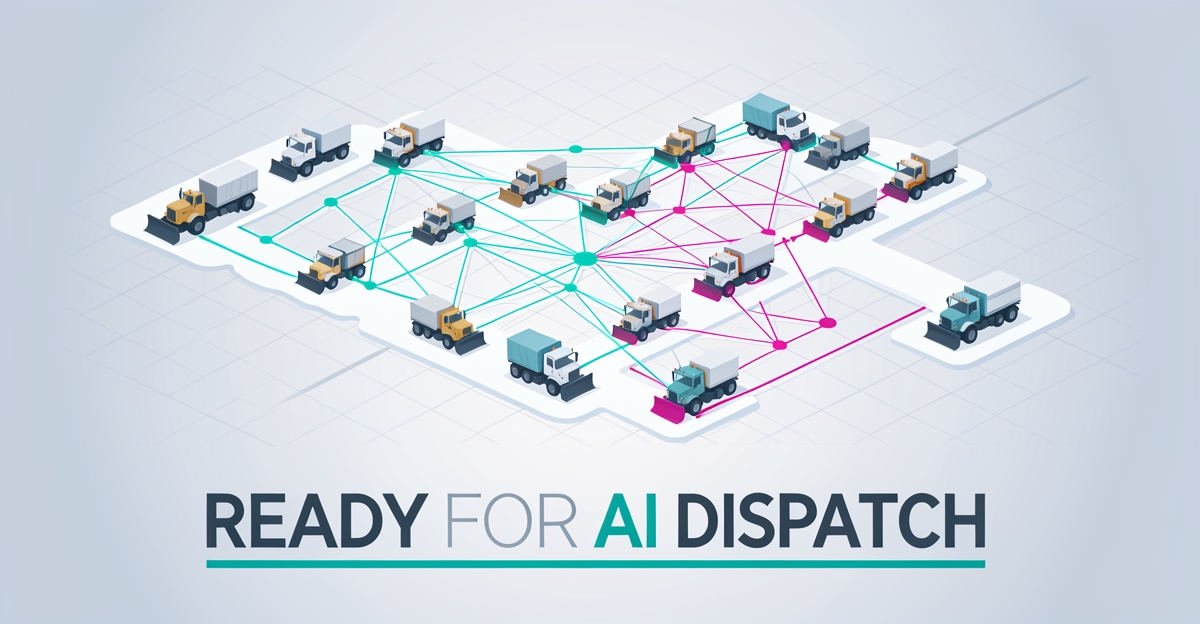
7 Signs Your Ice Management Business Is Ready for AI-Driven Service Dispatching
Key Facts
- A large share of AI investment is wasted when companies implement tools without business process expertise, implementation guidance consistently points to process-first sequencing.
- Aligning AI with existing workflows, rather than forcing teams to adapt to rigid tools, is widely reported to shorten implementation timelines.
- Most successful AI implementations begin with business logic mapping before any technology is selected.
- Poor data quality and fragmented governance are repeatedly cited as top barriers to measurable AI results.
- Gradual, phased integration with proper change management is associated with higher employee satisfaction and smoother adoption.
- AI tools that match a business's own terminology and workflows tend to see meaningfully better adoption and faster time-to-value.
Hire a team member that works 24/7 — for less than a part-time wage.
AI receptionists, SDRs, dispatchers and 99+ roles. Trained on your business, fully managed.
Not sure where to start? Ask our AI planner
Why Manual Dispatch Breaks Down During Peak Ice Events
Peak ice events don't create chaos. They expose it. When snow and freezing rain hit, call volume spikes, routes compress, and every manual step in dispatch becomes a delay that customers feel.
Manual dispatch breaks down under that pressure because it relies on the speed of people, not systems. Dispatchers juggle phone calls, texts, spreadsheets, and tribal knowledge while trying to prioritize contracts, technician proximity, and real-time weather. Response times stretch, service windows are missed, and decisions become inconsistent across shifts and crews.
The pattern is consistent: this is a process problem first. AI projects rarely fail because the model isn't smart enough. They fail because the underlying processes are not standardized, the data is messy, or nobody owns the ongoing maintenance. In ice management, that means ad-hoc prioritization and undocumented routing rules get automated, not fixed.
Technology-first approaches accelerate the breakdown. Implementation guidance on AI in business operations consistently warns that a substantial share of AI investment is wasted when companies deploy tools without business process expertise. Without a clear, mapped workflow, AI simply scales confusion faster than the business can control it.
Manual tracking also creates data fragmentation that undermines any future automation. Poor data quality, inadequate architecture, and fragmented governance are repeatedly cited as top barriers to AI success. When customer locations, contract priority levels, service history, and technician availability live in different spreadsheets or heads, dispatch decisions are inconsistent and audit trails disappear.
Peak events magnify three failure points that signal manual dispatch is maxed out:
- Call volume spikes that outpace dispatcher capacity and lead to missed or delayed acknowledgments
- Inconsistent response times across crews because prioritization depends on who is on shift
- Manual tracking of routes and ETAs that creates errors and erodes customer trust
Businesses that align AI with their existing workflows, rather than forcing teams to adapt to a rigid tool, consistently report shorter implementation timelines. That alignment starts with problem-first mapping, not tool selection.
For service businesses in this category, the lesson is practical. Standardize the dispatch process before automating it. Document decision rules, define a single source of truth for operational data, and clarify ownership for maintenance. AIQ Labs takes this approach with AI Workflow Builds: rebuild the one workflow that costs you the most, like dispatch, at a fixed price, in phases, so the system fits your service model rather than forcing a generic tool into peak-season chaos.
When manual dispatch is the bottleneck, the fix isn't more dispatchers on the phone. It's a clear, repeatable process that can be augmented, measured, and improved.
The 7 Readiness Signs Backed by AI Implementation Research
Before investing in AI for your ice management dispatching, assess whether your business has the foundational elements to support it. Readiness hinges less on the technology and more on process maturity, data quality, and strategic alignment. Organizations that begin with clear problem definition and standardized workflows consistently see better outcomes, while those that skip these steps risk wasting much of their AI investment. Below are the seven evidence-based signs that indicate your ice management company is prepared to implement AI-driven dispatching effectively.
The first sign is having a clearly defined problem you want AI to solve, such as reducing response delays during peak snow events or eliminating manual call logging. Most successful AI implementations start with business logic mapping before any tool is chosen. This problem-first approach ensures AI addresses real operational pain points rather than creating new inefficiencies.
Second, your dispatching workflows must be standardized and well-documented. If your team relies on tribal knowledge or ad-hoc decisions, AI will only automate inconsistency. AI projects rarely fail due to model limitations, they fail because underlying processes are not standardized, data is messy, or no one owns maintenance. Mapping your current process, from call intake to technician assignment, is essential before automation.
Third, you need clean, organized data with a single source of truth. Poor data quality, inadequate architecture, and fragmented governance are top barriers to AI success, and many companies see no measurable results from AI investments because of these issues. For ice management, this means centralized, accurate records of customer locations, service history, technician availability, and weather-linked priority rules.
Fourth, leadership must be committed with clear, measurable business objectives. AI priorities should derive from business goals, not the reverse. Whether your objective is cutting average response time by a specific percentage or handling more service calls per day, executive sponsorship and defined KPIs are critical for alignment and accountability.
Fifth, you must have a governance and accountability plan. This includes defining who oversees AI decisions, audits outputs, and manages exceptions. Without structured oversight, errors can compound silently, especially in high-stakes environments like winter dispatching where safety and timing are paramount.
Sixth, plan for workforce redeployment to capture capacity gains. Organizations often create efficiency gains but lack the flexibility to redeploy staff, which stalls productivity. Instead of having dispatchers handle more of the same, retrain them for higher-value tasks like customer relationship management or complex route problem-solving to maximize return on the investment.
Finally, be willing to start small with a controlled pilot. Phased adoption, testing AI on a subset of routes or during specific weather events, allows for learning, refinement, and confidence-building before full rollout. Organizations using gradual integration with proper change management consistently report higher employee satisfaction with new technology, reducing resistance and increasing long-term success.
From Readiness to Results: A Problem-First Implementation Roadmap
Once you've identified the signs your ice management business is ready for AI-driven dispatching, the next step is turning that readiness into a structured implementation plan. A problem-first roadmap begins not with technology, but with a clear understanding of your current operations. Start by conducting a time audit of your dispatching workflow, tracking every task over 3–5 days to pinpoint repetitive, time-consuming activities. Organizations that begin with business objectives and work backward to AI capabilities consistently outperform those that start with technology and search for applications. This audit reveals where delays occur, such as during peak snow events when manual prioritization slows response times.
Next, map the entire dispatch process step by step, including decision points and handoffs. Use a visual tool to outline how service requests move from intake to technician assignment. Then, color-code each task: blue for dispatcher responsibilities, green for technician or customer actions, and orange for tasks AI can handle, like route optimization, priority sorting based on contract terms, or ETA calculation. This visual separation clarifies where automation adds value without disrupting human judgment. Process mapping ensures the technology fits your reality rather than forcing your team to adapt to a rigid system.
Design a pilot focused on a subset of routes or specific weather conditions, such as icy evenings or high-priority municipal contracts, to test the AI dispatcher in a controlled environment. Track performance against defined KPIs like average response time or number of calls handled per hour. Pilots allow teams to adapt and provide feedback before full rollout. Once the pilot proves value, scale the system with governance in place, defining who oversees AI decisions, how data is validated, and how exceptions are handled. AIQ Labs supports this journey with flexible payment models: Start Monthly for ongoing managed support, Build in Milestones for phased delivery of a workflow build, or Own It Outright for full ownership of your custom dispatch automation system. If you'd rather start by offloading intake and dispatch coordination entirely, AI Employees can handle dispatching and reception roles at a fraction of the cost of a human hire. This approach ensures AI doesn't just automate tasks, it transforms your dispatching into a scalable, resilient operation.
Still paying for 10+ subscriptions that don’t talk to each other?
We build custom AI systems you own outright. No vendor lock-in. Full control.
Not sure where to start? Ask our AI planner
Frequently Asked Questions
How do I know if my ice management business is ready for AI dispatching?
What happens if I try to use AI before standardizing my dispatching process?
Do I need perfect data to start using AI for dispatching?
What should my dispatchers do after AI handles routing and prioritization?
Is it better to roll out AI dispatching all at once or start small?
Who is responsible for overseeing AI decisions in dispatching?
When Your Dispatch Is Ready to Work Smarter
The path to AI-driven dispatching isn't about chasing the latest technology, it's about strengthening the foundation you already have. Readiness comes from clear problem definition, standardized workflows, clean data, leadership alignment, governance, workforce planning, and a willingness to start small. When these elements are in place, AI doesn't just automate tasks, it amplifies your team's expertise, reduces response delays during peak events, and turns operational chaos into a scalable advantage. For ice management businesses facing mounting pressure each winter, the real opportunity lies in building a dispatch system that learns, adapts, and grows with you. If you've recognized these signs in your own operations, the next step is to explore how a tailored AI solution could fit your specific workflow. Start with the 2-minute Fit Check, then book a free 30-minute strategy call to map your biggest bottleneck and see where AI can deliver real, measurable value, no obligation, just clarity.
Make AI your competitive advantage — not just another tool.
Strategy, implementation and ongoing optimization. One partner, end to end.
Not sure where to start? Ask our AI planner