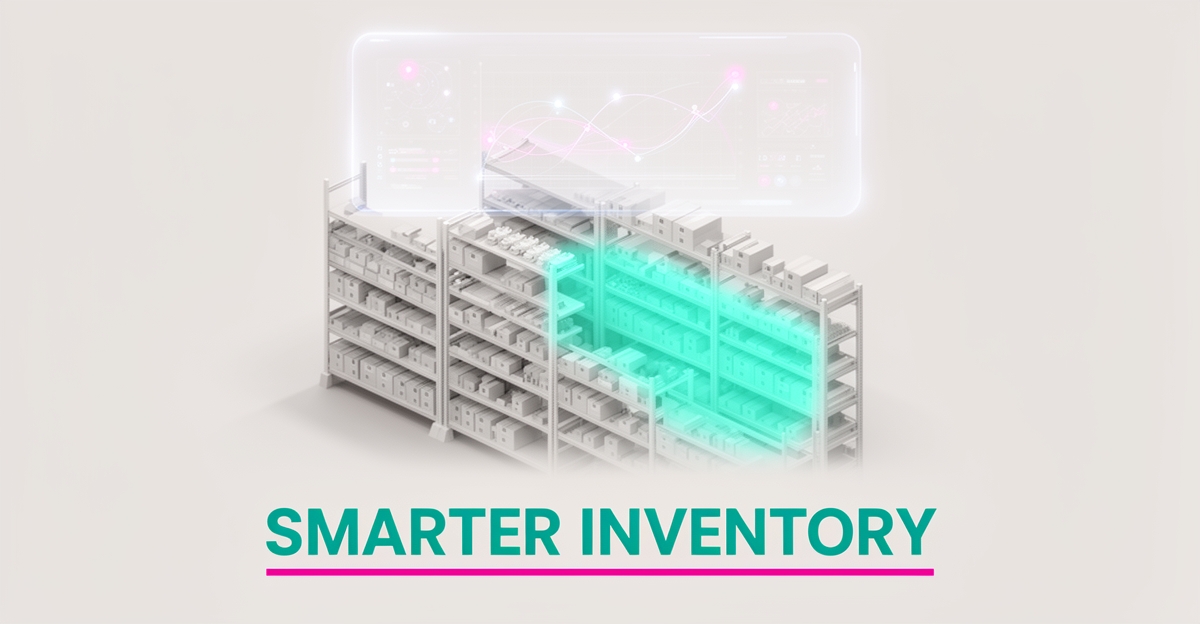
7 Signs Your Industrial Supply Distributor Is Ready to Adopt AI for Inventory Management
Key Facts
- AI-powered inventory systems typically achieve substantially higher demand forecasting accuracy than spreadsheet-based methods, according to industry research
- Companies adopting AI forecasting commonly report meaningful reductions in both stockouts and excess inventory
- Weekly spreadsheet reviews create up to 7 days of lag before stockouts surface, while live monitoring flags issues the same day
- AI systems typically automate the majority of routine replenishment tasks while improving forecast accuracy
- AI-driven inventory management can reduce carrying costs by analyzing real-time demand signals
- A SKU selling 200 units daily loses 1,400 sales opportunities during a 7-day spreadsheet lag
Hire a team member that works 24/7 — for less than a part-time wage.
AI receptionists, SDRs, dispatchers and 99+ roles. Trained on your business, fully managed.
Not sure where to start? Ask our AI planner
Persistent Stockouts and Overstocking Despite Adequate Inventory
There's a particular frustration in distribution: your warehouse has plenty of stock—just not the stock customers actually want. When stockouts and overstocking happen at the same time, the problem isn't your inventory levels. It's your forecasting method.
Traditional inventory management leans on historical sales reports, spreadsheet models, fixed reorder points, and manager judgment. These approaches work for simple operations with stable demand, but they break down as SKUs multiply and demand shifts. Without predictive insights, overstocking drives up carrying costs and blocks capital, while understocking produces lost sales, backorders, and frustrated customers—a direct hit on both revenue and margins.
The core issue is that manual systems simply can't see the patterns. They can't detect demand trends, identify anomalies, or anticipate seasonality across thousands of SKUs, which turns replenishment decisions into guesswork. And the lag compounds the damage: if you're checking a spreadsheet weekly, a fast-moving SKU selling 200 units a day could be near stockout for up to seven days before anyone notices. Live monitoring flags that same issue the same day—seven days of sales you don't lose on a healthy-margin item.
This is exactly where AI-driven forecasting changes the equation. Distributors using AI forecasting typically report meaningful reductions in stockouts and excess inventory. Rather than reacting after a stockout or a clearance sale, AI systems analyze historical patterns, seasonality, and real-time demand signals to recommend reorder timing and quantities before problems become expensive.
For industrial distributors, the signals that your forecasting method has hit its ceiling usually look like this:
- You're expediting shipments for items that somehow ran out while slower SKUs pile up on shelves.
- Reorder points were set months (or years) ago and haven't kept pace with actual demand shifts.
- Excess stock keeps getting discounted or written down, tying up working capital.
- Your team spends more time firefighting backorders than planning ahead.
If several of these sound familiar, the pattern points to a shift from reactive inventory control to predictive planning—the fundamental change AI brings to inventory management. Systems like the intelligent forecasting solutions AIQ Labs builds analyze historical sales patterns, detect seasonality, and generate automated reorder recommendations, all while keeping experienced operators in the loop for supplier issues, strategic orders, and high-value decisions.
The goal remains what it has always been: the right products, in the right quantity, at the right location, at the right time. The difference is whether you get there by reacting to yesterday's data or by predicting tomorrow's demand.
Reliance on Manual Spreadsheets and Reactive Reorder Cycles
Many distributors still run their replenishment on weekly spreadsheet reviews, a rhythm that creates up to 7 days of lag before a stockout or excess shows up on anyone's radar. Live monitoring flags those same issues the same day, turning a week of blind risk into immediate visibility. For a SKU moving 200 units daily, that time gap represents thousands in lost margin every time it happens.
- Manual counts and static reorder points break down as SKU counts and channels multiply
- Disconnected systems prevent real-time tracking of stock movement and demand signals
- Reactive purchasing leads to both costly stockouts and capital-draining overstock
- Human-in-the-loop review remains essential for exceptions, supplier changes, and strategic decisions
AI-driven systems close that gap by ingesting live data from POS, warehouses, and supplier portals, then applying machine learning to detect patterns and recommend replenishment before problems compound. Industry research suggests this approach typically automates the majority of routine replenishment tasks while improving forecasting accuracy substantially. AIQ Labs helps distributors make that shift with custom forecasting models that learn your demand signals and surface same-day reorder actions your team can trust.
Inability to Scale Across Multi-Channel or Multi-Location Operations
As industrial supply distributors expand across multiple sales channels and physical locations, traditional inventory systems begin to falter under the weight of growing complexity. Spreadsheets and manual reorder points simply cannot keep pace with thousands of SKUs generating real-time demand signals from e-commerce platforms, brick-and-mortar stores, and supplier portals. This fragmentation leads to delayed insights, inconsistent forecasting, and costly inventory imbalances that erode margins and customer trust.
AI-powered inventory management overcomes these limitations by integrating live data from all operational touchpoints into a unified forecasting engine. Unlike traditional methods that rely on stale, siloed data, AI systems continuously ingest and analyze inputs from POS terminals, warehouse management systems, and supplier portals to generate accurate, scalable predictions. This enables consistent handling of large catalogs—where human-driven processes break down—by applying machine learning across countless SKUs and demand variables simultaneously.
The result is near-instant replenishment recommendations that reflect current conditions, not outdated assumptions. As noted in industry analysis, AI typically delivers meaningful forecasting accuracy improvements and can cut stockouts dramatically by turning complex, multi-source data into actionable insights. For distributors managing growing operational footprints, this shift from reactive tracking to predictive planning isn't just an upgrade—it's a necessity for maintaining service levels and financial control at scale. To explore how AIQ Labs builds custom inventory intelligence systems that scale with your business, start the two-minute Fit Check at aiqlabs.ai/apply for a free 30-minute strategy call with our team.
Lack of Real-Time Visibility and Proactive Decision-Making
Many industrial supply distributors still rely on outdated systems that offer only a snapshot of inventory levels, making it impossible to anticipate demand shifts before they disrupt operations. This lack of real-time visibility forces teams into a reactive cycle—responding to stockouts or overstock situations after they've already impacted revenue and customer satisfaction. AI transforms this dynamic by delivering continuous, live insights into stock levels across all locations and channels, enabling proactive decision-making instead of damage control.
AI-powered inventory systems provide real-time or near-real-time inventory visibility, a critical upgrade from traditional methods where spreadsheet updates can lag by up to seven days. This delay means problems go unnoticed for a full week, during which time a fast-moving SKU selling 200 units daily could result in 1,400 lost sales opportunities. With AI, anomalies like sudden demand spikes or supplier delays are detected the same day they occur, allowing immediate corrective action before stockouts or excess accumulation escalate.
AI doesn't just show what's in stock—it predicts what will be needed and when. By analyzing historical sales, seasonality, promotions, and real-time supply chain signals, machine learning models forecast demand with a level of accuracy manual methods can't match. This predictive capability triggers automated replenishment recommendations before thresholds are breached, reducing carrying costs and minimizing both stockouts and overstock. For distributors managing thousands of SKUs, this shift from guesswork to precision planning eliminates costly inefficiencies while freeing up working capital tied up in excess inventory.
- Real-time data feeds from POS, warehouses, and supplier portals
- Machine learning models detecting demand patterns and anomalies
- Automated reorder triggers based on predictive forecasts
- Continuous learning from sales and stock movement feedback
- Human-in-the-loop validation for strategic exceptions
AIQ Labs helps industrial supply distributors implement these intelligent systems through custom AI development that integrates directly with existing ERP, CRM, and logistics platforms. By owning the built solution, businesses gain full control over their inventory intelligence without vendor lock-in or ongoing subscription complexity. The result is a self-optimizing inventory operation that anticipates needs, prevents waste, and keeps the right parts in the right place at the right time—turning inventory management from a cost center into a strategic advantage.
How AIQ Labs Delivers Ownable AI Inventory Systems for Industrial Distributors
Moving from spreadsheets to owned intelligence changes how industrial distributors plan stock. When demand patterns are learned and replenishment is recommended in real time, teams stop firefighting stockouts and overstock.
AIQ Labs builds production-ready inventory systems that distributors own outright, with custom AI development, ERP/CRM integration, and human-in-the-loop design. The approach replaces subscription chaos with unified digital assets that learn demand patterns and optimize reordering without vendor lock-in. With 200+ multi-agent systems deployed and four live SaaS products the company runs daily, the builds are proven in production—not slideware.
A practical build starts with data and ends with owned control. The system is architected around three outcomes:
- Custom AI models trained on historical sales, seasonality and multi-channel signals for predictive forecasting
- Deep two-way API integrations with ERP, CRM and warehouse tools for real-time visibility and automated purchase orders
- Human-in-the-loop controls so experienced operators review exceptions, supplier issues and strategic orders
True ownership is central. Clients receive full ownership of custom-built systems, no vendor lock-in, and complete control over customization and future development. That ownership model aligns with how AIQ Labs delivers AI Workflow Builds and AI Operating Systems as production-ready, scalable applications built for long-term growth.
Integration is designed for industrial complexity. Disconnected systems prevent accurate tracking of inventory levels and demand signals, leading to poor decision-making and reactive operations. Custom workflows unify CRM, accounting, project management and inventory data into a single source of truth, eliminating manual data entry and reducing operational errors.
The human-in-the-loop model ensures AI augments expertise, not replaces it. AI processes more data than manual review allows, but experienced operators still review exceptions, supplier constraints and high-value decisions. The best tools stay transparent about reorder quantity and why, so the math is auditable rather than a mysterious verdict.
Implementation follows a phased, production-first process. Discovery and architecture map current processes and data infrastructure, then custom development and integration build the forecasting and replenishment engine. Deployment includes training and monitoring, with ongoing optimization as demand patterns evolve. Engagements are structured to fit how you buy: start monthly, build in milestones, or own it outright.
For distributors facing persistent stockouts, excess inventory tying up working capital, or slow reactive reorder cycles, an owned AI inventory system turns inventory from a cost center into a competitive advantage.
Still paying for 10+ subscriptions that don’t talk to each other?
We build custom AI systems you own outright. No vendor lock-in. Full control.
Not sure where to start? Ask our AI planner
Frequently Asked Questions
How do I know if my inventory problems are bad enough to need AI?
How much can AI actually improve demand forecasting accuracy?
We check our spreadsheets weekly—is that really a problem?
Will AI replace our inventory managers and purchasing team?
Is AI inventory forecasting a black box we can't audit?
How long does it take to implement AI inventory management?
Turn Inventory Guesswork into Strategic Advantage
The signs are clear: when stockouts and overstocking coexist, spreadsheets lag behind real-time demand, or scaling across channels creates chaos, your inventory management has hit the limits of traditional methods. AI-driven forecasting doesn't just automate reordering—it shifts you from reactive firefighting to predictive planning, cutting stockouts, reducing excess inventory, and freeing up working capital tied up in dead stock. For industrial distributors, this means fewer lost sales, lower carrying costs, and a team focused on strategy instead of spreadsheets. The shift starts with clarity: take the free two-minute Fit Check at aiqlabs.ai/apply to see where AI can unlock measurable gains in your operation—then schedule a no-obligation 30-minute strategy call to map your path forward.
Make AI your competitive advantage — not just another tool.
Strategy, implementation and ongoing optimization. One partner, end to end.
Not sure where to start? Ask our AI planner