7 Signs Your Lawn Mowing Business Is Ready for AI-Powered Scheduling
Key Facts
- AI-powered scheduling typically increases daily job capacity through optimized routing and real-time crew-availability matching
- Automated appointment reminders and confirmations reduce no-shows and missed callbacks
- Industry surveys suggest most landscaping businesses still rely on manual texts and calls for customer communication, leaving a wide gap for early adopters
- Labor shortages remain a top risk for landscapers, making it hard to fix scheduling chaos by hiring another coordinator
- A phased rollout, one workflow, measured for 30 days, is the lowest-risk way to prove ROI before scaling
Hire a team member that works 24/7 — for less than a part-time wage.
AI receptionists, SDRs, dispatchers and 99+ roles. Trained on your business, fully managed.
Not sure where to start? Ask our AI planner
You're Losing Revenue to Scheduling Chaos and Missed Appointments
Every double-booked crew and forgotten callback chips away at your bottom line, and in a labor market this tight, you can't afford the leaks. Landscaping continues to face persistent labor shortages, which means every scheduling failure leaves revenue on the table that competitors are ready to capture.
Manual scheduling systems buckle under growth pressure in predictable ways. When you're juggling paper calendars, text messages, and mental notes, double bookings become inevitable, and each one costs you either a frustrated customer or an idle crew burning payroll while they wait.
The financial damage compounds quickly:
- Missed appointments that force customers to wait days for rescheduling, often pushing them toward competitors
- Inefficient routes that waste fuel and limit your crew to fewer jobs per day than optimized routing allows
- Inconsistent follow-ups that let one-time customers slip away instead of converting to recurring contracts
- After-hours calls that go unanswered because you're on a mower, not at a desk
The routing inefficiency alone carries a steep price. Industry analyses of AI-powered scheduling consistently point to meaningful gains in daily job capacity, meaning a crew currently completing six jobs daily could often handle seven or eight with optimized routing and automated schedule management.
Customer communication presents another revenue leak. Many lawn care businesses still rely on manual texts and calls that fall through the cracks during busy periods. Each missed confirmation or delayed follow-up erodes the trust that turns seasonal customers into year-round contracts.
The staffing situation makes these operational gaps even more expensive. With staffing repeatedly cited as one of the biggest risks in landscaping surveys, you can't solve scheduling chaos by simply hiring another office coordinator, the labor pool isn't there, and neither is the budget.
AI-powered scheduling systems address these failures by automatically matching crew availability to customer requests, optimizing daily routes in real time, and sending consistent appointment confirmations without manual intervention. Businesses that adopt these tools early are typically the ones capturing revenue that manual systems let slip away.
AIQ Labs builds scheduling automation that integrates with your existing workflows, handling appointment booking, route optimization, and customer follow-ups while your team focuses on the actual work. The goal isn't replacing your judgment, it's eliminating the administrative chaos that costs you jobs.
AI-Powered Scheduling Delivers Measurable Gains Without Disrupting Your Workflow
What if your crews could complete more jobs every day without hiring a single new employee? AI-powered scheduling makes this possible by eliminating the inefficiencies that keep lawn care businesses stuck at their current capacity.
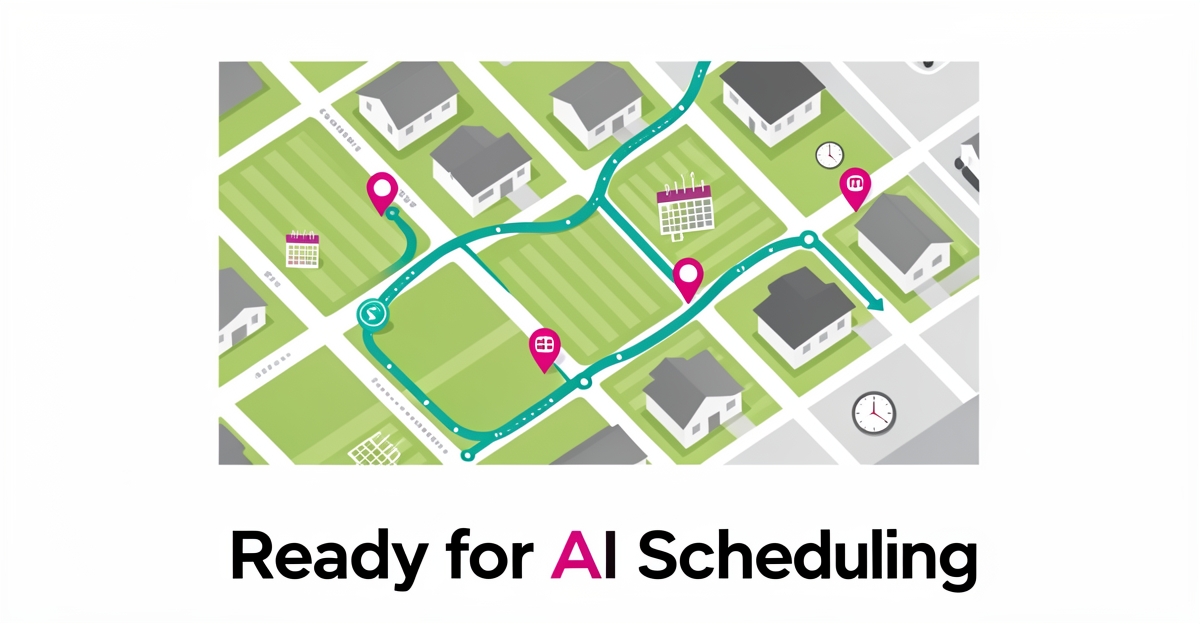
AI-powered scheduling works through intelligent route optimization that analyzes job proximity, traffic patterns, and crew availability. These systems continuously adjust schedules based on real-time conditions and weather updates, ensuring your teams spend more time mowing and less time driving between appointments.
The financial impact compounds quickly. Businesses using AI scheduling tools typically grow faster than those running on manual processes, primarily through improved operational efficiency and customer retention. This acceleration stems from AI's ability to handle the administrative burden that usually consumes hours of your day.
Beyond route optimization, AI scheduling platforms deliver measurable improvements across your entire operation:
- Automated appointment reminders that reduce no-shows by keeping clients informed without manual texting or calling
- Dynamic rescheduling that instantly adjusts routes when weather delays or cancellations occur
- Intelligent crew assignment based on equipment availability, skill requirements, and geographic proximity
- Consistent customer communication through automated updates about arrival times and service completion
The competitive advantage is clearest in communication. Most landscaping businesses still haven't adopted automated customer notification tools, so early adopters gain a real edge through service consistency and faster response times that differentiate them from competitors still relying on manual processes.
Implementation doesn't require abandoning your existing systems. Modern AI scheduling solutions integrate with tools you already use, including Google Calendar, CRM platforms, and accounting software. This connectivity ensures that appointment bookings, customer data, and route information flow automatically between systems without duplicate data entry.
At AIQ Labs, we build custom AI scheduling systems that work within your current workflows rather than forcing you to adapt to rigid software limitations. Whether that starts with an AI Workflow Build targeting your scheduling bottleneck or grows into a fuller AI Operating System for your whole operation, the technology handles the coordination complexity while your team focuses on delivering quality service.
The pattern is clear: businesses that adopt AI scheduling early position themselves to capture market share while competitors struggle with manual processes. In an industry constrained by labor shortages, the ability to maximize every crew's productivity isn't just an advantage, it's essential for survival.
Start Small, Prove ROI, Then Scale: Your AI Transformation Pathway
Lawn care owners often try to automate everything at once and stall out before seeing value. A phased pathway reduces risk and builds internal confidence while protecting cash flow.
Starting with a single, high-friction workflow, scheduling and dispatch, lets you test AI where it hurts most before committing to larger investments. The efficiency gains show up on weekly reports, not just in theory: more jobs per crew, less fuel burned, fewer missed appointments.
Using your own data to configure the system is critical for adoption. Feed it real examples so responses match your tone and operational style, keep instructions short and clear, and refine as you go. Most landscaping businesses already run on software of some kind, but only a small minority have tried AI, leaving a clear first-mover advantage for disciplined adopters.
This is exactly why AIQ Labs works on a Build in Milestones model. You approve and pay for each phase as it ships, keep everything built so far, and stop anytime. It aligns with the core principle of workflow automation: demonstrate clear ROI before additional investment.
A sensible first phase looks like this:
- Deploy scheduling and dispatch automation to eliminate conflicts and reduce manual call-backs
- Integrate with your existing CRM and calendar so crews see one source of truth
- Measure baseline metrics for jobs per day, fuel use, and missed appointments for 30 days
- Expand to automated client notifications and follow-ups once ROI is proven
AIQ Labs applies this same milestone approach to lawn care operations, designing custom AI systems that streamline appointment booking and task assignment without disrupting existing workflows or losing the human touch. The goal is prove ROI first, then scale.
Allow time for team training focused on features that eliminate daily frustrations. Verify system integration before committing, protect customer data with proper security practices, and track adoption alongside business metrics. When the scheduling layer delivers measurable time savings and revenue lift, teams are ready to expand into estimating, routing, and predictive maintenance with confidence.
Still paying for 10+ subscriptions that don’t talk to each other?
We build custom AI systems you own outright. No vendor lock-in. Full control.
Not sure where to start? Ask our AI planner
Frequently Asked Questions
How do I know if my lawn mowing business is ready for AI-powered scheduling?
Will AI scheduling actually let me handle more jobs without hiring?
Isn't staffing the real problem, not software?
What if my customers don't want automated messages?
How fast can a lawn care business grow with AI scheduling?
Can I try AI scheduling without overhauling my whole system?
The Window Is Open, But It Won't Stay Open Forever
If you recognized your business in even two or three of these signs, double bookings, missed callbacks, routes that waste fuel, crews stuck at six jobs a day, the problem isn't your work ethic. It's that manual scheduling was built for a smaller operation than the one you're running now. AI-powered scheduling consistently frees up capacity most owners didn't know they had, and only a small minority of landscapers have tried AI so far, the first-mover advantage is still available, but it shrinks every season. The smart path is the one we've outlined: start with one workflow, measure results for 30 days, and scale only after the ROI is proven. At AIQ Labs, we build scheduling automation around your existing workflows, not against them, and we'll tell you honestly if there isn't a clear win. Take the two-minute Fit Check at aiqlabs.ai/apply, then book your free 30-minute strategy call, a real working session with an AI engineer to map your biggest bottleneck. Your crews are ready for more jobs. The question is whether your schedule can keep up.
Make AI your competitive advantage — not just another tool.
Strategy, implementation and ongoing optimization. One partner, end to end.
Not sure where to start? Ask our AI planner