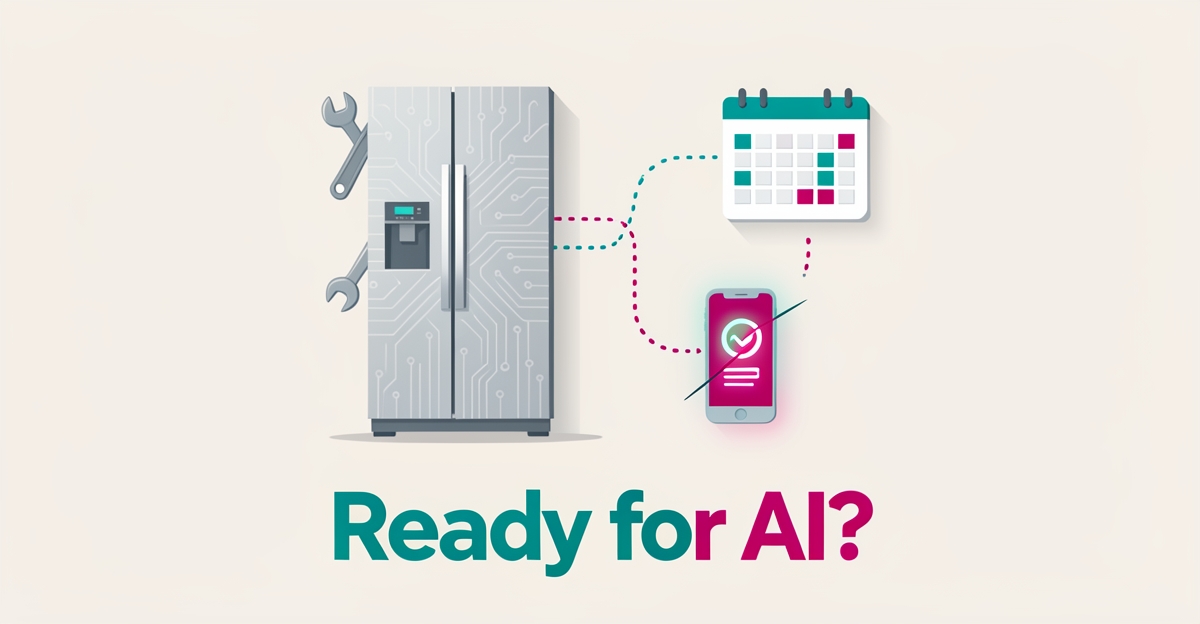
7 Signs Your Refrigerator Repair Business Is Ready for AI-Driven Service Tracking
Key Facts
- The U.S. appliance repair market is a multi-billion-dollar industry with tens of thousands of independent shops competing for the same customers.
- Industry analyses consistently show live-answered calls convert to appointments at roughly double the rate of voicemail.
- Tiered repair-vs-replace quotes typically close at meaningfully higher rates than single-price quotes.
- Shops that grow in 2026 tend to use AI to respond faster, quote smarter, and automate follow-up.
- AIQ Labs has deployed 200+ multi-agent systems and runs 4 live SaaS products daily.
Hire a team member that works 24/7 — for less than a part-time wage.
AI receptionists, SDRs, dispatchers and 99+ roles. Trained on your business, fully managed.
Not sure where to start? Ask our AI planner
The Cost of Operational Blind Spots in a Crowded Market
Every missed call in the appliance repair business is a job handed to a competitor. In a market this crowded, that math adds up fast, and most owners never see it happening.
The scale of the opportunity is hard to overstate. The U.S. appliance repair market is a multi-billion-dollar industry spread across tens of thousands of independent repair businesses competing for the same customers. In a field that dense, the difference between growing and stagnating often comes down to speed of response, not technical skill.
That's where operational blind spots become expensive. Industry analyses consistently show that calls answered live convert to appointments at roughly double the rate of calls that hit voicemail. In other words, a repair shop that can't answer the phone in real time loses a large share of its inbound job opportunities, not because the work was declined, but because nobody picked up.
Manual service tracking compounds the problem in quieter ways:
- Job details living in paper notes, texts, and memory instead of a searchable service history
- Scheduling delays that push appointments days out while faster competitors book same-day
- Technicians dispatched manually, wasting drive time and shrinking the number of jobs completed per day
- Follow-up work, warranty checks, repeat service reminders, falling through the cracks entirely
None of these leaks show up on a profit-and-loss statement, which is exactly why they persist. The revenue is invisible: the appointment never booked, the repeat customer who called someone else, the technician idling between jobs. As industry analysis has put it, the shops that grow in 2026 will be the ones that respond faster, quote smarter, and automate the follow-up work that used to fall through the cracks.
The gap is widening because AI-driven tools have made instant response a baseline expectation. Platforms across the industry now offer AI-powered call answering, estimating, scheduling, and dispatch, and customers increasingly reward the businesses that deliver it. A repair shop running on manual tracking isn't just inefficient; it's structurally slower than the competition.
This is the backdrop against which the seven signs below matter. If your business shows several of them, high call volume you can't cover, delayed scheduling, patchy service history records, the cost isn't hypothetical. It's already being paid in jobs you never knew you lost. The question is whether your tracking systems can scale with demand, or whether they're quietly capping your growth. For repair businesses evaluating that question, managed AI staff like an [AI receptionist](/ai-employees) can answer every call 24/7 at a fraction of the cost of a front-desk hire, while custom builds automate service logs, job assignments, and technician dispatch on your terms.
Signs 1-3: Communication and Conversion Breakdowns
High call volume means nothing if the phone goes to voicemail. In a market with tens of thousands of competing businesses, the shops that grow are the ones that capture demand the moment it arrives. The first readiness signal is a breakdown between calls received and appointments booked.
When calls are answered live, appointment conversion typically lands far above the rate for voicemail, and the gap is widest after hours and on weekends when technicians are on jobs. AI-powered call answering closes it by providing 24/7 coverage that qualifies, books, and dispatches without adding headcount. For appliance repair teams, this is often the first workflow to automate: an [AI employee](/ai-employees) handling reception around the clock, typically at around 80% less cost than a human hire.
The second signal shows up in the quote process. Businesses that send a single-price quote tend to close at lower rates than those offering repair-vs-replace tiered estimates. Industry analysis attributes the lift to clearer options and faster response. Slow quote generation also creates drop-off; customers call multiple shops while waiting.
Signs your quoting is costing you business include:
- Quotes taking hours or days instead of minutes from a job description or photo
- Technicians manually typing estimates between service calls
- No standardized Good/Better/Best options for repair vs. replace decisions
- Follow-up calls or texts falling through the cracks after the initial estimate
AI estimating tools generate quotes in seconds and present tiered options automatically, reducing manual errors and speeding decisions. The third signal is the compounding effect of both issues: high inbound volume paired with slow, inconsistent follow-up.
When scheduling, dispatch, and customer history live in separate tools, teams lose visibility and speed. Market coverage notes the shops that scale in 2026 will be the ones using AI to respond faster, quote smarter, and automate follow-up work that used to fall through the cracks.
AI-driven service tracking addresses these gaps by automating service logs, job assignments, and technician dispatch in one owned system. Rather than rebuilding everything at once, many shops start by [rebuilding the single workflow that costs the most](/workflow-builds) at a fixed price, in phases, then expand once the results are proven.
Signs 4-5: Scheduling Chaos and Dispatch Inefficiency
Manual scheduling starts to break as call volume climbs and technician availability shifts daily. In a market this competitive, the shops that scale are the ones automating the follow-up work that falls through the cracks.
Sign 4 is scheduling chaos. Dispatchers spend hours rebalancing boards, chasing confirmations, and re-routing after last-minute cancellations. The result is delayed repair scheduling, idle trucks, and customers calling back for updates. AI-powered scheduling and dispatch tools are built to optimize routes, reduce travel time, and increase the number of jobs completed per day.
When scheduling is manual, growth ceilings appear quickly. Adding job volume forces adding administrative staff, not technicians. Businesses hit a point where more calls do not equal more completed repairs. Automating service logs, job assignments, and technician dispatch removes that ceiling.
Sign 5 is dispatch inefficiency. Inefficient dispatch shows up as overlapping service windows, technicians driving across town between jobs, and missed arrival windows that erode trust. Field service platforms across the industry now use AI to optimize scheduling and dispatch, but off-the-shelf tools only go so far when your routes, territories, and service rules are your own.
The operational symptoms are consistent and measurable:
- Technicians spend more time on the phone with dispatch than on repairs
- Route changes are reactive, not proactive, leading to overtime and fuel waste
- Same-day requests get declined because the board cannot be re-optimized fast enough
- Customer callbacks spike due to poor visibility into arrival times
Custom workflow automation integrates with your existing CRM, accounting, and scheduling systems to create a single source of truth, rather than adding another dashboard to check.
Businesses that wait to address scheduling chaos often see conversion losses elsewhere. The live-answer versus voicemail conversion gap widens when scheduling cannot keep pace with demand.
The shift from manual to AI-driven dispatch is less about technology and more about capacity. When route optimization and automated dispatch run continuously, teams complete more jobs without adding headcount and maintain service quality as volume grows.
Signs 6-7: Service History Amnesia and Reactive Customer Management
Many repair shops still rely on scattered notes or memory to track past service, making it impossible to spot recurring issues or anticipate customer needs. Without a centralized history, technicians waste time re-diagnosing problems that were already addressed, and customers feel like they're starting from scratch with every visit. This service history amnesia erodes trust and prevents businesses from building long-term relationships based on proven reliability.
AI-powered customer management systems transform this reactive cycle by automatically logging every interaction, repair, and part replacement into a searchable profile that grows smarter with each job. These systems analyze patterns across appliances, technicians, and service dates to predict when a customer might need preventive maintenance or is likely to consider replacement, turning guesswork into proactive outreach. They also surface insights like which appliance models have the highest repeat failure rates or which technicians resolve specific issues fastest, enabling smarter dispatch and targeted upsells.
By shifting from reactive fixes to predictive care, repair businesses stop treating each service call as a transaction and start nurturing it as part of an ongoing relationship. AI systems flag customers who haven't had maintenance in over a year, suggest seasonal check-ups based on local climate patterns, or even automate follow-ups after a repair to confirm satisfaction, all without manual effort. This level of attentiveness turns one-time clients into loyal advocates who refer others and are less price-sensitive when upgrades are needed. As the appliance repair market grows more competitive, the ability to anticipate needs before the customer even expresses them becomes a defining advantage. Shops that connect call answering, dispatch, and customer history into [one connected operating layer](/ai-operating-systems), built in phases and owned outright, consistently outperform peers on retention and referrals.
From Recognition to Implementation: Your AI Service Tracking Roadmap
Recognizing the seven signs is only half the equation. The shops that actually grow in a crowded market are the ones that move from recognition to a structured implementation plan, turning AI-driven service tracking into an operational advantage rather than another stalled software experiment.
Start with a needs assessment. Map where your workflow breaks down: missed calls, delayed scheduling, incomplete service histories. Quantify the cost of each. If voicemail is catching your overflow calls, the math is stark, live call answering converts at roughly double the rate of voicemail, according to consistent industry findings.
Next, evaluate tools honestly. Off-the-shelf platforms like ServiceTitan, Jobber, Housecall Pro, Workiz, and Service Fusion offer AI-powered call answering, estimating, scheduling, and dispatch, typically on monthly subscriptions or per-technician pricing. Compare features against your actual bottlenecks, not a feature checklist.
Then plan integration and training deliberately. Four consistent challenges stall implementations:
- Integration with existing systems and processes
- Data quality and accuracy in your service records
- Customer adoption and acceptance
- Security and compliance
Data quality deserves special attention. AI service tracking is only as good as the history feeding it, if your technicians' logs live on paper invoices and scattered spreadsheets, clean that up before automating anything on top of it. Training matters just as much: your staff needs to understand not just which buttons to press, but why the new workflow exists.
Finally, monitor performance against the baseline you established in step one, and adjust. This is where the build-versus-rent decision becomes real. Generic subscriptions get you started, but they're built for everyone and therefore no one, your dispatch rules, your service history structure, your customer communication cadence all get squeezed into someone else's template. This is why owned systems have gained traction among repair businesses. AIQ Labs builds AI systems you own outright rather than rent month to month, with flexible payment models, start monthly, build in milestones, or own it outright, so there's no vendor lock-in and no per-seat fees compounding as you grow.
The right sequencing looks like this: assess, evaluate, integrate, train, monitor, then scale what works. Whether you choose an off-the-shelf platform or a tailored build, the shops pulling ahead in 2026 are responding faster, quoting smarter, and automating the follow-up work that used to fall through the cracks. If you want clarity on which path fits your operation, [start with a 2-minute Fit Check](/apply) and a free 30-minute strategy call can map your biggest bottleneck and identify the highest-ROI automation opportunities, no obligation, just a real working session.
Still paying for 10+ subscriptions that don’t talk to each other?
We build custom AI systems you own outright. No vendor lock-in. Full control.
Not sure where to start? Ask our AI planner
Frequently Asked Questions
How many jobs do appliance repair shops lose when calls go to voicemail?
What are the signs my repair business needs AI-driven service tracking?
Do tiered quotes really close more jobs than single-price estimates?
Can AI scheduling and dispatch actually help me complete more jobs without hiring more staff?
What should I look for when choosing an AI tool for my appliance repair business?
Why is data quality so important before automating my service records?
Turn Operational Gaps Into Growth Opportunities
If your refrigerator repair business is showing signs like missed calls, slow quoting, scheduling delays, or fragmented service history, you're already losing revenue to faster competitors. These aren't just inefficiencies, they're structural barriers to growth in a field where response speed wins jobs. The good news? AI-driven service tracking closes these gaps by automating call answering, estimating, dispatch, and customer follow-up, without adding headcount or subscription chaos. AIQ Labs helps appliance repair owners move from recognizing these bottlenecks to implementing owned AI systems that automate service logs, job assignments, and technician dispatch, so you can respond faster, quote smarter, and turn every service interaction into a trust-building opportunity. The first step is clarity: [start with a 2-minute Fit Check](/apply) and a free 30-minute strategy call to map your biggest bottleneck and see where AI delivers the highest ROI, no obligation, just a real working session.
Make AI your competitive advantage — not just another tool.
Strategy, implementation and ongoing optimization. One partner, end to end.
Not sure where to start? Ask our AI planner