7 Signs Your Utility Contracting Business Is Ready for AI-Driven Job Scheduling
Key Facts
- UKG research has found that roughly three-quarters of frontline employees report feeling burned out according to UKG research.
- 43% of employees report being often or always exhausted per UKG study findings.
- Burned-out employees are roughly 3x more likely to seek new employment according to UKG research.
- UKG reports burnout can cost organizations up to 17x the cost of training per employee UKG reports.
- Analyses of AI projects suggest most fail to meet objectives, largely due to poor adoption LinkedIn analysis shows.
- Microsoft research cited in the same analysis suggests about two-thirds of the value people get from AI comes down to managers and culture Microsoft research cited.
- Vendors of predictive infrastructure management report significant cost reductions and stronger audit readiness when maintenance shifts from emergency repairs to planned interventions iFactory data indicates.
Hire a team member that works 24/7 — for less than a part-time wage.
AI receptionists, SDRs, dispatchers and 99+ roles. Trained on your business, fully managed.
Not sure where to start? Ask our AI planner
The Burnout Crisis in Utility Contracting: Why Traditional Scheduling Is Failing Your Team
Your best technician just called in sick, again. The overtime budget is bleeding out, and three different crews are waiting for dispatch instructions that should have been sent an hour ago. This isn't just a bad day; it's a systemic failure of traditional scheduling methods that are pushing utility contracting teams to the breaking point.
The numbers reveal a workforce in crisis. UKG research has found that roughly 76% of frontline employees feel burned out, with 43% reporting they are "often" or "always" exhausted. For utility contractors managing complex field operations, these aren't just HR statistics, they're operational red flags that directly impact safety, compliance, and project timelines.
Reactive dispatch creates a cascade of problems that manual scheduling simply cannot solve. When schedulers rely on spreadsheets and gut instinct rather than real-time data, the result is predictable chaos:
- Overtime spirals as dispatchers scramble to cover emergency callouts without visibility into crew capacity or certification requirements
- Inconsistent job assignments breed resentment when the same technicians get stuck with difficult routes while others get preferential treatment
- Safety incidents multiply as exhausted workers lose focus during high-risk electrical or gas line work
- Compliance violations slip through when manual tracking fails to account for labor laws, union rules, or required rest periods
The financial damage extends far beyond overtime pay. The same UKG research found that burned-out employees are roughly three times more likely to seek new employment, and that burnout can cost organizations nearly three times the average cost of health insurance and up to seventeen times the cost of training per employee. When you factor in the specialized nature of utility work, where certifications take years to earn and safety knowledge is literally life-or-death, losing experienced crew members to preventable exhaustion becomes an existential threat.
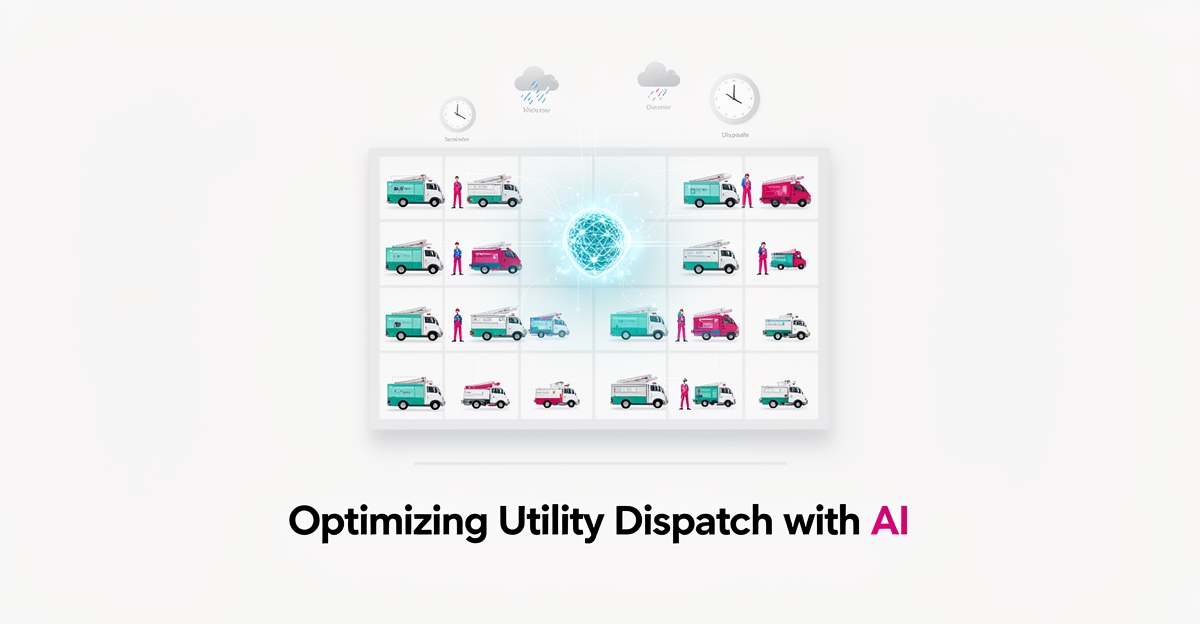
AI-driven smart scheduling addresses these failures by replacing reactive guesswork with predictive intelligence. Instead of waiting for a crew to call in exhausted or a job to run over schedule, AI systems analyze field logs, weather patterns, and job complexity to optimize dispatch before problems occur. This approach automatically balances workloads, ensures compliance with labor regulations, and creates the consistency that burned-out teams desperately need.
At AIQ Labs, we rebuild the one workflow that costs you the most, typically dispatch and scheduling, through our AI Workflow Builds, delivered at a fixed price and in phases so you see results without betting the whole business on a moonshot. By treating scheduling as a strategic function rather than an administrative burden, utility contractors can transform exhausted, reactive teams into sustainable, high-performing operations.
How AI-Driven Scheduling Fixes Workflow Breakdowns in Real Time
When dispatch teams scramble to match crews with jobs using whiteboards and spreadsheets, the workflow itself becomes the bottleneck. AI-driven scheduling changes the equation by ingesting field logs, live weather feeds, and job-complexity scores to build and adjust crew assignments in real time, turning reactive firefighting into proactive orchestration. The result is a dispatch loop that aligns staffing with actual demand before overtime spikes or compliance gaps appear.
Research and industry analysis consistently show that AI only creates value when it fixes the workflow, not when it's layered onto broken processes. Utility contractors who embed scheduling intelligence directly into daily operations see the same pattern that predictive infrastructure management vendors report: significant cost reductions and stronger audit readiness by shifting from emergency repairs to planned interventions. That same principle applies to labor, when the schedule reflects real-time conditions, wasted hours and coverage gaps shrink automatically.
- Field logs feed continuous learning so the model improves with every completed job
- Weather data triggers pre-emptive crew repositioning ahead of storms or heat events
- Job-complexity scoring matches the right skill mix to each work order
- Compliance rules, certifications, union hours, rest periods, are enforced at assignment time
- Dispatchers shift from manual coordination to exception handling and crew support
AIQ Labs builds these systems as part of an AI Operating System, one connected operating layer, built in phases and owned outright by you, unifying field logs, weather feeds, and compliance rules into a single dispatch brain. The technology doesn't replace human judgment; it surfaces the right decision at the right moment so supervisors can focus on safety, quality, and crew wellbeing. And if you'd rather start smaller, an AI Employee handling dispatch or scheduling coordination can prove the concept at a fraction of the cost of a full-time hire.
Preparing Your Team for AI Adoption: The Human-Centered Implementation Framework
The technology is only the beginning. Microsoft research suggests that roughly two-thirds of the value your people get from AI comes down to your managers and culture, not the tools themselves. Meanwhile, analyses indicate that around 70 percent of AI projects fail to meet their objectives, largely due to poor adoption by employees. For utility contractors facing frontline burnout rates near 76%, this gap between potential and reality determines whether AI scheduling reduces overtime or becomes another expensive experiment.
The FriendlyCHRO Method, developed by Sharad Verma, offers a three-step framework that puts employees first. BCG research suggests that leaders pulling ahead put the majority of their AI budget into their people, not just software licenses. This approach recognizes that dispatchers, field supervisors, and crew leads need to see how AI tackles their daily challenges, unpredictable weather delays, last-minute emergency calls, certification matching, before they'll trust it with critical scheduling decisions.
- Involve everyone in planning: Bring dispatchers, field supervisors, and crew leads into strategy sessions from day one. Let them define what "good scheduling" looks like for their specific trade, electrical, gas, fiber, so the system reflects real operational knowledge, not theoretical ideals.
- Create emotional buy-in through Q&A and success stories: Hold regular sessions where leadership addresses fears directly. Share concrete examples of how AI-driven crew matching has reduced emergency scrambles and weekend overtime for similar operations. Make the benefits tangible and personal.
- Train with hands-on practice: Move beyond classroom demos. Run simulated dispatch scenarios using actual field logs, weather data, and job complexity factors. Let teams experience how the AI handles a transformer failure during a storm or a permit delay on a fiber pull, then iterate based on their feedback.
This human-centered approach aligns with what AIQ Labs sees across utility contracting engagements: the companies that treat AI adoption as cultural transformation, not tool deployment, are the ones turning rising overtime costs and inconsistent assignments into predictable, optimized operations. The half-life of professional skills is now less than five years, making continuous learning non-negotiable. When your dispatch team understands the "why" behind every AI recommendation, they become partners in optimization rather than passive users of a black box.
Still paying for 10+ subscriptions that don’t talk to each other?
We build custom AI systems you own outright. No vendor lock-in. Full control.
Not sure where to start? Ask our AI planner
Frequently Asked Questions
How do I know if my utility contracting business is ready for AI-driven job scheduling?
Can AI scheduling really reduce burnout for field crews?
Will AI scheduling mess up compliance with labor laws and union rules?
What's the biggest risk if we just keep using spreadsheets for dispatch?
Do crews actually trust AI scheduling, or will adoption fail?
How quickly can AI scheduling show results for a utility contractor?
From Burnout to Balance: Your Path to Sustainable Scheduling
The evidence is clear: utility contractors stuck in reactive scheduling cycles are facing more than just operational headaches, they're watching their best talent burn out while compliance risks and overtime costs spiral. AI-driven job scheduling isn't about replacing your team's expertise; it's about giving dispatchers and supervisors the real-time intelligence to prevent crises before they happen, balancing workloads fairly while automatically enforcing certifications, union rules, and rest periods. The real advantage comes when you pair this technology with a human-centered approach, involving your crew in planning, sharing tangible success stories, and providing hands-on training that turns skepticism into ownership. When your team sees how AI handles a transformer failure during a storm or matches the right skills to a complex fiber pull, they become active partners in optimization. Ready to move from guessing to knowing? Start with the free two-minute Fit Check to see where AI-driven scheduling can eliminate your biggest dispatch bottlenecks, then, if it looks like a fit, book a free 30-minute strategy call. No obligation, just clarity on your specific opportunity.
Make AI your competitive advantage — not just another tool.
Strategy, implementation and ongoing optimization. One partner, end to end.
Not sure where to start? Ask our AI planner