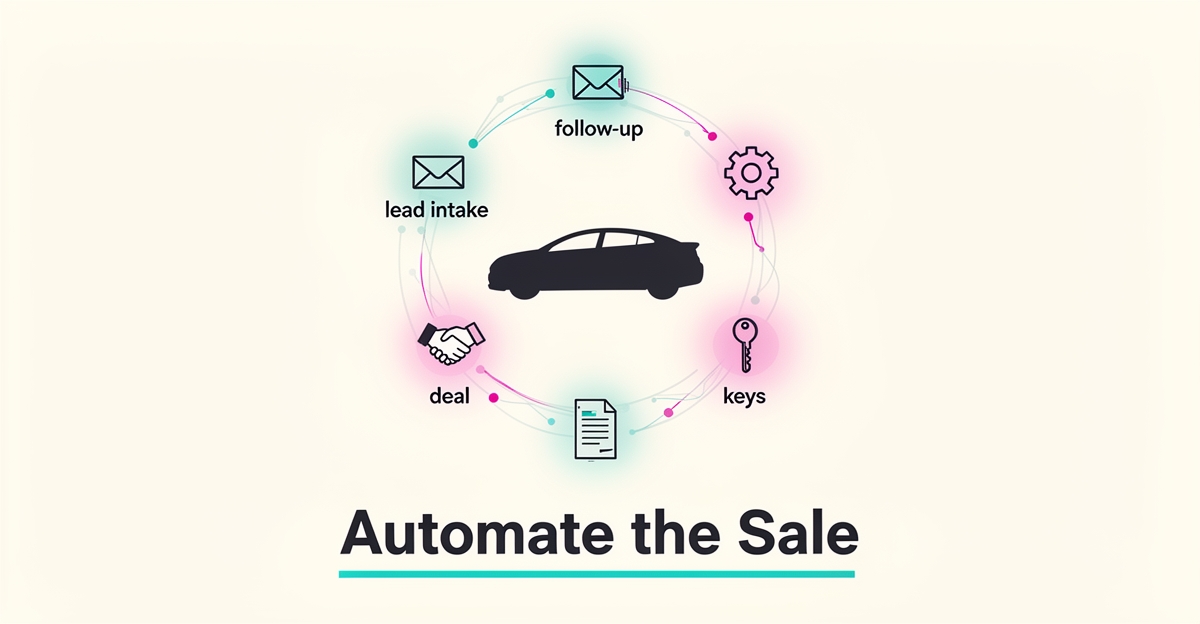
7 Ways AI Can Automate Car Brokerage Workflows from Lead to Sale
Key Facts
- Most dealerships are increasing AI budgets heading into 2026, according to industry research
- Industry analyses of AI-driven dealership operations report meaningfully shorter sales cycles and higher gross profit per dealership operations research
- A large share of routine brokerage review work is automatable with current AI, per brokerage automation analysis
- AIQ Labs has deployed 200+ multi-agent systems and runs 4 live SaaS products daily
- AI Employees typically cost roughly 80% less than an equivalent human hire
Hire a team member that works 24/7 — for less than a part-time wage.
AI receptionists, SDRs, dispatchers and 99+ roles. Trained on your business, fully managed.
Not sure where to start? Ask our AI planner
The Brokerage Bottleneck: Manual Workflows Cost Deals
Car brokerage workflows are often slowed by manual processes that create costly delays from the first lead to final sale. Teams spend hours on repetitive tasks like data entry, follow-up scheduling, and lead qualification—time that could be spent building relationships and closing deals. These inefficiencies directly impact revenue by extending sales cycles and increasing the risk of lost opportunities.
Industry research on AI-driven dealership operations points to meaningfully shorter sales cycles for teams that automate, and brokerage automation analysis suggests a large share of manual review work can be offloaded to AI. This isn't just about saving time; it's about reclaiming capacity to focus on high-value activities that drive conversions.
Common bottlenecks include delayed lead responses, inconsistent follow-up, and manual data synchronization across systems. When leads aren't engaged within minutes, interest drops and competitors step in. Manual processes also introduce errors and inconsistencies that erode trust and complicate negotiations. Over time, these small inefficiencies compound into longer sales cycles, lower close rates, and measurable revenue leakage.
- Slow initial response times reduce lead conversion potential
- Manual follow-up leads to inconsistent engagement and missed opportunities
- Data entry errors create rework and delay deal progression
- Lack of real-time insight prevents proactive deal management
- Disconnected systems force brokers to switch contexts, reducing focus
AIQ Labs addresses these challenges with AI Workflow Builds that automate lead intake, qualification, and follow-up—reducing manual effort while improving speed and accuracy. By eliminating these friction points, brokers can respond faster, nurture leads more effectively, and move deals through the pipeline with fewer delays. The result is a smoother, more predictable path from lead to sale—one that protects revenue and strengthens customer relationships.
AI-Powered End-to-End Automation from Lead to Sale
Car brokerage moves fast, and manual hand-offs are where leads stall. AI compresses the entire funnel from first inquiry to signed sale by automating repetitive work while keeping brokers in control of relationships.
Instant lead intake and qualification is the entry point. AI agents capture form fills, calls and chat messages 24/7, validate contact data, and score intent in real time. That speed matters: industry research on AI-driven dealership operations consistently points to faster response and shorter cycles as the first measurable win.
24/7 inquiry handling removes the after-hours gap. Voice and text agents answer questions, check inventory, and book test drives without waiting for staff. Brokers stay focused on high-value conversations while routine coverage runs continuously.
Automated vehicle matching turns search into recommendation. AI parses buyer criteria, budget and trade preferences, then surfaces relevant stock across lots and partners. Personalization lifts conversion and reduces back-and-forth.
Dynamic offer negotiation support gives brokers data in the moment. AI drafts counter-offers, checks market comps, and flags financing options, accelerating decisions without sacrificing control.
Document and financing prep is a major time sink. AI extracts data from IDs and pay stubs, pre-fills forms, and routes packages for approval. Analysis of manual vs AI workflows highlights how much of this review labor can be automated in brokerage settings.
CRM and follow-up orchestration keeps deals moving. AI logs interactions, triggers next-best actions, and sequences reminders across email, SMS and call. The result is fewer dropped leads and more consistent pipeline hygiene.
Post-sale retention closes the loop. AI schedules service reminders, requests reviews, and identifies upsell opportunities, turning one-time buyers into repeat clients.
The business case is clear. Dealership operations analysis for 2026 finds most dealerships increasing AI budgets, with adopters reporting meaningful revenue and gross-profit gains over manual-only competitors.
End-to-end automation opportunities across the brokerage funnel include:
- Instant lead intake and qualification with 24/7 capture
- Automated vehicle matching and personalized recommendations
- Dynamic offer negotiation support and financing prep
- CRM orchestration and automated follow-up sequences
- Post-sale retention and referral generation
These workflows map directly to AI Workflow Builds for car brokerage. AIQ Labs rebuilds the one workflow that costs you the most—at a fixed price, in phases—so brokers can focus on relationships and deals rather than admin.
With AI-powered end-to-end automation, the brokerage funnel becomes faster, more consistent, and revenue-focused.
Proven Business Impact and Why Brokers Are Adopting Now
The direction is clear: AI-powered workflows deliver measurable business impact for car brokers ready to modernize their operations. According to industry research, dealerships leveraging AI report higher gross profit and stronger sales than competitors still relying on manual processes. These gains stem from AI's ability to automate repetitive tasks, accelerate response times, and free up brokers to focus on high-value activities like relationship building and complex negotiations.
Compared to manual workflows, AI-driven systems create a decisive advantage across efficiency, conversion, and customer experience. Brokerage research suggests a substantial share of routine tasks is automatable with current AI—cutting manual review labor significantly and shortening the sales cycle. This translates to faster lead follow-up, fewer dropped opportunities, and more consistent customer interactions. Where manual processes are prone to delays and human error, AI ensures every inquiry is tracked, qualified, and nurtured with precision—directly boosting conversion rates and revenue potential.
- Higher gross profit reported by AI-enabled dealerships
- Stronger sales versus competitors using traditional methods
- A substantial share of routine brokerage tasks identified as automatable
- Shorter sales cycles with AI integration
- Major reductions in manual review labor through automation
Adoption is accelerating, with most dealerships planning to increase AI budgets in 2026 as they recognize the productivity and growth potential. However, successful implementation hinges on addressing three core challenges: ensuring data quality and accuracy, achieving seamless integration with existing CRM and dealer management systems, and investing in team training to build confidence and competence with AI tools. Brokers who overcome these hurdles position themselves to capture sustainable competitive advantage—not just through cost savings, but by transforming how they engage customers from first lead to final sale. For those ready to move beyond pilots, AIQ Labs partners with brokerages to design and deploy custom AI workflows you own outright—turning automation into a lasting business capability.
How AIQ Labs Builds Production-Ready Brokerage Workflows
The gap between knowing AI works and actually deploying it in production is where most brokerages stall. Industry research shows AI-powered workflows can shorten sales cycles and lift gross profit, yet the path from pilot to production remains the primary barrier.
AIQ Labs closes that gap by building custom, owned systems rather than reselling chatbot widgets. Three entry points map directly to the seven workflow automations covered in this article, from lead intake and enrichment through offer negotiation and post-sale follow-up: AI Employees (managed AI staff—receptionists, SDRs, dispatchers and 99+ other roles, at roughly 80% less cost than a human hire), AI Workflow Builds (rebuild the one workflow that costs the most, at a fixed price, in phases), and AI Operating Systems (one connected operating layer across your business, built in phases and owned outright).
- Start Monthly — Deploy a managed AI Employee (Lead Qualifier, Appointment Setter, or Receptionist) for a flat monthly cost well below a human hire; build, training, integrations, and ongoing optimization included.
- Build in Milestones — Automate one department (sales, finance, or operations) phase by phase; approve each delivery, stop anytime, keep everything built.
- Own It Outright — A full AI operating system across all workflows; one project price or monthly Build Partnership with complete code, agent, and data ownership.
Our production track record backs the architecture: 200+ multi-agent systems deployed for clients, plus 4 live SaaS products we run ourselves every day. That same multi-agent, voice-first foundation powers the brokerage workflows we build—cutting manual task load sharply while keeping your team in control of every deal.
Still paying for 10+ subscriptions that don’t talk to each other?
We build custom AI systems you own outright. No vendor lock-in. Full control.
Not sure where to start? Ask our AI planner
Frequently Asked Questions
How much can AI really shorten the car brokerage sales cycle?
How much manual review labor can AI automate in brokerage workflows?
Will using AI mean I lose control over my customer relationships?
What kind of revenue impact can dealerships expect from adopting AI in brokerage?
Is AI only for large dealerships, or can small brokerages benefit too?
What are the biggest challenges when implementing AI in car brokerage, and how can they be overcome?
Turn the Funnel Into a Revenue Engine
Manual handoffs, slow replies and scattered data are where car brokerage deals stall and revenue leaks. Automating lead intake and qualification, 24/7 inquiry handling, vehicle matching, offer support, financing prep, CRM orchestration and post-sale retention compresses the funnel while keeping brokers in control of relationships. The result is faster response, consistent follow-up and a more predictable path from first inquiry to signed sale. If you want to see where the biggest time and revenue gains are in your specific workflow, start with a focused audit of response time, follow-up consistency and manual data work. AIQ Labs builds custom, production-ready brokerage workflows you own outright, so your team can focus on selling. Take the 2-minute Fit Check at aiqlabs.ai/apply, then book a free 30-minute strategy call at aiqlabs.ai/book to map your bottleneck and highest-ROI automation opportunities. Prefer email? Reach the team at [email protected].
Make AI your competitive advantage — not just another tool.
Strategy, implementation and ongoing optimization. One partner, end to end.
Not sure where to start? Ask our AI planner