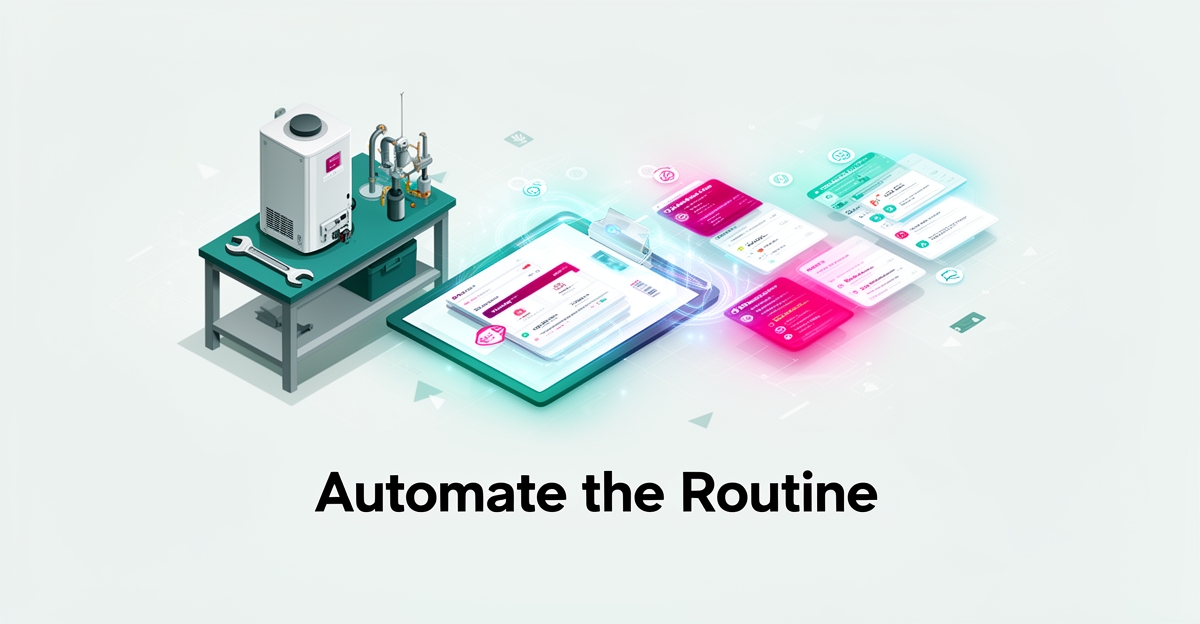
7 Ways AI Can Automate Routine Tasks in a Boiler Repair Shop
Key Facts
- Generative AI can significantly boost productivity for writing and documentation tasks, enabling faster work order logging according to applications research.
- Contact centers using generative AI have reported meaningful productivity gains, streamlining repair shop communications per industry analysis.
- Boiler repair shops typically lose 20+ hours weekly to manual administrative tasks and data entry.
- AI Employees cost roughly 80% less than a comparable human hire while working 24/7.
- AI-driven workflow automation substantially reduces manual data entry errors in field service operations.
- Most AI failures come from disconnected point tools, not from AI itself. Integrated, owned workflows avoid that trap.
Hire a team member that works 24/7 — for less than a part-time wage.
AI receptionists, SDRs, dispatchers and 99+ roles. Trained on your business, fully managed.
Not sure where to start? Ask our AI planner
The Hidden Cost of Manual Admin in Boiler Repair Operations
The daily drag on boiler repair shops starts before the first call even comes in: work orders logged by hand, phones ringing during jobs, missed follow-ups, and dispatch bottlenecks that ripple through the day. These routine admin tasks aren’t just tedious, they’re costly, draining focus from the skilled work that keeps boilers running and customers warm.
Manual processes in field service operations are prone to error and inefficiency, with research showing that businesses lose significant time to repetitive administrative work. For example, studies indicate that generative AI can meaningfully boost productivity for writing tasks, suggesting similar gains are possible when automating routine documentation like work order entries and service notes. Similarly, contact centers using generative AI have reported notable productivity increases, highlighting how AI-driven automation can streamline communication-heavy workflows common in boiler repair shops.
These inefficiencies add up quickly. Many shops report losing 20+ hours per week to manual admin, time that could be redirected toward billable repairs, preventive maintenance, or customer engagement. When technicians pause to log details or dispatchers scramble to reassign jobs due to missed calls, response times slow and customer satisfaction drops. The hidden cost isn’t just in lost hours; it’s in missed opportunities, increased stress on staff, and avoidable mistakes that lead to callbacks or delayed follow-ups.
AI workflows offer a practical fix by taking over repetitive, rule-based tasks without replacing human expertise. Imagine a system that automatically logs work orders from voice notes or emails, assigns the nearest available technician based on skill and location, and triggers personalized follow-up messages after service completion, all without manual input. Such automation reduces the risk of data entry errors, ensures no job falls through the cracks, and keeps the shop running smoothly even during peak demand.
By offloading these routine tasks to AI, boiler repair teams can reclaim time, reduce operational friction, and focus on what they do best: diagnosing complex issues, performing quality repairs, and building trust with clients. The result isn’t just faster response times, it’s a more resilient, responsive operation where technology handles the repetition, and humans handle the judgment.
7 AI Automations That Transform a Boiler Repair Shop
Routine work eats margin in a boiler repair shop. Dispatchers copy call notes, office staff re-type work orders, and follow-ups slip through the cracks while technicians wait for instructions. AI workflows can remove that friction by handling the repetitive steps so crews stay on boilers instead of paperwork.
AI work order logging and extraction turns phone calls, emails, and texts into structured jobs automatically. Voice and text inputs are parsed for address, boiler model, symptoms, and urgency, then logged without manual re-entry. Generative AI meaningfully boosts productivity for writing and documentation tasks according to applications research, which translates into faster, cleaner job records and fewer missed details at intake.
Intelligent technician dispatch matches the right skill set, parts availability, and travel time to each job. AI evaluates live capacity and prioritizes urgent call-outs, reducing idle time and improving first-time fix rates. The automation of routine tasks like dispatch helps reduce manual errors and increase efficiency in field service operations.
24/7 AI phone reception and booking keeps the phone answered after hours. An AI receptionist answers calls, qualifies the issue, books a slot, and sends confirmations. Contact centers using generative AI have reported meaningful productivity gains in industry applications analysis, a lift that carries directly to inbound repair requests and booking speed.
Automated client follow-ups and service reminders protect retention. The system sends post-service check-ins, maintenance reminders, and review requests on schedule. AI-powered tools can automate tasks such as scheduling and routine paperwork as shown in AI applications research, freeing office staff from manual tracking.
AI-powered scheduling and billing closes the loop from job completion to payment. Invoices are generated from work order data, approvals are routed, and reminders are sent automatically. This reduces administrative burden and allows shops to focus on complex tasks that require human expertise.
Customer support chatbots provide instant answers about pricing, service areas, and boiler safety. Chatbots can be used to automate customer service and provide 24/7 support to clients per applications of artificial intelligence coverage, lowering the workload on human agents while improving satisfaction.
Automated quote and invoice processing extracts line items from photos or PDFs and pushes them to accounting. The workflow reduces re-keying and accelerates month-end close.
Boiler repair companies can automate tasks like work order logging, technician dispatch, and client follow-ups using AI workflows. AIQ Labs builds custom systems tailored to field service operations, through managed AI Employees or a focused workflow build, reducing manual errors and speeding up response times through owned, production-ready automation.
The seven automations work best as an integrated system:
- Work order capture from voice, email, and SMS with auto-logging
- Smart dispatch based on skills, parts, and proximity
- 24/7 receptionist for booking and triage
- Automated follow-ups, reminders, and billing
Together they create a leaner shop where technicians do the work only people can do.
How to Implement AI Without Disrupting Your Shop
Implementing AI in your boiler repair shop doesn’t have to mean overhauling everything at once. Start by identifying one high-pain workflow, like work order logging or technician dispatch, where manual errors slow you down and frustrate your team. AIQ Labs helps you deploy an AI Employee to handle that specific task alongside your technicians, not replace them, so your staff can focus on complex repairs while the AI manages routine follow-ups and scheduling. This approach keeps disruption low and builds confidence as you see tangible improvements in response times and accuracy.
Train your team on the new tools during regular shop meetings, keeping sessions short and hands-on so technicians see how the AI reduces their administrative load. Monitor performance against clear goals, such as cutting work order entry time by half or reducing missed follow-ups, using the built-in tracking that comes with every deployment. Many shops worry about upfront costs, but AI Employees typically cost around 80% less than hiring a comparable human for equivalent roles, and you can begin with a Start Monthly plan that includes setup, training, integrations, and ongoing improvements, usually for less than the cost of a part-time hire. If job displacement fears arise, emphasize that the AI handles repetitive tasks like dispatching and client reminders, freeing your skilled technicians to do more billable work.
Roll out in phases using the Build in Milestones option, approve and pay for each completed workflow automation before moving to the next, or choose Own It Outright if you want full ownership of a custom AI operating system from day one. Either way, you retain control, avoid vendor lock-in, and scale only when the data shows it’s working. By starting small, proving value, and expanding deliberately, you turn AI from a risky experiment into a reliable teammate that keeps your shop running smoother, day after day.
From First Call to Follow-Up: Owning Your Automated Workflow
Imagine a boiler repair shop where the phone rings and an AI dispatcher instantly logs the call, creates a work order, and assigns the nearest certified technician, all before the receptionist hangs up. This isn’t a futuristic vision; it’s the kind of system AIQ Labs builds for field service companies, where end-to-end dispatch automation eliminates manual scheduling delays by integrating AI Dispatcher and work order management roles directly with CRM and calendar systems. Industry research shows generative AI can lift productivity in contact centers, a gain amplified when applied to high-volume, time-sensitive workflows like emergency boiler repairs.
From the first customer call to post-service follow-up, every touchpoint becomes a seamless, automated sequence: AI chatbots handle after-hours inquiries and schedule appointments, AI-powered tools auto-populate work orders from voice notes or photos, and routing logic optimizes technician assignments based on real-time availability and parts. After service completion, the system triggers personalized satisfaction surveys and maintenance reminders without human intervention. This level of integration isn’t achievable with disconnected point solutions, it requires a custom-built system where data flows natively between dispatch, invoicing, and customer communication tools, eliminating the 20+ hours weekly that small shops typically lose to manual data entry across siloed platforms. Fewer handoffs mean fewer missed appointments, more accurate billing, and higher first-time fix rates.
Owning this system, not renting fragmented tools, means boiler repair shops retain full control over their workflow logic, data, and future enhancements. Unlike subscription-based platforms that lock businesses into rigid architectures and recurring fees, AIQ Labs’ custom development approach transfers full IP ownership upon completion, allowing shops to adapt the system as their service offerings evolve or integrate new tools like inventory management or warranty tracking. This ownership model aligns with our three entry points: managed AI Employees across 99+ roles (including AI Dispatcher and work order managers), a fixed-price workflow build for the one process that costs the most, or a phased AI Operating System that connects the whole shop in one layer you own outright. For shops ready to move beyond manual processes, we start with a free strategy call to map bottlenecks and identify high-ROI automation opportunities, no obligation, just clarity on where AI can deliver measurable gains. Begin your Fit Check at aiqlabs.ai/apply, then schedule your free 30-minute strategy call at aiqlabs.ai/book.
Still paying for 10+ subscriptions that don’t talk to each other?
We build custom AI systems you own outright. No vendor lock-in. Full control.
Not sure where to start? Ask our AI planner
Frequently Asked Questions
How much admin time can AI actually save my boiler repair shop each week?
Will AI replace my technicians or dispatchers?
Can AI really improve productivity for writing and calls in field service?
What are the first AI automations boiler shops should start with?
Is AI safe to implement without disrupting daily operations?
How does AI reduce errors and missed jobs in boiler repair?
Ready to Reclaim Your Shop’s Time?
AI isn’t here to replace your technicians; it’s here to handle the repetitive admin that slows them down. From logging work orders to dispatching crews and chasing follow-ups, these seven automations work together to cut errors, speed up response times, and free your team for the complex repairs that actually drive revenue. Shops that implement these workflows often reclaim 20+ hours a week, time that goes straight back into billable work and customer care. If you’re ready to stop losing hours to manual data entry, start with a two-minute Fit Check at aiqlabs.ai/apply. You’ll get a clear read on your biggest bottleneck, then a free 30-minute strategy call at aiqlabs.ai/book to map a practical rollout, no obligation, just a straightforward plan to make your shop run smoother.
Make AI your competitive advantage — not just another tool.
Strategy, implementation and ongoing optimization. One partner, end to end.
Not sure where to start? Ask our AI planner