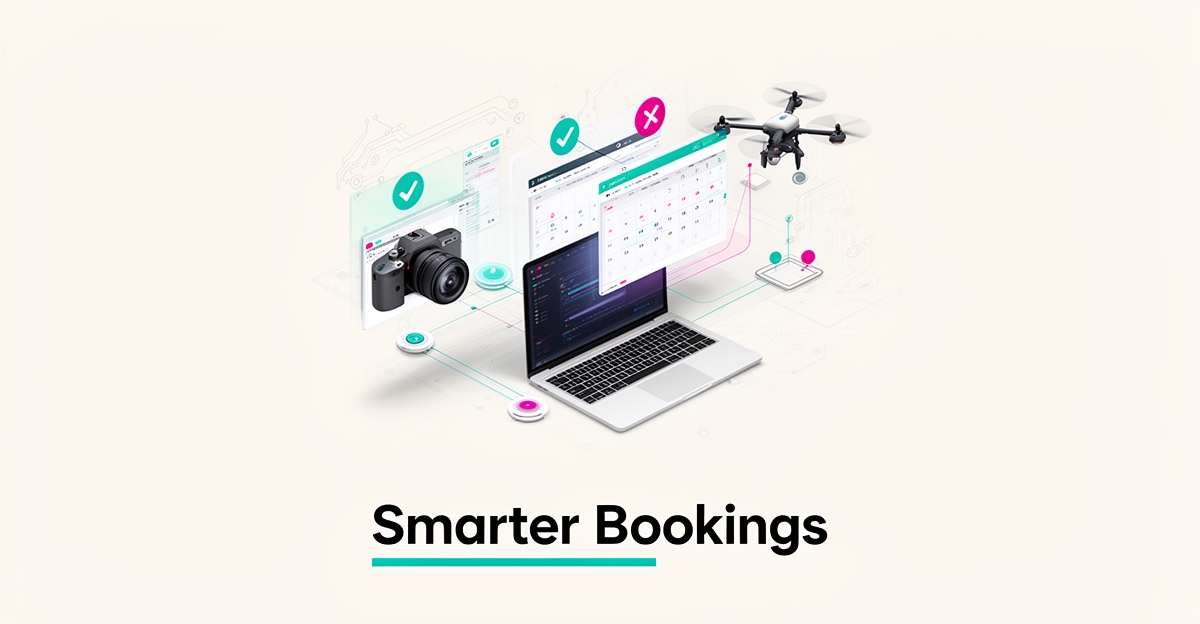
7 Ways AI Can Improve Equipment Booking and Availability Management
Key Facts
- The large majority of Schedule It users reported booking errors before automation according to Schedule It's user data
- 97% of Schedule It users reported improved equipment utilization after intelligent scheduling according to Schedule It's user data
- AI scheduling systems can reduce no-shows by up to 60% according to SchedulingKit research
- 71% of Schedule It users reported reduced email and phone calls after adopting equipment scheduling
- 92% of Schedule It users reported reduced booking errors following automation implementation
- AI-powered booking systems offer omni-channel access via chat, voice, text and social media per SchedulingKit
Hire a team member that works 24/7 — for less than a part-time wage.
AI receptionists, SDRs, dispatchers and 99+ roles. Trained on your business, fully managed.
Not sure where to start? Ask our AI planner
The Hidden Costs of Manual Equipment Booking
For equipment-heavy businesses, the daily reality of manual booking often means juggling double bookings, chasing down ghost reservations, and losing 20+ weekly hours to endless phone-tag scheduling. This isn't just an inconvenience—it's a utilization leak draining operational efficiency. According to Schedule It's user data, 92% of users experienced booking errors before automation, turning scheduling into a costly liability rather than a simple task. These errors directly translate to idle equipment, frustrated teams, and missed revenue opportunities that compound over time.
The hidden costs extend far beyond scheduling mishaps. Manual systems create blind spots in availability tracking, leading to overbooking during peak demand and underutilization during lulls. Staff spend valuable time reconciling calendars, verifying bookings, and managing last-minute changes—time that could be spent on core business functions. This constant firefighting erodes morale and prevents teams from focusing on strategic growth initiatives. Without real-time visibility into equipment usage patterns, businesses operate reactively, unable to anticipate demand or optimize asset allocation effectively.
Common pain points in manual equipment booking include:
- Double bookings causing operational delays and client dissatisfaction
- Ghost reservations that block availability without actual usage
- Time-intensive coordination consuming 20+ hours weekly per team
- Inaccurate utilization reporting hindering forecasting and planning
- Inconsistent customer experiences due to manual handoffs and errors
These inefficiencies represent more than administrative overhead—they signal a fundamental gap in how equipment-intensive businesses manage their most valuable physical assets. When booking processes remain manual, utilization becomes unpredictable, and the true cost of equipment ownership rises due to inefficiency rather than necessity. Addressing this leak requires shifting from reactive scheduling to intelligent, automated systems that continuously optimize availability based on real-time demand and usage patterns. For businesses ready to close this gap, AIQ Labs rebuilds the booking workflow itself through AI Workflow Builds—a fixed-price, phased rebuild of the one workflow that costs you the most. To see whether your booking process qualifies, start with the two-minute Fit Check at https://aiqlabs.ai/apply.
From Static Calendars to Intelligent Availability Engines
Equipment availability used to be a spreadsheet problem. Today it is a prediction problem.
Manual booking relied on staff answering phones during business hours, updating a shared calendar, and hoping no one double-booked the same asset. That era offered high personalization but low efficiency, high cost in staff time, and a high no-show rate.
Online booking links changed the access model. Clients could self-serve 24/7 through a static calendar, which cut basic friction but left intelligence behind. Personalization stayed low, automation remained basic, and conflicts still required human cleanup.
AI-powered scheduling closes that gap. SchedulingKit's framework maps this as a clear evolution from manual to online links to AI-powered systems, with availability moving from limited hours to 24/7 and automation from minimal to extensive.
An intelligent availability engine does not just display a grid. It learns from usage patterns, forecasts demand, and prevents conflicts before they happen. The system gets smarter with use, and the more the system is used, the better it gets at predicting preferences and preventing no-shows.
This shift is transformative, not incremental. Industry analysis notes that Calendly's AI additions are incremental rather than transformative, while true AI scheduling brings together booking pages, AI chatbots, voice agents, and smart reminders in a single system.
The practical difference shows up in three moves:
- Dynamic availability that fills gaps and suggests alternatives when preferred slots are full
- Omni-channel access so clients can book via chat, voice, text, social media, or a traditional booking page from one system
- Predictive guardrails that reduce no-shows by up to 60%
For equipment-intensive operations, the impact compounds. Schedule It's user data shows 97% of users reported improved equipment utilization, with 92% reporting reduced booking errors and 71% reporting reduced email and phone calls.
AIQ Labs applies this same principle in its workflow automation work, building custom systems that dynamically update availability based on real-time demand and user behavior rather than static rules. The result is availability as a dynamic engine, not a static calendar, where rental cycles optimize themselves and double bookings become a prevented event, not a daily firefight.
7 AI Capabilities That Change Equipment Utilization
Equipment sits idle while demand goes unmet because traditional calendars can't read patterns or act on them. AI changes that by turning availability data into predictive, self-optimizing workflows that fill gaps before they cost revenue.
Predictive no-show reduction protects utilization from the start. SchedulingKit research shows AI scheduling systems can reduce no-shows by up to 60%. The system learns usage patterns over time and triggers smart reminders and waitlist offers that keep slots filled.
Omni-channel booking removes friction from every entry point. AI-powered booking systems offer omni-channel access so clients can book via chat, voice, text, social media, or a traditional booking page from one system. This unified access increases capture rate and reduces manual hand-offs.
Dynamic gap-filling and alternative suggestions keep utilization high in real time. AI can fill gaps in your schedule, suggest alternative times when preferred slots are full, and optimize provider utilization. The more the system is used, the better it gets at predicting preferences and preventing no-shows.
Real-time utilization forecasting gives operators a forward view, not a rearview mirror. Schedule It's user data shows 97% of users reported improved equipment utilization after adopting intelligent scheduling. Forecasting models analyze historical booking patterns, client preferences, and resource availability to allocate assets proactively.
Automated rebooking and waitlist management closes revenue leaks without staff intervention. When a cancellation occurs, the system instantly offers the slot to waitlisted users, confirms with automated reminders, and updates calendars across tools. This kind of automation is exactly what an AI Workflow Build delivers for equipment operations: one broken workflow, rebuilt properly, at a fixed price.
Natural language scheduling makes booking intuitive. Natural Language Processing lets clients interact with the system using natural language, making the booking process more intuitive and conversational. Voice agents and chatbots handle intent, check availability, and confirm in one flow.
Cross-system integration eliminates manual data entry and double bookings. AI systems connect to existing calendars, inventory, and CRM tools to maintain a single source of truth. AIQ Labs develops custom systems that dynamically update availability based on real-time demand and user behavior, replacing spreadsheet syncs with automated data flows.
These capabilities compound:
- Predictive no-show modeling with automated reminders and waitlist backfill
- Omni-channel booking via chat, voice, text and social from one platform
- Real-time gap filling and alternative time suggestions
- Natural language scheduling that learns preferences over time
Together they shift equipment management from reactive admin to continuous optimization, reducing errors and maximizing rental cycles.
What Implementation Looks Like for Equipment-Heavy Teams
For equipment-heavy teams, implementing AI-driven booking isn't about replacing existing workflows overnight—it's about strategically layering intelligence onto systems already managing dispatch, maintenance, and field crew coordination. The process begins with platform selection that respects current investments, prioritizing solutions capable of integrating with entrenched dispatch software without requiring a full rip-and-replace. Teams then connect their operational calendars—often tied to maintenance windows and crew shifts—to establish a unified view of equipment availability, ensuring AI recommendations align with real-world constraints like mandatory service intervals or crew certification requirements.
Next comes rule configuration, where business logic specific to equipment-heavy operations is encoded: defining buffer times between jobs for setup/teardown, prioritizing certain equipment types during peak demand, or automatically blocking slots during scheduled maintenance. This step is critical for translating field expertise into system constraints the AI can respect. Once foundational rules are set, AI features like predictive demand modeling and intelligent rescheduling are enabled, allowing the system to learn from historical booking patterns—such as which equipment types consistently face shortages on Mondays or how weather delays impact weekend availability—to proactively suggest alternatives before conflicts arise.
Finally, rigorous testing validates the system against real-world scenarios: simulating last-minute crew callouts, unexpected equipment failures, or urgent client requests to ensure availability updates flow correctly from the dispatch core. AIQ Labs' build approach creates deep, bidirectional integrations with the very systems running dispatch, invoicing, and inventory—meaning availability isn't siloed in a separate booking tool but dynamically updates from the same source that triggers work orders and generates service bills. This ensures field teams see accurate, real-time availability whether they're checking via a mobile app, receiving a voice agent update, or reviewing a dispatcher's screen, with booking errors reduced—as reported by 92% of Schedule It users after automation—and utilization rates boosted through smarter gap-filling during maintenance windows.
- Platform selection focused on compatibility with existing dispatch and maintenance software
- Calendar integration aligning crew shifts, service intervals, and booking windows
- Rule configuration encoding equipment-specific constraints like setup times and priority access
- AI feature enablement for predictive demand learning and intelligent rescheduling
- Testing against real-world disruptions like crew callouts and emergency repairs
By anchoring AI enhancements to the operational heartbeat of equipment management—where dispatch decisions, maintenance schedules, and invoicing originate—teams gain intelligence that doesn't just optimize bookings but strengthens end-to-end operational fidelity. This approach transforms availability management from a reactive chore into a proactive advantage, directly supporting the core promise of AI in equipment booking: maximizing asset utility without adding complexity to crews already juggling demanding field schedules. For teams ready to map this path to their specific constraints, starting with a focused workflow assessment reveals where AI delivers the clearest operational lift. Start the Fit Check to identify your highest-impact automation opportunity in equipment booking and availability management.
From Booking Fix to Operational Intelligence
The true value of AI in equipment booking extends far beyond fixing scheduling gaps—it becomes the foundation for an intelligent operating system. AI doesn't just prevent double bookings or reduce no-shows by up to 60% and optimize provider utilization—it generates the data and workflows that power broader automation. Each booking interaction feeds insights into demand forecasting, maintenance scheduling, and inventory planning, turning a tactical function into a strategic asset. This shift from reactive booking to proactive operational intelligence is where AI delivers its highest ROI, especially when built on a system designed to scale.
AIQ Labs enables this evolution through three entry points: AI Employees like Dispatchers and Booking Agents that handle real-time coordination at a fraction of the cost of a human hire, AI Workflow Builds that rebuild your most expensive workflow at a fixed price, and AI Operating Systems that connect everything into one operating layer you own outright. The journey starts with a free Fit Check—a two-minute assessment followed by a no-obligation strategy call—to identify the highest-impact starting point. From there, businesses can build incrementally with milestone-based payments, owning every agent, workflow, and insight they create, ensuring long-term control and continuous improvement without vendor lock-in.
Still paying for 10+ subscriptions that don’t talk to each other?
We build custom AI systems you own outright. No vendor lock-in. Full control.
Not sure where to start? Ask our AI planner
Frequently Asked Questions
How does AI actually prevent double bookings for equipment rentals?
Can AI really reduce equipment no-shows, and by how much?
Will implementing AI booking disrupt my current dispatch and maintenance workflows?
Do my customers have to use a specific app or portal to book equipment?
How does AI improve equipment utilization rates compared to manual scheduling?
Is AI scheduling cost-effective for small equipment businesses?
Turn Equipment Booking from a Cost Center into a Competitive Advantage
Manual equipment booking drains time, creates costly errors, and leaves valuable assets idle when demand is high. AI transforms this reactive process into a predictive, self-optimizing system that reduces no-shows by up to 60%, fills scheduling gaps in real time, and provides omni-channel access so clients can book how they prefer. For equipment-heavy teams, this means higher utilization, fewer double bookings, and staff freed from scheduling firefights to focus on core work. AIQ Labs builds custom AI workflows that integrate with your existing dispatch and maintenance systems—no rip-and-replace needed—so availability updates in real time and intelligence grows with use. The result is not just smoother booking, but a foundation for broader operational intelligence. Ready to see where AI delivers the clearest lift for your equipment operations? Start with the free two-minute Fit Check at https://aiqlabs.ai/apply to identify your highest-impact automation opportunity—no obligation, just clarity.
Make AI your competitive advantage — not just another tool.
Strategy, implementation and ongoing optimization. One partner, end to end.
Not sure where to start? Ask our AI planner