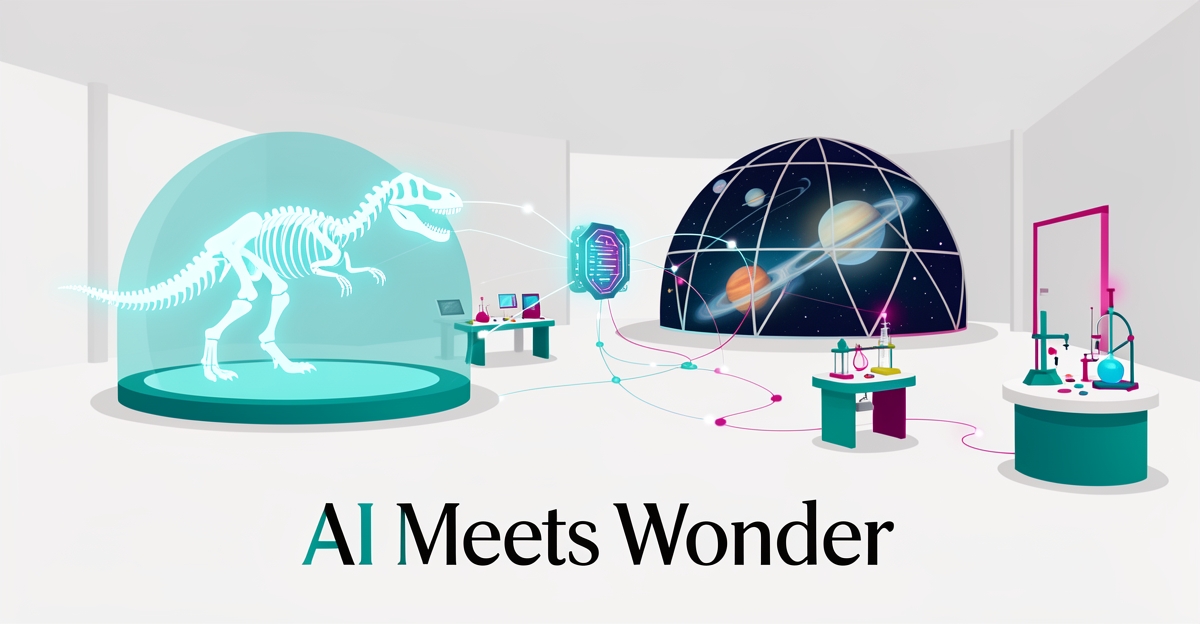
7 Ways AI Can Improve Visitor Personalization in Children's Museums
Key Facts
- A majority of consumers, research has put it around 71%, expect personalized interactions according to McKinsey research
- Roughly three in four consumers get frustrated when personalization is missing per McKinsey research
- In physical retail, 20-40% of visitors typically convert when they receive human guidance based on Melingo's summary of studies
- Simplifying digital touchpoints like kiosks can meaningfully lift conversions as demonstrated by Aimers
- Most landing page visitors won't convert today but remain interested per Prepr CMS analysis
- AI-powered guides enhance engagement by providing real-time insights and answers per lessons from the Berlin Natural History Museum
- Personalized recommendations typically improve visitor satisfaction and retention per Melingo research
Hire a team member that works 24/7 — for less than a part-time wage.
AI receptionists, SDRs, dispatchers and 99+ roles. Trained on your business, fully managed.
Not sure where to start? Ask our AI planner
The Personalization Gap in Children's Museums
A family walks through your doors, a toddler tugging one hand and a nine-year-old pulling toward the opposite wing of the museum. Within minutes, one child is bored, the other is overwhelmed, and the parents are wondering whether the visit was worth the drive. This is the personalization gap in action, and it quietly costs children's museums their most valuable asset: repeat visitors.
The gap exists because most museum experiences are still built on a one-size-fits-all model. Every family receives the same floor map, the same exhibit flow, and the same post-visit silence. Yet consumer expectations have moved far beyond that. According to McKinsey research, around 71% of consumers now expect personalized interactions, and that expectation doesn't switch off at the museum entrance.
The cost of ignoring this expectation is measurable. The same research found that roughly 76% of consumers get frustrated when personalization is missing, and frustration in a family setting rarely stays quiet. A bored child becomes a parent cutting the visit short, and a cut-short visit becomes a family that doesn't return, or worse, one that shares its disappointment with other local parents.
There's also an untapped opportunity hiding in plain sight. In physical retail environments, studies show that 20-40% of visitors convert into customers when they receive human guidance. Children's museums see the same dynamic: a docent who knows a child's name and interests transforms the visit. But human guidance doesn't scale, and most museums can't staff every gallery with enough interpreters to personalize every family's journey.
The result is a museum full of visitors who are interested but under-served. As one analysis of visitor behavior puts it, the vast majority of visitors won't "convert" on any given day, but that doesn't mean they aren't interested. In the museum context, most families leave without a reason to come back, not because the exhibits failed, but because nothing in the experience recognized who they were or what they needed.
Closing this gap traditionally required more staff, more research time, and more budget than most museums can spare. This is where AI-driven visitor personalization changes the equation. Systems that learn from visitor data, age, interests, visit patterns, engagement signals, can deliver the tailored guidance that human staff alone cannot provide at scale, from recommending age-appropriate exhibits to sending follow-up content based on what a family actually did during their visit. It's the same principle AIQ Labs applies when building custom AI systems that learn from customer data and deliver one-to-one engagement across industries.
The question for museum operators is no longer whether families expect personalization. The data makes clear that they do, and that failing to deliver it carries a real cost in satisfaction, word of mouth, and repeat attendance.
AI-Powered Guides and Real-Time Context
AI-powered guides are transforming how children's museums engage visitors by delivering real-time answers, cultural context, and interactive exploration both onsite and online. These intelligent systems use conversational AI to respond to questions as they arise, creating a dynamic learning environment that adapts to each child’s curiosity and pace. By providing immediate, accurate information, AI guides reduce frustration and keep young visitors immersed in the experience, turning passive observation into active discovery.
Research shows that AI-powered guides enhance engagement by offering real-time insights and answers to visitors’ questions, significantly improving their overall experience according to lessons from the Berlin Natural History Museum. These guides also enable interactive exploration by delivering cultural context and responding to inquiries in ways that support both physical and virtual museum visits as demonstrated in museum accessibility initiatives. This capability is especially valuable in children’s museums, where age-appropriate explanations and playful interaction are key to sustaining interest and understanding.
- Provides instant, age-appropriate responses to exhibit-related questions
- Delivers contextual stories and cultural background in real time
- Supports multilingual access for diverse visitor groups
- Adapts tone and complexity based on visitor age and engagement level
- Functions seamlessly across onsite kiosks and online museum platforms
By integrating AI guides into the visitor journey, children’s museums can personalize interactions at scale, aligning with AIQ Labs’ expertise in AI customer journey optimization, where tailored engagement drives satisfaction and repeat visits. These systems not only answer questions but anticipate needs, guiding families through exhibits in ways that feel intuitive and enriching. As a result, children remain engaged longer, retain more information, and are more likely to return, proving that intelligent, responsive guidance is a cornerstone of modern, inclusive museum experiences.
Personalized Recommendations and Interactive Exhibits
Children's museums are evolving beyond static displays to become dynamic learning environments where every interaction feels tailored to the child. AI-powered personalization transforms how exhibits engage young visitors, turning passive observation into active discovery. By analyzing age, interests, and real-time behavior, AI systems recommend exhibits that match developmental stages and curiosity levels, ensuring each child encounters content that’s both challenging and achievable. This targeted approach reduces overwhelm and increases the likelihood of meaningful engagement, as children are more likely to explore exhibits that feel personally relevant.
Interactive exhibits enhanced by AI respond to a child’s actions with adaptive feedback, creating a dialogue rather than a monologue. For example, touch-sensitive displays might adjust complexity based on how a child manipulates objects, while voice-enabled stations answer follow-up questions in age-appropriate language. These responsive systems deepen understanding by meeting learners where they are, turning mistakes into teachable moments. Research shows that personalized recommendations significantly improve visitor satisfaction and retention, with a majority of consumers expecting tailored interactions and most expressing frustration when personalization is absent. When children feel seen and understood in their exploration, they’re more likely to absorb concepts and retain knowledge long after leaving the museum.
The impact extends beyond the visit itself through intelligent follow-up engagement. AI systems analyze which exhibits captured a child’s attention, how long they interacted with specific displays, and even which questions they asked via voice interfaces. This data fuels personalized post-visit communications, such as email suggestions for related home experiments or invitations to upcoming themed workshops, that reinforce learning and encourage return visits. Museums leveraging this closed-loop personalization report stronger emotional connections with families, translating into higher repeat visitation rates. By continuously refining recommendations based on actual behavior rather than assumptions, AI ensures each visit builds on the last, transforming occasional guests into lifelong learners. AIQ Labs’ expertise in building custom personalization engines enables museums to implement these systems without disrupting existing operations, turning visitor data into a cycle of engagement that grows richer over time.
Accessible, Scalable Personalization in Practice
AIQ Labs helps children’s museums deliver personalized experiences that feel intuitive and inclusive for every visitor, regardless of age, ability, or background. By adapting content in real time and simplifying interactions, AI removes barriers that often limit engagement, especially for neurodiverse guests or those with sensory sensitivities. Research shows most consumers expect personalized interactions and feel frustrated when they don’t receive them, underscoring the need for systems that anticipate needs without requiring manual input. AI-powered systems can analyze behavior patterns to adjust exhibit difficulty, pacing, or sensory input on the fly, ensuring no visitor feels overwhelmed or under-challenged. This level of responsiveness builds trust and encourages longer, more meaningful visits.
Scalable personalization doesn’t require overhauling existing infrastructure, it starts with smart, focused integration. AIQ Labs develops custom systems that learn from anonymized visit data, such as dwell time, exhibit revisits, or interaction patterns, to refine recommendations over time, all while maintaining strict data privacy and compliance. These systems can trigger age-appropriate activity suggestions, adjust audio narration speed, or recommend quiet zones based on real-time feedback, creating a seamless flow that feels tailored without being intrusive. For example, simplifying digital touchpoints, like check-in kiosks or exhibit selectors, has been shown to lift conversions substantially, proving that reducing friction directly improves engagement. When AI handles routine personalization tasks, staff are freed to focus on facilitation, emotional support, and deeper educational moments.
Implementing this approach begins with a clear assessment of current visitor journeys and touchpoints where personalization can add the most value. AIQ Labs partners with children’s museums to map these opportunities, then builds and deploys tailored AI agents, such as intelligent assistants or adaptive exhibit controllers, that work alongside human teams. These agents are trained on museum-specific content and visitor behaviors, continuously improving through feedback loops while remaining under full institutional ownership. With options to [start monthly](/pricing), build in milestones, or own the system outright, museums can scale AI capabilities at their own pace without vendor lock-in. The result is a reliable, accessible foundation for personalization that grows with the museum’s mission, ensuring every child, family, and caregiver leaves feeling seen, understood, and eager to return.
Still paying for 10+ subscriptions that don’t talk to each other?
We build custom AI systems you own outright. No vendor lock-in. Full control.
Not sure where to start? Ask our AI planner
Frequently Asked Questions
Will AI make the museum feel less personal for kids and families?
Do families actually expect personalization at a children’s museum?
What happens if we don’t personalize the visit?
Can AI personalization work without hiring more staff?
Does simplifying the visitor experience really improve engagement?
How does AI help with accessibility and inclusion?
From One-Size-Fits-All to Every Family Feels Seen
The personalization gap in children's museums isn't a technology problem, it's a relevance problem. Families arrive with different ages, interests, and attention spans, and when nothing in the experience recognizes who they are, visits get cut short and repeat attendance quietly erodes. As we've seen, AI-powered guides deliver age-appropriate answers in real time, adaptive exhibits meet each child at their level, and personalized follow-ups turn a single visit into an ongoing relationship, all while keeping accessibility and data privacy front and center. With a majority of consumers now expecting personalized interactions, the museums that close this gap first will own the loyalty of their local families. The good news: you don't need to overhaul your operations to start. Begin by mapping your visitor journey to find the touchpoints where personalization adds the most value, then build from there, AIQ Labs develops custom systems museums can start monthly, build in milestones, or own outright, with no vendor lock-in. Curious what that could look like for your museum? Take the two-minute Fit Check at [aiqlabs.ai/apply](/apply) and book a free 30-minute strategy call, a real working session with an AI engineer, and if there isn't a clear win, we'll tell you that too.
Make AI your competitive advantage — not just another tool.
Strategy, implementation and ongoing optimization. One partner, end to end.
Not sure where to start? Ask our AI planner