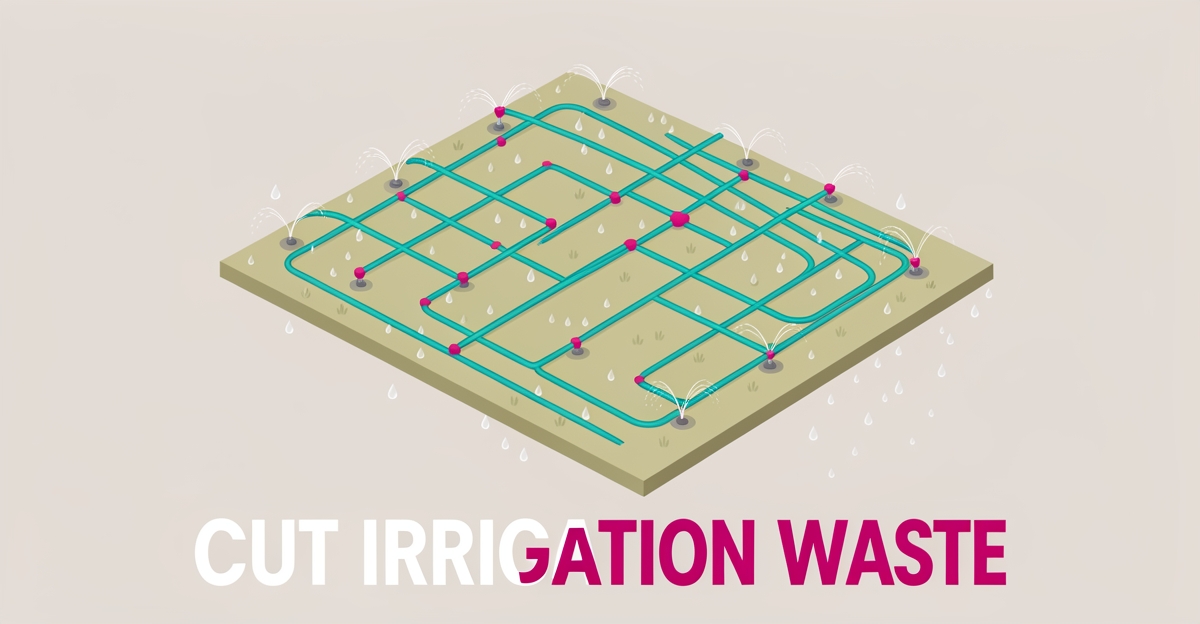
# 7 Ways AI Can Reduce Waste in Irrigation System Installation
**Quick Answer:** AI cuts irrigation waste by optimizing pipe length, sprinkler placement and pressure. Most farms already generate telemetry data that can feed smarter installs.
## Key Facts
- AI-powered design reduces pipe overages from manual takeoffs by optimizing routes for minimal length and elevation change.
- Poor sprinkler head placement can cause significant distribution uniformity losses, AI placement tools help eliminate them.
- Pressure mismatches can meaningfully increase water consumption over a season; AI-driven real-time monitoring corrects them.
- Most farms already generate telemetry data that can improve resource management and minimize waste in irrigation.
- Digital twins enable predictive maintenance, reducing downtime and waste by optimizing resource utilization over the system lifecycle.
- Automated reporting tracks usage and adjusts for seasonal changes, supporting efficient irrigation practices year-round.
- AI-powered decision support systems can reduce input waste (such as nitrogen and water) by optimizing crop growth and delivery.
## Table of Contents
- [The Hidden Costs of Traditional Irrigation Installation](#the-hidden-costs-of-traditional-irrigation-installation)
- [AI-Powered Design: Optimizing Pipe Length and Sprinkler Placement](#ai-powered-design-optimizing-pipe-length-and-sprinkler-placement)
- [Real-Time Monitoring: IoT Sensors and Smart Water Pressure Management](#real-time-monitoring-iot-sensors-and-smart-water-pressure-management)
- [Automated Reporting and Seasonal Adjustments for Long-Term Efficiency](#automated-reporting-and-seasonal-adjustments-for-long-term-efficiency)
- [Implementing AI Solutions: Practical Steps for Irrigation Professionals](#implementing-ai-solutions-practical-steps-for-irrigation-professionals)
## The Hidden Costs of Traditional Irrigation Installation
Traditional irrigation installation carries a silent price tag that most contractors and property owners only discover after the trenches are backfilled. Material overages from imprecise pipe cuts, sprinkler heads placed by rule-of-thumb rather than hydraulic calculation, and pressure settings that guess at zone requirements all compound into a waste stream that erodes margins and depletes water resources. The financial bleed is real: every foot of excess pipe, every mispositioned head, and every psi over the design target represents capital buried underground.
AI and IoT are increasingly central to how organizations measure and manage resource efficiency, and irrigation is no exception. Connected devices and sensors deliver real-time data on materials, flow, and demand, the raw material for cutting overproduction and excess stock. Yet many installers still rely on manual takeoffs and static designs that cannot adapt to field conditions.
The environmental toll mirrors the financial one. Over-pressurized zones mist water into evaporation. Under-designed zones create dry spots that trigger longer run times. Both scenarios waste the very resource the system exists to deliver. And because most farms already generate telemetry data, the information needed to do better often already exists, it just isn't being used at the installation phase.
Common sources of waste include:
- Pipe overages from manual takeoffs and field adjustments
- Sprinkler head misplacement causing uneven distribution and dry spots
- Pressure mismatches that drive up water consumption over a season
- Seasonal programming left at summer peaks year-round
- No post-install feedback loop to validate design assumptions
AIQ Labs builds AI systems that analyze real-time field data to deliver sustainable, cost-effective installations, turning the installation phase from a source of waste into a precision operation. The hidden costs don't have to stay hidden. They just have to be measured.
## AI-Powered Design: Optimizing Pipe Length and Sprinkler Placement
Design waste starts before the first trench is dug. AI and digital twin technology let installers model an entire irrigation layout virtually, testing pipe routes and sprinkler coverage against site-specific topography, soil, and weather data.
A digital twin is a virtual model of the physical system that simulates performance under different scenarios. Engineers can test and enhance designs without physical prototypes, saving time, money, and resources. This approach reduces the need for on-site rework and excess material ordering.
Site data makes the optimization precise. AI ingests elevation maps, soil moisture profiles, wind patterns, and crop zones to calculate the shortest viable pipe runs and ideal head spacing, using the telemetry most farms already produce.
The result is **material-efficient design** rather than rule-of-thumb layouts. Pipe length is trimmed to actual need, fittings are reduced, and sprinkler heads are placed for uniform coverage without overlap. That cuts both upfront material cost and installation labor.
Digital twins also support sustainable outcomes beyond installation. Research on farm automation points to meaningful input reductions, including nitrogen, when AI-powered digital twins optimize crop growth. Precise water delivery from optimized placement reinforces those gains.
This kind
AI Employees
Hire a team member that works 24/7 — for less than a part-time wage.
AI receptionists, SDRs, dispatchers and 99+ roles. Trained on your business, fully managed.
See If You’re a Fit — AI Employees from $700/mo
Not sure where to start? Ask our AI planner
of work fits naturally into an AI Workflow Build: AIQ Labs rebuilds the one workflow that costs you the most, in this case, design and takeoff, at a fixed price, in phases.
Typical optimization outputs from an AI-powered design workflow include:
- Calculated pipe routes with minimal length and elevation change
- Sprinkler head placement mapped to coverage zones and pressure requirements
- Material take-off lists generated automatically from the validated digital twin
- Scenario comparisons for seasonal adjustments and future expansion
By validating designs virtually, teams avoid over-ordering and reduce on-site waste. The model becomes a living reference for installation crews and later maintenance, supporting **predictive maintenance** and resource utilization over the system lifecycle.
## Real-Time Monitoring: IoT Sensors and Smart Water Pressure Management
Installing an irrigation system isn't just about laying pipes, it's about ensuring every drop of water serves a purpose. Once the system is in place, real-time monitoring becomes critical to prevent waste from pressure fluctuations, leaks, or inefficient operation. IoT sensors embedded throughout the installation continuously gather data on flow rates, pressure levels, and soil moisture, feeding this information into AI algorithms that analyze performance as it happens. This allows for immediate adjustments to water pressure settings, ensuring that sprinklers operate at optimal efficiency without overwatering or causing runoff.
By combining IoT infrastructure with AI-powered analytics, irrigation systems gain the ability to self-correct in response to changing conditions, whether due to weather shifts, equipment wear, or varying water demand across zones. For example, if pressure drops in one section due to a partial blockage or elevation change, the AI can automatically adjust valve openings or pump output to maintain uniform distribution, preventing both under-irrigation and unnecessary strain on the system. This dynamic responsiveness not only conserves water but also reduces wear on components, extending the lifespan of the installation.
Beyond immediate adjustments, the continuous stream of sensor data enables long-term optimization. AI identifies patterns in usage, pressure variability, and zone-specific performance, informing decisions about seasonal recalibration or future upgrades. Automated reporting features translate this data into actionable insights, helping installers and property managers track efficiency over time and validate that the system delivers on its design intentions. This closed-loop approach, where installation informs ongoing optimization, ensures the initial investment in smart design pays dividends through reduced water waste, lower maintenance needs, and sustained operational efficiency.
## Automated Reporting and Seasonal Adjustments for Long-Term Efficiency
Automated reporting transforms raw irrigation data into actionable insights that sustain efficiency year-round. By continuously tracking water usage patterns across seasons, AI systems identify trends that manual monitoring often misses, such as gradual increases in consumption during dry periods or unexpected drops indicating potential leaks. This real-time visibility allows installers and operators to make data-driven adjustments before waste accumulates, ensuring the system performs optimally as environmental conditions shift.
AI-powered reporting also predicts maintenance needs by analyzing sensor data for early signs of wear or inefficiency, such as pressure fluctuations or uneven spray patterns. Predictive maintenance minimizes downtime and waste by optimizing resource utilization across the system's life. These insights feed into automated scheduling adjustments, reducing the risk of overwatering or underwatering as temperatures and rainfall change throughout the year.
Seasonal adjustments driven by AI ensure irrigation aligns with actual plant needs rather than fixed calendars. By analyzing historical weather data, soil moisture levels, and evapotranspiration rates, the system dynamically modifies run times and frequencies to match seasonal demands. This approach not only conserves water but also extends the lifespan of system components by preventing strain from inappropriate scheduling. The result is a self-optimizing installation that maintains peak efficiency with minimal intervention, delivering long-term savings and reduced environmental impact.
## Implementing AI Solutions: Practical Steps for Irrigation Professionals
Moving from concept to field results requires a clear integration path that fits existing installation workflows.
Start with site data capture. Install IoT sensors on key points to collect real-time soil moisture, slope, flow rate and pressure. The telemetry most farms already generate becomes the foundation for AI-driven design decisions, often without new sensor investments.
Use the data to build a digital twin of the planned system. The virtual model simulates performance under different scenarios, letting teams test pipe length, sprinkler head placement and water pressure settings before material is cut. Digital twins help engineers test and enhance designs, reducing the need for physical prototypes and iterations.
AI Development
Still paying for 10+ subscriptions that don’t talk to each other?
We build custom AI systems you own outright. No vendor lock-in. Full control.
See If You’re a Fit — AI Employees from $700/mo
Not sure where to start? Ask our AI planner
Next, deploy decision support for the crew. An AI-powered decision support system analyzes site conditions and provides recommendations for optimal water usage and material quantities per zone.
Practical steps irrigation professionals can implement now include:
- Map the site with IoT sensors for soil, pressure and flow to create a real-time data baseline
- Build a digital twin to simulate pipe routes, head spacing and pressure zones before installation
- Activate automated reporting to track usage and adjust for seasonal changes
- Integrate AI decision support that recommends material quantities and settings per zone
Automated reporting closes the loop. It tracks usage and adjusts for seasonal changes, ensuring optimal irrigation practices without manual review. By predicting maintenance needs, this technology minimizes downtime and waste.
Customization matters. AIQ Labs tailors models to soil type, topography and crop needs, whether as a single AI Workflow Build for design and takeoff, or as part of a broader AI Operating System that connects design, installation, and ongoing operations. **True ownership of the system** means the business controls the data, models and future updates, with payment models that fit: start monthly, build in milestones, or own it outright.
For teams evaluating approaches, the workflow layer is where material waste is reduced. AI optimizes pipe length, sprinkler head placement and water pressure settings based on site data, while automated reporting provides visibility for continuous improvement.
## Frequently Asked Questions
**How much material waste can AI help reduce in irrigation installation?**
AI-powered design reduces pipe overages by eliminating manual takeoffs and field adjustments, while optimized sprinkler placement cuts distribution uniformity losses. Exact savings vary by site, but the biggest gains come from validating designs against real field data before material is ordered.
**What is a digital twin and how does it help in irrigation system design?**
A digital twin is a virtual model of the irrigation system that simulates performance under different scenarios, allowing engineers to test pipe routes, sprinkler placement, and pressure settings before physical installation. This reduces the need for physical prototypes, minimizes material waste, and supports predictive maintenance over the system lifecycle.
**Do I need to install new sensors to use AI for irrigation optimization?**
Not necessarily. Most farms already generate telemetry data from existing equipment that can be used to improve resource management and minimize waste. AIQ Labs can leverage this existing data stream as a foundation for AI-driven design decisions, reducing the need for new sensor investments.
**How does real-time monitoring prevent water waste after installation?**
IoT sensors continuously collect data on flow, pressure, and soil moisture, which AI analyzes to make immediate adjustments, like correcting pressure drops or preventing overwatering, ensuring optimal efficiency. This dynamic responsiveness conserves water, reduces component wear, and extends system lifespan.
**Can AI help with seasonal adjustments in irrigation scheduling?**
Yes. AI-powered automated reporting analyzes historical weather, soil moisture, and evapotranspiration to dynamically adjust run times and frequencies based on actual plant needs rather than fixed calendars. This prevents overwatering in cool seasons and underwatering in dry periods.
**What practical steps should irrigation professionals take to start using AI in their installations?**
Begin by mapping the site with IoT sensors to establish a real-time data baseline for soil, pressure, and flow. Then build a digital twin to simulate pipe routes and head spacing before installation, activate automated reporting for seasonal adjustments, and integrate AI decision support to recommend zone-specific material quantities and settings.
## From Waste to Worth: Turning Irrigation Installations into Profit-Driven Operations
AI and IoT transform irrigation installation from a source of hidden waste into a precision operation, trimming pipe overages, eliminating sprinkler misplacement, and correcting pressure mismatches that inflate water use. By leveraging real-time site data, digital twins, and automated reporting, installers move beyond guesswork to designs that are material-efficient, hydraulically sound, and seasonally adaptive. This isn't just about saving water or materials; it's about protecting margins, reducing rework, and delivering systems that perform as intended from day one. For irrigation professionals ready to stop burying cost in the trench, start with the 2-minute Fit Check and then a free 30-minute strategy call to see how AI workflow automation can turn your next installation into a model of efficiency. The data to act is already in your field.
AI Transformation Partner
Make AI your competitive advantage — not just another tool.
Strategy, implementation and ongoing optimization. One partner, end to end.
See If You’re a Fit — AI Employees from $700/mo
Not sure where to start? Ask our AI planner