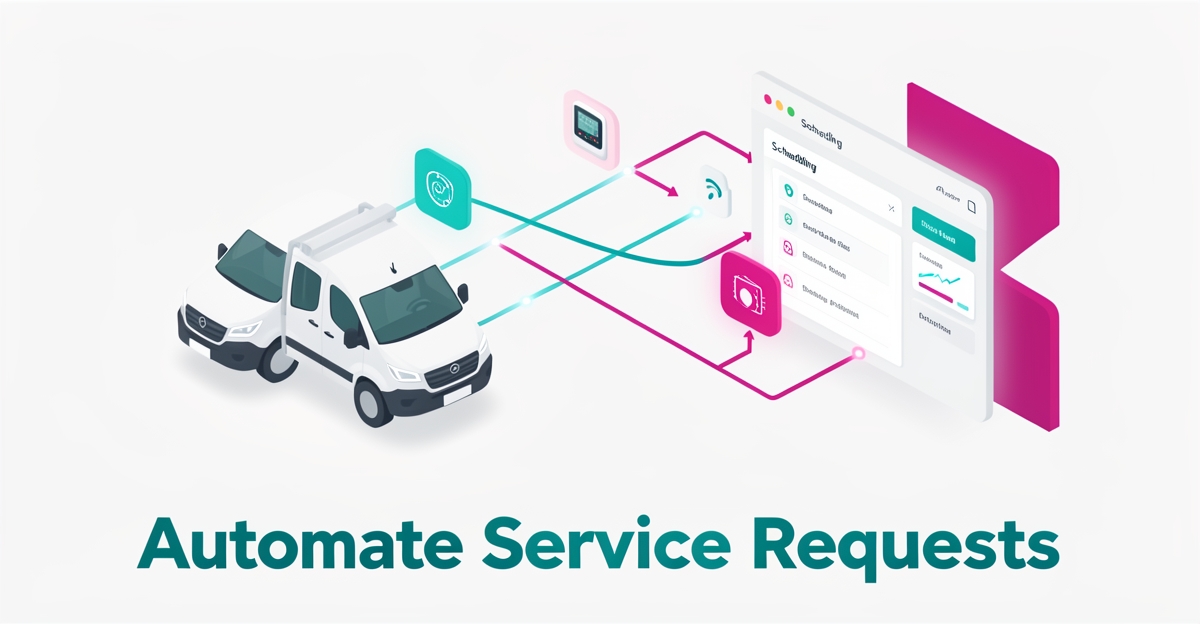
7 Ways HVAC Contractors Can Automate Routine Service Requests with AI Workflow Systems
Key Facts
- AI-powered assistants can handle initial service requests 24/7, qualifying job types and booking appointments without a human dispatcher
- AI-assisted dispatching can weigh technician certifications, location, availability, and parts on hand to reduce mismatches and improve job completion rates
- AI route optimization can cut drive time and fuel costs by sequencing jobs based on live traffic and technician proximity
- Automated customer follow-ups via SMS can lift repeat bookings without adding dispatcher workload
- Workflow optimization is consistently cited by trade business owners as the area where AI delivers the most operational impact
- Invoicing and cash flow remain top operational priorities for trade businesses, manual logging and late paperwork are a common drag
- AI-assisted estimating can dramatically shorten quote turnaround, letting contractors respond to requests while the customer is still deciding
Hire a team member that works 24/7 — for less than a part-time wage.
AI receptionists, SDRs, dispatchers and 99+ roles. Trained on your business, fully managed.
Not sure where to start? Ask our AI planner
The Hidden Cost of Manual Service Requests in HVAC
Every service call starts with a phone call, and for most HVAC contractors that call still creates a bottleneck. Manual intake, dispatcher juggling, and paper-based logging slow the whole operation down before a technician even leaves the shop.
That focus on workflow is earned. When requests are handled by hand, small errors compound into costly delays across the day, and trade business owners consistently point to workflow optimization as the area where AI can make the biggest operational difference.
Dispatch delays are the most visible symptom. A dispatcher manually qualifying job type, collecting address and equipment details, then matching technician certifications and parts availability can take 15-30 minutes per call. That lag pushes first-available windows later and increases the chance a customer books elsewhere.
Scheduling errors follow quickly. Without real-time visibility, crews get double-booked, sent to jobs without the right parts, or dispatched out of route. AI-assisted dispatching can analyze technician certifications, location, availability, and parts on hand to recommend optimal assignment, reducing mismatches and improving job completion rates.
The revenue impact is measurable. Manual intake and quoting mean slower response and fewer jobs completed per day. AI-powered assistants can handle initial intake, qualify job types, collect critical information, and schedule service windows without a human dispatcher, so requests that arrive after hours or during a busy morning stop falling through the cracks. For a residential HVAC company running 8-12 technicians, capturing even a handful of those otherwise-lost jobs each week typically adds up to meaningful annual revenue.
Cash flow pressure adds another layer. Invoicing and cash flow consistently rank among the top operational priorities for trade business owners. Manual logging of visits and work orders creates late invoicing, data entry errors, and time spent chasing paperwork instead of serving customers.
The hidden cost shows up in these recurring friction points:
- Dispatch delays from manual call handling and qualification
- Scheduling errors from lack of real-time crew and parts visibility
- Missed revenue from slow quote generation and lost callbacks
- Administrative drag from manual logging and invoicing follow-up
HVAC businesses often spend hours managing service requests, dispatching crews, and logging visits. That manual load is exactly where AI workflow and task automation can reduce manual errors and improve turnaround time. AIQ Labs builds custom, production-ready workflow systems that integrate with existing field management tools to automate task routing, prioritize jobs, and generate work orders without replacing the team that runs them. See AI Workflow Builds to rebuild the one workflow that costs you the most.
How AI Workflow Systems Automate Routine Service Requests
HVAC contractors often spend hours manually handling service requests, from initial intake to scheduling and follow-up. AI workflow systems automate these routine tasks, reducing manual effort and improving job completion rates. By integrating intelligent automation into daily operations, businesses can free up dispatchers and technicians to focus on higher-value work while maintaining consistent service quality.
AI-powered assistants handle initial service request intake 24/7, qualifying job types, collecting critical details like system type and symptoms, and scheduling appointments without human intervention. This eliminates phone tag and manual data entry, ensuring no request goes unanswered outside business hours. AIQ Labs builds managed AI staff, including receptionists and dispatchers across 99+ roles, that integrate directly with existing field management tools to create seamless end-to-end workflows. Explore AI Employees to see how a booking agent or dispatcher can run at a fraction of a human hire's cost.
Predictive dispatching uses AI to analyze technician certifications, real-time location, parts inventory, and job urgency to recommend optimal assignments, reducing mismatches and improving first-time fix rates. Unlike static scheduling boards, these systems continuously adapt to changing conditions throughout the day. Route optimization further enhances efficiency by sequencing jobs based on live traffic and technician proximity, cutting drive time and fuel costs. Automated follow-ups then keep customers engaged post-service through SMS reminders for maintenance or review requests, driving repeat business without adding dispatcher workload. Together, these seven automation methods transform reactive service desks into proactive, self-optimizing operations.
Implementing AI Automation Without Disrupting Existing Operations
Adopting AI workflow automation doesn't mean ripping out the systems that already run your HVAC business. The contractors who succeed treat implementation as a phased rollout, not an overnight overhaul, and integration with existing field management tools remains one of the top implementation challenges for trade businesses adopting AI.
The first step is mapping your current service request workflow end to end, from the moment a call or form submission comes in, through dispatch, job completion, and follow-up. This reveals which handoffs create the most manual work and where errors creep in. For most HVAC operations, intake and scheduling are the highest-value starting points, since AI assistants can handle initial qualification and booking without a human dispatcher.
From there, a phased approach keeps risk low and your team confident:
- Phase one, automate intake: Deploy an AI assistant to capture service requests, qualify job types, and schedule appointments around the clock.
- Phase two, optimize dispatch: Layer in AI-assisted dispatching that weighs technician certifications, location, availability, and parts on hand to recommend optimal assignments.
- Phase three, expand outward: Add route optimization, automated follow-ups, and predictive maintenance once the core workflow runs smoothly.
Each phase should integrate directly with the field management tools you already use rather than replacing them. Deep, two-way API connections between your scheduling software, CRM, and invoicing systems are what turn isolated automations into a single source of operational truth. This matters because disconnected tools are exactly what create the manual data entry and mismatched job assignments that AI is supposed to eliminate.
Payment structure also shapes adoption risk. With Start Monthly, a flat plan covers the build, training, integrations, and ongoing monitoring, letting you pilot one AI employee, such as a dispatcher or booking agent, at roughly 80% less than the cost of a human hire. With Build in Milestones, a larger system is split into phases you approve and pay for as each ships, so you keep everything built even if priorities change. And with Own It Outright, the finished system is yours, no vendor lock-in, no rented automation.
Compliance and ownership deserve equal attention. Every automated action should carry validation layers, escalation paths to human staff, and complete audit trails, especially when AI handles customer communications or payment details. With invoicing and cash flow among the top operational priorities for trade business owners, protecting the integrity of those financial workflows during automation is non-negotiable.
Finally, measure ROI from day one. Track metrics like response time, job completion rates, and repeat bookings before and after each phase, so baselining early lets you prove value quickly. AIQ Labs structures engagements around this kind of measurable, phased delivery, 200+ multi-agent systems deployed, backed by 4 live SaaS products the company runs daily. For contractors who want automation connected across the whole operation rather than one workflow at a time, AI Operating Systems build one connected operating layer in phases that you own outright.
Still paying for 10+ subscriptions that don’t talk to each other?
We build custom AI systems you own outright. No vendor lock-in. Full control.
Not sure where to start? Ask our AI planner
Frequently Asked Questions
How much time does manual service request intake actually waste for HVAC contractors?
Can AI really increase revenue for a small residential HVAC company?
Will automating dispatch hurt first-time fix rates?
What’s the biggest operational priority HVAC owners say they struggle with?
How much can route optimization save on fuel?
Do customers actually respond to automated follow-ups?
From Phone Tag to Proactive Service
Manual service intake is quietly draining HVAC operations, dispatch delays, scheduling errors, and late invoicing compound into lost revenue and frustrated customers. AI workflow systems flip that script by automating routine requests end-to-end: 24/7 intake and qualification, AI-assisted dispatch that matches certifications, location and parts, route optimization that cuts drive time and fuel, and automated follow-ups that drive repeat bookings. Contractors who roll this out in phases, intake first, then dispatch, then expansion, protect existing tools while building a single source of operational truth. AIQ Labs builds custom, production-ready workflow systems that integrate with the field management tools you already use to automate task routing, prioritize jobs, and generate work orders without replacing your team. If you're ready to map your biggest bottleneck to a measurable automation plan, start the 2-minute Fit Check at https://aiqlabs.ai/apply for a free 30-minute strategy call to identify high-ROI opportunities specific to your operation.
Make AI your competitive advantage — not just another tool.
Strategy, implementation and ongoing optimization. One partner, end to end.
Not sure where to start? Ask our AI planner