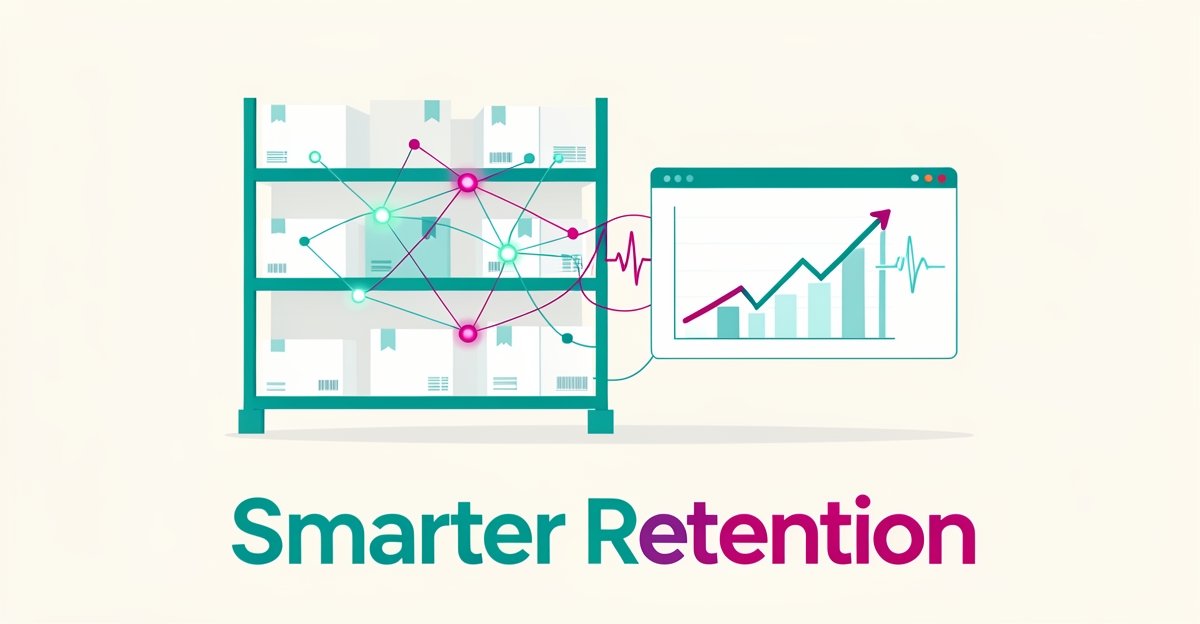
7 Ways Medical Supply Distributors Can Use AI to Improve Customer Retention
Key Facts
- Integrated AI systems achieved 91% accuracy in clinical conclusions versus 30% for standalone models in one widely cited study according to healthcare AI research
- The same research found integrated AI answered 94% of clinical questions helpfully, pointing to reliable AI-assisted customer service per implementation data
- AI-driven demand forecasting can reduce stockouts and excess inventory simultaneously per supply chain research
- Continuous monitoring and pattern recognition deliver AI's most consistent healthcare value per BMC Health Services Research
- Manual processes limit distributors' ability to leverage historical data for personalized service per industry analysis
- Predictive AI shifts medical supply retention from reactive fixes to proactive personalized engagement
Hire a team member that works 24/7 — for less than a part-time wage.
AI receptionists, SDRs, dispatchers and 99+ roles. Trained on your business, fully managed.
Not sure where to start? Ask our AI planner
The Retention Challenge: Why Medical Supply Distributors Lose Customers
When a hospital runs out of critical surgical supplies or a clinic can't get the diagnostic equipment it needs, the consequences extend far beyond inconvenience—patient care hangs in the balance. For medical supply distributors, these moments of failure don't just cost a single sale; they erode the trust that took years to build.
The stakes in medical supply distribution are uniquely high. Unlike other industries where a delayed shipment might cause frustration, stockouts of critical medical supplies can force healthcare providers to delay procedures or compromise patient care. According to supply chain research, the inability to predict demand accurately leaves distributors vulnerable to inventory disruptions that send customers scrambling to competitors who can deliver reliably.
Generic communication compounds the problem. When distributors treat all customers the same—sending identical product catalogs to a small dental practice and a large hospital system—they signal that they don't understand the unique pressures each facility faces. Industry analysis shows that manual processes limit a distributor's ability to leverage historical data, making personalized service nearly impossible at scale.
The reactive service model creates additional vulnerability. Most distributors operate in crisis mode, responding to problems only after customers complain. This approach leaves money on the table and relationships strained:
- Customers discover stockouts only when they place urgent orders
- Recurring supply needs go unrecognized until customers run low
- Satisfaction issues surface only after customers have already decided to leave
- Administrative burdens frustrate both distributor staff and healthcare providers
Research from healthcare management studies demonstrates that AI systems excel at continuous monitoring and pattern recognition—precisely the capabilities needed to shift from reactive to proactive service. As healthcare AI expert Vishal Singhhal notes, "The technology handles what it does best: continuous monitoring, pattern recognition, data collection. Your clinicians handle what they do best: personalized care, complex decision-making, human connection."
The performance gap between traditional and AI-enhanced approaches is striking. Clinical research found that integrated AI systems achieved 91% accuracy in their conclusions, compared to just 30% for standalone AI models. This dramatic difference underscores why properly implemented AI isn't just an upgrade—it's a fundamental transformation in how distributors can serve their customers.
For medical supply distributors competing in an industry where trust and reliability determine survival, these retention challenges aren't minor operational issues. They're existential threats that AI-powered customer relationship management can address directly. AIQ Labs builds systems that anticipate customer needs before problems arise—turning distribution relationships from transactional to truly collaborative. If you're curious where to start, our two-minute Fit Check maps your highest-impact opportunity.
How AI Predicts and Prevents Churn Through Personalization and Proactivity
Medical supply distributors face constant pressure to retain customers in a competitive market where service quality and reliability directly impact long-term partnerships. AI transforms retention strategies from reactive fixes to predictive, personalized engagement by analyzing patterns in customer behavior and anticipating needs before they arise.
One widely cited study found an integrated AI system achieved 91% accuracy in clinical conclusions when analyzing complex medical data, significantly outperforming standalone models like GPT-4, which achieved only 30% accuracy on the same casesHeather Couture, PhD. That level of precision, applied to distribution data, lets you identify subtle shifts in purchasing patterns, seasonal demand fluctuations, or early signs of dissatisfaction—allowing intervention before a customer considers switching suppliers. By leveraging predictive accuracy, AI turns historical transaction data into actionable foresight.
Personalization at scale becomes feasible when AI analyzes individual customer profiles, order histories, and communication preferences to tailor outreach. For example, the system can recognize when a clinic consistently orders specific wound care supplies every six weeks and automatically trigger a personalized reminder or share educational content about new product variants—without manual intervention. This proactive approach not only reduces stockouts but strengthens trust by demonstrating deep understanding of the customer's operational rhythm.
AI also enhances retention by continuously monitoring satisfaction indicators through sentiment analysis of support interactions, feedback forms, and engagement metrics. Combined with the same study's finding that the integrated system answered 94% of clinical questions helpfullyHeather Couture, PhD, distributors gain a reliable tool for assessing whether customers feel supported and informed. Declining satisfaction scores or reduced engagement trigger alerts for customer success teams to reach out with tailored solutions—turning potential churn into opportunities for deeper relationship building.
Through these capabilities, AI enables medical supply distributors to shift from transactional service to anticipatory partnership. By predicting needs, personalizing communication, and acting on satisfaction signals in real time, distributors create experiences that are difficult to replicate—fostering loyalty not through incentives alone, but through consistent, intelligent service that evolves with the customer's needs. This predictive retention model ensures that every interaction reinforces value, reducing the likelihood of churn before it even begins.
Turning Satisfaction Data into Retention Action with AI Monitoring
Medical supply distributors face a critical challenge: turning satisfaction signals into retention actions before customers churn. AI monitoring systems transform raw feedback into early warning indicators, enabling proactive interventions that strengthen loyalty. By continuously analyzing sentiment across support interactions, usage patterns, and direct feedback, distributors can detect subtle dissatisfaction triggers long before they escalate into lost business.
AI-powered sentiment analysis processes thousands of customer touchpoints daily—from support tickets and call transcripts to product usage metrics—identifying emerging concerns with precision. This real-time monitoring allows teams to intervene at the first sign of frustration, whether it's delayed shipments, confusing ordering processes, or unmet clinical needs. The approach shifts retention strategy from reactive damage control to predictive relationship management.
According to industry research, integrated AI systems answered 94% of clinical questions helpfully—a benchmark that translates directly to customer service effectiveness in medical supply distribution. When AI detects declining satisfaction scores or negative sentiment trends, it automatically triggers tailored responses: personalized outreach from account managers, expedited shipping for critical supplies, or customized training resources. These timely interventions demonstrate attentiveness that builds trust and reduces churn risk.
- Analyze support interaction sentiment for frustration indicators
- Monitor product usage patterns for abandonment signals
- Track feedback trends across multiple channels
- Trigger automated interventions based on satisfaction thresholds
- Flag at-risk accounts for proactive relationship management
AIQ Labs embeds satisfaction monitoring into the operational fabric—not as a periodic survey but as a real-time pulse check—through our AI Operating Systems work, where one connected layer tracks performance across your whole distribution workflow. The result is a self-correcting system that adapts to evolving customer needs, transforming satisfaction data from a retrospective metric into a forward-looking retention engine. The retention strategy doesn't just measure satisfaction—it actively cultivates it through intelligent, timely action.
From Insight to Impact: Implementing AI Retention Systems in Your Distribution Workflow
Knowing which AI tools can improve retention is one thing — deploying them without disrupting daily operations is where most distributors stall. The good news: a phased, low-risk rollout makes adoption far more manageable than a full-system overhaul.
Start with the highest-impact, lowest-complexity win: an AI receptionist or support agent trained on your product catalog, order history, and account data. AIQ Labs' AI Employees fill exactly these roles—managed AI staff that handle order status questions, delivery ETAs, and reorder requests around the clock, typically at around 80% less cost than a human hire. According to healthcare AI implementation data, integrated AI systems answered 94% of clinical questions helpfully — evidence that well-configured conversational AI handles nuanced, industry-specific inquiries reliably.
From there, layer in machine learning for inventory prediction. Models that analyze historical purchasing patterns, seasonality, and account-level consumption can forecast recurring needs before customers place an order. Research from C3.ai on supply chain resilience shows AI-driven demand forecasting can reduce stockouts and excess inventory simultaneously — directly protecting the customer relationships that depend on reliable fulfillment. If a broken reorder workflow is your biggest retention risk, our AI Workflow Builds rebuild that one workflow at a fixed price, in phases.
The third pillar is feedback analytics. Sentiment analysis across emails, support tickets, and survey responses surfaces dissatisfaction before it becomes churn. A study published in BMC Health Services Research underscores that continuous monitoring and pattern recognition are where AI delivers the most consistent value in healthcare settings.
A practical implementation sequence looks like this:
- Phase one: Deploy a customer-facing AI support agent integrated with your order management system (weeks 1–4)
- Phase two: Train predictive models on 12–24 months of order history to forecast recurring needs (weeks 5–10)
- Phase three: Activate sentiment tracking across all customer touchpoints with automated escalation alerts (weeks 11–14)
- Ongoing: Review model accuracy monthly and retrain as purchasing patterns shift
Payment structure matters as much as sequencing. AIQ Labs offers three ways to pay: Start Monthly to pilot a single AI capability without capital risk, Build in Milestones to split the work into approved phases so you pay only as each system ships, or Own It Outright if you want the system built and owned by you, not rented. No fake prices—every quote reflects the actual scope of work.
As Vishal Singhhal notes, "The technology handles what it does best: continuous monitoring, pattern recognition, data collection. Your clinicians handle what they do best: personalized care, complex decision-making, human connection." The same division of labor applies to distribution — AI manages the signals, your team strengthens the relationships.
From Reactive to Proactive: How AI Transforms Medical Supply Retention
Medical supply distributors face high-stakes retention challenges where stockouts and generic service erode trust built over years. AI shifts the paradigm from reactive fixes to predictive partnership—analyzing purchasing patterns to forecast recurring needs, personalizing communication at scale, and monitoring satisfaction signals in real time to intervene before churn begins. With integrated systems demonstrating 91% accuracy in clinical conclusions and 94% helpfulness in answering clinical questions in published research, the technology delivers the precision needed to anticipate customer needs and strengthen relationships through intelligent, timely action. For distributors ready to move beyond transactional service, the path forward starts with a focused, low-risk approach. Take the two-minute Fit Check, then book a free 30-minute strategy call—no obligation, just clarity on where AI delivers the highest impact for your business.
Make AI your competitive advantage — not just another tool.
Strategy, implementation and ongoing optimization. One partner, end to end.
Not sure where to start? Ask our AI planner