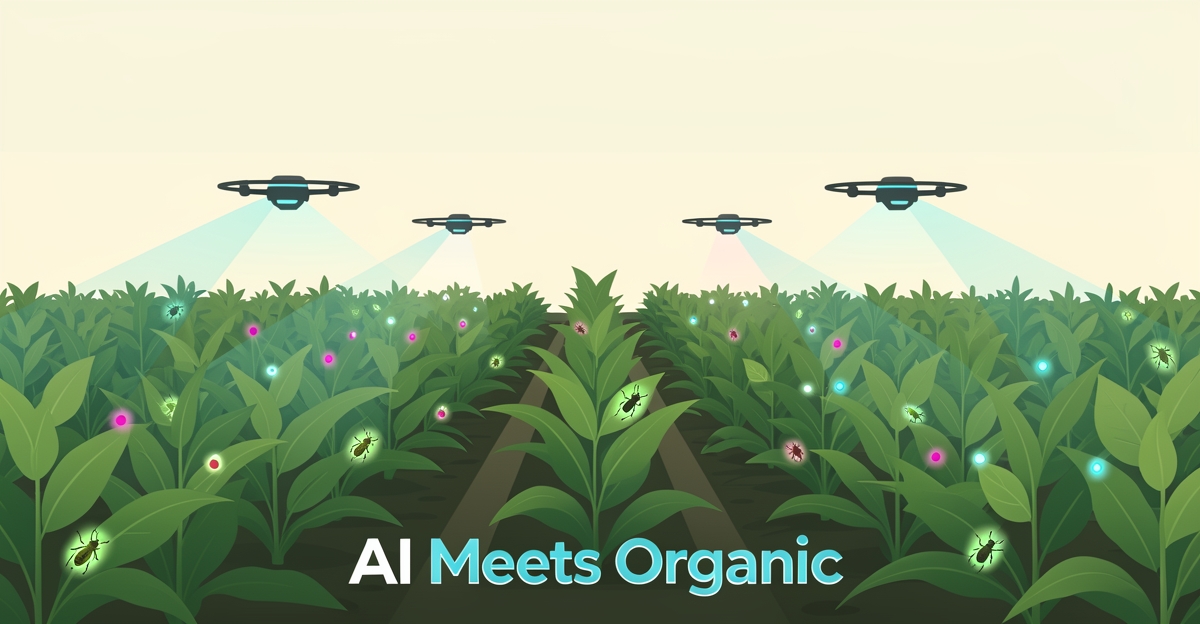
7 Ways Organic Farms Can Use AI to Reduce Pest Infestations Naturally
Key Facts
- AI models using convolutional neural networks have demonstrated high accuracy (reported around 94%) in detecting early blight and late blight in organic tomatoes per agricultural technology research
- Sensor-based interventions can improve resource use efficiency by up to 40% in organic farming systems according to agricultural research
- Global organic farmland has expanded substantially over the past decade while productivity gaps persist per FAO report findings
- Precision irrigation systems can reduce water consumption significantly in organic vegetable farms through AI-driven soil moisture and weather data
- The AI in agriculture market continues to grow as sustainable farming demand rises driven by precision agriculture adoption
- Sensor-controlled drip irrigation in organic tomatoes has been reported to reduce water usage while increasing yield per agricultural research findings
- AI-driven crop monitoring identifies early pest infestations enabling timely organic-approved interventions according to industry research
Hire a team member that works 24/7 — for less than a part-time wage.
AI receptionists, SDRs, dispatchers and 99+ roles. Trained on your business, fully managed.
Not sure where to start? Ask our AI planner
The Organic Pest Pressure Problem
Organic farms face mounting pressure from pest infestations that threaten both yield stability and certification integrity, creating a critical need for early detection solutions that avoid synthetic chemicals. Conventional farming often achieves higher productivity through chemical interventions, widening the gap that organic producers must bridge while meeting rising consumer demand for sustainable food. This challenge is compounded by the limitations of manual scouting, which frequently misses subtle pest patterns until damage becomes widespread and economically significant.
AI-powered monitoring systems offer a practical approach by analyzing environmental data from farm sensors, satellite imagery, and field logs to identify pest invasions at their earliest stages. These systems utilize machine learning algorithms to distinguish between harmful pests and beneficial insects, enabling targeted interventions that align with organic principles rather than requiring broad-spectrum treatments. By integrating real-time data streams, AI provides actionable insights that allow farmers to deploy organic-approved methods—such as biocontrol sprays or strategic pruning—before infestations escalate, preserving crop health without compromising certification standards.
- AI models using convolutional neural networks have demonstrated high accuracy in detecting early blight and late blight in organic tomatoes, showing the precision possible for disease and pest identification.
- Global organic farmland has expanded substantially over the past decade, yet productivity gaps persist compared to conventional methods, highlighting the urgency for yield-enhancing technologies.
- Sensor-based interventions can improve resource use efficiency in organic systems, reducing waste while maintaining ecological balance.
AIQ Labs supports this shift toward intelligent pest management through [AI Workflow Builds](/workflow-builds) that rebuild the one monitoring or scouting workflow that costs your farm the most — fixed price, delivered in phases. These systems process continuous streams of environmental data to predict pest patterns, enabling organic farmers to act preventively with natural methods that protect both yields and soil health. As demand for sustainably produced food intensifies, early detection capabilities powered by AI represent a critical pathway for organic farms to close productivity gaps while upholding their ecological commitments.
AI-Powered Early Detection and Pattern Recognition
AI-powered early detection transforms how organic farms identify and respond to pest threats before they become visible to the naked eye. By continuously analyzing data from drones, soil sensors, and satellite imagery, machine learning algorithms spot subtle changes in plant health that signal the onset of infestations. This proactive approach allows farmers to deploy organic-approved interventions—like introducing beneficial insects or applying neem oil—at the precise moment they’re most effective, preventing widespread crop damage. Research highlights that AI-driven crop monitoring systems can identify early signs of pest infestations or diseases, enabling timely intervention with organic-approved methods according to industry research.
Beyond spotting anomalies, AI excels at distinguishing between harmful pests and beneficial insects, a critical capability for maintaining ecological balance in organic systems. Computer vision models trained on large datasets of insect imagery can recognize species-specific patterns in movement, shape, and feeding behavior, ensuring that interventions target only true threats. This precision avoids unnecessary disruption to pollinators and predatory insects that naturally suppress pest populations. Advanced AI tools can differentiate between harmful pests and beneficial insects, enabling targeted pest control measures that align with organic farming practices as noted in recent analysis.
Environmental context further sharpens AI’s predictive power, turning raw data into foresight. By integrating real-time weather patterns, soil moisture levels, historical pest logs, and even nearby crop rotations, AI models can forecast pest invasions days or weeks before they escalate. For instance, convolutional neural networks analyzing tomato plant imagery have been reported to achieve around 94% accuracy in detecting early blight and late blight—conditions that often precede pest vulnerability—demonstrating how AI leverages visual and environmental cues per findings in agricultural technology research. These predictions empower farmers to adjust irrigation, deploy trap crops, or release biocontrol agents preemptively, staying within organic guidelines while reducing reactive measures.
AIQ Labs supports this capability through custom AI builds that integrate with existing farm sensors and field logs, turning multi-source data into actionable pest intelligence. Rather than replacing traditional knowledge, these tools enhance a farmer’s ability to read their land, combining generational wisdom with real-time analytics. The result is a dynamic defense system where early detection leads to precise, natural responses—keeping crops healthy, ecosystems intact, and organic certification intact. As precision irrigation systems reduce water waste by delivering water directly to plant roots based on soil moisture and weather data, similar AI-driven precision applies to pest management, optimizing intervention timing and method as outlined in precision agriculture solutions. This approach ensures that every action taken is both effective and compliant with organic principles, turning data into resilient, chemical-free farming.
Precision Interventions That Protect Soil and Biodiversity
The most effective organic pest management doesn't come from reacting to damage — it comes from precision interventions guided by environmental intelligence. AI systems now analyze soil composition, moisture levels, and weather patterns to determine optimal timing for natural treatments, transforming how organic farms protect biodiversity while maintaining certification standards.
Research shows that AI-based systems can analyze various factors such as soil composition, moisture levels, and weather patterns to determine optimal planting times and irrigation schedules. This same analytical capability extends to pest management, where machine learning models process field data into actionable insights for targeted pruning and biocontrol sprays. By integrating with farm sensors and field logs, these systems detect pest patterns early using environmental data, enabling intervention before infestations establish.
- Precision application of organic-approved treatments only where thresholds are exceeded
- Biocontrol spray timing optimized for beneficial insect life cycles
- Pruning recommendations that improve airflow and reduce disease pressure
- Crop rotation planning enhanced by historical pest and soil data analysis
The impact on resource efficiency is measurable. Sensor-based interventions can improve resource use efficiency by up to 40%, while AI models using convolutional neural networks have demonstrated high accuracy in detecting early blight and late blight in organic tomatoes. This precision means farmers apply natural treatments only when and where needed, preserving the soil microbiome and beneficial insect populations that form the foundation of organic resilience.
Data-driven farm management compiles soil health, weather, and historical data to recommend crop rotations and pest control strategies that align with organic practices. When AI analyzes this comprehensive dataset, it identifies patterns invisible to human observation — microclimate variations that favor specific pests, soil nutrient correlations with disease susceptibility, and optimal windows for releasing beneficial insects. The result is a farming system where technology amplifies ecological wisdom rather than replacing it.
AIQ Labs builds custom AI systems that integrate with existing farm sensors and field logs to deliver this precision. Our AI Workflow Builds create owned, production-ready platforms that process environmental data into targeted intervention plans — reducing chemical dependency while protecting the biodiversity that makes organic farming sustainable.
From Data to Action on the Farm
Turning AI insights into farm-ready actions starts with connecting sensor data to real-time decisions. Organic growers can deploy IoT devices that log every input application, irrigation cycle, and climatic parameter, creating transparent records that simplify certification audits and build trust with consumers. These systems feed into AI platforms that analyze patterns across soil moisture, temperature, and pest activity, enabling farmers to anticipate threats before they spread. By integrating field logs with environmental data, growers shift from reactive spraying to proactive, organic-approved interventions that protect both crops and ecosystem balance.
Automated scouting further closes the loop between detection and action. Fleets of drones and ground-based robots equipped with computer vision can traverse fields regularly, identifying early signs of pest infestations with high precision. AI models using convolutional neural networks have demonstrated strong accuracy in detecting early blight and late blight in organic tomatoes, allowing farmers to trigger targeted biocontrol sprays or pruning protocols at the first sign of trouble. This level of accuracy reduces unnecessary treatments and preserves beneficial insect populations that are vital to organic pest management.
Data-driven irrigation and fertigation represent another powerful lever for reducing pest pressure while conserving resources. Precision irrigation systems that deliver water directly to plant roots based on real-time soil moisture and weather data have been shown to cut water consumption meaningfully in organic vegetable farms. When paired with AI-guided fertigation, these systems optimize nutrient delivery to strengthen plant resilience against pests and diseases. Together, these workflows transform raw data into daily farm practices that enhance sustainability, lower operational costs, and uphold the core principles of organic agriculture.
Implementing AI Pest Management With Owned Systems
Organic farms face constant pressure to protect crops without compromising their chemical-free standards, making early pest detection critical for sustainable operations. AIQ Labs helps farms build owned AI systems that integrate directly with existing soil sensors, weather stations, and field logs to monitor pest patterns continuously. By analyzing real-time environmental data, these custom systems identify subtle shifts in insect activity or crop stress before visible damage occurs, enabling timely organic interventions.
A precision agriculture approach using AI can detect pest invasions through sensor and satellite imagery, allowing farmers to deploy targeted, natural treatments that align with organic principles. Similarly, AI models using convolutional neural networks have demonstrated high accuracy in detecting early blight and late blight in organic tomatoes, showing the reliability of data-driven disease prediction. These capabilities reduce reliance on broad-spectrum applications by enabling precise, localized responses—such as releasing beneficial insects or applying approved biocontrol sprays only where needed.
Farms can implement these systems through flexible engagement models that match their scale and technical readiness. With the Start Monthly option, AIQ Labs handles setup, training, and integration with farm tools under a flat monthly plan, including ongoing monitoring and improvements. The Build in Milestones approach breaks development into phases—such as sensor integration, pest pattern modeling, and alert automation—so farms approve and pay for each completed stage while retaining all work done. For long-term control, the Own It Outright model delivers full ownership of the AI system, code, and data upon completion, eliminating vendor lock-in.
- Continuous monitoring of soil moisture, temperature, and insect activity via connected sensors
- AI-driven analysis of field logs to correlate pest outbreaks with weather patterns or crop rotations
- Automated alerts when pest risk exceeds thresholds, triggering organic-approved responses
- Historical data tracking to refine predictions and improve seasonal planning
- Seamless integration with existing farm management software through custom APIs
By owning their AI pest management system, organic farms gain a sustainable advantage—reducing crop losses through early detection while preserving ecological balance. This approach turns reactive pest control into a proactive, data-informed practice that supports both yield stability and certification integrity. Farms ready to explore this capability can start with a 2-minute [Fit Check](/apply), then book a free 30-minute strategy call to map their specific needs and identify the most impactful starting point for AI integration.
Still paying for 10+ subscriptions that don’t talk to each other?
We build custom AI systems you own outright. No vendor lock-in. Full control.
Not sure where to start? Ask our AI planner
Frequently Asked Questions
How accurate are AI systems at detecting early signs of pest infestations in organic crops?
Can AI distinguish between harmful pests and beneficial insects on organic farms?
What resource efficiency improvements can AI-powered interventions provide for organic farms?
How does AI help organic farmers meet certification standards while managing pests?
What kind of data do AI systems analyze to predict pest outbreaks on organic farms?
Is implementing AI pest management compatible with existing organic farm infrastructure?
Cultivating Resilience: The Future of Organic Pest Control
The shift from reactive pest control to proactive, AI-driven intelligence represents a meaningful evolution in organic agriculture. By leveraging environmental data for early detection, deploying precision interventions that protect beneficial insects, and integrating seamless sensor-to-action workflows, organic farms can bridge the productivity gap without compromising certification standards or ecological integrity. These technologies don't replace the farmer's expertise—they amplify it, turning subtle environmental signals into timely, targeted responses that preserve soil health and biodiversity. As consumer demand for sustainably produced food intensifies, the operations that thrive will be those that treat data as a strategic asset rather than an afterthought. For growers ready to explore how a custom AI build can integrate with existing infrastructure to create owned pest management capabilities, starting with a 2-minute [Fit Check](/apply) and a free strategy call offers a practical pathway to identify specific opportunities and map a realistic implementation approach.
Make AI your competitive advantage — not just another tool.
Strategy, implementation and ongoing optimization. One partner, end to end.
Not sure where to start? Ask our AI planner