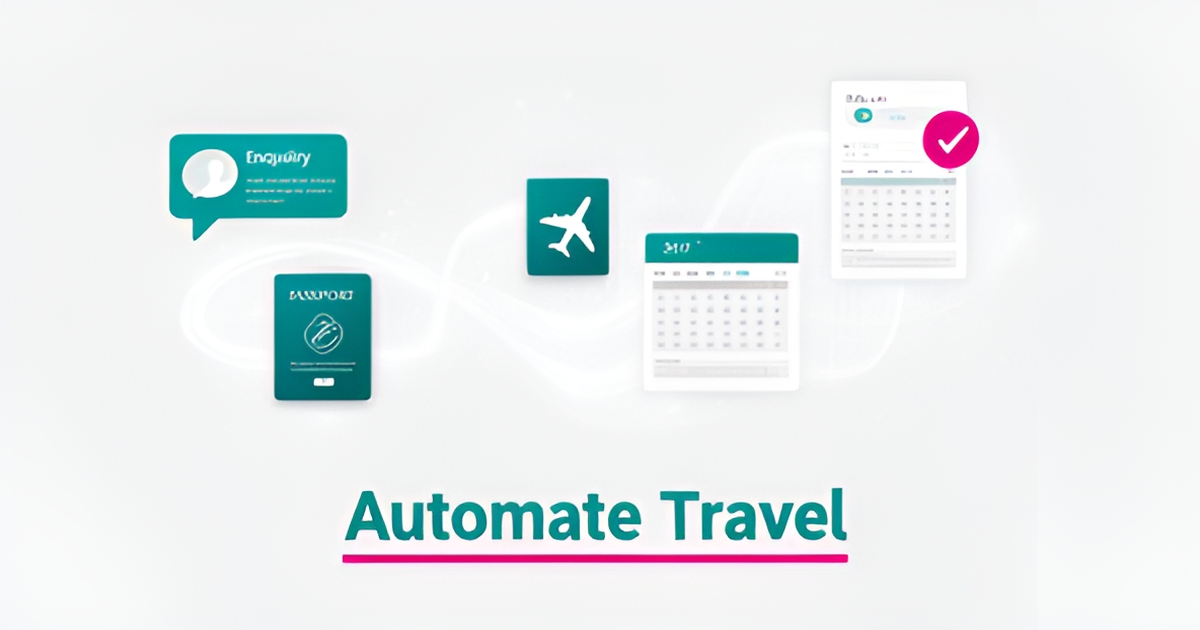
AI Agents Automating Travel Agency Marketing And Logistics
Key Facts
- The AI agents market is projected to grow from $7.6 billion in 2025 to $182.9 billion by 2033, with travel named as an adopting industry, according to Grand View Research
- 25% of travelers now use generative AI to plan trips, up from 15% a year earlier, and 43% among high-income millennials, per Deloitte data
- MIT Sloan found that 80% of AI agent implementation effort goes to unglamorous work like data engineering, governance, and workflow integration
- Agentic systems cut manual workloads by over 60% on repetitive tasks like data entry and reconciliation, per MarketsandMarkets research
- An AI agent can refine an itinerary in about 15 minutes versus roughly 3 hours building it from scratch, according to practitioner analysis
- Vertical, domain-specific AI agents are the fastest-growing market segment at a 62.7% CAGR, per MarketsandMarkets
- Roughly 60% of enterprises cite compliance and data governance concerns as key barriers to AI agent adoption, per MarketsandMarkets research
Hire a team member that works 24/7 — for less than a part-time wage.
AI receptionists, SDRs, dispatchers and 99+ roles. Trained on your business, fully managed.
Not sure where to start? Ask our AI planner
The Squeeze: Travel Agencies Are Losing Time, Leads, and Margin
Every booking is a sequence of time-sensitive steps, enquiries, supplier confirmations, document delivery, payment tracking. Run a dozen of them in parallel and something slips, and the slip is what your client sees.
The demand side is moving faster than most agencies are. Roughly 25% of travelers now use generative AI to plan trips, up from 15% a year earlier, and among high-income millennials that figure reaches 43%. Clients arrive pre-researched by a model, which means the agency's value collapses to judgment, access, and accountability, and only if the agency responds fast enough to demonstrate any of it.
Meanwhile, the platforms are building around you. Google has rolled out AI-driven trip planning across Search, Maps, and Gemini, and Expedia is already live with autonomous booking agents that can research, plan, and book a vacation end-to-end, circumventing intermediaries entirely. Hospitality technologist Max Starkov calls the shift to AI-first travel "the greatest transformation of our industry since the advent of the internet."
The internal numbers tell the same story. Industry-wide, conversion on inquiries often sits in the single digits to low teens, meaning most of the marketing spend agencies pour into lead generation evaporates in slow follow-up and missed handoffs. The typical failure points look like this:
- Enquiries answered hours or days late, after the traveler has booked elsewhere
- Supplier confirmations chased manually, slipping when staff volume peaks
- Documents and payment reminders sent late, or not at all
- Itineraries that take hours to build by hand while competitors draft theirs in minutes
None of this is a people problem. It's a process problem, and it's fixable. The agencies that win won't be the ones with the fanciest demos; they'll be the ones who took one workflow, put it into production, measured it, and then did the next one. That's the workflow-first approach AIQ Labs builds around: map how the agency actually works, pilot an agent on the single most expensive broken step, and keep humans in control of the judgment calls while agents handle capture, chasing, and coordination.
The window is closing. While agencies debate, competitors are quietly rebuilding their follow-up, their confirmations, and their itineraries around agents that never sleep. Every enquiry that sits unanswered tonight is a booking someone else is confirming tomorrow.
Why AI Agents Fit Travel Workflows: The Research-Backed Case
Travel is, at its core, a transaction-cost business, endless searching, communicating, and contracting. That's exactly what AI agents are built to eliminate, which is why the market signals point so strongly toward this industry.
The numbers tell the story. The global AI agents market is projected to grow from USD 7.6 billion in 2025 to USD 182.9 billion by 2033, a 49.6% annual growth rate, with travel explicitly named among the industries integrating agents into customer engagement. A second research firm pegs growth at 46.3% annually, different figures, same direction.
Two segments within that growth matter most for travel work. Vertical, domain-specific agents are the fastest-growing offering category at a 62.7% CAGR, validating purpose-built agents over generic tools. And multi-agent systems are growing at 48.5% CAGR, significant because travel logistics demand exactly what they enable: real-time coordination, decentralized task execution, and context-aware decisions across parallel bookings.
The economics back this up. MIT Sloan researchers argue that the fundamental promise of AI agents is dramatically reducing transaction costs, the time and effort in searching, communicating, and contracting. Agentic systems cut manual workloads by over 60% in comparable task categories like reconciliation and data entry.
MIT Sloan even documents a concrete travel example: an agent that planned a vacation using consumer input plus API access to websites, email, and Slack, then, given credit card permissions, selected flights and hotels and booked and paid for the entire trip without human involvement.
What does this mean for an agency? The workflows most worth automating are the repetitive, time-sensitive ones:
- Enquiry capture and first response
- Supplier confirmation chasing
- Document delivery and payment reminders
- Booking status monitoring and itinerary checking
Every booking is a sequence of time-sensitive steps, and running dozens in parallel means slips that reach the client. Agents don't get tired and work around the clock, a point MIT Sloan's John Horton makes plainly.
This is also why implementation discipline matters. In one MIT Sloan-documented case, 80% of the implementation effort went to unglamorous work: data engineering, stakeholder alignment, governance, and workflow integration. That's the phase most agencies underestimate. It's why workflow-first providers like AIQ Labs map a business's actual processes before building, starting with one workflow, piloting it in production, then scaling, rather than shipping a demo and hoping.
The evidence is clear: agents fit travel workflows not as a novelty but as a structural match between what the industry does and what the technology does best.
Start With the Workflow, Not the Tool: Process Mapping Steps
The single biggest predictor of whether an AI agent succeeds in a travel agency isn't the model you choose, it's whether you mapped the workflow before you picked the tool. Every booking is a sequence of time-sensitive steps: enquiries, supplier confirmations, document delivery, payment tracking. Run enough of them in parallel and something slips, and the slip reaches the client.
The methodology that works starts with observation, not technology. Map how the agency actually operates today, who answers enquiries, who chases suppliers, who sends invoices, and identify where an agent genuinely helps. The strongest candidates are repetitive, rule-based tasks:
- Enquiry capture and after-hours lead response
- Supplier confirmation chasing and booking status monitoring
- Document delivery and payment reminders
- First-draft itinerary building
Itinerary drafting illustrates the gap clearly: one practitioner analysis found an agent can refine an itinerary in about 15 minutes versus roughly 3 hours building from scratch. But the judgment calls, pricing, supplier selection, handling an anxious traveler, stay with your people. As MIT Sloan research notes, agents still struggle with exceptions that humans handle easily, so human-in-the-loop design with logged actions isn't optional; it's the architecture.
Then pilot one real workflow. The winning principle is narrow and deep: automate one workflow, measure it, then do the next. Adoption is wide and shallow; production is narrow and deep. The agencies that win won't have the fanciest demos, they'll have taken one process, put it into production, measured it, and repeated.
Set expectations honestly about the effort. In one 2025 implementation case, 80% of the work went to unglamorous tasks, data engineering, stakeholder alignment, governance, and workflow integration, not the AI itself. That's why AIQ Labs structures every build through a Discovery & Architecture phase first, then delivers one workflow at a time inside the systems you already use, with validation layers and audit trails on every agent action.
The payoff for this discipline is real: agentic systems can reduce manual workloads by over 60% on repetitive tasks like data entry and reconciliation. But it comes from process discipline, not from the tool.
If you want to see which of your workflows is the right first candidate, start with the two-minute Fit Check at aiqlabs.ai/apply, it leads to a free 30-minute strategy call where an AI engineer maps your biggest bottleneck. If there isn't a clear win, you'll hear that too.
Implementation Roadmap: One Workflow, Phased Delivery, Measured Results
Most travel agencies don't fail at AI because the technology is hard. They fail because they try to automate five workflows at once and finish none of them. The winning pattern, as one practitioner puts it, is to be "narrow and deep": take one workflow, put it into production, measure it, then do the next one.
Start by picking exactly one first workflow, after-hours enquiry capture or supplier confirmation chasing. Both are deployable within roughly 30 days without touching your booking systems, which keeps risk low while proving value fast. This mirrors AIQ Labs' workflow-first approach: analyze how the agency actually operates before selecting any tool, then pilot on one real workflow rather than a sandbox demo.
Structure delivery in phases, with each phase approved before the next begins. Expect the unglamorous work to dominate: in one 2025 case documented by MIT Sloan, 80% of AI agent implementation effort went to data engineering, stakeholder alignment, governance, and workflow integration, not the AI itself. Budget for that reality upfront.
Non-negotiables throughout the build include:
- Human-in-the-loop controls, agents handle capture, chasing, and coordination; judgment calls and the client relationship stay with your people
- Validation layers, every action checked before execution, with guardrails limiting what the agent can do
- Audit trails, complete logging of agent actions for compliance review and quality assurance
These controls matter commercially, not just philosophically. Roughly 60% of enterprises cite compliance and data governance concerns as key barriers to AI agent adoption, making governance infrastructure a genuine differentiator rather than overhead.
Then measure the metrics that actually reflect agency economics: cost to acquire a customer, conversion rate on qualified leads, and labor cost per booking. Industry conversion on inquiries often sits in the single digits to low teens, so even modest gains compound quickly.
One honest caveat: reclaimed time is not automatically saved money. MIT Sloan's Kate Kellogg cautions that just because an agentic AI model reclaims 20% of someone's time, that doesn't mean it's a 20% labor-cost savings. If the freed hours go to more marketing, better follow-up, or higher-touch client service, the return shows up in conversion and retention, not payroll. Measurement discipline, not enthusiasm, is what turns automation into margin.
Your Next 30 Days: From Fit Check to First Agent in Production
Google rolled out AI trip-booking agents across Search, Maps, and Gemini, while OpenAI's Operator is already planning vacations live with Expedia. The window for travel agencies to automate their own workflows is open, but it won't stay that way.
Here's the practical truth: the agencies that win won't have the fanciest demos. As one practitioner bluntly puts it, they'll be "the ones who took one workflow, put it into production, measured it, and then did the next one", narrow and deep beats wide and shallow (source). And MIT Sloan's research on real agent deployments found that 80% of implementation effort goes to unglamorous work, data engineering, stakeholder alignment, and workflow integration, not flashy prompt tricks (source). So plan for the boring 80% from day one.
Your first 30 days should follow the workflow-first methodology the research converges on: start with the workflow, not the tool, and pilot on one real process (source). AIQ Labs structures this as a two-minute Fit Check followed by a free 30-minute strategy call, a working session to identify your highest-ROI workflow, not a sales pitch. If there's no clear win, they'll say so.
Then pick the payment model that matches your ambition:
- Start Monthly, one AI employee, like an after-hours enquiry responder, at a flat monthly cost less than a part-time hire. Build, training, integrations, and monitoring included.
- Build in Milestones, one workflow rebuilt in phases. Approve and pay per phase; stop anytime and keep everything built so far.
- Own It Outright, a full AI operating system connecting intake, communication, scheduling, and reporting, with full ownership of code, agents, and data.
The urgency is real. Deloitte found 25% of travelers now use generative AI for trip planning, up from 15% a year earlier, and 43% of high-income millennials already arrive pre-researched by a model (source). Meanwhile, autonomous agents from Google and Expedia can research, plan, and book trips without any intermediary at all (source).
The agencies that survive disintermediation will be the ones selling judgment, access, and accountability, backed by agents that never miss an enquiry. Start the Fit Check, put one workflow into production, and measure it.
Still paying for 10+ subscriptions that don’t talk to each other?
We build custom AI systems you own outright. No vendor lock-in. Full control.
Not sure where to start? Ask our AI planner
Frequently Asked Questions
What travel agency tasks should I automate first with AI agents?
Will AI agents replace my travel agency staff?
How much time can AI agents actually save a travel agency?
How long does it take to implement AI agents in a travel agency?
Why should travel agencies worry about AI like Expedia and Google's booking agents?
What's the biggest mistake agencies make when adopting AI agents?
One Workflow in Production Beats Five in Planning
The pattern across this research is consistent: travel is a transaction-cost business, AI agents are built to eliminate exactly those costs, and the agencies that win will be narrow and deep, one workflow in production, measured, then the next. The market is growing at nearly 50% annually, with travel explicitly named among adopting industries, and 25% of travelers already arrive pre-researched by a model. Meanwhile, 80% of implementation effort goes to unglamorous work, data engineering, governance, integration, which is why discipline beats enthusiasm. Your next step is simple: pick your single most expensive broken workflow, likely after-hours enquiry capture or supplier confirmation chasing, and pilot it inside the systems you already use. AIQ Labs structures exactly this kind of engagement, starting with a two-minute Fit Check at aiqlabs.ai/apply, followed by a free 30-minute strategy call where an AI engineer maps your biggest bottleneck. If there isn't a clear win, you'll hear that too. Every enquiry sitting unanswered tonight is a booking someone else confirms tomorrow.
Make AI your competitive advantage — not just another tool.
Strategy, implementation and ongoing optimization. One partner, end to end.
Not sure where to start? Ask our AI planner