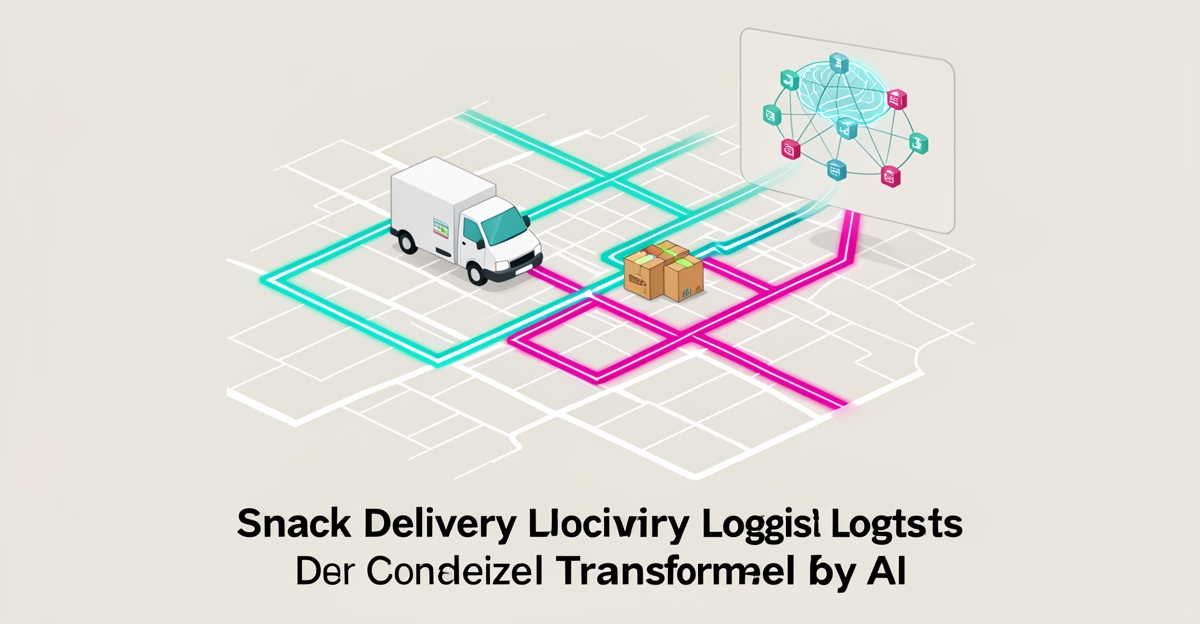
AI Employee Spotlight: How a Smart AI Dispatcher Transforms Snack Delivery Logistics
Key Facts
- AI dispatch can reduce daily route planning from an hour or more with manual dispatch to just a few minutes per day, according to fleet management analysis
- AI typically enables one dispatcher to manage several times more vehicles than the manual ratio of roughly 1:10-12, based on fleet management research
- AI dispatch can dramatically reduce dispatch costs versus staffing full-time human dispatchers, per franchise operations analysis, AIQ Labs' managed AI employees typically run at roughly 80% less cost than a human hire
- Callers who do not get immediate service frequently call the next provider, as shown in franchise operations research
- AI calculates optimal routes in seconds, accounting for traffic, weather, and delivery windows, per fleet management analysis
- Replacing static ETAs with ML-based ETAs has cut customer complaints substantially in reported automation case studies
- Industry turnover for dispatch positions runs high, with each departure costing thousands of dollars in recruiting and training, per franchise operations data
Hire a team member that works 24/7 — for less than a part-time wage.
AI receptionists, SDRs, dispatchers and 99+ roles. Trained on your business, fully managed.
Not sure where to start? Ask our AI planner
Why Manual Dispatch Fails Snack Delivery Businesses
Snack delivery businesses often discover the limits of manual dispatch the hard way: a growing route network suddenly turns into daily chaos. What starts as a manageable process with a few drivers becomes unsustainable once operations expand beyond a handful of vehicles.
According to field service research, traditional dispatch typically hits a breaking point at around 6-8 vehicles. Beyond that threshold, manual scheduling can produce hours of daily firefighting just to keep routes from collapsing. One field service company with nine technicians reportedly tracked roughly 2.5 hours per day spent on schedule adjustments alone.
The problem compounds quickly. Manual dispatching tends to cost fleets meaningfully more in total operating expenses than AI-optimized alternatives, according to fleet management analysis. For snack delivery operations running tight margins, that inefficiency directly erodes profitability.
Human dispatchers also face inherent capacity constraints that no amount of experience can overcome:
- A single dispatcher can effectively manage only about 10-12 vehicles manually, while AI systems let one dispatcher oversee several times that number
- Route planning typically consumes an hour or more daily versus minutes with AI optimization
- Assignment decisions that take minutes manually can happen in seconds with AI
- Industry turnover for dispatch positions runs high, costing thousands of dollars per departure in recruiting and training
The customer impact is equally severe. Franchise operations research indicates that most callers who don't receive immediate service simply call the next provider. For snack delivery businesses competing on reliability and convenience, missed calls translate directly to lost revenue.
AIQ Labs works with delivery businesses facing exactly these scaling challenges, deploying AI employees, including AI dispatchers, that handle schedule management and customer notifications around the clock. The technology processes thousands of scheduling possibilities in seconds, weighing variables like delivery windows, traffic conditions, and driver availability that overwhelm manual processes.
The result is a structural shift: dispatch stops being a bottleneck and becomes a competitive advantage.
How AI Dispatchers Transform Delivery Logistics
AI dispatchers are transforming delivery logistics by automating the scheduling process, optimizing routes, and enabling real-time customer communication, capabilities that directly address the pain points of snack delivery operations. A key advantage is the dramatic reduction in planning time: AI systems can calculate optimal routes in seconds, accounting for traffic, weather, and delivery windows, reducing daily route planning from an hour or more with manual dispatch to just a few minutes per day. This efficiency allows dispatchers to manage significantly larger fleets, with one AI-powered dispatcher handling several times more vehicles than the manual ratio of roughly 1:10-12.
Beyond speed, AI dispatch delivers substantial cost savings. Franchise operations analysis shows AI dispatch can dramatically reduce dispatch costs versus fully staffed human dispatch teams. These savings stem from eliminating salaries, benefits, and overhead while maintaining 24/7 coverage without overtime costs. AIQ Labs' managed AI employees typically run at roughly 80% less cost than an equivalent human hire. Additionally, AI dispatch systems evaluate thousands of scheduling possibilities in seconds, weighing factors like driver qualifications, delivery windows, and vehicle capacity to make optimal assignment decisions that human dispatchers cannot process at scale.
- AI calculates optimal routes in seconds, accounting for traffic, weather, and delivery windows
- AI enables one dispatcher to manage several times more vehicles than the manual ratio of roughly 1:10-12
- Replacing static ETAs with ML-based ETAs has cut customer complaints substantially in reported case studies
AIQ Labs deploys AI employees specifically designed for snack delivery businesses to improve on-time performance and customer satisfaction through these exact capabilities. By automating routine dispatch tasks, AI dispatchers free human teams to focus on complex exceptions and relationship-building, creating a hybrid model where technology handles volume and humans handle judgment, ultimately delivering more reliable, scalable, and cost-effective delivery operations.
Implementing AI Dispatch: From Pilot to Full Scale
Implementing AI dispatch begins with clearly defining the problem your snack delivery operation faces. Start with a specific use case such as same-day deliveries in a single city or high-priority ticket dispatch, then establish baseline KPIs like average response time, miles per job, and on-time delivery rate. This focused approach prevents scope creep and allows you to measure impact accurately from day one, especially important when scaling from pilot to full deployment.
Data preparation is the foundation of any successful AI dispatcher implementation. Collect GPS tracking, order histories, driver availability logs, and historical ETA data into a centralized system with reliable ETL processes. Organizations that prioritize data hygiene see significantly faster ROI, garbage in, garbage out applies doubly to AI systems that depend on clean inputs for optimal routing and scheduling decisions. For snack delivery businesses dealing with perishable goods, accurate historical data on delivery windows and traffic patterns is particularly critical.
Adopt a hybrid human-AI model from the outset to balance automation benefits with necessary human judgment. Let the AI handle the bulk of standard inbound delivery requests, answering calls, checking driver availability, and booking jobs, while reserving complex situations like multi-stop VIP orders, emotionally charged customer complaints, or outbound coordination for human dispatchers. This approach reduces burnout on your team while maintaining service quality for edge cases that require empathy or local knowledge AI cannot replicate.
Governance and monitoring become essential as you scale beyond the pilot phase. Implement model versioning, clear rollback procedures, and incident response playbooks to maintain system reliability. Keep human oversight for high-impact decisions such as emergency rerouting during severe weather, and log every automated reassignment for auditing and continuous improvement. Regular KPI tracking against your baseline metrics ensures the AI dispatcher delivers promised improvements in on-time performance and customer satisfaction without creating new operational blind spots. AIQ Labs builds these systems in milestones with fixed pricing, so each phase is measurable before you commit to the next, see pricing for how the payment models work.
Still paying for 10+ subscriptions that don’t talk to each other?
We build custom AI systems you own outright. No vendor lock-in. Full control.
Not sure where to start? Ask our AI planner
Frequently Asked Questions
At what point does manual dispatch start to fall apart for snack delivery?
How many vehicles can one dispatcher actually handle with AI vs manually?
What kind of cost savings do snack delivery businesses see with AI dispatch?
Will an AI dispatcher replace my human team completely?
How much time does AI save on daily route planning?
Does AI dispatch actually improve customer experience for deliveries?
From Daily Firefighting to a Dispatch Advantage
Manual dispatch stops working well before most snack delivery businesses realize it, the breaking point typically arrives around 6-8 vehicles, and beyond that you're spending hours each day just keeping routes from collapsing. As we've seen, AI dispatchers flip that equation: route planning drops from over an hour to minutes, one dispatcher can oversee several times more vehicles, and ML-based ETAs can meaningfully cut customer complaints. The businesses winning in delivery aren't choosing between humans and AI, they're adopting a hybrid model where AI handles routine scheduling and customer notifications while people focus on judgment calls and relationships. The result is a structural shift: dispatch stops being a bottleneck and becomes a competitive advantage. If you're ready to see what that looks like in your operation, start with AIQ Labs' two-minute Fit Check at aiqlabs.ai/apply, then book a free 30-minute strategy call, a real working session with an AI engineer to map your biggest bottleneck and identify high-ROI automation opportunities. If there isn't a clear win, we'll tell you that too.
Make AI your competitive advantage — not just another tool.
Strategy, implementation and ongoing optimization. One partner, end to end.
Not sure where to start? Ask our AI planner