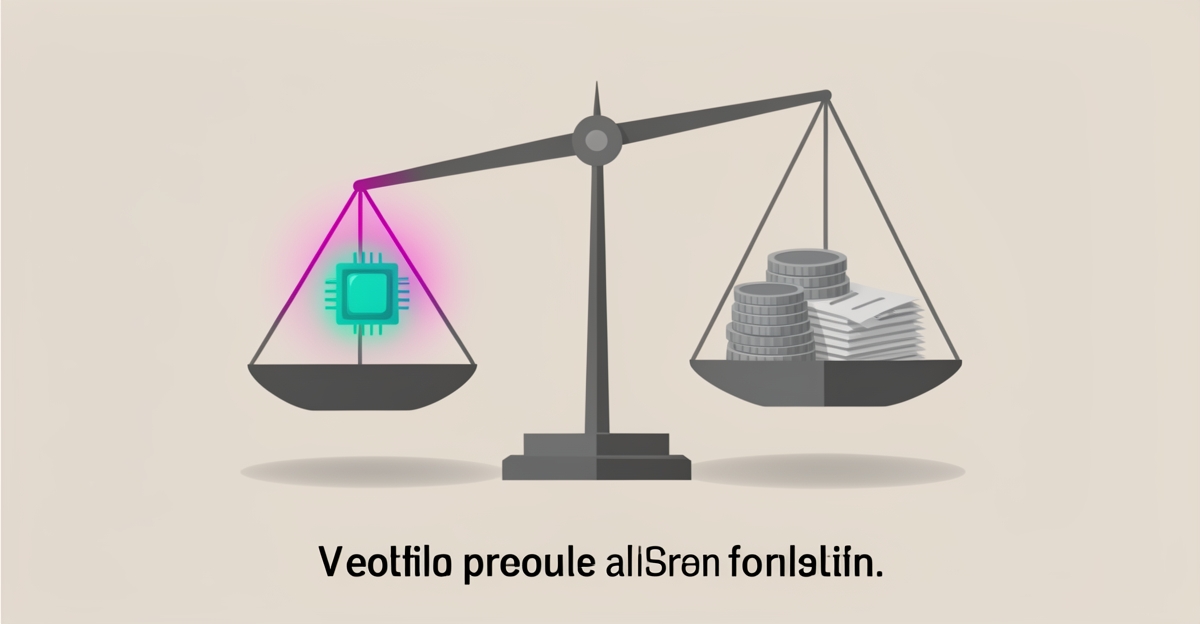
AI Employee vs. Human Staff: The Cost of Hiring vs. Using AI for Inquiries
Key Facts
- A fully loaded human employee typically costs tens of thousands more than their base salary once benefits, taxes, equipment, and management overhead are added, commonly 25–35% on top of pay.
- AIQ Labs' managed AI employees typically run around 80% less than the cost of an equivalent human hire.
- Fast response matters: inquiry handling studies have long shown that answering a lead within minutes dramatically outperforms slower follow-up for qualification odds.
- AI can typically deflect a large share of routine calls and messages autonomously, with contact center studies commonly citing 40–70% automation rates.
- Front desk and reception roles see high annual turnover, and replacing an employee can cost a significant fraction of their annual salary.
- A live-agent interaction typically costs several dollars, while a fully automated conversation costs a fraction of that.
- AI implementation payback is typically measured in weeks to a few months, versus the months-long ramp human hires need to reach full productivity.
Hire a team member that works 24/7 — for less than a part-time wage.
AI receptionists, SDRs, dispatchers and 99+ roles. Trained on your business, fully managed.
Not sure where to start? Ask our AI planner
The Hidden Cost of Human Inquiry Staff
Businesses often focus only on base salary when budgeting for inquiry staff, overlooking the true financial burden of human labor. The fully-loaded cost of a human employee handling calls and inquiries typically lands well above the budgeted salary, often in the $50,000–$90,000 range for roles budgeted at $35,000–$55,000 in base pay. This gap arises because base pay represents just a fraction of total employment expenses. Benefits, taxes, equipment, and management overhead commonly add 25–35% to salary, so a $50,000-salary employee can easily cost $70,000 or more once everything is counted. For specialized roles like healthcare front desk staff, the pattern is the same: a modest base salary balloons once turnover, coverage gaps, and overhead are included. Limited visibility into total costs leads to chronic underestimation.
Beyond direct compensation, hidden costs compound the financial strain. Recruiting and training a new inquiry handler typically runs thousands of dollars per hire, with ramp-up time to full productivity stretching several months, during which the employee operates below peak efficiency while still incurring full costs. Replacing an employee can cost a significant fraction of their annual salary, made worse by high churn in front-line roles like reception and intake. These factors mean businesses continuously reinvest in hiring and onboarding just to maintain baseline staffing levels, draining resources that could fund growth initiatives.
Perhaps most critically, limited human availability creates revenue leakage that traditional cost calculations ignore. Inquiry teams working standard 40-hour weeks miss after-hours, weekend, and holiday leads, opportunities that AI-driven systems capture around the clock. Inquiry handling research has long shown that answering a new lead within minutes dramatically increases qualification odds compared to slower follow-up, a threshold that's hard for human teams to meet consistently during peak volumes or off-hours. When combined with the inability to handle simultaneous interactions, this results in missed calls, delayed responses, and lost revenue, costs that rarely appear on balance sheets but directly impact growth potential. For businesses relying on inquiry handling for lead generation, these opportunity costs often exceed the visible expenses of staffing.
AI Employees vs Human Staff: Cost, Coverage and Capacity Compared
The numbers tell a story most business owners don't expect. A fully loaded human employee costs tens of thousands of dollars annually once you account for salary, benefits, taxes, equipment, and management overhead. A managed AI employee handling equivalent routine tasks typically runs around 80% less, the benchmark AIQ Labs uses across its [AI Employee](/ai-employees) deployments, which span receptionists, SDRs, dispatchers, and 99+ other roles.
- Availability: 40 hrs/week vs. 24/7/365
- Response time: minutes to hours vs. sub-60 seconds
- Simultaneous capacity: 1 interaction vs. unlimited
- Scaling economics: linear cost growth vs. near-zero marginal cost
The gap widens when you factor in hidden costs. Front desk and reception roles see high annual turnover, and new hires typically need months to reach full productivity. AI deploys in days, not months, and never calls in sick. For inquiry handling specifically, the cost per interaction drops from several dollars for a live agent to a small fraction of that for a fully automated conversation.
Speed isn't just a convenience metric, it's a revenue lever. Research on lead response has consistently shown that answering inquiries within minutes dramatically outperforms slower follow-up for qualification. A human team asleep at 2:00 AM captures zero of those leads. An AI employee captures all of them.
This isn't theoretical. AIQ Labs has deployed 200+ multi-agent systems, and we regularly see SMBs reclaim significant weekly hours of manual data entry and eliminate missed-call leakage entirely by deploying managed AI employees for reception, intake, and qualification roles. The hybrid model, AI for volume and velocity, humans for judgment and relationship, delivers the strongest ROI.
The Hybrid Model: Where AI Wins and Humans Still Matter
The most effective strategy for handling client inquiries isn't choosing between AI and human staff, it's combining their strengths in a hybrid model. AI excels at managing high-volume, repetitive tasks such as 24/7 inquiry handling, initial lead qualification, and data entry, freeing human teams to focus on complex judgment, empathy-driven conversations, and relationship building. This approach leverages what each does best: AI for speed, scale, and consistency; humans for nuance and trust. The division of labor is not about replacement but about better work allocation, allowing businesses to scale without proportional hiring.
In practice, AI handles the front lines of customer interaction, deflecting a significant portion of routine inquiries before they reach human agents. Contact center studies commonly cite automation handling 40–70% of incoming calls and messages. This deflection translates directly into efficiency gains, with organizations often reporting meaningful reductions in Average Handle Time for the interactions that do require human involvement. The result is faster response times, higher capacity, and improved service quality without increasing headcount.
- AI manages initial lead qualification and routing, ensuring only high-intent prospects reach human sales teams
- After-hours and weekend inquiries are handled instantly, capturing leads that would otherwise be missed
- Repetitive tasks like appointment scheduling, FAQ responses, and data entry are automated with consistent accuracy
- Human staff focus on complex problem-solving, negotiation, and building long-term client relationships
- A sustainable ratio of human supervisors to AI agents keeps oversight and continuous improvement practical
This structure creates operational resilience. Businesses using this model report not only cost savings but also improved employee satisfaction, as staff spend less time on monotonous tasks and more on meaningful work. As of late 2026, this balance is becoming a competitive necessity: the ability to deliver 24/7 responsiveness while maintaining human touch increasingly defines market leadership. For organizations pursuing AI transformation, the hybrid approach offers a pragmatic path forward, one that maximizes efficiency without sacrificing the human elements that drive loyalty and long-term value. AIQ Labs helps businesses design and implement this balance through managed [AI Employee](/ai-employees) deployment and strategic integration with existing teams.
From Cost Comparison to Implementation with AIQ Labs
The math becomes actionable when you look beyond annual savings to the mechanics of deployment. AIQ Labs' Start Monthly model for [AI Employees](/ai-employees) gives you managed AI staff, receptionists, SDRs, dispatchers, and more, with setup, training on your business processes, CRM and calendar integrations, ongoing monitoring, and continuous improvements included. This approach eliminates the variable costs of human staffing, such as benefits, taxes, and turnover, while delivering 24/7 availability that human teams simply cannot match without shift premiums or overtime. Full payment model details are on the [pricing page](/pricing).
Implementation is designed for speed and low risk. Most AI employees are deployed within days, allowing businesses to pilot a single role, like an AI receptionist or lead qualifier, without disrupting existing operations. Within that short window, the AI agent is trained on your specific workflows, integrated with your tools, and live on your phone, email, or chat channels. Because the model includes pause-or-adjust flexibility, you can test the concept with minimal commitment before deciding to scale.
Measuring ROI happens quickly. With human employees typically taking months to reach full productivity and AI systems operational in days, the payback period for AI implementation is usually measured in weeks to a few months. During this time, you'll capture savings from reduced missed inquiries, AI typically handles 40–70% of routine calls autonomously, and gain measurable improvements in response speed, which strengthens lead qualification when inquiries are answered within minutes. These gains compound as you add more AI employees to handle additional workflows, scaling capacity without proportional headcount growth. Businesses that outgrow a single role can move up to a fixed-price [Workflow Build](/workflow-builds) or a phased [AI Operating System](/ai-operating-systems) that they own outright.
- Pilot one high-volume, repetitive task, such as appointment scheduling or initial lead intake, to isolate impact and validate performance.
- Track key metrics like response time, inquiry volume handled, and human staff time freed up before and after deployment.
- Use the data to calculate hard savings and reinvest a portion into expanding AI coverage to adjacent roles or departments.
This phased approach turns cost comparison into a repeatable growth strategy. Instead of viewing AI as a one-time cost-cutting move, SMBs can use it as a lever for sustainable expansion, handling more inquiries, qualifying more leads, and booking more appointments without the recurring expense of hiring and training new staff. The result is a leaner, more responsive operation where human talent focuses on high-value interactions while AI manages the volume, consistently and around the clock. To explore how this could work for your specific workflow, start with the [2-minute Fit Check](/apply) and then a free strategy call to map your highest-impact opportunity.
Still paying for 10+ subscriptions that don’t talk to each other?
We build custom AI systems you own outright. No vendor lock-in. Full control.
Not sure where to start? Ask our AI planner
Frequently Asked Questions
What is the true annual cost of a human employee handling inquiries, and why is it higher than the base salary?
How much can businesses save by using an AI employee instead of a human for routine inquiry tasks?
What are the hidden costs of hiring human inquiry staff that businesses often overlook?
How does AI improve response time and lead qualification compared to human teams?
What is the hybrid model of AI and human staff, and why is it considered the most effective strategy?
How quickly can an AI employee be deployed, and what is the typical ROI timeline?
Turning Inquiry Handling Into Your Competitive Edge
The data is clear: the true cost of human inquiry staff, factoring in benefits, turnover, ramp-up time, and missed after-hours leads, far exceeds what most businesses budget for. AI employees offer a proven alternative, typically handling 40–70% of routine inquiries at a fraction of the per-interaction cost while operating 24/7 with sub-60-second response times. But the real advantage lies not in replacement, but in a hybrid model where AI manages volume and velocity, freeing human teams to focus on high-value conversations that build trust and drive revenue. This approach typically delivers measurable ROI within weeks to a few months through reduced missed inquiries, faster lead qualification, and scalable capacity without proportional hiring costs. To see how this could work for your specific workflow, whether it's appointment scheduling, lead intake, or customer support, start with the [2-minute Fit Check](/apply), then [book your free 30-minute strategy call](/book) and discover where AI can create immediate value in your business.
Make AI your competitive advantage — not just another tool.
Strategy, implementation and ongoing optimization. One partner, end to end.
Not sure where to start? Ask our AI planner