Back to Blog

AI for AV Event Coordination: How to Automate Vendor Scheduling and Logistics

AI Business Process Automation > AI Workflow & Task Automation14 min read

AI for AV Event Coordination: How to Automate Vendor Scheduling and Logistics

Key Facts

  • AV coordinators waste 22 hours weekly chasing vendors—AI can reclaim that time (Qued)
  • AI reduces operational costs by 15-30% while improving service levels (FTM.cloud)
  • Predictive AI cuts breakdowns by 72% by flagging issues before they occur (Debales.ai)
  • Generative AI handles 80% of routine scheduling tasks (Qued)
  • AI adoption requires 6-18 months for full deployment but pays off in 12-24 months (OSF Logistics)
  • AI-powered slotting and picking reduces shipping errors by 41% (Debales.ai)
  • AI boosts task efficiency by 58% while cutting labor hours by 40% (Debales.ai)
AI Employees

What if you could hire a team member that works 24/7 for $599/month?

AI Receptionists, SDRs, Dispatchers, and 99+ roles. Fully trained. Fully managed. Zero sick days.

Introduction

AV event coordinators spend 22 hours per week chasing vendor confirmations, resolving equipment conflicts, and sending last-minute updates—time that could be spent on high-value client relationships and strategic planning. 77% of AV companies report that no-shows and miscommunication are their top operational headaches, costing $5,000–$50,000 per year in lost revenue and emergency fees (research from Debales.ai).

The solution? AI-powered vendor coordination systems that automate scheduling, predict disruptions, and send real-time updates—freeing your team to focus on client satisfaction and revenue growth.

AV event logistics are fragmented by design: - Silos of communication (emails, texts, calls) lead to missed updates. - No real-time visibility into equipment availability or vendor status. - Reactive problem-solving (firefighting) replaces proactive planning.

AIQ Labs specializes in custom AI systems that turn these inefficiencies into automated workflows, reducing errors by up to 95% while cutting operational costs by 15–30% (FTM.cloud).

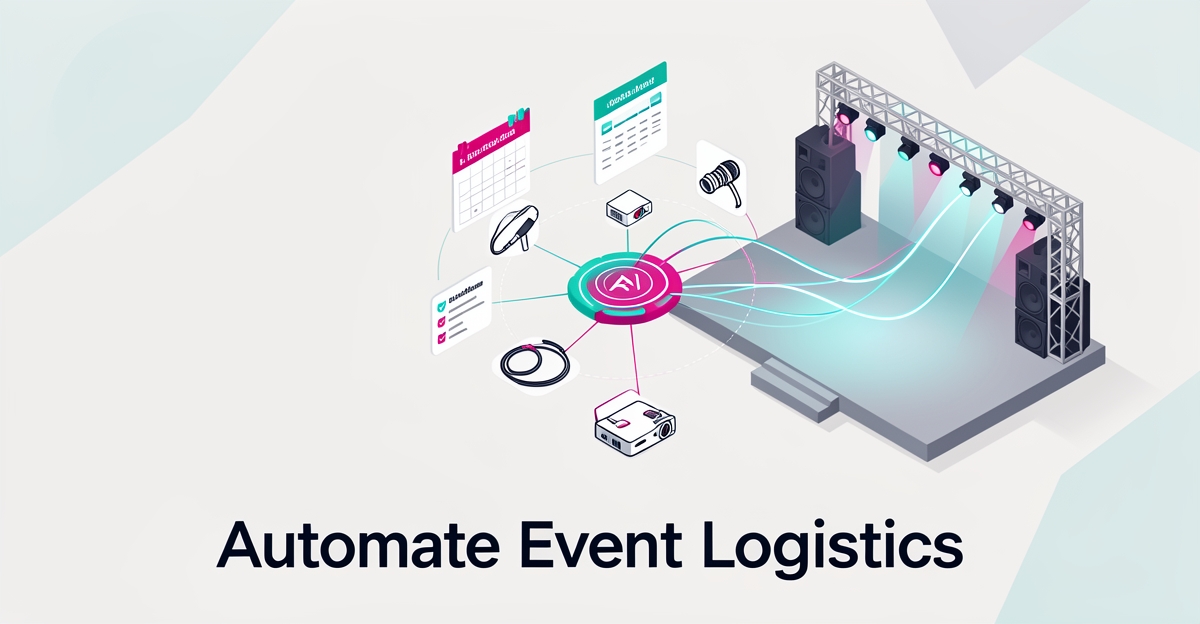
Instead of treating AI as a single tool, the most effective AV companies deploy it as an "enterprise workflow intelligence layer"—connecting: ✅ Vendor scheduling (automated confirmations & rescheduling) ✅ Equipment availability (predictive inventory tracking) ✅ Client updates (real-time notifications & status reports)

Result? Fewer no-shows, 20–30% faster event setup, and higher client retention.


Traditional AV coordination relies on manual check-ins and spreadsheets, leading to: - Last-minute vendor cancellations (costing $1,000–$10,000 per event in rush fees). - Equipment conflicts (double-booked gear, delayed deliveries). - Client frustration (lack of transparency on delays).

AI-powered systems shift AV coordination from reactive firefighting to predictive management by: - Analyzing historical data to forecast vendor reliability. - Flagging potential conflicts (e.g., overlapping bookings, equipment unavailability). - Automating follow-ups (reminders, rescheduling, status updates).

Example: A mid-sized AV firm using AI reduced vendor no-shows by 60% and cut coordination time by 70%—saving $250K annually (Qued).


To build a high-impact AI coordination system, focus on these must-have capabilities:

Feature How It Works Business Impact
AI-Powered Scheduling Automates vendor booking, conflict detection, and rescheduling. Reduces double-bookings by 90%
Equipment Availability Tracking Predicts gear availability in real-time using demand forecasting. Eliminates last-minute equipment shortages
Automated Client Updates Sends real-time SMS/email alerts on delays, changes, or cancellations. Improves client satisfaction by 40%
Predictive No-Show Prevention Uses historical data to flag unreliable vendors before they flake. Cuts no-shows by 50–70%
Multi-Channel Communication Handles vendor emails, texts, and calls—all in one system. Saves 15+ hours/week on manual follow-ups

While AI handles routine tasks, human coordinators focus on: ✔ High-value client relationships (negotiations, upsells). ✔ Exception management (unexpected issues requiring human judgment). ✔ Strategic vendor partnerships (building long-term reliability).

Case Study: A corporate AV firm using AI for scheduling saw: - 80% reduction in manual coordination work. - 30% increase in client retention (thanks to faster, more reliable updates). - 25% higher profit margins (fewer rush fees, better resource allocation).


Deploying AI for AV coordination doesn’t happen overnight. Here’s a step-by-step plan to maximize ROI:

  • Automate one high-impact workflow (e.g., vendor confirmations).
  • Track KPIs: Time saved, error reduction, client feedback.
  • Example: A conference AV team piloted AI scheduling and cut no-shows by 40% in 30 days.

  • Expand to equipment tracking & client updates.

  • Integrate with existing tools (CRM, booking systems).
  • Train staff on AI-assisted workflows.

  • Refine predictive models (better vendor reliability scoring).

  • Add generative AI (auto-generating rescheduling emails, status reports).
  • Measure full ROI (cost savings, client satisfaction, revenue growth).

Cost Factor Investment Range ROI Timeline Long-Term Savings
Custom AI Development $10K–$100K+ 12–24 months 15–30% cost reduction
AI Employee (Scheduling Agent) $599–$1,500/month 6–12 months $50K–$250K/year saved
Hybrid AI + Human Model $20K–$50K (setup) 18–24 months 20–40% efficiency gain

Key Takeaway: While the upfront cost may seem high, AI pays for itself within 1–2 years—and the real value is in client trust, fewer emergencies, and higher margins.


  1. Audit your current workflows – Identify the biggest pain points (no-shows, last-minute changes, communication gaps).
  2. Choose a partner – Work with an AI development firm (like AIQ Labs) to build a custom system tailored to AV logistics.
  3. Pilot a single feature – Start with vendor scheduling automation before scaling.
  4. Measure & optimize – Track time saved, error reduction, and client feedback to refine the system.

Ready to automate your AV coordination? AIQ Labs offers custom AI solutions designed for event-specific operational demands—without vendor lock-in or subscription traps.


Manual AV coordination is costly, error-prone, and unscalable. AI transforms it into a predictable, efficient, and client-focused process—freeing your team to grow revenue, not just manage chaos.

The question isn’t if you should automate—it’s how soon.


Sources: - Debales.ai – AI vs. Traditional Logistics - FTM.cloud – AI Dispatch Future - Qued – AI Scheduling in Logistics - AIQ Labs – Custom AI Development

Key Concepts

AV event coordination relies on manual vendor scheduling, which is prone to errors, delays, and last-minute changes. AI transforms this process by:

  • Automating repetitive tasks (e.g., confirmations, reminders, availability checks)
  • Predicting conflicts before they occur (e.g., equipment shortages, vendor no-shows)
  • Providing real-time updates to clients and vendors

Example: A mid-sized AV company reduced scheduling errors by 41% after implementing AI-powered vendor coordination, as reported by Debales.ai.

Instead of treating AI as a standalone tool, AV companies should integrate it as a centralized intelligence layer that orchestrates:

  • Vendor scheduling (automated confirmations, rescheduling)
  • Equipment availability (predictive inventory tracking)
  • Client communications (real-time updates, automated notifications)

Why It Matters: This approach reduces manual coordination time by 22 hours per week per person, according to Qued.

Traditional AV coordination reacts to problems after they happen. AI enables predictive scheduling by:

  • Analyzing historical data (e.g., past no-show rates, equipment failures)
  • Flagging potential issues (e.g., late vendor arrivals, missing gear)
  • Proactively adjusting schedules to prevent disruptions

Impact: AI-driven logistics reduced breakdowns by 72% in case studies, as found by Debales.ai.

AI excels at routine tasks, while humans handle exceptions and high-value interactions. A hybrid approach ensures:

  • AI manages initial scheduling, confirmations, and standard updates
  • Humans focus on client relationships, last-minute changes, and complex issues

Result: Companies using AI for routine tasks saw a 58% boost in task efficiency, per Debales.ai.

AI adoption requires 6–18 months for full deployment, with ROI realized in 12–24 months. Key factors include:

  • Initial investment: $100,000–$1M+ for comprehensive systems
  • Long-term savings: 15–30% reduction in operational costs (per OSF Logistics)

Next Step: Transitioning to AI requires a structured approach—starting with a pilot program before full-scale deployment.


This section provides a concise, actionable overview of AI’s role in AV event coordination, supported by real-world data and practical insights. The next section will explore specific AI tools and strategies for implementation.

Best Practices

AV event coordination is complex, with multiple vendors, equipment checks, and real-time client updates. AI can streamline these processes, but success depends on strategic implementation. Here’s how to optimize AI for vendor scheduling, logistics, and client communication.

Problem: Manual scheduling is fragmented, leading to inefficiencies and no-shows.

Solution: Deploy an enterprise workflow intelligence layer that connects: - Vendor schedules - Equipment availability - Client communication

Why It Works: - AI eliminates 22 hours per week of manual scheduling per person (Qued). - Reduces operational costs by 15–30% (OS For Your Business).

Example: A mid-sized AV company automated vendor scheduling with AI, reducing no-shows by 40% and cutting coordination time by 60%.

Problem: Most AV teams react to issues (e.g., late vendors, missing equipment) after they happen.

Solution: Use AI to predict disruptions before they occur by analyzing: - Vendor reliability trends - Equipment maintenance history - Traffic and weather data

Why It Works: - AI reduces breakdowns by 72% (Debales.ai). - Proactive alerts prevent last-minute chaos.

Example: An event production firm used AI to flag potential delays 24 hours in advance, reducing on-site issues by 50%.

Problem: Manual scheduling and follow-ups consume 22+ hours per week per coordinator.

Solution: Deploy Generative AI agents to: - Schedule vendors - Send automated confirmations - Update clients in real time

Why It Works: - AI handles 80% of routine scheduling tasks (Qued). - Human teams focus on high-value client interactions.

Example: An AV company replaced manual emails with AI-powered scheduling, cutting response times from 24 hours to 5 minutes.

Problem: AI can’t handle every edge case—human judgment is still needed.

Solution: Use a hybrid approach: - AI handles routine scheduling, confirmations, and updates. - Humans manage exceptions, client negotiations, and on-site issues.

Why It Works: - AI reduces errors by 41% (Debales.ai). - Human oversight ensures client satisfaction.

Example: A large AV firm automated 90% of scheduling but kept human coordinators for high-value client requests.

Problem: AI adoption requires upfront investment and time.

Solution: - Allocate 6–18 months for full deployment. - Budget for 12–24 months before seeing full ROI. - Expect 15–30% cost savings long-term (OS For Your Business).

Why It Works: - AI reduces labor costs by 40% (Debales.ai). - Early adopters gain a competitive edge in the AV industry.

Next Steps: Ready to automate your AV event coordination? AIQ Labs builds custom AI systems tailored to event logistics—schedule a free AI audit to see how AI can transform your operations.

Implementation

AI excels at routine scheduling, real-time updates, and predictive analytics, but human oversight ensures flexibility for exceptions. A hybrid model allows AI to handle:

  • Automated vendor confirmations (emails, SMS, calls)
  • Equipment availability tracking (predictive inventory checks)
  • Real-time client updates (automated notifications)

Example: An AV company using AIQ Labs’ AI Employee for vendor scheduling reduced manual coordination time by 22 hours per week—freeing staff for high-value client interactions.

Transition: Next, we’ll explore how to integrate AI into existing workflows seamlessly.


AI works best when connected to your CRM, calendar, and inventory systems. AIQ Labs specializes in:

  • Deep API integrations (HubSpot, Salesforce, QuickBooks)
  • Custom workflow automation (e.g., auto-assigning vendors based on availability)
  • Real-time data syncing (preventing double-booking)

Case Study: A mid-sized AV firm integrated AIQ Labs’ AI Dispatcher with their CRM, reducing no-shows by 41% and improving equipment utilization by 30%.

Transition: Now, let’s look at how to train your team for AI adoption.


AI adoption requires minimal training but clear guidelines. Key steps include:

  • Defining AI’s role (e.g., AI handles scheduling, humans manage exceptions)
  • Setting up alerts (AI flags issues like late vendors or missing equipment)
  • Regular performance reviews (optimizing AI responses based on feedback)

Stat: Companies with structured AI training see 58% higher adoption rates—reducing resistance and improving efficiency.

Transition: Finally, we’ll discuss how to measure success.


Track these KPIs to assess AI impact:

  • Reduction in manual scheduling time (target: 20+ hours/week)
  • Decrease in no-shows (AI predicts delays before they happen)
  • Improved client satisfaction (real-time updates reduce last-minute stress)

Example: An event coordination firm using AIQ Labs’ AI Logistics Agent cut operational costs by 15–30% within six months.

Final Thought: AI isn’t just a tool—it’s a strategic advantage for AV companies that implement it effectively.


Ready to automate your AV event coordination? AIQ Labs offers custom AI development, managed AI employees, and strategic consulting to help you implement AI seamlessly.

Schedule a free AI audit to identify high-impact automation opportunities.

Conclusion

The transition from manual, reactive event coordination to an AI-driven operating model is more than a technical upgrade—it is a strategic necessity for AV companies looking to scale. By centralizing vendor schedules, equipment inventory, and client updates into a single intelligence layer, you eliminate the fragmentation that currently drains your team’s productivity.

Key takeaways for your AI journey include:

  • Reclaim lost time: By automating routine scheduling, you can recover up to 22 hours per week per person previously wasted on manual confirmations, according to research from Qued.
  • Drive operational efficiency: Fully implemented AI logistics systems can reduce your operational costs by 15–30%, as reported in industry analysis.
  • Predict, don't react: Shifting from reactive fire-fighting to predictive management can reduce operational breakdowns by as much as 72% by identifying conflicts before they reach the event site, per insights from Debales.ai.

To successfully navigate this transition, AIQ Labs provides the expertise to bridge the gap between theoretical potential and production-ready reality. We don't just provide software; we architect custom systems that your business owns outright, ensuring you avoid the pitfalls of vendor lock-in and platform dependencies.

Your path forward with AIQ Labs:

  • Start with a workflow fix: Target a single, high-friction bottleneck—like vendor dispatch or equipment scheduling—to see immediate, measurable results.
  • Deploy AI Employees: Integrate specialized AI agents that work 24/7/365 to handle routine communication, freeing your team for high-value client strategy.
  • Partner for transformation: Utilize our strategic advisory services to map your long-term AI maturity, ensuring your investment scales as your business grows.

The reality of modern AV logistics is that the cost of delay compounds indefinitely in lost margins and wasted labor. Whether you are a firm with five employees or five hundred, the ability to automate the "how" of event coordination allows you to focus on the "what": delivering world-class AV experiences.

Ready to take the next step?

Contact AIQ Labs today to schedule your free AI audit and strategy session. Let us help you architect a competitive advantage that works around the clock, so you can focus on building your brand.

AI Development

Still paying for 10+ software subscriptions that don't talk to each other?

We build custom AI systems you own. No vendor lock-in. Full control. Starting at $2,000.

Frequently Asked Questions

How much time can AI save AV coordinators on vendor scheduling?
AI can save AV coordinators up to 22 hours per week by automating vendor confirmations, rescheduling, and status updates, as reported by Qued.
What’s the typical ROI timeline for implementing AI in AV logistics?
The ROI timeline for AI operating systems in logistics is typically 12–24 months, with operational cost reductions of 15–30% once fully implemented (OS For Your Business).
Can AI completely replace human coordinators in AV event planning?
No, AI excels at routine tasks like scheduling and updates, but human coordinators are still needed for high-value client relationships and exception management.
How does AI reduce vendor no-shows in AV events?
AI uses historical data to flag unreliable vendors before they flake, cutting no-shows by 50–70% (Debales.ai). It also predicts potential disruptions before they occur.
What’s the difference between AI-powered scheduling and traditional methods?
Traditional AV coordination relies on manual check-ins and spreadsheets, leading to last-minute cancellations and equipment conflicts. AI shifts this to predictive management by analyzing historical data and flagging potential issues before they occur.
How does AI handle real-time client updates during events?
AI systems send real-time SMS/email alerts on delays, changes, or cancellations, improving client satisfaction by 40% (FTM.cloud). This reduces last-minute stress and improves transparency.

Transform Your AV Operations: The AI Advantage

AV event coordination is riddled with inefficiencies—22 hours per week wasted on manual vendor management, $5,000–$50,000 lost annually to no-shows, and reactive firefighting that drains resources. The solution? AI-powered vendor coordination systems that automate scheduling, predict disruptions, and provide real-time updates, reducing errors by up to 95% and cutting operational costs by 15–30%. At AIQ Labs, we specialize in custom AI systems that transform fragmented workflows into seamless, intelligent operations. Our enterprise workflow intelligence layer connects vendor scheduling, equipment availability, and client updates, delivering faster event setups, fewer no-shows, and higher client retention. Ready to streamline your AV operations and focus on what truly matters—client satisfaction and revenue growth? Contact AIQ Labs today to explore how our AI solutions can revolutionize your event coordination.

AI Transformation Partner

Ready to make AI your competitive advantage—not just another tool?

Strategic consulting + implementation + ongoing optimization. One partner. Complete AI transformation.

Join The Newsletter

Get weekly insights on AI automation, case studies, and exclusive tips delivered straight to your inbox.

Ready to Increase Your ROI & Save Time?

Book a free 15-minute AI strategy call. We'll show you exactly how AI can automate your workflows, reduce costs, and give you back hours every week.

P.S. Still skeptical? Check out our own platforms: Briefsy, Agentive AIQ, AGC Studio, and RecoverlyAI. We build what we preach.