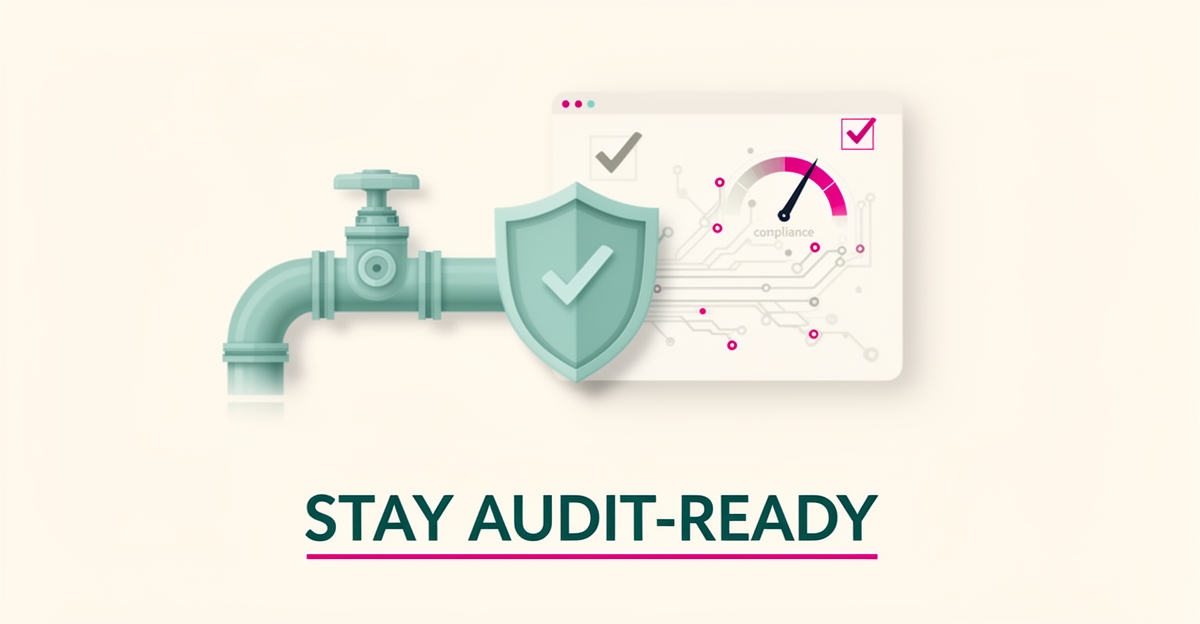
AI for Backflow Testing Compliance: How to Stay Ahead of Regulatory Changes
Key Facts
- Residential backflow testing in Columbia SC typically runs $75 to $200 per device as of late 2026 according to local cost data
- Commercial backflow testing fees typically reach $100 to $225 per device in Columbia SC per regional pricing
- Testing costs can peak 10-15% during spring and early summer due to seasonal demand per Columbia market data
- Off-peak fall/winter testing can save $15-30 per test compared to seasonal peaks per local cost analysis
- Common backflow repair work typically ranges from $200 to $1,000 per device according to service pricing
- Full backflow device replacement typically costs $800 to $2,500+ per unit per replacement cost data
- The EU AI Act entered into force in August 2024, establishing binding AI governance requirements per TechRadar analysis
- DORA came into application in January 2025, accelerating regulatory expectations for operational resilience per industry reporting
- The SEC has described AI governance as an exam expectation for financial institutions per LinkedIn industry analysis
- ISO 42001 aligns with the EU AI Act across six governance areas including risk management and continuous improvement per compliance framework analysis
- AI compliance engines can translate regulatory updates and cross-reference affected protocols within minutes per Eularis case study
- Compliance by design transforms regulatory adherence from a friction tax into a strategic enabler per TechRadar analysis
Hire a team member that works 24/7 — for less than a part-time wage.
AI receptionists, SDRs, dispatchers and 99+ roles. Trained on your business, fully managed.
Not sure where to start? Ask our AI planner
The Compliance Burden Backflow Companies Face Today
Missing a single annual test can trigger fines, service interruption, and costly emergency repairs. For backflow companies, compliance is not administrative overhead, it is revenue protection and license preservation.
Annual inspections are mandated to protect public water supplies, and the financial exposure stacks quickly. Residential backflow testing in Columbia SC typically runs about $75 to $200 per device as of late 2026, while commercial property owners often face higher fees of $100 to $225 per device. Those base fees are only the start of the cost equation.
Seasonal demand adds pressure to margins and scheduling. Testing costs can peak 10-15% during spring and early summer in Columbia due to seasonal demand, while off-peak fall/winter testing can save $15-30 per test. Companies must chase windows, re-route crews, and absorb overtime when municipalities enforce year-end compliance deadlines.
Failure is far more expensive than testing. Common repair work typically ranges from $200 to $1,000 per device, and full device replacement often costs $800 to $2,500+. A missed inspection can cascade into fines, additional fees, and water service interruption for the customer, which in turn creates liability and churn for the testing firm.
Regulatory standards change frequently, and backflow testing protocols must move with them. The compliance burden compounds when:
- Municipal codes and utility requirements update mid-cycle with no centralized notification
- Documentation and reporting formats differ by jurisdiction and inspector
- Crew schedules must adapt to seasonal cost spikes and inspection windows
- Repair and replacement decisions depend on accurate test history and device age
This is where compliance by design beats compliance as review. AI can monitor updates, flag changes, and automatically update internal workflows, ensuring testing protocols remain current and legally sound. AIQ Labs builds these compliance engines as part of its AI Workflow Builds, rebuilding the one workflow that costs you the most, at a fixed price and in phases, so firms maintain legal compliance while cutting the administrative burden on human operators.
When compliance is built into operations, it becomes a competitive advantage rather than a friction tax. Companies that automate monitoring, documentation, and workflow updates can move faster, reduce errors, and earn customer trust.
How AI Compliance Engines Monitor and Adapt to Regulation
Regulatory change rarely announces itself politely, a municipal code amendment or a new state testing requirement can quietly invalidate months of established procedure. For backflow testing operations, where annual inspections are mandated by local regulations to protect public water supplies, falling out of step with a rule change can mean fines, additional fees, and even water service interruption.
AI compliance engines address this by shifting organizations from reactive to proactive compliance management. Rather than assigning staff to manually track regulatory bulletins, these systems continuously scan municipal codes, state regulations, and utility requirements, flagging changes the moment they take effect and mapping them to the specific workflows they touch.
The broader regulatory environment makes this capability urgent. The EU AI Act entered into force in August 2024, and DORA came into application in January 2025, signaling that regulators now expect structured, demonstrable governance. Meanwhile, the SEC has described AI governance as an exam expectation for financial institutions, per industry analysis, a posture that is rippling across every regulated sector.
Frameworks like ISO 42001 provide the scaffolding for this shift. According to the same LinkedIn analysis, ISO 42001 works alongside the EU AI Act through six alignment areas, risk management, documentation, data governance, human oversight, performance monitoring, and continuous improvement, creating a practical bridge between governance and compliance. Applied to backflow testing, these principles translate into concrete capabilities:
- Automated regulatory monitoring of municipal and state codes affecting testing protocols
- Workflow automation that updates schedules, documentation requirements, and reporting procedures when rules change
- Documentation management that maintains required records and generates filings for municipal authorities
- Predictive maintenance that analyzes test results to anticipate assembly failures before they occur
The documentation dimension matters more than many operators realize. AI systems can auto-format submissions for multiple jurisdictions simultaneously, when Brazil's ANVISA updated stability testing regulations, AI translated the Portuguese text, cross-referenced affected formulations, and notified teams within minutes, as Dr. Andrée Bates of Eularis describes. The same architecture applies to backflow compliance: a code revision in one jurisdiction triggers an immediate review of every affected testing protocol.
This is the model behind the compliance-by-design approach that AIQ Labs builds into its compliance workflows, governance embedded in the architecture rather than bolted on afterward. As TechRadar's analysis puts it, compliance done right "doesn't limit enterprise choice or burden IT teams. And it supports innovation where it matters: in the real world, at scale, under scrutiny."
The result is a compliance posture that strengthens itself over time. Continuous monitoring feeds into performance review, incidents inform updated controls, and every regulatory change becomes an automatic workflow adjustment rather than a manual scramble, keeping testing protocols current, legally sound, and audit-ready by default.
Traditional vs AI-Enhanced Compliance for Testing Operations
For most testing operations, compliance is something checked periodically, annually, quarterly, or when an auditor calls. But the regulatory environment no longer moves on that schedule. The EU AI Act entered into force in August 2024, and DORA came into application in January 2025, signaling how quickly binding requirements can arrive and reshape what "compliant" means.
The traditional model treats compliance as a bolted-on layer: manual record-keeping, periodic checks, and slow manual updates whenever rules change. According to a LinkedIn industry analysis, this approach evaluates compliance as a binary, either compliant or not, with the focus on passing audits rather than maintaining continuous compliance. Controls are manual and periodic, resource allocation is heavily dependent on human capacity, and scalability is limited by how many people you can throw at the paperwork.
The contrast with AI-enhanced compliance is stark across four dimensions:
- Response time: When Brazil's ANVISA updated stability testing regulations, AI translated the Portuguese text, cross-referenced affected formulations, and notified teams within minutes, a real-world example of what continuous regulatory monitoring looks like.
- Documentation: Automated documentation generation replaces manual record-keeping, maintaining clear records of system functionality, data usage, known risks, and existing controls.
- Scalability: Where traditional compliance is limited by human capacity, automated monitoring scales across systems and jurisdictions without adding headcount.
- Resource allocation: Reduced manual effort frees skilled staff from repetitive tracking to focus on oversight and judgment calls that automation cannot make.
This is the difference between compliance as review and compliance by design. In the modern approach, governance becomes a product feature rather than a legal overlay, and market access depends on provable transparency, safety, and accountability. Dan Jones, Senior Security Advisor at Tanium, put it plainly in TechRadar: "Compliance builds trust. Done right, it doesn't limit enterprise choice or burden IT teams. And it supports innovation where it matters: in the real world, at scale, under scrutiny."
For backflow testing operations, the stakes are concrete. Non-compliance can result in fines, additional fees, and water service interruption, and testing costs already reflect both inflation and increased regulatory requirements as of late 2026. An AI compliance engine that continuously scans municipal codes, state regulations, and utility requirements, then automatically updates testing schedules, documentation requirements, and reporting procedures, turns that pressure into an operational advantage. AIQ Labs builds exactly these engines, whether as a single rebuilt workflow or as part of a fuller AI Operating System that connects your whole operation in phases you own outright.
The strategic payoff is what analysts call converting the "friction tax" into a strategic enabler. Organizations that have built compliance into how they operate can move into regulated markets, deploy with confidence born from genuine governance, and earn the kind of customer trust that actually accelerates growth, per TechRadar analysis. Compliance stops being the price of doing business and becomes the reason customers choose you.
Implementation Roadmap for Automated Backflow Compliance
Regulatory changes for backflow testing arrive without warning, and manual tracking leaves SMBs exposed to fines, fees, and service interruptions. An automated roadmap turns compliance into a built-in operating rhythm rather than a seasonal scramble.
Step one is assess gaps and inventory systems. Teams map every backflow assembly, testing vendor, and municipal requirement in use today. A cost guide for Columbia SC shows residential testing typically runs about $75 to $200 per device as of late 2026, with commercial properties often facing $100 to $225 per device. Knowing the inventory and cost baseline makes risk visible before it becomes a penalty.
Step two strengthens controls and documentation. AI compliance engines continuously scan municipal codes and utility updates, then flag changes that affect testing intervals or reporting formats. Documentation is generated automatically, with audit trails that satisfy inspectors and reduce manual filing. This is where compliance by design replaces bolt-on checklists.
Step three runs audits and closes gaps. Automated checks compare scheduled tests against regulatory mandates, highlight overdue assemblies, and trigger corrective workflows. Seasonal demand drives price swings, with testing costs peaking roughly 10-15% during spring and early summer in Columbia, while off-peak fall/winter testing can save $15-30 per test. Proactive scheduling avoids both fines and peak pricing.
Step four deploys continuous monitoring. AI systems monitor regulatory feeds in real time and update internal workflows automatically when rules change. The EU AI Act entered into force in August 2024, illustrating how regulatory frameworks evolve rapidly and require ongoing adaptation. Continuous monitoring keeps protocols current without manual review cycles.
AIQ Labs supports this roadmap for SMBs through three entry points: AI Employees for managed staff like dispatchers and schedulers at a fraction of a human hire, AI Workflow Builds to rebuild your costliest compliance workflow at a fixed price, and AI Operating Systems for a connected layer you own outright. Implementation typically includes:
- Gap assessment and system inventory with risk scoring
- Automated regulatory monitoring and workflow updates
- Documentation generation and audit-ready reporting
- Continuous performance monitoring and improvement loops
When controls are embedded, compliance stops being a friction tax and becomes a strategic enabler. Teams reduce administrative burden, avoid costly repairs that typically range from $200 to $1,000 per device, and protect against full replacement costs of $800 to $2,500+. The result is testing protocols that stay current, legally sound, and financially predictable.
Still paying for 10+ subscriptions that don’t talk to each other?
We build custom AI systems you own outright. No vendor lock-in. Full control.
Not sure where to start? Ask our AI planner
Frequently Asked Questions
How does AI help backflow testing companies stay compliant with changing regulations?
What are the financial risks of missing a backflow test in Columbia, SC?
When are backflow testing costs highest in Columbia, SC, and how can companies save?
What does 'compliance by design' mean in the context of AI for backflow testing?
How does AI-enhanced compliance compare to traditional methods in terms of scalability and response time?
What steps are involved in implementing AI-powered compliance for backflow testing operations?
Turn Compliance into Your Competitive Edge
Backflow testing companies face mounting pressure from evolving regulations, seasonal cost spikes, and the high price of non-compliance, from fines and service interruptions to costly repairs and device replacements. As this article shows, AI compliance engines transform this burden by continuously monitoring municipal codes, automating workflow updates, and generating audit-ready documentation, turning reactive scrambles into proactive, built-in governance. The result is fewer errors, reduced administrative strain, and testing protocols that stay legally sound without constant manual oversight. For businesses ready to stop treating compliance as a friction tax and start leveraging it as a strategic advantage, the next step is clear: take AIQ Labs' 2-minute Fit Check, then book a free 30-minute strategy call to map your biggest bottleneck and identify where AI can deliver real value for your backflow testing business, no pitch, just clarity.
Make AI your competitive advantage — not just another tool.
Strategy, implementation and ongoing optimization. One partner, end to end.
Not sure where to start? Ask our AI planner