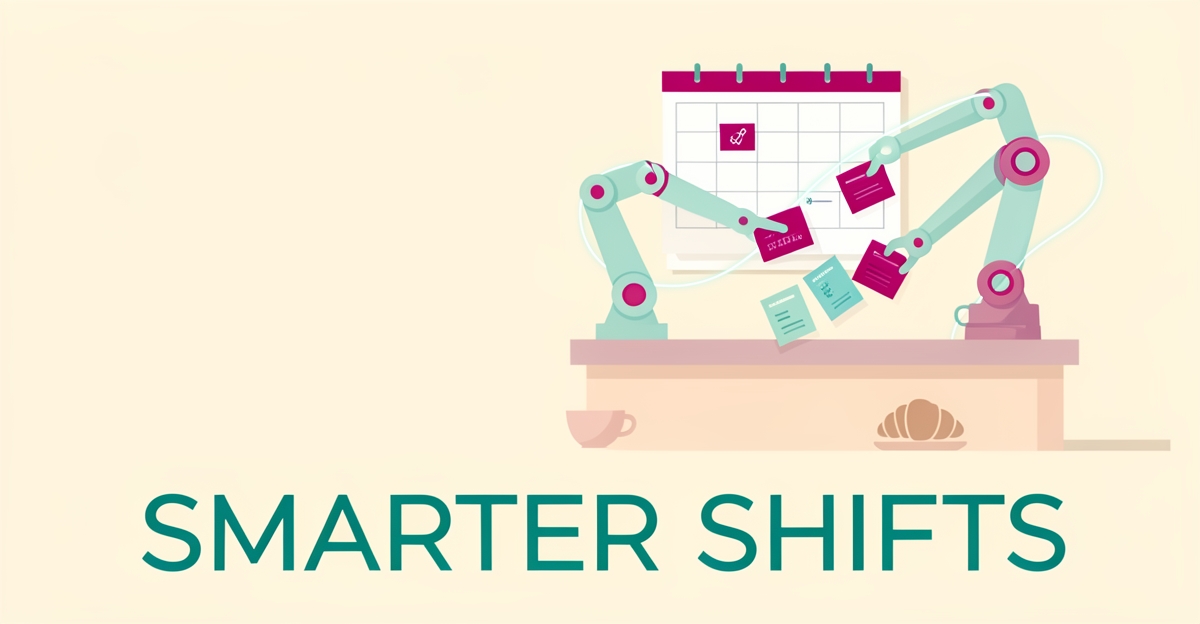
AI for Brunch Staffing: How to Automate Shift Scheduling Without Losing Staff Morale
Key Facts
- Optimized shift scheduling can meaningfully increase throughput without new hires or equipment, according to industry research on workforce optimization
- A meaningful share of staff are absent or delayed on any given day, causing lost productivity in brunch operations
- Staggered shifts can extend bottleneck coverage beyond what traditional fixed shifts deliver, per manufacturing analysis
- Attrition in hospitality roles is often driven by burnout and inflexible scheduling, per workforce studies
- AI enables skill-based staffing for roles like baristas and plating specialists during peak brunch hours
- Human-in-the-loop AI preserves manager oversight while automating scheduling complexity
Hire a team member that works 24/7 — for less than a part-time wage.
AI receptionists, SDRs, dispatchers and 99+ roles. Trained on your business, fully managed.
Not sure where to start? Ask our AI planner
The Hidden Cost of Manual Brunch Scheduling: Absenteeism, Burnout, and Lost Revenue
Manual brunch scheduling creates a hidden drain on operations that mirrors the challenges seen in manufacturing. When staff are absent or delayed, even at modest rates, the impact cascades through service speed, order accuracy, and customer satisfaction during peak rushes. This inconsistency doesn't just frustrate guests; it directly erodes revenue when tables sit idle or orders back up due to insufficient coverage. Like manufacturers losing productive hours to unplanned gaps, brunch spots face real financial consequences from preventable staffing volatility.
Beyond immediate service disruptions, rigid scheduling practices fuel deeper workforce issues. Attrition in demanding hospitality roles is consistently linked to burnout caused by inflexible shifts and poor work-life balance. Employees who repeatedly face last-minute changes or being called in to cover no-shows report higher stress and lower engagement, accelerating turnover. This cycle forces managers into constant recruitment mode, diverting energy from guest experience and team development. The cost isn't just in wages; it's in lost institutional knowledge and degraded morale.
AIQ Labs recognizes that solving this requires more than just filling slots, it demands systems that anticipate demand, respect availability, and reduce administrative burden. Through AI Workflow Builds, we rebuild the one workflow that costs you the most, often scheduling, on a fixed price, phased basis. By automating shift swaps, tracking real-time availability, and integrating with existing HR tools, AI-driven scheduling can stabilize coverage without adding complexity. The goal isn't to remove the human touch but to free managers from spreadsheet hell so they can focus on leading their teams through the brunch rush. When scheduling works for the business and the people, both show up stronger.
AI-Powered Scheduling: Beyond Just Filling Shifts to Strategic Workforce Optimization
Brunch rushes don't look like factory lines, but the staffing math is the same. When coverage gaps hit the bottleneck station, the expo, the well, the server floor, the whole service slows and morale drops with it.
AI moves scheduling from filling shifts to optimizing workforce flow. Instead of static rosters, AI-powered scheduling tools align staffing levels with real-time demand, predict peak brunch hours, and match the right skills to the right moments. Industry research on shift optimization consistently finds that a meaningful share of operators are absent or delayed on any given day, leading to lost productivity, a pattern that repeats in high-volume breakfast operations when call-outs collide with the 10 a.m. surge.
The strategic shift is from coverage to continuity. AI can identify the true bottleneck in service flow and concentrate labor where it creates throughput, not just presence. Studies of optimized shift scheduling have found double-digit throughput gains achievable without buying new machines or hiring new personnel, a principle that transfers directly to brunch kitchens and dining rooms, though your exact results will depend on your operation.
Flexible models make that optimization sustainable for staff. Staggered or compressed workweeks improve work-life balance and reduce burnout, which matters in high-attrition shift-based roles. Workforce analysis notes that staggered shifts can extend daily bottleneck coverage well beyond a traditional fixed shift, extending peak coverage without extending individual hours.
In practice, AI supports the human factors that keep teams engaged:
- Dynamic demand forecasting that maps reservations, ticket times, and historical brunch peaks to required headcount
- Skill-based scheduling that places certified baristas, plating specialists, or allergen-trained servers where they're needed
- Automated shift swaps and availability management that reduce manager back-and-forth and honor employee preferences
- Integrated training schedules that build coverage without pulling staff from the floor during rushes
This is where strategic workforce optimization differs from simple automation. AIQ Labs approaches shift management as part of broader operations, whether as managed AI Employees that handle scheduling coordination around the clock, or as part of a connected AI Operating System built in phases and owned outright. The result is flexible shift models that protect morale, improve retention, and keep the brunch service flowing without overburdening teams.
Implementing AI in Your Brunch Operation: Practical Steps for Seamless Integration and Employee Buy-in
Start by mapping your brunch operation's value stream to uncover peak demand periods and staffing bottlenecks, just as manufacturers identify production constraints to optimize output. Research on optimized scheduling suggests meaningful throughput gains are possible without adding resources, a principle directly applicable to managing brunch rushes where timing and skill alignment are critical. Industry analysis confirms that aligning staffing with real-time demand prevents both understaffing during peak hours and costly overstaffing during lulls.
Next, leverage AI for skill-based scheduling by matching employee competencies like espresso machine operation, plating, or patio service expertise, ensuring the right staff are deployed when and where they're needed most. This approach builds on findings that flexible shift models improve retention by accommodating employee preferences, a vital consideration given the attrition rates that plague similar high-volume roles. Workforce studies highlight that addressing underlying factors like fatigue and household responsibilities through adaptable scheduling significantly boosts reliability and morale.
Create a buffer staffing layer for unexpected surges, such as sudden tourist influxes or local events, by using AI to predict demand spikes and automatically suggest on-call staff availability. This mirrors the buffer operator strategy proven effective in manufacturing, where covering absences and demand fluctuations maintains consistent output. User-reported benefits of AI scheduling tools include improved focus and accountability, which translates to fewer no-shows and smoother shift transitions when employees trust the system's fairness.
Finally, manage shift swaps and availability through an AI-powered portal that allows staff to request changes while enforcing business rules, like minimum rest periods or skill coverage requirements, reducing managerial overhead. Pair this with clear communication and a phased rollout: pilot the AI scheduler with one shift team first, gather feedback, and adjust before full deployment. Involving employees early and explaining how AI reduces their administrative burden, not replaces their judgment, is key to overcoming resistance and fostering genuine buy-in. AIQ Labs supports this transition by integrating AI scheduling tools with existing HR systems to ensure human oversight remains central to the process.
Maintaining Morale and Oversight: The Human Element in AI-Driven Brunch Staffing
The fear that automation will strip away human control is valid, but well-designed AI scheduling actually amplifies human leadership rather than replacing it. When implemented correctly, these systems handle the computational heavy lifting while managers retain final authority over every shift assignment.
AIQ Labs builds this philosophy directly into its architecture through human-in-the-loop controls that function as guardrails rather than autopilot. Managers configure escalation triggers for edge cases, such as last-minute call-outs during a Sunday rush or conflicts between labor rules and availability preferences, ensuring the AI proposes solutions but humans make the final call. This approach mirrors findings from industry research showing that successful automation requires balancing algorithmic efficiency with human oversight.
The real transformation happens in how managers spend their reclaimed time. Instead of wrestling with spreadsheets for hours, they can focus on high-impact activities like mentoring new hires, refining training schedules, and building the team culture that reduces turnover. This shift proves critical in high-volume brunch operations where burnout runs high; workforce research consistently links attrition in shift-based industries to unpredictable scheduling and manager burnout.
Effective human-AI collaboration in brunch staffing typically includes these oversight mechanisms:
- Configurable approval thresholds that require manager sign-off for overtime assignments or skill-mismatched shifts
- Real-time override capabilities allowing instant human intervention during unexpected rushes or staff emergencies
- Audit trails that track every AI decision, enabling managers to review patterns and adjust algorithms based on team feedback
- Bias monitoring to ensure fair distribution of desirable shifts and prevent favoritism in automated assignments
Creating predictable, fair schedules directly combats the fatigue that drives talent away. Staff absences and delays remain a daily reality in shift-based operations, often driven by burnout from chaotic scheduling practices. By using AI to eliminate scheduling errors and favor consistency, managers foster the stability that keeps experienced brunch staff engaged.
Ultimately, AI serves as an exoskeleton for managers, not a replacement. It handles the mathematical complexity of balancing availability, labor budgets, and forecasted covers, while humans provide the empathy, context, and strategic judgment that turn a schedule into a cohesive team.
Still paying for 10+ subscriptions that don’t talk to each other?
We build custom AI systems you own outright. No vendor lock-in. Full control.
Not sure where to start? Ask our AI planner
Frequently Asked Questions
How does AI-powered scheduling actually reduce absenteeism and no-shows in brunch operations?
Will using AI for scheduling make my team feel like they're being replaced or monitored too closely?
Can AI scheduling really improve throughput or service speed without hiring more people?
How do I get my team to trust and adopt an AI scheduling system instead of resisting it?
What kind of data does AI use to predict brunch rush staffing needs?
Is AI scheduling only for big chains, or can small independent brunch spots benefit too?
Where AI Meets the Brunch Table: Smarter Scheduling for Real Results
AI-powered brunch staffing isn't about replacing your team with algorithms, it's about giving managers back their time and giving staff the predictability they need to thrive. By aligning shifts with real-time demand, honoring availability, and automating the administrative grind, AIQ Labs' approach turns scheduling from a pain point into a lever for smoother service, lower burnout, and stronger retention. The result? Fewer coverage gaps, happier teams, and more focus on what really matters: delivering great brunch experiences. Ready to see how this works in your operation? Start with a free Fit Check to uncover your biggest bottleneck, then book a free 30-minute strategy call, no obligation, just clarity. Questions first? Reach us at [email protected].
Make AI your competitive advantage — not just another tool.
Strategy, implementation and ongoing optimization. One partner, end to end.
Not sure where to start? Ask our AI planner