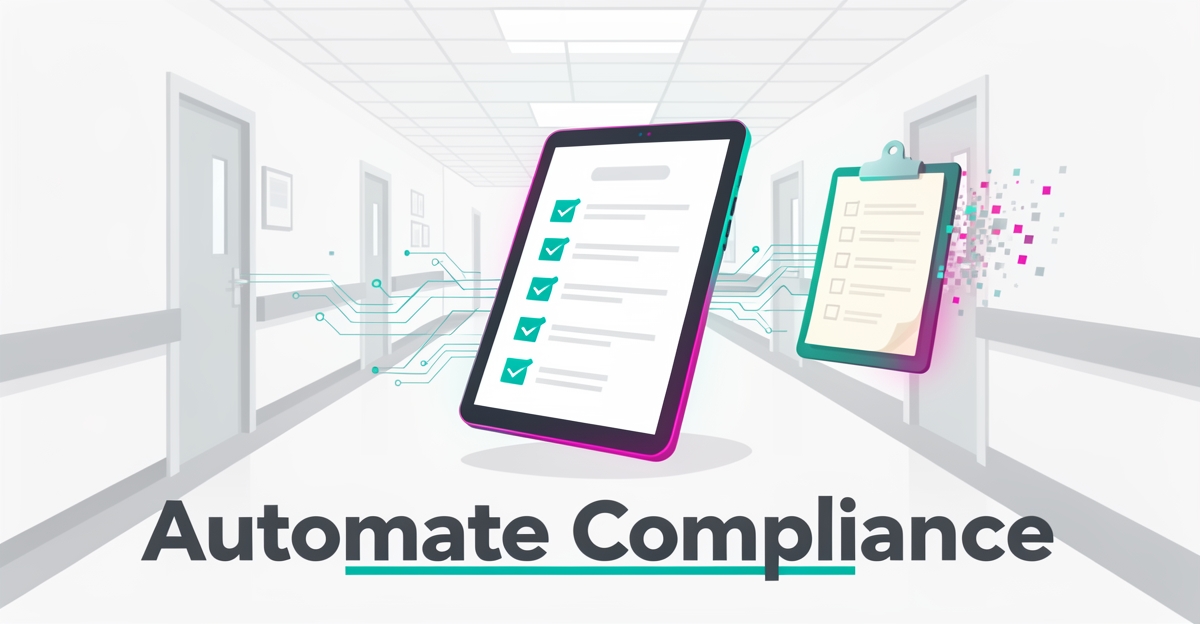
AI for Cleaning Task Logging: How Medical Facilities Can Automate Compliance & Reporting
Key Facts
- Most facilities still rely on paper checklists that offer no real-time visibility into whether critical cleaning tasks were completed
- Manual data entry is consistently less accurate than automated capture, and errors compound across shifts and locations
- Automated logging produces timestamped, location-specific records that hold up during audits and inspections
- AI-driven cleaning protocols support infection control by eliminating blind spots in task verification
- Facilities typically see payback within months as manual effort declines and audit readiness improves
Hire a team member that works 24/7 — for less than a part-time wage.
AI receptionists, SDRs, dispatchers and 99+ roles. Trained on your business, fully managed.
Not sure where to start? Ask our AI planner
The Compliance Visibility Gap in Medical Cleaning
Most facility managers still walk the halls with clipboards, trusting paper checklists that offer zero real-time visibility into whether critical cleaning tasks were actually completed. Industry surveys consistently show that a large majority of facilities still rely on these manual logs, creating a blind spot that wastes labor through rework and exposes facilities to compliance penalties. Meanwhile, most facility managers report an urgent need for better oversight technology to close this gap.
- Paper logs cannot verify when or by whom a high-touch surface was disinfected
- Missing signatures trigger audit failures and regulatory fines
- Administrative staff spend hours reconciling illegible or incomplete checklists
- Infection control teams lack data to correlate cleaning lapses with outbreak patterns
Manual data entry is consistently less accurate than automated capture, a discrepancy that directly impacts patient safety when terminal cleans are missed or documented incorrectly. AIQ Labs works with facilities to replace these fragile workflows with AI-powered data collection that integrates into existing operations, turning daily cleaning logs into audit-ready records without adding administrative burden. The compliance visibility gap isn't just a paperwork problem; it's a liability exposure that compounds with every unverified checklist.
How AI Automates Logging, Compliance and Reporting
AI-powered cleaning protocols transform how medical facilities handle compliance and reporting by replacing manual entry with automated capture that is consistently more accurate than human transcription. This leap in precision ensures that every cleaning task, from surface disinfection to equipment sanitation, is logged correctly and consistently across shifts and locations. With AI-driven workflows, facilities gain real-time visibility into service quality, enabling immediate adjustments when standards dip and strengthening infection control.
Administrative burdens drop significantly as AI automates data capture from sensors, IoT devices, and staff check-ins, eliminating hours spent on manual log consolidation. Sensor-driven scheduling triggers cleaning tasks based on actual usage and contamination levels rather than fixed timetables, optimizing resource use while maintaining rigorous hygiene standards. These intelligent systems generate audit-ready reports automatically, pulling timestamped, location-specific data into formats that satisfy regulators like OSHA and CDC without extra effort from facility teams.
- Real-time dashboards show cleaning completion rates by zone, shift, and staff member
- Automated alerts flag missed or incomplete tasks before they become compliance risks
- Historical data enables predictive cleaning to prevent pathogen buildup in high-traffic areas
- Reports export in standardized formats for Joint Commission and state health inspections
- Integration with existing facility management tools creates a single source of truth for hygiene operations
By embedding AI into daily cleaning operations, medical facilities shift from reactive compliance to proactive infection control. AIQ Labs supports this transformation through AI Workflow Builds that integrate intelligent data collection into current workflows, ensuring that every swipe of a mop or spray of disinfectant contributes to a verifiable, auditable record, reducing liability while protecting patient and staff health. The result is a cleaner, safer environment backed by data that holds up under scrutiny.
From Paper Logs to Production AI: Implementation Path
Many medical facilities still depend on paper logs for cleaning task tracking, creating blind spots in compliance reporting and consuming valuable staff time on manual data entry. Transitioning to AI-powered data collection doesn't require replacing existing systems, it can be layered into current workflows to deliver immediate visibility and audit readiness.
AIQ Labs begins with a discovery phase to map current cleaning protocols, identify integration points with tools like CMMS or scheduling software, and design a minimal-viable AI data capture layer that works alongside paper or digital logs. This approach avoids disruption while establishing a foundation for automation. Staff training focuses on simple interactions, such as voice commands or mobile check-ins, that feed structured data into the AI system without adding burden. Because so many facilities still use paper checklists with no operational visibility, this incremental shift is a critical first step toward real-time oversight.
The AI layer is built to extract and normalize data from multiple sources, including scanned paper forms, mobile entries, or sensor inputs, using high-accuracy models that consistently outperform manual transcription. This cleaned data flows into existing dashboards or reporting tools via API integrations, enabling automated compliance reports tied to health regulations like OSHA or CDC guidelines. Facilities using similar AI-driven workflows typically see meaningful administrative cost reductions, with payback often realized within months as manual effort declines and audit readiness improves.
Governance is embedded from the start: data privacy safeguards align with HIPAA requirements, bias monitoring ensures consistent task tracking across shifts and teams, and human-in-the-loop controls allow supervisors to validate AI-generated logs before finalization. These controls are essential given concerns about data security and algorithmic fairness in healthcare AI deployments. By owning the custom-built system, facilities retain full control over data, model behavior, and future enhancements, eliminating vendor lock-in while scaling AI use across additional workflows like inventory tracking or work order management. This production-first approach turns compliance logging from a reactive chore into a proactive operational advantage.
Why Built, Owned AI Beats Subscription Checklists
Traditional cleaning protocols often depend on paper checklists, with most facilities still using this method and experiencing zero visibility into service quality. This lack of real-time oversight means wasted labor and rework, as facility managers struggle to track compliance or identify gaps in service delivery. Without digital traceability, audits become time-consuming and error-prone, increasing the risk of non-compliance with health regulations.
In contrast, AI-powered cleaning protocols transform task logging into an automated, auditable process. By integrating sensor data, IoT devices, and computer vision, these systems capture cleaning activities in real time, ensuring every task is logged accurately and consistently. Automated capture consistently outperforms manual methods in accuracy, while significantly reducing administrative overhead. This level of precision supports regulatory adherence and enables immediate corrective actions when standards are not met.
AIQ Labs builds custom-owned AI systems, via AI Operating Systems built in phases and owned outright, that replace subscription-based checklists with sustainable, facility-specific solutions. Unlike recurring-cost tools that offer limited flexibility, owned AI platforms provide full control over data, workflows, and compliance reporting, with payment models that fit your stage: start monthly, build in milestones, or own it outright. Facilities gain real-time visibility into service quality, reduce manual logging efforts, and generate audit-ready reports on demand, turning cleaning operations into a transparent, efficient, and compliant function.
Still paying for 10+ subscriptions that don’t talk to each other?
We build custom AI systems you own outright. No vendor lock-in. Full control.
Not sure where to start? Ask our AI planner
Frequently Asked Questions
How much more accurate are AI-powered cleaning logs compared to manual paper checklists?
Can AI really reduce the risk of hospital-acquired infections in medical facilities?
Will switching to AI cleaning logs require us to replace our current systems or disrupt daily operations?
How much can we save on administrative costs by automating cleaning task logging with AI?
Is our data safe and compliant with healthcare regulations like HIPAA when using AI for cleaning logs?
How long does it typically take to see a return on investment after implementing AI-powered cleaning logs?
From Paper Trails to Proven Compliance: Your Next Step
Medical facilities no longer need to gamble with paper logs that leave compliance to chance. AI-powered cleaning task logging delivers verifiable, timestamped records that consistently outperform manual methods, while cutting administrative overhead and strengthening infection control. The shift from reactive checklist-chasing to proactive, auditable hygiene operations isn't just about avoiding fines; it's about building trust through verifiable safety. For facilities ready to replace guesswork with real-time visibility, the path forward starts with a 2-minute Fit Check followed by a free 30-minute strategy call to map your biggest bottleneck and see where AI delivers the fastest return, because compliant cleaning shouldn't require a clipboard and a hope.
Make AI your competitive advantage — not just another tool.
Strategy, implementation and ongoing optimization. One partner, end to end.
Not sure where to start? Ask our AI planner