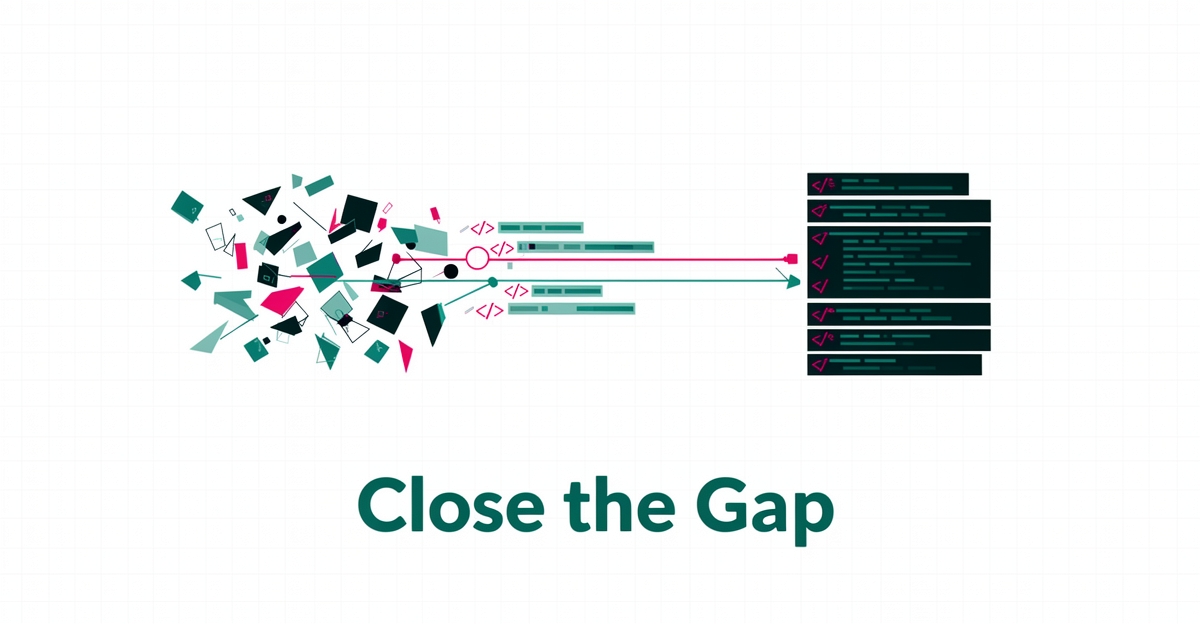
AI for Code Consultants: 5 Essential Features Every Automated System Should Have
Key Facts
- AI models that score high on isolated benchmarks often drop to a fraction of that performance on real-world coding tasks, according to independent testing.
- The performance gap between lab benchmarks and production code explains why teams lose trust in AI tools, benchmark analysis reveals.
- As of 2026, AI tools have become essential for modern development, making auditability non-negotiable for consultants.
- Production-ready AI requires full codebase context with PR history awareness, not just isolated snippet analysis.
- Codified standards enforcement with lifecycle tracking beats advisory suggestions that let coding standards drift.
- Multi-agent review architecture spanning IDE, Git, and CLI catches defects that single-pass tools miss.
- AIQ Labs builds regulatory rule mapping and audit trails directly into systems, so compliance is never an afterthought.
Hire a team member that works 24/7 — for less than a part-time wage.
AI receptionists, SDRs, dispatchers and 99+ roles. Trained on your business, fully managed.
Not sure where to start? Ask our AI planner
The Reality Gap: Why Most AI Code Tools Fail in Production
The benchmark numbers look impressive until they meet production code. Code consultants see this gap daily: models that shine in labs stumble when context, standards, and process matter.
Independent testing has repeatedly shown that models scoring in the high 80s on isolated benchmark tests can drop to roughly a third of that on real-world coding tasks. That kind of performance drop between lab and production explains why many teams lose trust after early wins.
The gap is not about raw intelligence. It is about context depth, enforcement, and lifecycle coverage. Isolated benchmarks test snippets with clean prompts. Production systems require understanding dependencies, PR history, architectural patterns, and cross-repo relationships. Without that, suggestions are generic and often unsafe.
Standards enforcement is another failure point. Advisory hints do not prevent drift. Consultants need codified rules that are discovered, enforced, and tracked across commits, not optional comments in a pull request. Review architecture matters too; single-pass tools miss inter-agent reasoning that catches subtle defects.
SDLC coverage determines adoption. Tools limited to PR-only review leave gaps in IDE feedback, Git workflows, and CLI automation. Market analysis notes the differences that matter show up in how much of your codebase a tool actually understands, whether it enforces standards or just suggests them, and how performance holds up on real production code.
As of 2026, community discussions frame AI tools as essential for modern development, which raises the bar for reliability and compliance. For code consultants working with regulated or customer-facing systems, that means auditability is non-negotiable.
Production-ready AI for code review should demonstrate:
- Full codebase and multi-repo context with PR history awareness
- Codified standards enforcement with lifecycle analytics, not advisory suggestions
- Multi-agent review architecture spanning IDE, Git, and CLI
- Version control integration, audit trails, and customizable alerts for compliance
In the AI Business Process Automation category, especially AI Document Processing & Management, these controls map directly to regulatory rule mapping and traceability. AIQ Labs builds systems with these features included from day one to ensure reliability and trust in compliance outcomes, because consultants cannot sell a tool that fails when context deepens.
The takeaway is simple: benchmark performance is a starting point, not a promise. Real-world coding tasks expose the reality gap, and only systems designed for depth, enforcement, and full SDLC coverage survive in production.
The 5 Non-Negotiable Features for Trustworthy AI Code Systems
The gap between benchmark performance and real-world effectiveness reveals a critical truth about AI code systems: isolated scores don't reflect production reliability. Models that excel on controlled tests often drop sharply when faced with actual coding tasks—a gap that undermines trust in automated reviews. This discrepancy highlights why superficial evaluations fail to predict how tools behave in complex, evolving codebases where context, standards, and collaboration matter most. For code consultants, this means prioritizing features that bridge the gap between theoretical capability and practical dependability.
Trustworthy AI systems must go beyond basic analysis to embed regulatory compliance directly into their reasoning. Regulatory rule mapping allows the AI to interpret and apply industry-specific requirements—such as data handling protocols or security mandates—within the context of each code change, reducing compliance risks before they reach production. When combined with version control integration, this ensures every suggestion aligns with both coding standards and legal obligations across branches, pull requests, and historical commits. AIQ Labs builds these capabilities into custom systems—whether a single AI Workflow Build or a full AI Operating System—so consultants can rely on AI not just to find issues, but to prevent them through proactive, standards-aware guidance.
Transparency and adaptability are equally essential for sustained trust. Audit trails provide a complete, immutable record of every AI decision—what was analyzed, why a flag was raised, and how recommendations evolved—supporting both internal reviews and external audits. Customizable alerts let consultants tailor notifications to project-specific risks, ensuring critical issues surface without noise fatigue. Finally, multi-agent reasoning enables deeper analysis by distributing tasks across specialized agents: one examines security implications, another checks architectural consistency, and a third validates regulatory alignment. This collaborative approach mirrors human expert review while scaling consistency, turning AI from a suggestive tool into a dependable partner in code integrity.
How AIQ Labs Builds These Features Into Every System
AIQ Labs embeds the five essential features for code consultants directly into our technical foundation rather than adding them as afterthoughts. Our multi-agent architecture ensures each feature operates as an integrated part of the system's core logic. For example, context depth—critical for understanding code dependencies and architectural patterns—is achieved through specialized research agents that analyze full codebases and PR history, addressing the well-documented gap between isolated benchmark scores and real-world coding performance. This approach moves beyond superficial diff-level reviews to deliver the deep contextual understanding required for reliable compliance outcomes.
Our systems connect in real time to development tools like GitHub, CI/CD pipelines, and issue trackers, ensuring comprehensive SDLC coverage across IDE, Git, and CLI environments. This integration allows our systems to enforce coding standards not as optional suggestions but as codified rules with lifecycle tracking and analytics—directly responding to industry critiques that many tools lack centralized standards enforcement. By connecting to external repositories and tracking rule violations across the development lifecycle, we provide the audit trails and version control necessary for regulated industries where security and compliance are non-negotiable.
Finally, our compliance-first design bakes regulatory rule mapping, customizable alerts, and human-in-the-loop controls into every agent workflow. Rather than bolting on compliance features post-development, we architect systems where validation layers and guardrails are intrinsic to the agent's decision-making process. This ensures that when AI amplifies developer skill, it does so within auditable boundaries that reduce bias and errors through continuous monitoring. The result is a system where features like rule mapping and alerting aren't add-ons but essential, built-in components of a trustworthy code consulting outcome. With 200+ multi-agent systems deployed and four live SaaS products we run daily, AIQ Labs delivers systems where reliability isn't promised—it's engineered in. Start the 2-minute Fit Check to explore how our architecture ensures these features work together from day one.
Still paying for 10+ subscriptions that don’t talk to each other?
We build custom AI systems you own outright. No vendor lock-in. Full control.
Not sure where to start? Ask our AI planner
Frequently Asked Questions
Why do AI code tools perform so much worse in production than in lab tests?
What features make an AI code system trustworthy for regulated industries?
How does multi-agent reasoning improve AI code review over single-pass tools?
Can AI code tools enforce coding standards or do they only give suggestions?
How does AIQ Labs ensure its AI systems are compliant and auditable?
What does 'full SDLC coverage' mean for an AI code review tool?
Why Real-World Performance Beats Benchmark Hype
The stark reality is that AI code tools scoring high in isolated tests often collapse when faced with actual production code—a gap that erodes trust fast. What separates reliable systems from flashy demos isn't raw intelligence, but depth: understanding full codebase context, enforcing standards as codified rules, spanning IDE to CLI with multi-agent reasoning, and baking in audit trails for compliance. For consultants working with regulated systems, these aren't nice-to-haves—they're the foundation of trustworthy AI that prevents drift and scales with your SDLC. If you're evaluating AI for code review, look beyond benchmark scores to how a tool handles real complexity. Start the 2-minute Fit Check to see how AIQ Labs engineers these essentials into systems built for production, not just proof-of-concepts.
Make AI your competitive advantage — not just another tool.
Strategy, implementation and ongoing optimization. One partner, end to end.
Not sure where to start? Ask our AI planner