AI for Coffee Roasters: What to Look for in a Robust, Scalable AI Solution
Key Facts
- Flavor prediction models can forecast sensory outcomes with high accuracy when trained on high-fidelity sensor data, though exact figures vary by roastery and dataset quality.
- Roasteries adopting integrated AI-assisted roasting software typically report meaningful gains in batch consistency within the first year.
- AI-driven roast monitoring can reduce wasted batches by catching deviations before beans are ruined, cutting operational costs over time.
- High-precision sensor setups for AI-enabled roasting can represent a significant upfront investment, budget for instrumentation as part of any AI roadmap.
- AI roasting models generally need a substantial base of historical roast profiles, often on the order of a hundred or more, before generating reliable predictions.
- Traditional PID-based systems miss the non-linear chemical reactions that AI models can capture during roasting.
- AI is only as good as the data behind it, as Margaret Atwood told The Verge, it's 'garbage in, garbage out'.
One AI employee doing one job, 24/7, for less than a part-time wage.
Receptionist, lead follow-up, intake or dispatch. Trained on your business and fully managed. From $700/mo.
Why Traditional Roasting Methods Fall Short in Consistency and Experimentation
Coffee roasting has long relied on intuition and experience, but even seasoned roasters face limits when trying to replicate perfection batch after batch. Traditional statistical process control and PID-based systems, while dependable for maintaining basic temperature curves, fail to capture the intricate, non-linear chemical reactions that develop flavor during roasting. These methods treat roasting as a linear progression of time and temperature, overlooking how subtle shifts in airflow, bean density, and moisture content interact in real time to create distinct sensory profiles. As a result, roasters often struggle with inconsistency, even when following the same profile, leading to wasted beans and missed opportunities for innovation.
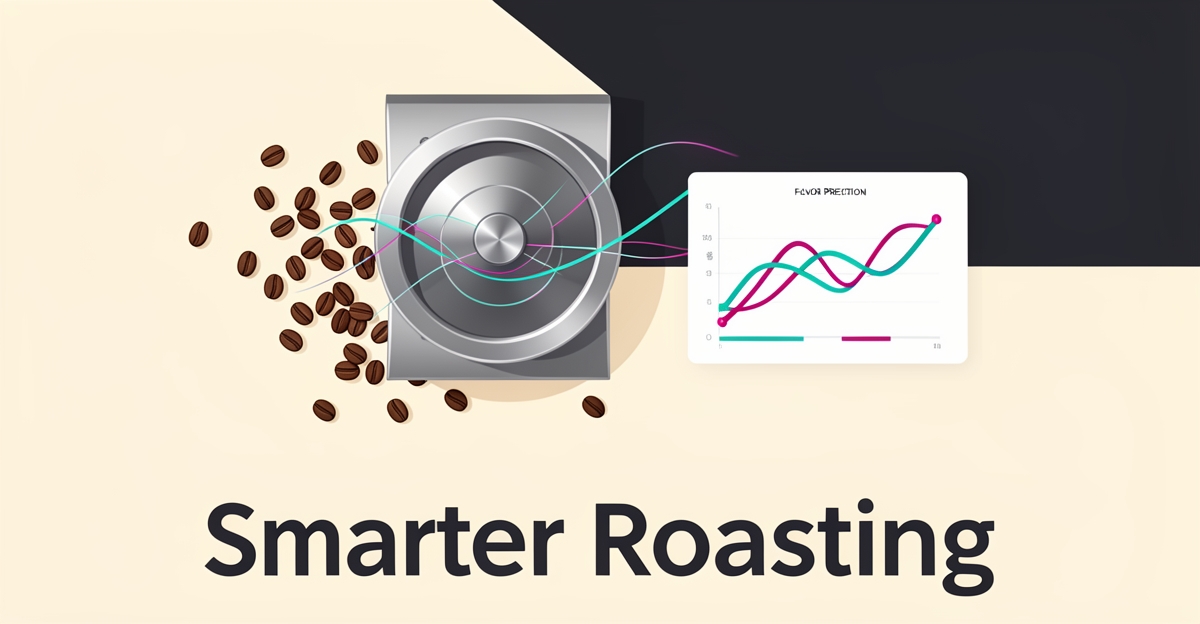
AI-powered models overcome these limitations by learning the complex, dynamic relationships within the roast chamber that traditional systems ignore. When trained on high-fidelity sensor data, flavor prediction models can forecast sensory outcomes with strong accuracy, enabling roasters to simulate and refine profiles before heating a single bean. This predictive power reduces trial-and-error waste and allows for rapid experimentation with roast variables that were previously too risky or costly to test at scale. Roasteries adopting integrated AI-assisted software typically report gains in batch consistency and reductions in operational costs within the first year, though exact results depend on data quality and how deeply the system is embedded in daily operations.
For roasters evaluating AI solutions, the focus should extend beyond prediction accuracy to include seamless integration with existing roasting hardware, compliance with food safety standards, and full ownership of both the model and the data it learns from. A robust system must handle high-resolution sensor inputs, such as bean temperature, color, and gas analysis, in real time while adapting to variations in green bean characteristics. Crucially, the solution should avoid vendor lock-in, ensuring that roasters retain control over their intellectual property and can evolve the system as their craft and business grow.
AIQ Labs supports coffee roasters in building owned, production-ready AI systems that align with these priorities, combining proven AI techniques with secure, scalable infrastructure designed for long-term independence and continuous improvement. Rather than relying on opaque third-party platforms, roasters can partner with a team that builds transparent, auditable AI tools tailored to their specific roasting philosophy and operational needs. This approach ensures that the technology serves the craft, not the other way around, while delivering the consistency and experimental freedom modern specialty coffee demands.
Industry research on AI-assisted roasting suggests that flavor prediction models perform best when fed high-fidelity sensor data, and that roasteries using integrated software generally see consistency and cost improvements in the first year. Sensor and instrumentation costs vary widely by setup, so treat hardware as a line item in any AI roadmap rather than an afterthought.
- Real-time adaptation to bean variability and environmental factors
- Full ownership of AI models, data, and source code
- Compliance with food safety and traceability standards
- Seamless integration with existing roasting hardware and software
- Transparent, auditable decision-making for quality control
What to Look for in a Robust, Scalable AI Solution for Coffee Roasting
For coffee roasters, selecting an AI solution isn't just about adopting new technology, it's about ensuring that the system integrates seamlessly with existing workflows while delivering measurable improvements in quality and efficiency. A robust AI platform must work with IoT-enabled roasters to collect real-time data on temperature, airflow, and bean development, enabling precise control over the roast curve. When fed high-fidelity sensor data, flavor prediction models can forecast sensory outcomes with strong accuracy, allowing roasters to simulate profiles before heating a single bean. This predictive capability reduces waste and supports rapid experimentation, unlocking flavor complexity previously difficult to achieve consistently.
Data quality is foundational to model performance. AI systems generally require a substantial base of historical roast data, often on the order of a hundred profiles or more, to train effectively and generate meaningful predictions. Without sufficient, clean data capturing variables like moisture content, ambient conditions, and equipment behavior, even advanced models will underperform. Roasters should evaluate whether a solution includes tools for data logging, cleaning, and version control to maintain model accuracy over time. Integration with existing software such as Artisan Roasting Software or Cropster is also critical, ensuring that AI enhancements complement rather than disrupt current operations.
Compliance with food safety standards is non-negotiable. Any AI system touching the roasting process must align with regulations governing food production, including traceability, hazard analysis, and record-keeping requirements. Look for platforms that provide audit trails, secure data handling, and validation layers to ensure AI-driven decisions don't compromise safety or quality. Ownership of data and models is another key consideration, roasters should retain full control over their roast profiles, sensor data, and any custom models developed, avoiding vendor lock-in that limits future flexibility or scalability.
- Seamless integration with IoT-enabled roasters for real-time sensor data collection
- A substantial base of historical roast profiles, often 100 or more, for effective model training
- Prediction accuracy that scales with the quality of your input data
- Built-in compliance features for food safety traceability and audit readiness
- Full ownership of data, models, and system customization rights
AIQ Labs supports roasters in building owned, production-ready AI systems that meet these criteria, drawing on experience across 200+ deployed multi-agent systems to deliver solutions that are not only accurate and scalable but truly yours to evolve. Rather than relying on opaque SaaS tools, roasters gain a transparent, adaptable platform rooted in their unique roasting identity and operational goals. This approach ensures long-term value, continuous improvement, and alignment with both craft principles and business growth objectives.
How AIQ Labs Delivers Owned, Production-Ready AI Systems for Roasters
For coffee roasters seeking precision and consistency, AI solutions must deliver more than just predictive insights, they need to integrate seamlessly with existing roasting workflows while ensuring full control over data and systems. AIQ Labs builds custom AI systems that roasters own outright, eliminating vendor lock-in and enabling long-term scalability. Unlike off-the-shelf tools, our approach starts with your specific roast profile goals, sensor inputs, and quality benchmarks, then architects a production-ready solution around the workflow that costs you the most, whether that's roast monitoring, quality logging, or production planning.
AIQ Labs offers three entry points depending on where you are today. AI Employees are managed AI staff, receptionists, SDRs, dispatchers, and 99+ other roles, that handle auxiliary tasks like order intake, customer follow-up, and inventory forecasting at roughly 80% less cost than a human hire. AI Workflow Builds rebuild the one workflow that costs your roastery the most, at a fixed price and in phases, so you see results before committing further. And AI Operating Systems connect your entire operation into one owned operating layer, built in phases and owned outright. Payment models are straightforward: start monthly, build in milestones, or own it outright, no fake prices, no invented case-study numbers.
We implement these capabilities through deep integration with your existing tools, whether that's Artisan Roasting Software, Cropster, IoT-enabled roasters, or your ERP, enabling real-time data exchange and automated workflow triggers. Our systems are built for production from day one, with validation layers, guardrails, and human-in-the-loop controls to ensure safety and reliability. Roasters gain full ownership of the code, models, and data, allowing them to evolve the system as their roasting techniques advance. For those evaluating AI tools, this means avoiding recurring subscription costs and platform dependencies while building a sustainable competitive advantage rooted in owned technology. To explore how a custom AI system could transform your roasting operations, start with the two-minute Fit Check, then book a free 30-minute strategy call to map your highest-impact opportunities for consistency, efficiency, and quality control.
Still paying for 10+ subscriptions that don’t talk to each other?
We build connected AI systems you own. Pay upfront or on a payment plan; the code is yours once it’s paid off.
Frequently Asked Questions
How accurate are AI flavor predictions for coffee roasting really?
Will switching to AI-assisted roasting actually improve consistency and cut costs?
How much does the hardware cost to enable AI roasting?
Do I need a lot of historical data before AI will work for my roastery?
Can an AI roasting solution integrate with the software I already use?
Will I own my roast data and models, or am I locked into a vendor?
Roast Smarter, Not Harder: Own Your AI Advantage
Choosing an AI solution for roasting is ultimately about protecting craft while gaining consistency and freedom to experiment. Traditional PID and statistical controls fall short on non-linear flavor development, while AI models trained on high-fidelity sensor data can forecast sensory outcomes, reduce waste, and drive real gains in batch consistency. A robust, scalable system must integrate with IoT-enabled roasters and existing software like Artisan or Cropster, meet food safety traceability requirements, and give you full ownership of data, models, and code to avoid vendor lock-in. With a solid base of historical profiles as a foundation, roasters can move from trial-and-error to predictive refinement. AIQ Labs helps roasters build owned, production-ready AI systems tailored to their specific workflows and quality benchmarks. Start with a two-minute Fit Check at https://aiqlabs.ai/apply to book a free 30-minute strategy call and map your highest-impact opportunities for consistency, efficiency, and quality control.
See what AI would actually do in your business, in 60 seconds.
The planner shows which step fits, the agents we’d build and the published price. No email needed.