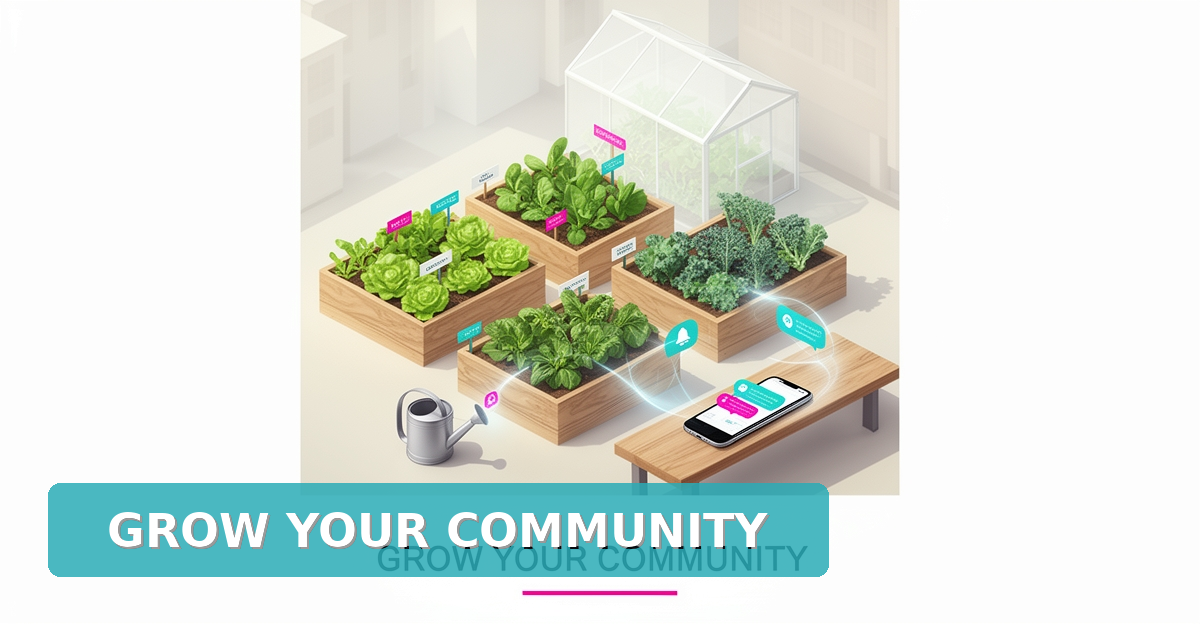
AI for Community Garden Communication: How to Automate Member Notifications and Updates
Key Facts
- Gardens that adopt digital management platforms typically report stronger member retention, largely because consistent communication keeps participants invested
- Community gardens are frequently cited as returning several dollars in produce value for every dollar invested
- Studies of urban greening suggest community gardens can lift surrounding property values by roughly 9%
- Even a small garden plot can yield a meaningful share of a household's fresh produce over a season
- Community gardening is widely associated with improved household food security and access to fresh produce
- AIQ Labs has deployed 200+ multi-agent systems and runs 4 live SaaS products daily
Hire a team member that works 24/7 — for less than a part-time wage.
AI receptionists, SDRs, dispatchers and 99+ roles. Trained on your business, fully managed.
Not sure where to start? Ask our AI planner
The Communication Bottleneck in Community Gardens
Community gardens thrive on connection, but keeping every member informed about events, planting schedules, and maintenance tasks often becomes a full-time job for organizers. Manual communication methods like phone trees, email chains, and bulletin boards create repetitive workloads that drain volunteer energy and slow response times. This constant demand for updates leads to burnout, with coordinators spending hours answering the same questions about workshop dates or watering rotations instead of focusing on garden growth and community building.
The strain of manual communication directly impacts member engagement and retention. Gardens relying solely on paper sign-up sheets and scattered email threads tend to see higher turnover, as members feel disconnected or miss important announcements due to delayed or inconsistent messaging. In contrast, gardens that adopt digital management platforms typically report stronger retention, showing how reliable communication strengthens community ties. When members receive timely updates about harvest days or composting workshops, they participate more consistently and feel valued as part of the garden's ecosystem.
Repetitive inquiries about routine tasks, such as when to plant tomatoes or who's responsible for weekend weeding, create avoidable friction that undermines the garden's collaborative spirit. Staff and volunteers end up acting as information hubs rather than facilitators of shared learning and stewardship. This bottleneck not only wastes human potential but also discourages new members who perceive the garden as disorganized or unwelcoming. Addressing this challenge requires shifting from reactive messaging to proactive, automated systems that deliver the right information at the right time without constant manual intervention.
By automating routine notifications, community gardens reclaim valuable time for strategic activities like expanding plots, hosting educational events, or partnering with local schools. AI-powered tools can handle recurring messages about weather-related delays, tool-sharing schedules, or seasonal planting guides, ensuring accuracy and consistency across all member touchpoints. This shift allows human coordinators to focus on relationship-building and problem-solving, tasks that truly nurture a thriving garden culture. For gardens seeking to scale their impact without scaling their workload, intelligent communication automation offers a sustainable path forward.
How AI Automates Garden Communication Without Increasing Staff Load
Community gardens thrive on connection, but keeping every member informed about watering schedules, plot assignments, and last-minute event changes can quickly overwhelm volunteer coordinators. When communication relies on manual phone trees or sporadic email blasts, critical updates fall through the cracks and member engagement suffers.
AI-powered communication systems change this dynamic entirely. By deploying automated messaging workflows, gardens can maintain consistent, personalized contact with members without adding administrative burden. Gardens using digital management platforms commonly report stronger member retention, largely because consistent communication keeps participants invested in their plots and the broader community.
AI Employees, such as dedicated community manager agents, handle the heavy lifting of member relations. These systems work around the clock to manage routine inquiries, send planting reminders, and coordinate work parties without requiring staff overtime. Unlike basic auto-responders, modern AI solutions understand context and can escalate complex issues to human coordinators when necessary.
The operational benefits extend beyond simple notifications:
- Automated event reminders for workdays, workshops, and harvest celebrations
- Real-time maintenance alerts about water shutoffs, tool availability, or weather-related closures
- Instant responses to frequently asked questions about plot assignments and garden rules
- Personalized task reminders based on individual member schedules and plot locations
This automation proves particularly valuable for resource-constrained organizations. Community gardens are frequently cited as returning several dollars in produce value for every dollar invested, yet many operate with minimal staff. By automating member communications, coordinators reclaim hours previously spent answering repetitive questions about meeting times or watering rotations.
AIQ Labs builds these capabilities into managed AI Employees that integrate with your existing communication channels. Drawing from experience deploying 200+ multi-agent systems, these agents handle multi-step workflows, like scheduling volunteer shifts or coordinating tool lending, while maintaining the personal touch that defines community gardening culture.
The technology also addresses the accessibility challenges that plague manual systems. AI-powered platforms can deliver messages via SMS, email, or voice calls based on member preferences, ensuring that everyone receives critical updates regardless of their technical proficiency. AI tools excel at streamlining repetitive tasks, allowing garden leaders to focus on programming and community building rather than administrative upkeep.
When communication runs on autopilot, gardens cultivate stronger communities. Members stay informed, coordinators avoid burnout, and the garden itself becomes more resilient, proving that smart automation supports, rather than replaces, the human connections at the heart of community agriculture.
Implementing AI Communication Tools in Your Community Garden
Getting communication right in a community garden means reaching volunteers where they are, without burying coordinators in repetitive messages. A structured rollout turns that goal into a repeatable system instead of another experiment.
Start by mapping every touchpoint: plot assignments, workday reminders, harvest alerts, weather advisories, and the inevitable "when is the compost turned?" questions. Gardens using digital management platforms typically see stronger member retention, so the audit pays off quickly. Next, match each workflow to an AI Employee role. An AI Receptionist handles inbound calls and texts 24/7, while an AI Coordinator can push scheduled notifications through SMS, email, or WhatsApp and log responses in your existing calendar or spreadsheet.
- Document current communication channels and frequency
- Identify the top five repetitive queries members ask
- Choose one AI Employee role that covers the highest-volume workflow
- Connect the agent to your calendar, messaging platform, and member list
- Run a two-week pilot with a single volunteer crew
Integration is where most pilots stall. AIQ Labs builds the connection layer, whether that's Google Calendar, a shared Airtable base, or a Twilio phone number, so the AI Employee reads and writes data in real time. Training members takes minutes: share a one-page cheat sheet with example commands like "Text PLOT to 555-0199 for your assignment" or "Reply STOP to pause alerts." Ongoing optimization is included in the Start Monthly plan, so the system sharpens itself as seasonal rhythms change.
Still paying for 10+ subscriptions that don’t talk to each other?
We build custom AI systems you own outright. No vendor lock-in. Full control.
Not sure where to start? Ask our AI planner
Frequently Asked Questions
How can AI help my community garden keep members informed without adding to my workload?
Will automated messaging feel impersonal to our garden members?
What kinds of tasks can an AI community manager actually handle?
Is AI communication automation affordable for a small, volunteer-run garden?
How do we get started with automating our garden's communications?
Will older or less tech-savvy members be left out?
Stop Managing Messages, Start Growing Community
Community gardens are frequently cited as returning several dollars in produce for every dollar invested, but that return depends on coordinators focusing on cultivation rather than repetitive phone calls. By automating member notifications, event reminders, and routine inquiries, gardens can reclaim hours once lost to administrative tasks while keeping every member informed and engaged. AIQ Labs builds managed AI Employees, such as dedicated community manager agents, that handle these workflows 24/7 through SMS, email, or voice, integrating directly with your existing calendar and member lists. Start by auditing your top five repetitive queries, then pilot one automated role with a single crew before scaling. To map your garden's specific bottlenecks without obligation, start the two-minute Fit Check at https://aiqlabs.ai/apply or book a free strategy call at https://aiqlabs.ai/book. If there isn't a clear win, we'll tell you.
Make AI your competitive advantage — not just another tool.
Strategy, implementation and ongoing optimization. One partner, end to end.
Not sure where to start? Ask our AI planner