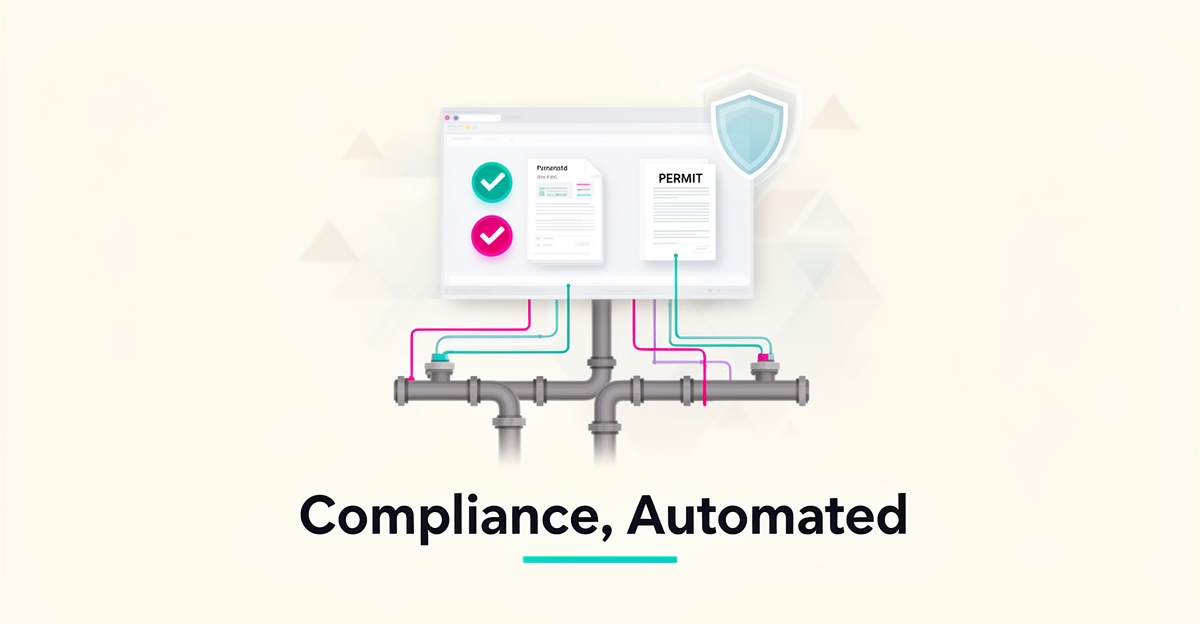
AI for Compliance: How Plumbing Businesses Can Automate Safety & Permit Tracking
Key Facts
- Plumbing businesses using AI-integrated software have reported meaningful revenue growth, with industry data from ServiceTitan citing gains around 17% on average
- Manual compliance tracking gaps can trigger fines ranging from $10,000 to $1 million depending on the regulatory body, per compliance automation research
- Employees typically waste several hours weekly, often cited as 4 hours 38 minutes, on duplicate repetitive tasks that AI automation can eliminate according to Clockify research
- Automated compliance systems are widely reported to achieve accuracy above 99.9%, compared to roughly 96–99.45% for manual data entry per Quality Magazine and Conexiom data
- AI automation can shrink audit preparation from 2-4 weeks to under 30 minutes through automated evidence assembly according to compliance automation guidance
- 93% of businesses surveyed agreed AI and cloud compliance programs remove human error and prove more effective than manual approaches per Accenture's Compliance Risk Study
- Automated compliance processing has been reported to deliver cost reductions of up to 80% compared to manual workflows according to Ardent Partners research
Hire a team member that works 24/7 — for less than a part-time wage.
AI receptionists, SDRs, dispatchers and 99+ roles. Trained on your business, fully managed.
Not sure where to start? Ask our AI planner
The Compliance Burden Crippling Plumbing Growth
Every plumbing business owner knows the feeling: a permits deadline slips through the cracks, a safety inspection gets rescheduled last-minute, or an audit request arrives while paperwork sits scattered across multiple systems. These aren't minor inconveniences, they're growth killers that cost time, money, and competitive advantage.
The compliance burden facing plumbing businesses today is heavy. According to FlowBots.ai, manual compliance tracking creates gaps that lead to violations, with fines ranging from $10,000 to $1 million depending on the regulatory body. For a growing plumbing operation managing multiple job sites, subcontractor certifications, and shifting local building codes, these risks multiply fast.
The time drain alone is costly. Research from Clockify shows that employees spend an average of 4 hours 38 minutes per week on duplicate, repetitive tasks, time that could be spent on revenue-generating work. For plumbing businesses juggling permits, safety inspections, and regulatory updates across multiple jurisdictions, this translates to thousands of dollars in lost productivity annually.
Manual compliance management creates four critical vulnerabilities:
- Missed deadlines that trigger penalties and project delays
- Incomplete documentation that fails audit scrutiny
- Inconsistent processes that vary by employee or location
- Reactive scrambling instead of proactive risk management
The accuracy gap between manual and automated systems is stark. While manual data entry typically achieves 96–99.45% accuracy, automated systems are reported to reach above 99.9% accuracy according to Quality Magazine and Conexiom research. In compliance contexts, that difference can mean the distinction between passing an audit and facing significant penalties.
The impact extends beyond avoiding fines. Plumbing businesses using AI-integrated software have reported an average revenue growth of 17% and a 6% increase in close rates, according to ServiceTitan's industry data. This growth stems partly from freeing teams to focus on service delivery rather than administrative firefighting.
AIQ Labs works with plumbing businesses to transform compliance from a reactive burden into a proactive advantage, typically starting with an AI Workflow Build that rebuilds the one compliance workflow costing you the most. By implementing systems that continuously monitor regulatory changes, track permit statuses, and maintain audit-ready documentation, plumbing companies can redirect their energy toward growth rather than paperwork. The question isn't whether compliance matters, it's whether your current approach is protecting your business or putting it at risk.
How AI Shifts Compliance From Reactive to Proactive
Plumbing compliance used to mean chasing permits after the fact and scrambling for documents when an inspector arrives. AI flips that model by making oversight continuous, automated, and evidence-ready before a risk becomes a penalty.
Continuous regulatory monitoring replaces manual checks with real-time scanning. AI systems monitor Federal Register updates, state sites, and local building codes and push instant alerts when a rule affecting commercial plumbing changes. This proactive stance removes the weekly manual review cycle and prevents missed filings that can trigger fines ranging from $10,000 to $1 million.
Intelligent document extraction turns paper-heavy permit and inspection records into structured data. AI reads, interprets, and processes applications, safety logs, and certificates automatically, then validates fields against business rules. According to compliance automation research, automated systems are reported to achieve above 99.9% accuracy compared to roughly 96–99.45% for manual data entry, closing the gap where human error creates violations.
Automated deadline escalation ensures nothing slips through. Instead of calendar reminders and spreadsheets, AI triggers multi-level alerts for permit renewals, inspection windows, and license expirations and routes approvals through defined chains. Compliance automation guidance shows audit preparation can shrink from 2-4 weeks to under 30 minutes when evidence is auto-assembled from connected systems.
Audit-ready evidence collection is built in by design. Every action is logged with timestamps, source system references, and user context, creating a defensible trail for inspectors. Real-time dashboards provide daily compliance scoring and gap analysis so managers see risk before it materializes.
The business impact is measurable. Accenture's Compliance Risk Study found 93% of respondents agreed AI and cloud compliance programs remove human error, automate manual tasks, and prove more effective and efficient. Automated processing has also been reported to deliver an 80% cost reduction versus manual workflows, freeing crews to focus on service instead of paperwork.
For plumbing businesses, this shift means permit tracking, safety inspections, and regulatory updates are managed as a living system rather than a quarterly scramble. AIQ Labs builds audit-ready systems that automatically flag risks and maintain documentation, either as a fixed-price AI Workflow Build or as part of a fuller AI Operating System your business owns outright.
Core capabilities that enable the reactive-to-proactive shift include:
- Real-time regulatory monitoring with instant alerts for code and permit changes
- Intelligent data extraction and validation from permits, inspections, and safety logs
- Automated deadline escalation with multi-level workflows and approvals
- Continuous gap analysis and audit-ready evidence collection with full trails
The result is continuous oversight instead of periodic checks, and proactive risk prevention instead of reactive remediation.
Permit and Safety Workflows AI Can Automate Today
Plumbing compliance lives in spreadsheets, email threads and manual checklists until an inspection or audit arrives. AI shifts permit and safety tracking from reactive scramble to continuous oversight, flagging risks before they become fines and keeping documentation audit-ready.
Permit application tracking becomes proactive instead of calendar-dependent. AI monitors submission status across municipalities, auto-escalates missing documents, and logs approvals with timestamps for evidence. Manual tracking relies on staff memory and spreadsheets; automated workflows replace that with rule-based triggers and multi-level alerts.
Inspection scheduling is coordinated across crews, jurisdictions and equipment. Systems pull from work orders, license expirations and code requirements to propose windows, confirm attendance and store results. Compliance automation guidance shows audit preparation can shrink from 2-4 weeks to under 30 minutes when evidence is auto-assembled.
Code update alerts remove the weekly manual review of Federal Register and state sites. AI continuously scans regulatory feeds for plumbing, environmental and safety changes relevant to a business's service area, then maps impacts to active permits and SOPs. The shift eliminates gaps that lead to outdated policies and violations.
Safety documentation is captured at the point of work and linked to the job record. AI extracts data from field notes, photos and inspection forms, validates completeness, and maintains immutable audit trails. Industry research notes employees spend 4 hours 38 minutes per week on duplicate, repetitive tasks, time that automation returns to billable work.
Licensing renewals are managed as a workflow, not a reminder. AI tracks individual technician licenses, contractor registrations and insurance certificates, triggers renewal tasks with required documents, and confirms filing. Missed renewals risk operational shutdowns; automated oversight keeps teams eligible to work.
Manual vs automated impact is stark:
- Regulatory change monitoring: weekly manual review vs real-time AI monitoring with instant alerts
- Audit preparation: 2-4 weeks of document gathering vs automated assembly in under 30 minutes
- Deadline tracking: calendar reminders and spreadsheets vs automated escalation workflows with multi-level alerts
- Evidence collection: manual requests to each department vs auto-pulled from connected systems with timestamps
The result is continuous gap analysis with daily compliance scoring instead of quarterly reviews. Accenture's Compliance Risk Study found 93% of respondents agreed AI and cloud compliance programs remove human error, automate manual tasks, and prove more effective and efficient.
For commercial plumbing, where local building codes intersect with environmental and safety standards, this matters. AIQ Labs builds audit-ready systems that automatically flag risks and maintain documentation, delivered in milestones so you see working software before committing further, and owned outright when the build is complete.
Implementing an Audit-Ready AI Compliance System
Most plumbing businesses don't realize they're one audit away from serious trouble until the inspector shows up unannounced. The gap between knowing compliance matters and actually maintaining audit-ready documentation can mean the difference between smooth operations and penalties ranging from $10,000 to $1 million depending on the regulatory body, according to compliance automation research.
The path to automated compliance starts with requirements gathering. Map every regulation touching your plumbing operation, local building codes, state licensing requirements, environmental standards, safety protocols. Document current tracking methods and identify where manual processes create gaps. This discovery phase typically reveals that teams spend 4 hours 38 minutes weekly on duplicate, repetitive tasks that AI can eliminate.
Next comes system integration. Connect your compliance platform to existing tools, CRM, scheduling software, accounting systems, document repositories. Modern AI systems use APIs to pull data automatically, eliminating manual entry errors. Automated platforms are reported to achieve above 99.9% accuracy compared to 96-99.45% for manual data entry, transforming reliability overnight.
Build your tactical implementation roadmap with these priorities:
- Automated permit application tracking with deadline alerts and escalation workflows
- Real-time regulatory change monitoring across jurisdictions you operate in
- Safety inspection scheduling with automatic documentation capture
- Audit trail generation that assembles evidence in minutes, not weeks
- Human-in-the-loop controls for critical compliance decisions
Training transforms technology into results. Your team needs to understand not just how the system works, but when to override it. Compliance automation cannot replace human judgment for critical decisions like risk acceptance or exception handling, as compliance experts emphasize. Staff must know when to escalate issues beyond the AI's authority.
AIQ Labs builds these systems with ownership and oversight baked in from day one. Unlike subscription platforms that lock you into their ecosystem, custom-built compliance systems transfer full code and data ownership to your business, built in milestones, paid as you go, and owned outright at the end. Every automated workflow includes configurable human-in-the-loop checkpoints, complete audit trails, and validation layers that catch errors before they become violations. With 200+ multi-agent systems deployed, AIQ Labs has seen exactly where compliance workflows break, and how to fix them.
Ongoing surveillance separates audit-ready businesses from those scrambling when inspectors arrive. Continuous monitoring flags potential violations in real-time, tracks regulatory changes automatically, and maintains documentation without manual intervention. What once required 2-4 weeks of audit preparation can now happen in under 30 minutes with automated evidence assembly. The system works while you sleep, ensuring nothing slips through cracks that manual processes inevitably create.
Still paying for 10+ subscriptions that don’t talk to each other?
We build custom AI systems you own outright. No vendor lock-in. Full control.
Not sure where to start? Ask our AI planner
Frequently Asked Questions
How much time is my plumbing team wasting on manual compliance tasks?
Can AI actually make audits faster instead of just adding more tech?
What kind of financial risk are we facing if we miss a permit or safety deadline?
Will automating compliance mean laying off my compliance staff?
Does AI for compliance actually grow revenue or just cut costs?
How do I know AI compliance systems are more effective than spreadsheets?
Turn Compliance from a Cost Center into Your Competitive Edge
As we've seen, manual compliance tracking isn't just tedious, it's a silent drain on productivity, accuracy, and growth for plumbing businesses juggling permits, inspections, and evolving regulations across jurisdictions. AI shifts this burden from reactive scrambling to proactive oversight, automating deadline alerts, document extraction, regulatory monitoring, and audit-ready evidence collection, cutting preparation time from weeks to minutes and reducing errors with near-perfect accuracy. The result? Teams reclaim hundreds of hours annually, avoid costly violations, and redirect focus to service delivery and revenue-generating work. For plumbing companies ready to stop fighting fires and start building resilience, the path forward begins with clarity. Start with the 2-minute Fit Check to see whether your compliance workflow is a fit, then book a free 30-minute strategy call with AIQ Labs to map your biggest compliance bottlenecks and discover where AI can deliver real, owned solutions, no obligation, just insight.
Make AI your competitive advantage — not just another tool.
Strategy, implementation and ongoing optimization. One partner, end to end.
Not sure where to start? Ask our AI planner