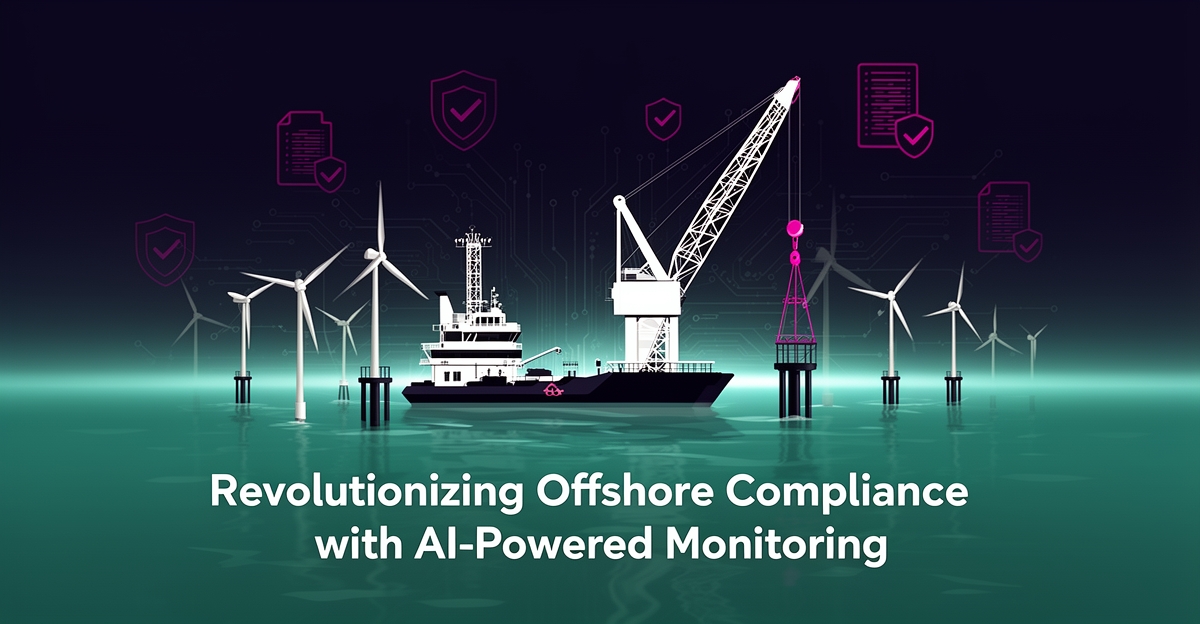
AI for Compliance in Marine Construction: Automating Environmental and Safety Audits
Key Facts
- EU Regulation 2024/1252 requires periodic assessment of raw materials based on production, trade, applications, recycling, and substitution data according to EU regulatory framework
- Australia's maritime recycling trial involved 6 port locations including Sydney, Fremantle, and Gladstone ports based on Australian maritime trial data
- The ARIA framework evaluates AI systems across three testing levels: model tests, adversarial red teaming, and real-world field testing per AI safety evaluation guidance
- EU Regulation 2024/1781 aims to improve product durability, reliability, repairability, upgradability, reusability, and recyclability per EU ecodesign requirements
- AI safety is fundamentally an operational discipline requiring clear rules, permissioning, human review checkpoints, and comprehensive logging based on industry AI safety guidance
- Marine construction projects face compliance burdens from material lists that change through periodic regulatory assessments per EU critical raw materials regulation
- AI-powered audit systems generate real-time alerts and audit-ready documentation by tracking regulatory updates against active project materials based on AI compliance system capabilities
Hire a team member that works 24/7 — for less than a part-time wage.
AI receptionists, SDRs, dispatchers and 99+ roles. Trained on your business, fully managed.
Not sure where to start? Ask our AI planner
Navigating the Complex Web of Marine Construction Regulations
Marine construction firms today face a regulatory landscape that stretches across continents, material categories, and waste streams, and it's expanding faster than most compliance teams can track manually. A single project can simultaneously trigger supply chain rules in Brussels, product design standards across the EU, and waste handling protocols at ports on the other side of the world.
Consider the sheer scope. The European Union's Regulation 2024/1252 establishes a framework for critical raw materials that marine construction projects depend on, requiring the Commission to maintain lists of strategic and critical materials through periodic assessments based on production, trade, applications, recycling, and substitution data. These lists aren't static. They shift as supply-demand gaps evolve, and materials characterized by long production lead-times and high supply disruption risk demand constant monitoring from procurement and compliance teams alike.
Layered on top of that is Regulation 2024/1781, which imposes ecodesign requirements on products used in construction. It mandates improvements in durability, reliability, repairability, upgradability, reusability, and recyclability, while also addressing hazardous chemicals and pushing for greater recovery of strategic and critical raw materials. For project teams specifying materials and equipment, this means every sourcing decision now carries a lifecycle compliance dimension.
Then there's the waste side of the equation, which varies by jurisdiction. Australia's maritime recycling trial illustrates how even routine waste handling has become a regulated, multi-stakeholder process. The trial spanned six port locations, including Sydney's Overseas Passenger Terminal, Fremantle Port, and Port of Hay Point, and covered standardized recyclable categories such as plastic bottles and containers, glass jars, paper and cardboard, and aluminium, tin, and steel cans. Strict biosecurity procedures prevented most international ship waste from entering regular domestic recycling channels, requiring specialized handling and coordination between three government agencies.
The result of these overlapping frameworks is a compliance burden that no spreadsheet can realistically manage:
- Material lists that change through periodic regulatory assessments
- Product-level ecodesign requirements spanning entire lifecycles
- Jurisdiction-specific waste segregation and biosecurity protocols
- Cross-border projects subject to divergent national standards simultaneously
This is precisely where AI-driven compliance systems earn their place. By automatically tracking regulatory updates, mapping them against active project materials and waste streams, and generating audit-ready documentation in real time, systems like those built by AIQ Labs replace manual oversight with continuous, logged monitoring, turning a fragmented regulatory web into a manageable, alert-driven workflow.
Why AI Safety Frameworks Are Essential for Trustworthy Compliance Automation
In high-stakes marine construction, a compliance misstep can trigger regulatory penalties, project delays, and environmental liability. Trustworthy automation therefore depends on safety practices that are provable, auditable, and continuously enforced.
The NIST ARIA model shows why superficial testing is insufficient for regulatory environments. The ARIA framework evaluates AI systems across three testing levels: model tests, adversarial red teaming, and real-world field testing. This multi-level approach mirrors the rigor required when AI tracks environmental regulations, safety standards, and audit requirements across marine projects.
AI safety is not an abstract design goal. As industry guidance notes, AI safety is fundamentally an operational discipline requiring clear rules, permissioning, human review checkpoints, and comprehensive logging rather than theoretical considerations. For marine compliance, that means guardrails must be built into data ingestion, decision authority, and audit trails.
Regulatory complexity raises the stakes. The European Union's Regulation (EU) 2024/1252 establishes a comprehensive framework for critical raw materials supply chains essential to marine construction. The regulation requires periodic assessment of raw materials based on data for production, trade, applications, recycling, and substitution. AI systems that monitor these obligations need scenario-based validation to avoid confident errors on evolving lists.
Ecodesign expectations add another layer. EU Regulation 2024/1781 aims to establish ecodesign requirements for products to improve durability, reliability, repairability, upgradability, reusability, and recyclability. Compliance automation must therefore handle lifecycle data, hazardous substance controls, and evidence for audit-ready documentation without manual oversight.
Robust frameworks share common operational pillars:
- Guardrails and input validation to control what data enters models and what actions are permitted
- Scenario-based testing and adversarial red teaming to surface failures before deployment
- Human-in-the-loop checkpoints for high-risk or irreversible compliance decisions
- Continuous monitoring, logging, and rollback plans for ongoing risk management
When these practices are embedded, AI can generate real-time alerts and audit-ready documentation while preserving human accountability. AIQ Labs builds AI compliance systems that apply this safety-first architecture to marine projects, ensuring firms meet legal obligations without manual oversight.
Without guardrails, permissioning, and continuous verification, automation in regulated marine construction becomes a liability rather than a control.
Building AI-Powered Audit Systems: From Real-Time Alerts to Audit-Ready Documentation
Marine construction projects juggle overlapping environmental and safety rules while data lives in siloed systems. AI-powered audit systems change that by turning scattered project data into continuous compliance visibility and traceable documentation.
AIQ Labs designs compliance systems that track environmental regulations, safety standards, and audit requirements across marine projects in real time. Multi-agent AI integrates project data sources so regulation changes trigger immediate alerts rather than manual reviews. This reduces manual oversight while preserving traceability for auditors.
Regulatory tracking must cover evolving EU frameworks. EU Regulation 2024/1252 establishes lists of strategic and critical raw materials based on methodologies communicated openly and transparently by the Commission. The regulation requires periodic assessment of raw materials based on data for production, trade, applications, recycling, and substitution. For marine builds that depend on steel, composites and electronics, automated monitoring of these lists prevents sourcing and reporting gaps.
Ecodesign obligations add another layer. EU Regulation 2024/1781 aims to establish ecodesign requirements for products to improve durability, reliability, repairability, upgradability, reusability, and recyclability. AI systems can map material choices, waste streams and end-of-life plans against those requirements as designs evolve.
Safety and environmental risk alerts rely on operational guardrails, not just benchmarks. AI safety evaluation frameworks emphasize robust guardrails, scenario-based testing, and continuous monitoring for AI systems used in compliance. Real-time alerts are built from validated data inputs, permissioned tool access, and human review checkpoints for high-risk actions.
Audit-ready documentation is produced by design. The system logs what the AI does, which tools it uses, and where it fails, creating a complete chain of evidence. This operational discipline mirrors guidance that AI safety is a daily operating discipline requiring clear rules, permissioning, human review, and comprehensive logging.
Practical waste management insights inform marine compliance workflows. Australia's maritime recycling trial involved 6 port locations: Sydney Overseas Passenger Terminal, White Bay Cruise Terminal, Port Botany's Bulk Liquids Berth, Fremantle Port, Gladstone Port, and Port of Hay Point. The trial included recyclable categories: plastic bottles, cups and containers; glass bottles and jars; paper and cardboard; aluminium, tin and steel cans. Similar multi-site tracking can be automated for construction sites and vessels.
A production-ready audit system typically includes:
- Regulation monitoring agents that ingest EU and local updates and map them to project activities
- Risk detection agents that flag environmental and safety deviations from sensor, permit and inspection data
- Documentation agents that assemble audit-ready reports with traceable evidence and human approvals
By integrating multi-agent AI with project data sources, firms meet legal obligations without manual oversight and maintain defensible, traceable compliance across the project lifecycle. For firms that want a single connected compliance layer rather than point tools, an AI Operating System approach, one system you own outright, keeps every alert, approval, and audit trail in one place.
Still paying for 10+ subscriptions that don’t talk to each other?
We build custom AI systems you own outright. No vendor lock-in. Full control.
Not sure where to start? Ask our AI planner
Frequently Asked Questions
How can AI help marine construction firms keep up with constantly changing regulations?
What is EU Regulation 2024/1252 and why does it matter for marine construction?
Does the EU ecodesign regulation affect the materials we specify on projects?
How do we know the AI compliance system itself is trustworthy and won't make costly errors?
Can AI handle jurisdiction-specific waste rules like Australia's maritime recycling requirements?
Will AI-generated compliance documentation actually hold up in an audit?
Turning Compliance Chaos into Competitive Clarity
Marine construction compliance no longer needs to be a reactive scramble through shifting regulations, fragmented data, and manual audits. As we've seen, AI-powered systems can continuously track evolving EU raw material lists, ecodesign standards, and jurisdiction-specific waste protocols, turning regulatory complexity into real-time alerts and audit-ready documentation. But technology alone isn't enough; trustworthy automation requires the operational discipline of AI safety frameworks, with guardrails, human oversight, and continuous monitoring built in from the start. For marine firms ready to replace spreadsheet fatigue with defensible, traceable compliance, the path forward begins with understanding where AI can deliver the highest impact. AIQ Labs offers three ways to start: AI Employees for compliance and documentation roles at a fraction of the cost of a human hire, fixed-scope Workflow Builds to automate your single most painful compliance workflow, and AI Operating Systems for a connected compliance layer you own outright. To explore how this applies to your operations, start with a free 30-minute strategy call to map your biggest compliance bottlenecks and identify high-ROI automation opportunities, no obligation, just clarity.
Make AI your competitive advantage — not just another tool.
Strategy, implementation and ongoing optimization. One partner, end to end.
Not sure where to start? Ask our AI planner