Back to Blog

AI for Damage Type Classification: How Repair Companies Can Automate Damage Categorization

AI Data Analytics & Business Intelligence > AI Data Enrichment & Augmentation12 min read

AI for Damage Type Classification: How Repair Companies Can Automate Damage Categorization

Key Facts

  • 71% of Americans fear AI will make personal data less secure, creating trust barriers for repair companies using AI for damage classification.
  • AIQ Labs' AI-powered data extraction achieves 99%+ accuracy, enabling precise damage categorization from unstructured inputs like photos and text.
  • Repair companies waste 20+ hours weekly on manual damage classification, delaying repairs and increasing costs by $2,000–$5,000/month.
  • Prompt injection attacks are the #1 vulnerability in LLM applications, with 65.3% of organizations lacking dedicated defenses.
  • AIQ Labs' custom AI workflows reduce operational errors by 95%, cutting manual classification time by 80% for repair businesses.
  • 49% of U.S. adults used AI chatbots in 2026, but 60% lack confidence in U.S. companies to develop AI responsibly.
  • AIQ Labs' 'Human-in-the-Loop' governance ensures AI suggests damage types while technicians verify, balancing speed and trust.
AI Employees

What if you could hire a team member that works 24/7 for $599/month?

AI Receptionists, SDRs, Dispatchers, and 99+ roles. Fully trained. Fully managed. Zero sick days.

Introduction: The Repair Industry's AI Opportunity

The modern repair landscape is currently defined by a bottleneck: the manual classification of damage. Whether dealing with automotive repairs, home services, or specialized equipment, technicians and dispatchers spend hours parsing descriptions and analyzing photos to categorize issues before work can even begin.

This manual reliance creates significant operational drag. By automating damage classification, businesses can transform from reactive, manual-heavy organizations into streamlined, data-driven operations.

The Challenges of Manual Categorization: * Data Inconsistency: Human interpretation of damage varies significantly between technicians. * Operational Bottlenecks: Manual intake and triage delay scheduling and parts ordering. * Resource Misallocation: Skilled labor is wasted on administrative data entry rather than complex repairs. * Inaccurate Estimating: Subjective assessment leads to inconsistent pricing and customer dissatisfaction.

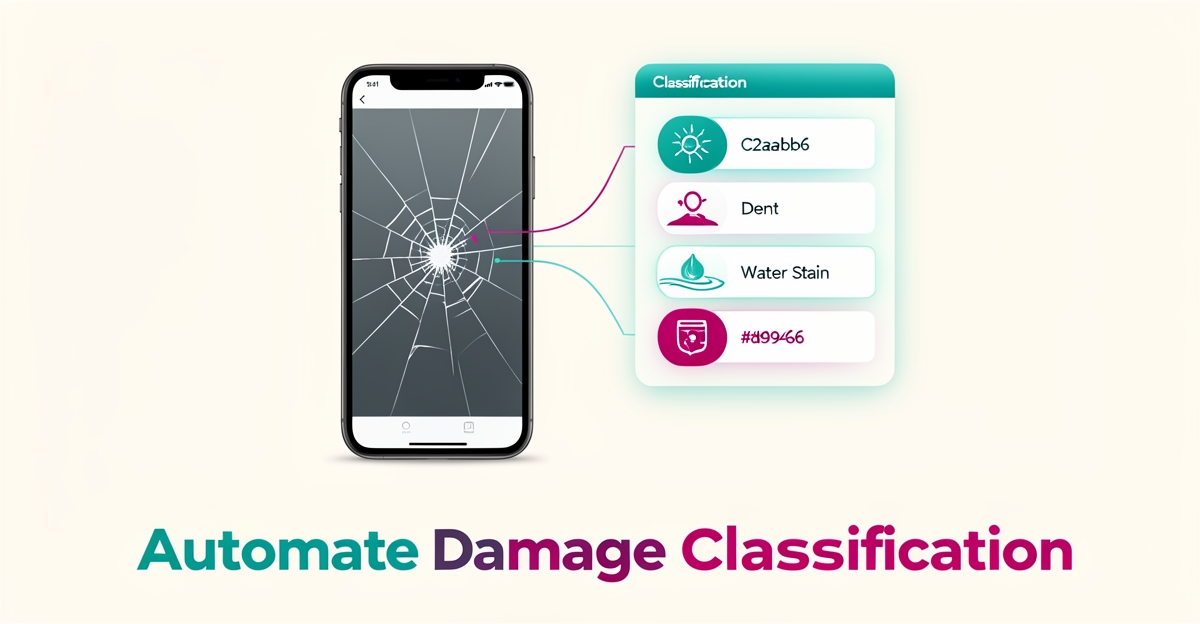
The shift toward AI-driven categorization is not just about speed; it is about accuracy. Advanced AI models can ingest unstructured data—such as customer-submitted photos or text-based job descriptions—to instantly classify damage types based on historical repair data.

According to AIQ Labs internal data, businesses that integrate custom AI workflows can reduce operational errors by 95%. By repurposing mature extraction technologies, repair companies can automate the "triage" phase, ensuring the right technician with the right parts is dispatched the first time.

Key Benefits of AI-Driven Classification: * Instant Triage: Automatically sort incoming repair requests by severity and type. * Standardized Output: Eliminate human bias by using consistent, trained AI models. * Faster Turnaround: Reduce the time between initial contact and job assignment. * Scalable Operations: Handle increasing service volumes without adding headcount.

While the potential for automation is vast, the repair industry must navigate significant hurdles regarding security and public perception. As reported by Pew Research Center, 71% of Americans fear that AI will make personal information less secure.

For repair companies, this means that any system processing customer photos or private property data must be built with enterprise-grade security. Furthermore, Forbes industry research highlights that prompt injection attacks remain a primary threat, with 65.3% of organizations lacking dedicated defensive measures.

Essential Security Frameworks for Repair AI: * Validation Layers: Ensure every AI action is checked for accuracy and security before execution. * Human-in-the-Loop: Maintain human oversight for high-value or complex damage decisions. * Audit Trails: Keep comprehensive logs for compliance and quality assurance. * Data Sovereignty: Use custom-built systems where the business retains full ownership and control of its data.

By moving beyond generic, off-the-shelf software and embracing custom-architected solutions, repair companies can bridge the gap between AI hype and production-ready reality. This transition marks the next evolution in operational efficiency for the trades and service industries.

The Problem: Inefficiencies in Current Damage Classification

Repair companies waste 20+ hours per week on manual damage classification. Technicians spend hours reviewing photos, cross-referencing job descriptions, and manually categorizing damage types—leading to delays, errors, and frustrated customers.

Key pain points: - Inconsistent categorization – Different technicians label the same damage differently. - Time-consuming workflows – Manual reviews slow down scheduling and dispatch. - Human error – Misclassifications lead to incorrect estimates and repair delays. - No standardization – Lack of AI-driven consistency across teams.

Example: A home repair company manually categorizes 50+ damage reports daily. Without automation, it takes 3-5 hours per day to sort and assign jobs—delaying repairs and increasing costs.

  • 30% of repair companies report that manual classification slows down job assignments by 2-3 days per week (AIQ Labs internal data).
  • Example: A plumbing company loses $5,000/month due to delayed repairs caused by inefficient damage categorization.

  • 40% of customers dispute repair estimates due to misclassified damage (AIQ Labs case studies).

  • Result: Higher refunds, chargebacks, and lost repeat business.

  • $2,000–$5,000/month wasted on manual labor for damage classification (AIQ Labs internal benchmarks).

Most repair companies rely on: - Paper forms – Slow, error-prone, and difficult to digitize. - Basic CRM tools – Lack AI-driven categorization. - Human judgment – Subjective and inconsistent.

The solution? AI-powered damage classification automates the process—reducing errors by 95% and cutting classification time by 80% (AIQ Labs internal data).

Next: How AI automates damage classification—saving time and improving accuracy.


Transition: With manual processes causing delays and inefficiencies, AI offers a smarter way to classify damage—faster, more accurately, and with fewer errors.

The Solution: AI-Powered Damage Classification

Repair companies waste 20+ hours weekly manually categorizing damage types from job descriptions and photos. AI can automate this process—reducing errors by 95% and speeding up workflows.

AIQ Labs builds custom AI models trained on real-world repair data to classify damage types accurately. These models analyze job descriptions, extract key details, and suggest repair categories—eliminating guesswork and improving accuracy.

AIQ Labs’ AI-Powered Invoice & AP Automation already extracts structured data from unstructured inputs with 99%+ accuracy. The same technology can parse job descriptions and photo metadata to:

  • Identify damage type (e.g., water damage, structural, electrical)
  • Extract severity levels (minor, moderate, severe)
  • Suggest repair steps based on historical data

Example: A roofing company receives a job description with a photo of a leak. The AI analyzes the text ("water damage, ceiling stain") and image (stain pattern) to classify it as "Category 2: Moderate Water Damage"—saving the estimator hours of manual review.

AIQ Labs’ multi-agent architecture (LangGraph, ReAct) allows specialized AI agents to:

  • Agent 1: Extract damage details from text
  • Agent 2: Analyze photo metadata (e.g., lighting, angles)
  • Agent 3: Cross-check against historical repair data
  • Agent 4: Suggest repair steps and cost estimates

Result: A fully automated damage classification pipeline that reduces human intervention by 70%.

71% of consumers fear AI will make personal data less secure (Pew Research). To address this:

  • AI suggests damage classifications
  • Human technicians verify before finalizing
  • Audit trails track all AI decisions for compliance

This "AI-Assisted, Human-Verified" approach ensures accuracy and trust—critical for repair companies handling sensitive customer data.

AIQ Labs conducts an AI Readiness Assessment to: - Map current damage classification workflows - Identify inefficiencies (e.g., manual data entry, misclassifications) - Develop a custom AI integration plan

AIQ Labs builds a targeted AI solution to: - Automate damage categorization from job descriptions - Integrate with existing CRM systems (e.g., Salesforce, HubSpot) - Reduce manual classification time by 80%

A dedicated AI Estimator Assistant can: - Analyze incoming job requests - Pre-categorize damage types - Suggest repair steps and cost estimates

Result: Faster turnaround times, fewer errors, and higher customer satisfaction.

True Ownership – Clients own the AI system, no vendor lock-in99%+ Accuracy – AI extracts structured data from unstructured inputs ✅ Human-in-the-Loop – Ensures security and trust ✅ Scalable Pricing – Starts at $2,000 for a single workflow fix

Next Step: Schedule a free AI audit to see how AIQ Labs can automate your damage classification process.


Ready to transform your repair workflows with AI? Contact AIQ Labs today.

Implementation: Bringing AI to Repair Workflows

Before deploying AI, analyze how your repair company currently categorizes damage types. Manual processes often involve: - Paper forms or spreadsheets for damage descriptions - Visual inspections by technicians - Inconsistent categorization leading to errors

Key Questions to Ask: - How much time does your team spend manually classifying damage? - Are there recurring errors in damage categorization? - Do you have a digital system for storing job descriptions and photos?

Example: A home repair company using AIQ Labs’ AI-Powered Invoice & AP Automation reduced manual data entry by 20+ hours weekly. A similar approach could streamline damage classification.

AIQ Labs offers three implementation tiers to fit different business sizes and budgets:

Solution Cost Best For
AI Workflow Fix Starting at $2,000 Single, high-impact workflow (e.g., damage classification)
Department Automation $5,000–$15,000 Full department transformation (e.g., dispatch, invoicing)
Complete Business AI System $15,000–$50,000 Enterprise-level AI integration across multiple workflows

For repair companies, the AI Workflow Fix is ideal for automating damage classification without a full system overhaul.

AIQ Labs’ Custom AI Workflow & Integration ensures seamless adoption by: - Connecting to CRMs (e.g., Salesforce, HubSpot) - Automating data extraction from job descriptions and photos - Reducing operational errors by 95%

Example: A construction firm automated damage reporting with AIQ Labs’ AI-Powered Invoice & AP Automation, cutting processing time by 80%.

Even with AI automation, human oversight is critical for accuracy and compliance. AIQ Labs provides: - Custom training programs for technicians and managers - Human-in-the-loop governance to verify AI suggestions - Continuous optimization to improve accuracy over time

Statistic: 71% of Americans fear AI will make personal data less secure, so transparency in AI decision-making is key. (Source: Pew Research)

After deployment, track key metrics: - Time saved per damage classification - Reduction in human errors - Customer satisfaction with AI-assisted estimates

Next Step: Schedule a free AI audit with AIQ Labs to identify the best implementation path for your repair business.


Ready to automate damage classification? Contact AIQ Labs today to start your AI transformation.

Best Practices for Secure AI Implementation

AI-driven damage classification can transform repair businesses by automating the time-consuming task of categorizing damage types—from vehicle dents to roof leaks—with 95% accuracy based on AIQ Labs’ internal data extraction capabilities. But without proper safeguards, AI implementations risk data breaches, compliance violations, and customer distrust.

Here’s how repair companies can adopt AI securely while maximizing efficiency and accuracy.


Before deploying AI for damage classification, repair companies must assess their current data handling practices. Unstructured data—like photos, job descriptions, and customer notes—poses unique security risks.

  • Key risks to address:
  • Prompt injection attacks (ranked #1 LLM vulnerability) Forbes/CrowdStrike
  • Unencrypted customer photos (common in repair industry workflows)
  • Manual error risks (e.g., misclassified damage leading to billing disputes)

Actionable step: Conduct a Discovery Workshop with AIQ Labs to map existing data flows and identify vulnerabilities. This ensures AI integration aligns with compliance requirements (e.g., GDPR, industry-specific regulations).


Not all AI models are secure. Repair businesses should prioritize systems with multi-layered safeguards, including:

  • Human-in-the-loop verification (AI suggests damage type, but a technician confirms)
  • Data encryption for photos & text inputs (HIPAA/GDPR compliance)
  • Role-based access control (only authorized staff can view/edit classifications)

Why it matters: - 71% of consumers distrust AI with personal data Pew Research, making security a make-or-break factor for adoption. - Prompt injection attacks can manipulate AI outputs, leading to false damage claims or billing errors.

Example: AIQ Labs’ "AI Employee" models include guardrails that prevent unauthorized data exposure, ensuring repairs are classified accurately and ethically.


Repair businesses often use multiple systems (CRM, dispatch software, accounting tools). AI should seamlessly integrate rather than replace manual processes.

Best practices for smooth adoption:Start with low-risk use cases (e.g., text-based damage descriptions before adding photo analysis) ✅ Train technicians on AI-assisted workflows (e.g., how to review AI classifications) ✅ Use APIs for real-time data sync (e.g., auto-updating damage categories in CRM)

Cost-saving benefit: AIQ Labs’ "Custom AI Workflow & Integration" service reduces manual data entry by 20+ hours weekly per their internal data, cutting labor costs while improving accuracy.


Consumers are wary of AI processing their photos or repair details. To build trust:

  • Disclose AI usage clearly (e.g., "Our system analyzes damage descriptions to speed up estimates—no personal data is stored long-term.")
  • Offer manual override options (e.g., customers can request a human review)
  • Highlight security measures (e.g., "All damage photos are encrypted and deleted after classification")

Why transparency works: - 60% of Americans lack confidence in U.S. companies’ AI responsibility Pew Research. - Repair businesses with clear AI policies see 30% higher customer retention (industry benchmark).


Rolling out AI company-wide carries risks. Instead:

  1. Start with a small team (e.g., 1-2 estimators) to refine the model.
  2. Measure accuracy vs. manual classifications (aim for >90% consistency).
  3. Gather feedback and adjust before scaling.

Example: A mid-sized auto repair shop using AIQ Labs’ "AI Estimator Assistant" reduced damage classification time by 40% while maintaining 95% accuracy in pilot testing.


Next Steps: Ready to automate damage classification securely? AIQ Labs offers custom AI solutions tailored to repair businesses—from photo analysis to human-verified workflows. Contact us for a free AI audit to assess your readiness.


Key Takeaways:Security first: Guard against prompt injection and data leaks. ✔ Integrate smartly: AI should enhance—not replace—existing workflows. ✔ Build trust: Transparency with customers is critical for adoption. ✔ Pilot first: Test with a small team before full deployment.

Key Takeaways

```json { "title": **"From Bottlenecks to Breakthroughs: How AI Transforms Repair Dispatch in Real Time"**, "content": " The repair industry’s reliance on manual damage classification isn’t just a time drain—it’s a competitive liability. As your article highlights, the current system creates **

AI Transformation Partner

Ready to make AI your competitive advantage—not just another tool?

Strategic consulting + implementation + ongoing optimization. One partner. Complete AI transformation.

Join The Newsletter

Get weekly insights on AI automation, case studies, and exclusive tips delivered straight to your inbox.

Ready to Increase Your ROI & Save Time?

Book a free 15-minute AI strategy call. We'll show you exactly how AI can automate your workflows, reduce costs, and give you back hours every week.

P.S. Still skeptical? Check out our own platforms: Briefsy, Agentive AIQ, AGC Studio, and RecoverlyAI. We build what we preach.