AI for Design Collaboration: How Firms Can Share Ideas in Real Time with Smart Summarization
Key Facts
- Scattered feedback across email, chat, and screenshots is the primary reason design review loops multiply
- Essential features for design collaboration tools include shared canvas, comments and mentions, version history, permissions, and clear status tracking
- Cloud-based BIM platforms such as Archicad Collaborate (via BIMcloud SaaS) provide real-time shared project environments for architects and engineers
- AI summarization turns live design discussions into structured briefs and annotations tied to specific project elements
- AIQ Labs has deployed 200+ multi-agent systems and runs 4 live SaaS products daily, applying that experience to design and documentation workflows
- BIMcollab is built on industry-standard IFC and BCF open standards for issue management
- Centralizing ideas, files, comments, and approvals in one shared space typically means fewer loops and faster delivery
Hire a team member that works 24/7 — for less than a part-time wage.
AI receptionists, SDRs, dispatchers and 99+ roles. Trained on your business, fully managed.
Not sure where to start? Ask our AI planner
The Hidden Cost of Fragmented Design Communication
Fragmented feedback doesn't just slow design work — it quietly erodes trust and momentum across teams.
When comments live in email threads, chat messages, and annotated screenshots, the project narrative splinters. Designers chase versions, stakeholders repeat requests, and decisions get lost between tools. As BasedLabs.ai puts it, "collaboration can make or break a creative project" — and scattered feedback is the primary reason loops multiply.
The cost shows up as rework and delay, not just inconvenience. The more people involved, the easier it is for feedback to splinter across email, chat, and screenshots. The right tools bring ideas, files, comments, and approvals into one shared space, which typically means fewer loops and faster delivery.
Centralized workspaces directly reduce these delays. In architecture and engineering, cloud-based teamwork creates a single source of truth that teams can access in real time. Archicad Collaborate documentation highlights BIMcloud SaaS delivering secure, real-time teamwork for architects and engineers, empowering teams to collaborate from any location.
Project-level visibility compounds the gains. Firms that connect design environments to their project tracking systems — for example, linking BIM workflows to issue-tracking platforms — typically report meaningful reductions in coordination overhead, because status, ownership, and decisions stop living in inboxes.
Fragmentation typically manifests as:
- Feedback duplicated across email, Slack, and file comments with no audit trail
- Version confusion from screenshots and exported PDFs instead of live canvases
- Approval bottlenecks because status, due dates, and notifications are not centralized
- Knowledge loss when project context leaves with individuals rather than staying in the workspace
Industry checklists for design collaboration tools consistently point to a core set of essentials: shared canvas, comments and mentions, version history and compare views, permissions for teammates, clients and guests, and clear status, due dates and notifications. These capabilities keep context intact and reduce back-and-forth.
For teams working remotely or hybrid, maintaining context across discussions is critical to clarity. AIQ Labs builds custom AI workflow systems that summarize design discussions and generate collaborative briefs, helping teams maintain context across remote or hybrid collaboration and reducing back-and-forth communication.
Without a shared, searchable record, design teams pay for fragmentation in missed deadlines, diluted creative intent, and stakeholder fatigue.
How AI Summarization Transforms Design Collaboration
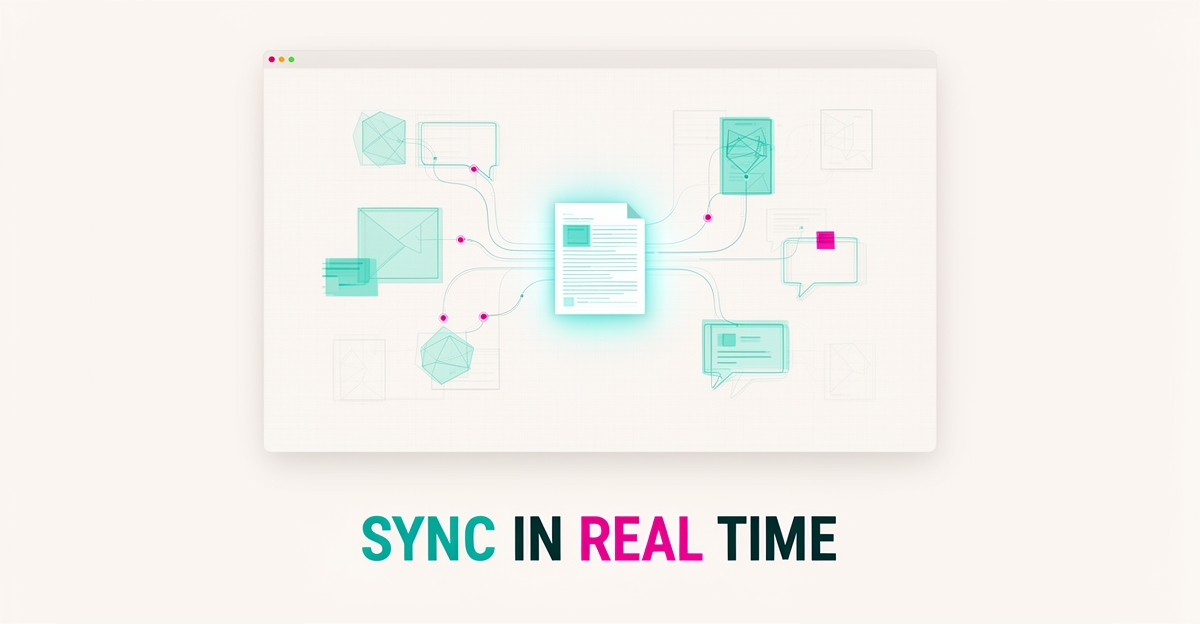
AI-powered summarization is transforming how design teams capture and share ideas in real time, turning fluid conversations into actionable documentation without disrupting creative flow. By automatically generating meeting notes, design briefs, and collaborative summaries, AI reduces manual overhead while preserving the intent and nuance of design discussions. This allows architects, engineers, and designers to focus on ideation rather than transcription, especially in fast-paced, hybrid environments where alignment is critical.
Effective design collaboration hinges on centralizing files, comments, and approvals into a single shared workspace, which reduces communication loops and accelerates project delivery — principles that AI summarization directly supports by distilling discussions into clear, accessible records. In practice, teams using AI-enhanced platforms typically spend less time reconciling feedback across email, chat, and screenshots, enabling faster iteration and fewer misalignments. AIQ Labs applies similar logic in its AI Operating Systems, where connected systems ingest design conversations and automatically generate structured briefs that maintain context across remote or hybrid teams — built in phases and owned outright by the client.
In practice, AI assistants integrated into design and BIM platforms can capture key decisions during live sessions, transforming verbal exchanges into structured annotations tied to specific model elements. This ensures that design intent — such as material choices or spatial adjustments — is preserved in the project record without requiring manual note-taking. High-profile creative partnerships, such as Adobe's Foundry work with major entertainment studios, demonstrate how AI can carry creative direction from concept sketches through to rendered prototypes, maintaining brand consistency while compressing workflows. As Adobe's Hannah Elsakr noted, these tools provide a “creative foundation to explore bolder ideas” by handling routine documentation so teams can focus on innovation. Together, these examples show how AI summarization doesn't just record conversations — it enhances collaboration by making design thinking transparent, traceable, and actionable in real time.
Implementing Smart Summarization in Your Design Workflow
Implementing smart summarization begins with selecting tools that align with your team's workflow, and industry checklists provide a practical framework for evaluation. Key criteria include shared canvas functionality with comments and mentions, reliable version history and compare views, granular permissions for teammates and clients, clear status tracking with due dates and notifications, consistent performance handling large design files, and seamless integrations with existing tools like project management platforms. BasedLabs.ai emphasizes that tools meeting these essentials reduce communication loops and accelerate delivery by centralizing files, comments, and approvals in one shared space. For design teams already using cloud-based BIM workflows, setting up BIMcloud SaaS creates the foundation for real-time collaboration, enabling architects and engineers to access shared project environments from any location while maintaining a single source of truth for data-rich building models. Archicad's documentation confirms that BIMcloud SaaS supports both named and floating cloud licenses, offering flexibility for teams of varying sizes and workflow preferences.
Once the collaboration environment is established, integrating AI summarization with project management systems ensures insights flow smoothly into actionable tasks. Teams can connect AI-generated meeting notes and design briefs directly to platforms like Jira or Asana using native integrations or middleware, transforming discussion highlights into tracked issues, assigned responsibilities, and deadline-driven workflows. This alignment reduces manual transcription efforts and ensures decisions made during design sessions are immediately visible in sprint planning or task boards. For organizations seeking to maintain context across remote or hybrid collaborations, AIQ Labs deploys managed AI staff and custom workflow builds that automate note generation and brief creation, helping teams preserve design intent without constant back-and-forth — typically at a fraction of the cost of an additional human hire. By anchoring AI summarization in proven collaboration architectures and connecting it to established task management systems, design firms can build workflows where ideas are captured, clarified, and acted upon in real time — turning creative discussions into measurable progress.
Still paying for 10+ subscriptions that don’t talk to each other?
We build custom AI systems you own outright. No vendor lock-in. Full control.
Not sure where to start? Ask our AI planner
Frequently Asked Questions
How does AI summarization actually save time during design collaboration?
What features should I look for in a design collaboration tool?
Can AI summarization work for distributed or hybrid design teams?
Will AI-generated summaries capture the nuance of creative discussions?
How do I integrate AI summarization with my existing project management tools?
What's the biggest risk of not using centralized collaboration tools?
Turning Design Conversations into Measurable Progress
Fragmented design communication isn't just an inconvenience — it's a silent drain on creativity, timelines, and team trust. When feedback scatters across email, chat, and screenshots, projects pay the price in rework, missed deadlines, and diluted intent. The solution lies in bringing clarity to collaboration: centralized workspaces, real-time visibility, and AI-powered summarization that turns fluid discussions into actionable records without disrupting creative flow. Platforms like Archicad Collaborate and the practices highlighted by BasedLabs.ai show how pairing smart summarization with proven BIM and project management systems can meaningfully cut coordination overhead. For design firms ready to stop losing decisions between tools, the next step is assessing where AI can remove friction in your specific workflow. Start with AIQ Labs' free 30-minute strategy call — or take the 2-minute Fit Check at aiqlabs.ai/apply — to explore how custom AI workflows can help your team maintain context, reduce back-and-forth, and turn design conversations into tangible progress. Questions? Reach the team at [email protected].
Make AI your competitive advantage — not just another tool.
Strategy, implementation and ongoing optimization. One partner, end to end.
Not sure where to start? Ask our AI planner