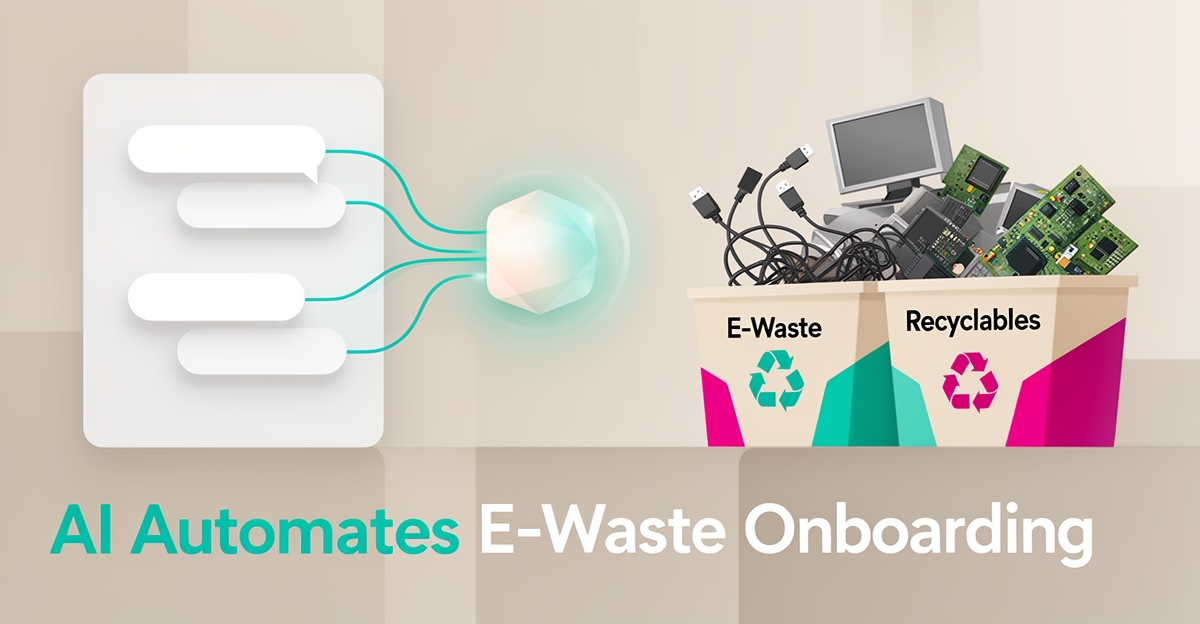
AI for E-Waste Customer Onboarding: Automating the First Touchpoint
Key Facts
- AI chatbots and voice agents can cut inquiry resolution times from minutes to seconds in well-built implementations
- A large share of routine stakeholder questions, material types, pricing, scheduling, can be answered autonomously by AI in mature deployments
- Modern AI assistants operate around the clock, capturing after-hours and weekend inquiries that would otherwise go to voicemail
- AI-driven self-service reduces the volume of inbound calls and chats, lowering operational costs for lean e-waste teams
- Speech interaction latency and accuracy in current AI systems have improved enough to support natural, real-time voice conversations
Hire a team member that works 24/7 — for less than a part-time wage.
AI receptionists, SDRs, dispatchers and 99+ roles. Trained on your business, fully managed.
Not sure where to start? Ask our AI planner
The High Cost of Slow First Responses in E-Waste
Every minute an e-waste inquiry goes unanswered, the odds of losing that customer climb. In an industry where clients often reach out during a narrow window of motivation, clearing out an office, closing a facility, offloading retired equipment, a slow first response doesn't just delay the sale; it ends it.
The core problem is structural. Most e-waste operations run lean teams focused on logistics, compliance, and processing, not front-desk coverage. When a facility manager calls at 6:30 PM about a pallet of decommissioned servers, that call goes to voicemail. When a broker submits an email inquiry on a Saturday, it sits until Monday. By then, the prospect has already contacted a competitor or lost the urgency entirely.
The pattern is familiar to most service businesses: the central challenge in customer service is delivering smart, fast, customized answers while managing increasingly complex operations. When teams are stretched thin, response quality and speed are the first casualties.
The friction compounds at every stage of manual intake. Consider what a typical e-waste inquiry actually requires from your team:
- Answering the same qualifying questions about material types, volume, and location
- Manually checking whether the customer's items fall within accepted categories
- Playing phone tag to confirm pickup logistics or drop-off scheduling
- Re-entering customer details into a CRM or spreadsheet by hand
- Following up on incomplete inquiries that went cold days earlier
Each of these steps represents a point where a qualified lead can silently abandon the process. The customer never tells you they left, they simply stop responding, and the revenue disappears without a trace.
The case for response speed is unambiguous. Well-implemented AI assistants routinely compress inquiry resolution from minutes to seconds, a gap that matters enormously when a potential customer is comparing your responsiveness against a competitor's. And when staff spend hours hunting for information and re-keying data, that's time burned on work that adds no value to the customer experience.
The cost isn't just operational inefficiency, it's invisible revenue loss. An e-waste business that misses five after-hours calls per week and takes 48 hours to return emails isn't just providing slow service. It's actively filtering out the motivated, ready-to-book customers who would have been the easiest wins.
AIQ Labs works with service businesses facing exactly this pattern: strong operational capability undermined by a front-end intake process that leaks qualified leads at every stage. The bottleneck is rarely the quality of the recycling work itself, it's the gap between when a customer reaches out and when the business meaningfully responds. That's the kind of workflow AI Workflow Builds are designed to fix.
How Intelligent Virtual Assistants Transform Initial Contact
Intelligent virtual assistants are redefining how e-waste businesses handle initial customer contact by resolving routine inquiries in seconds rather than minutes. This dramatic reduction in response time comes from AI-powered chatbots and voice agents that can autonomously answer a large share of stakeholder questions, accepted materials, pricing tiers, service areas, scheduling windows, without human intervention. These systems operate 24/7, ensuring customers receive immediate assistance regardless of when they reach out, which is particularly valuable for e-waste companies serving clients across different time zones or with urgent disposal needs.
Modern virtual assistants incorporate sentiment analysis to detect frustration, confusion, or urgency in customer tone, allowing them to escalate complex cases to human experts while maintaining conversation context. This hybrid approach ensures routine inquiries are handled instantly by AI, while sensitive or technical questions receive the empathetic support only human agents can provide. By automating the first touchpoint, e-waste businesses free up staff to focus on high-value interactions like negotiating bulk pickups or explaining regulatory compliance requirements.
The technology also enables consistent, accurate responses by drawing from centralized knowledge bases that eliminate the variability seen in human-agent interactions. Customers no longer experience conflicting information depending on which representative they speak with, building trust through standardized service quality. For e-waste operations managing complex material streams and fluctuating market values, this consistency reduces follow-up clarifications and accelerates the path from initial inquiry to scheduled service pickup. AIQ Labs deploys these as managed AI employees, receptionists, SDRs and dispatchers that integrate directly with existing scheduling and CRM tools, creating a seamless workflow from first contact to service confirmation.
Building Your AI Onboarding Workflow: From Chat to Calendar
AI-powered onboarding workflows transform the first customer touchpoint into a seamless, intelligent experience that drives efficiency and satisfaction. By connecting AI systems to your knowledge base, you ensure accurate, real-time responses about accepted materials, pricing tiers, and service availability, eliminating guesswork and compressing inquiry resolution from minutes to seconds. This foundation allows the AI to handle routine questions autonomously, freeing human staff to focus on complex e-waste logistics and compliance discussions.
Personalization begins at the first interaction, with AI analyzing customer inputs to trigger tailored follow-up flows that reinforce brand trust and guide next steps. For example, a customer inquiring about server recycling receives automated follow-ups detailing data destruction certifications, while a homeowner scheduling TV pickup gets localized drop-off instructions, each message dynamically generated based on intent and history. This approach significantly reduces the manual follow-up burden on your team, and because a large share of routine questions can be answered autonomously in mature deployments, staff attention stays where it's most valuable.
The final friction point, scheduling, is removed through direct integration with calendar and dispatch tools. After qualifying the inquiry and gathering address, volume, and preferred timing, the AI proposes real-time slots and books the appointment instantly, syncing with dispatch systems and sending calendar invites to both customer and technician. This end-to-end automation cuts operational costs through reduced call volume and creates a standardized, 24/7 onboarding experience that scales with demand while maintaining the human touch for complex cases. AIQ Labs builds these integrated workflows at a fixed price and in phases, so your AI system owns the full customer journey from first click to confirmed service date.
Securing Your AI Workforce: Governance and Human Collaboration
As AI systems gain deeper access to customer data and operational workflows in e-waste onboarding, securing these intelligent agents becomes as critical as their deployment. Because these systems handle sensitive information, scheduling details, contact records, sometimes payment data, they require robust protection against emerging threats. Governance frameworks must evolve alongside AI capabilities to maintain trust and operational integrity.
Effective AI workforce security begins with behavioral monitoring designed specifically for non-human patterns, as traditional anomaly detection often fails to catch sophisticated AI misuse. Organizations should implement incident response protocols tailored to AI employee failures, including credential compromise scenarios and autonomous decision-making errors. Clear accountability chains established before deployment, not after incidents, ensure rapid containment and learning from security events, particularly when AI systems interact with customer scheduling and payment data.
A balanced human-AI collaboration model preserves empathy while leveraging automation efficiency, especially for sensitive e-waste inquiries involving data privacy concerns or hazardous material handling. AI excels at routine qualification and scheduling, but human agents must retain authority for complex ethical judgments and emotionally charged situations. This hybrid approach improves first-call resolution by equipping staff with AI-generated insights while preserving the human touch for cases requiring nuanced understanding of customer circumstances and regulatory compliance. Continuous performance monitoring and staff training on AI handoff protocols ensure the system adapts to evolving threats and customer needs without compromising service quality or security posture.
Still paying for 10+ subscriptions that don’t talk to each other?
We build custom AI systems you own outright. No vendor lock-in. Full control.
Not sure where to start? Ask our AI planner
Frequently Asked Questions
How much faster can AI respond to e-waste customer inquiries compared to traditional methods?
Can AI handle routine e-waste inquiries without human help, and how much of the workload does it typically take on?
What happens if a customer reaches out after hours or on weekends, will they still get a response from an AI system?
Is it safe to let AI handle customer data like scheduling and payment information in e-waste onboarding?
Will using AI for customer onboarding make the experience feel impersonal or robotic for e-waste clients?
How does AI improve the accuracy and consistency of information given to e-waste customers during onboarding?
Turn First Contact Into Your Fastest Win
The first touchpoint is where e-waste revenue is won or lost. Slow responses after hours, on weekends, and during busy logistics windows quietly filter out motivated buyers who simply move on to a competitor. Automating that initial inquiry with intelligent virtual assistants changes the pattern: routine qualification, material checks, and scheduling happen instantly 24/7, while sentiment-aware escalation preserves the human touch for complex, compliance-sensitive cases. Connected to your knowledge base and calendar, the workflow compresses resolution from minutes to seconds and turns a chat into a confirmed service date without re-keying data. Governance and human-AI collaboration keep the system secure and trustworthy as it scales. If your team is strong operationally but leaking leads at intake, a focused review of the onboarding flow is the highest-ROI place to start. AIQ Labs can map that bottleneck with you: start the two-minute Fit Check at https://aiqlabs.ai/apply, then book a free 30-minute strategy call at https://aiqlabs.ai/book. Prefer email? Reach the team at [email protected].
Make AI your competitive advantage — not just another tool.
Strategy, implementation and ongoing optimization. One partner, end to end.
Not sure where to start? Ask our AI planner