AI for Emergency Call Detection: How Elevator Firms Can Respond Faster to Faults
Key Facts
- Bosch Service Solutions developed a multilingual AI voice bot that translates elevator emergency calls in real time according to Bosch.
- The AI detects language barriers mid-call and prompts passengers to select their preferred language for translation per Bosch Service Solutions.
- Bosch's AI automatically recognizes caller mood, panic, fear, or calm, to help prioritize which elevator faults need immediate dispatch according to their emergency service documentation.
- AI captures key call details, location, elevator ID, fault type, and auto-transfers them into service tickets per Sebastian Brix of Bosch.
- Despite full automation of translation and data capture, Bosch insists service employees always make the final dispatch decisions in emergencies as Sebastian Brix emphasizes.
- Brix expects AI and GenAI to reshape the service center industry, making service more efficient and higher in quality according to Bosch.
- The classic Emergency! TV series aired 122 episodes from 1972 to 1977, popularizing paramedic services in America according to Wikipedia.
Hire a team member that works 24/7 — for less than a part-time wage.
AI receptionists, SDRs, dispatchers and 99+ roles. Trained on your business, fully managed.
Not sure where to start? Ask our AI planner
The Cost of Slow Emergency Response in Elevators
When elevator emergency calls are delayed by language barriers, miscommunication, or manual triage, the consequences ripple far beyond inconvenience, each second of confusion amplifies downtime, distress, and operational risk. According to Bosch Service Solutions, emergency situations demand immediate, clear communication, yet language barriers can trap passengers in escalating anxiety while responders struggle to understand the nature of the fault or the passenger's condition. This delay isn't just frustrating; it directly increases the time elevators remain out of service, disrupting building operations and tenant satisfaction.
Miscommunication during triage often leads to dispatch errors, where technicians are sent without critical details about the fault type or urgency, resulting in repeat visits, unnecessary part replacements, or unresolved issues that require escalation. Bosch Service Solutions highlights that AI-powered systems mitigating these risks enable service employees to focus on resolving the actual emergency rather than deciphering language or reconstructing fragmented information. By automating initial contact and real-time translation, such systems reduce the cognitive load on human operators, minimizing errors caused by stress or misinterpretation during high-pressure calls.
The operational toll extends to customer trust and brand reputation. Passengers experiencing prolonged confusion during an elevator entrapment are more likely to perceive the response as inadequate, regardless of the eventual resolution. Bosch Service Solutions emphasizes that combining AI efficiency with human judgment ensures urgent situations are prioritized while maintaining the empathy essential for crisis management. For elevator firms, this means faster fault resolution, fewer repeat dispatches, and a service experience that reassures users, even in their most vulnerable moments. By addressing the root causes of delayed response, AI doesn't just improve efficiency; it turns emergency communication into a reliable, human-centered process. Bosch Service Solutions demonstrates how this approach converts technical capability into tangible safety and trust.
How AI Voice Detection Prioritizes Faults in Real Time
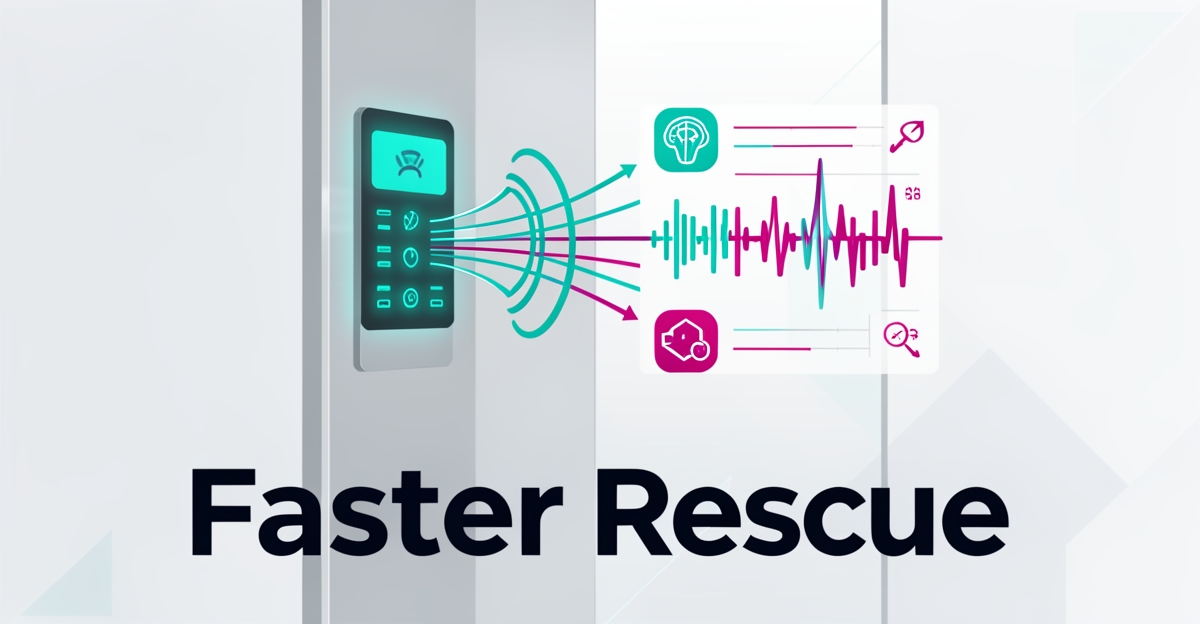
When a passenger presses the emergency call button in an elevator, AI voice detection systems immediately analyze the conversation to identify language barriers and assess urgency. Bosch Service Solutions has implemented a multilingual AI voice bot that detects when a passenger and operator don't share a common language, then prompts the passenger to select their preferred language for real-time translation according to their digital portfolio consultant. This allows the system to bridge communication gaps without delaying response, ensuring critical information is conveyed accurately from the outset.
Natural language analysis goes beyond translation to detect emotional cues that signal distress or urgency. AI can automatically recognize the mood of callers, such as panic, fear, or calm, helping prioritize which faults require immediate dispatch as noted in their emergency service documentation. By capturing vocal tone, speech patterns, and keyword context, the AI flags high-risk situations for faster human review, reducing the chance that a life-threatening delay goes unnoticed due to subjective call assessment.
The AI system handles translation and information capture while human operators retain full decision authority. Service employees make the final call on dispatch and rescue actions, using the AI-generated transcript and mood analysis as support tools per Sebastian Brix's emphasis on the human factor. This collaboration ensures AI improves efficiency without overriding judgment, letting staff focus on resolving the emergency rather than managing language barriers or manual note-taking.
- Real-time translation enables seamless communication between passengers and operators regardless of native language
- Mood recognition helps identify urgent situations by detecting distress in vocal patterns
- Information capture automatically logs call details into service tickets for faster follow-up
- Human operators maintain final authority over dispatch decisions while AI handles routine tasks
For elevator firms, this means faults are prioritized not just by technical severity but by real-time human impact, ensuring that a trapped, distressed passenger gets help faster even if the mechanical fault appears minor. AIQ Labs applies similar natural language analysis principles in its AI Employees for receptionist and dispatcher roles, where voice agents detect urgency, translate conversations, and escalate critical issues while keeping human supervisors in control. The result is a response system that's both faster and more attuned to the actual needs of people in crisis.
From Call to Dispatch: A Faster Emergency Workflow
When an elevator emergency button is pressed, every second matters, especially when language barriers complicate communication. AIQ Labs' AI Employees can step in immediately after initial contact, using natural language processing to detect distress signals, identify the passenger's preferred language, and activate real-time voice translation without delay. This ensures that critical details about the fault, such as unusual noises, jerking motions, or smoke, are captured accurately and transmitted to dispatch teams in real time. According to Bosch Service Solutions, AI-powered systems like theirs enable seamless conversation between trapped passengers and emergency operators by detecting language barriers and prompting passengers to select their preferred language, eliminating dangerous misunderstandings during high-stress situations.
Once the AI system establishes clear communication, it automatically extracts key information from the dialogue, location, elevator ID, nature of the fault, and passenger condition, and structures it into a prioritized service ticket. AI and GenAI technologies are well suited to recognizing caller mood and urgency, allowing the system to flag life-threatening scenarios for immediate escalation while routing less critical issues appropriately. This intelligent triage ensures that technicians are dispatched based on real-time risk assessment, not just call order. As Sebastian Brix notes, AI relieves service employees of tedious translation and data-entry tasks, allowing them to focus entirely on resolving the emergency with full attention and expertise, directly improving response quality and customer trust during critical moments. The result is a faster, more reliable workflow where humans and AI collaborate: the machine handles communication overhead, and the human applies judgment where it matters most. For elevator firms seeking to reduce downtime and enhance safety, this AI-assisted workflow shifts emergency response from reactive to proactive. To explore how AI Employees can be tailored to your fault detection and dispatch processes, start with the 2-minute Fit Check at AIQ Labs to map your highest-impact automation opportunities.
Building an AI Emergency Response System with AIQ Labs
When elevator passengers face emergencies, every second counts, especially when language barriers delay critical communication. AIQ Labs addresses this challenge by deploying AI Employees trained specifically on technical elevator terminology and emergency protocols, enabling immediate understanding and action during fault reports. These managed AI staff integrate with dispatch tools like scheduling software and CRM systems, ensuring that detected faults trigger instant notifications to maintenance teams without manual intervention. According to Bosch Service Solutions, AI-powered emergency systems reduce response delays by enabling real-time translation and accurate information capture, directly improving resolution speed in multilingual environments.
AIQ Labs offers three ways to build this capability. With Start Monthly, firms launch a dedicated AI employee for emergency call detection with setup and ongoing management included, typically around 80% less than the cost of a human hire, with 24/7 monitoring and continuous optimization. With Build in Milestones, firms rebuild the emergency-response workflow phase by phase, language detection, call routing, ticket automation, approving and paying a fixed price for each phase as it ships, while retaining full use of completed phases. And for firms that want the whole connected layer, Own It Outright delivers a complete AI operating system for emergency response, built in phases and owned by you, with no vendor lock-in and full intellectual property rights to the agents, workflows, and data. Whichever path fits, the first step is the same: a 2-minute Fit Check, followed by a free 30-minute strategy call to scope the highest-impact starting point. This approach ensures elevator firms not only respond faster to faults but also build a sustainable, owned AI capability that evolves with their operational needs.
Still paying for 10+ subscriptions that don’t talk to each other?
We build custom AI systems you own outright. No vendor lock-in. Full control.
Not sure where to start? Ask our AI planner
Frequently Asked Questions
How does AI improve emergency response times in elevators when passengers speak different languages?
Can AI in elevator emergency systems detect if a passenger is in distress or panic?
Do human operators still make the final decisions in AI-assisted elevator emergency responses?
What happens to the information captured during an AI-assisted elevator emergency call?
Is it true that AI replaces human judgment in elevator emergency situations?
How does AIQ Labs help elevator firms implement AI emergency call detection systems?
Key Takeaways
Every Second Counts: Turning Emergency Response Into a Competitive Advantage
Elevator emergencies don't wait for business hours, language alignment, or perfect conditions, and neither should your response system. As Bosch Service Solutions demonstrates, combining AI-driven translation, mood detection, and automatic information capture with human dispatch authority cuts response delays while keeping empathy and judgment where they belong: with your people. For elevator firms, the firms that adopt this model first will resolve faults faster, run leaner dispatch operations, and earn more trust from the buildings they serve. AIQ Labs builds exactly these systems, AI Employees for emergency call handling and dispatch, workflow rebuilds for your most costly response processes, and full AI operating systems owned outright. Start with the 2-minute Fit Check and find out where an hour of automation saves a day of downtime.
Make AI your competitive advantage — not just another tool.
Strategy, implementation and ongoing optimization. One partner, end to end.
Not sure where to start? Ask our AI planner