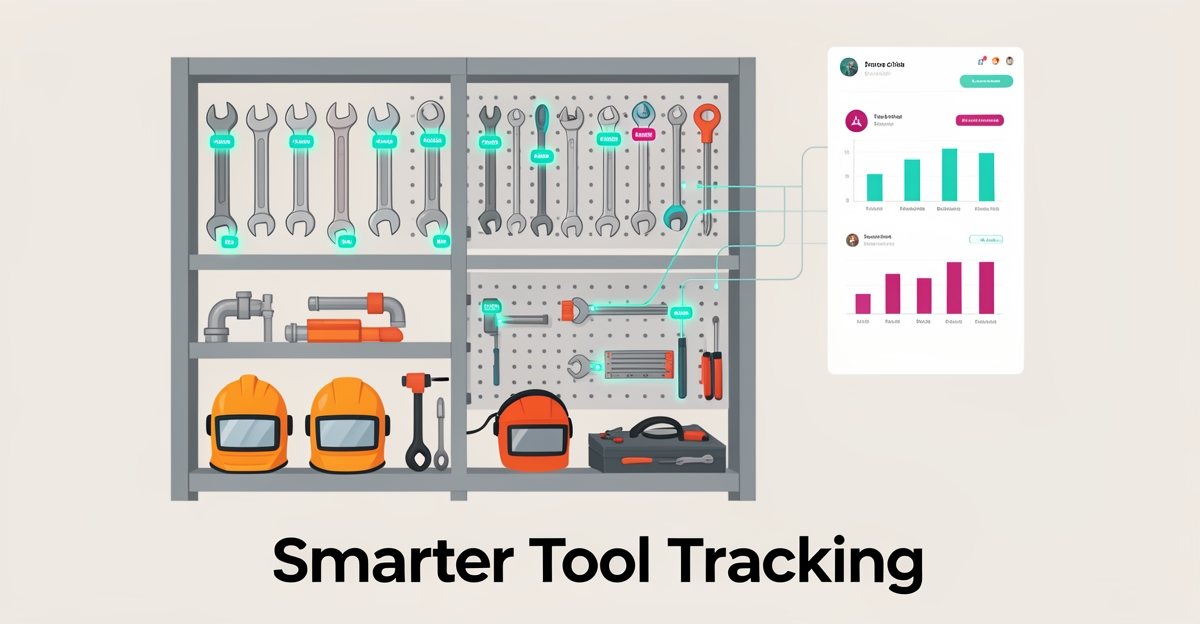
AI for Equipment Inventory: How Plumbing and Welding Schools Can Reduce Losses
Key Facts
- AI automation can compress manual tasks that took hours into minutes, freeing staff for higher-value work.
- Industry guidance suggests most AI adoption success depends on people and processes, not technology alone.
- Automation follows a defined process the same way every time, which makes it more consistent than manual checks.
- Modern agentic systems can run entire processes end to end, not just repetitive steps.
- AI monitoring can surface patterns humans miss, including usage anomalies and security gaps.
Hire a team member that works 24/7 — for less than a part-time wage.
AI receptionists, SDRs, dispatchers and 99+ roles. Trained on your business, fully managed.
Not sure where to start? Ask our AI planner
The Hidden Cost of Lost and Misplaced Trade Tools
A missing angle grinder on a Monday morning can stall an entire welding lab. In plumbing and welding schools, high-value tools disappear not because of negligence, but because manual sign-out sheets and visual checks break down at scale.
Paper logs rely on students remembering to sign in and out, and instructors remembering to check. When classes overlap, tools move between benches, and end-of-day counts happen by eye, the system creates blind spots. That blind spot is where loss becomes normal.
Manual tracking also hides wear until failure. A torch used past its service interval or a regulator left unchecked does not trigger an alert. Instructors discover problems during use, not before, which creates safety risk and unplanned downtime for students.
The cost compounds quickly. Lost or misplaced equipment forces emergency purchases, delays projects, and strains already tight training budgets. Safety is also compromised when the right tool is not available and teams improvise with substitutes.
AI automation changes the visibility equation. Systems can track tool usage in real time, predict wear patterns, and prevent theft or misplacement before it impacts a class. Modern agentic systems can run entire processes end to end instead of just repetitive steps, freeing staff time for teaching rather than paperwork.
AI inventory also reduces the errors that persist with human checks. Automation follows the process the same way every single time, which matters when dozens of tools move daily across multiple labs and no two instructors count the same way.
The efficiency gain is measurable. Industry analyses of AI automation consistently report that manual reconciliation tasks that took hours can be reduced to minutes. For shops, that means inventory counts that used to eat an afternoon become an automated background check.
Loss in trade labs typically follows predictable patterns:
- Theft or unauthorized removal with no timestamped record
- Misplacement between stations and after class changeovers
- Unchecked wear leading to unsafe use or sudden failure
- Sign-out sheets left incomplete or filed late
These are not process failures by people; they are process limits of paper. AI inventory systems alert staff when tools are overdue or missing, improving safety and availability without adding administrative burden.
Adoption success depends on people as much as tech. Industry guidance on AI adoption consistently emphasizes that people and processes matter more than the tooling itself. Training instructors and students on a simple check-in flow ensures the system is used consistently.
AIQ Labs builds automated inventory systems for high-value trade labs that track usage, predict wear, and flag missing assets, whether as a single AI Workflow Build for your highest-loss process or as part of a broader AI Operating System. The result is fewer lost tools, more predictable budgets, and safer training environments where the right equipment is available when students need it.
How AI Tracks Usage, Predicts Wear, and Prevents Theft
In a busy plumbing or welding lab, a missing torch or overdue torque wrench can stall a class and create safety risk. AI-driven inventory automation closes those gaps by watching tools in real time instead of relying on paper sign-outs.
Machine learning and computer vision work together to monitor check-outs, returns, and location data. Computer vision can interpret images and video to verify tool presence, while machine learning models learn from data to spot patterns and improve over time without being explicitly programmed. Natural language processing enables staff to query inventory by voice or text.
Agentic automation takes the monitoring further by working toward a goal on its own. Agents plan their own steps, use tools, and adjust based on what they find, flagging overdue items and surfacing patterns humans miss. This is where AI automation reduces errors, it follows the process the same way every single time.
The impact shows up in time and accuracy. Industry analyses of AI automation consistently report large reductions in manual effort for document-heavy and reconciliation tasks. In a trade lab, that means the afternoon count becomes a background process and the sign-out sheet becomes a queryable record.
In trade labs this translates to:
- Real-time check-out tracking with automatic overdue alerts when tools are not returned
- Predictive wear forecasting that flags maintenance needs before failure
- Theft and misplacement prevention through usage pattern detection and anomaly alerts
AI monitoring also identifies patterns such as chronic bottlenecks at specific stations and can flag security gaps by continuously scanning for anomalies. For high-value equipment, that means better availability, safer labs, and less loss.
AIQ Labs builds automated inventory systems that alert staff when tools are overdue or missing, improving safety and availability for trade programs. Implementation starts with a strong foundation of clean data and organized systems, then pilots in small workflow areas with measurement and team enablement.
Adoption succeeds when people are equipped to use it. Practical training and peer support matter more than complex interfaces, which is why every AIQ Labs build includes instructor enablement alongside the system itself.
From Manual Logs to Automated Alerts in High-Value Labs
Trade schools in plumbing and welding face constant pressure to maintain high-value equipment while ensuring student safety and operational continuity. Manual tracking methods often fall short, leading to lost tools, delayed repairs, and preventable hazards. AI-powered inventory systems transform this challenge by combining natural language processing, computer vision, and intelligent alerting to create a seamless, self-monitoring environment.
These systems use NLP to enable voice or text-based check-ins, allowing students and instructors to log tool usage naturally without disrupting workflow. Computer vision then verifies each transaction by visually confirming the item’s identity and condition against digital records, reducing reliance on manual entry and minimizing errors. Process mining analyzes usage patterns over time to identify bottlenecks, such as tools frequently held past due or stations with chronic delays, highlighting where workflows break down. AI agents continuously monitor this data, triggering automated alerts when equipment is overdue, missing, or showing signs of abnormal wear, enabling staff to intervene before small issues become safety risks or costly replacements.
By integrating these components, AIQ Labs’ approach ensures that high-value tools remain accounted for, properly maintained, and readily available when needed. This not only reduces losses from theft or misplacement but also enhances lab safety by preventing the use of damaged or unserviced equipment. The result is a more reliable, efficient training environment where students spend less time searching for tools and more time developing critical skills, directly supporting both educational outcomes and operational resilience. Automation frees up instructional time while maintaining rigorous tracking standards, and because these systems are designed to augment, not replace, human oversight, instructors stay in control of their labs while the software handles the counting.
Implementing AI Inventory Without Disrupting Classes
Implementing AI inventory systems doesn’t require overhauling entire labs overnight. A lean rollout begins with cleaning up asset data, ensuring tool records are accurate, complete, and standardized, because AI models depend on high-quality inputs to make reliable decisions about usage patterns and wear prediction. Because most AI adoption success hinges on people and processes rather than technology alone, data hygiene is a critical first step. Once foundational data is in place, schools can pilot the system in a single lab or tool category, such as welding torches or precision plumbing fixtures, to test alerts for overdue or missing items without disrupting ongoing classes.
This phased approach allows instructors to engage with the technology through simple, role-specific training focused on interpreting alerts and updating tool status after use, rather than mastering complex interfaces. Tasks that once took hours manually can typically be completed in minutes when augmented by intelligent systems, freeing up valuable instructional time. By empowering staff with intuitive dashboards and mobile-friendly check-in/check-out workflows, schools address adoption challenges rooted in complexity and resistance to change. Measuring impact during the pilot, tracking reductions in search time, misplaced tools, or unexpected downtime, provides clear evidence of value before expanding to additional labs or tool types.
- Start with a data audit to eliminate duplicates and gaps in tool records
- Pilot in one high-loss area, like specialty welding equipment
- Train instructors using real-world scenarios from their daily workflows
- Measure time saved and loss reduction over a 4-week cycle
- Refine alerts and processes based on feedback before scaling
AIQ Labs supports this iterative method through its current service lineup. A fixed-price AI Workflow Build targets the one inventory process that costs your program the most, delivered in phases so classes keep running. Schools that want inventory intelligence connected to scheduling, maintenance, and budgeting can grow into an AI Operating System they own outright. The fastest way to find the right fit is the two-minute Fit Check, followed by a free 30-minute strategy call. Success in the pilot phase builds confidence for broader deployment, turning inventory management from a reactive chore into a proactive advantage.
Still paying for 10+ subscriptions that don’t talk to each other?
We build custom AI systems you own outright. No vendor lock-in. Full control.
Not sure where to start? Ask our AI planner
Frequently Asked Questions
Why do tools keep disappearing in our welding and plumbing labs?
How much time can AI actually save on inventory checks?
Will students and instructors actually use an AI tracking system?
Can AI predict when a torch or regulator will fail?
Is AI inventory hard to roll out without disrupting classes?
What’s the first step to get started with AI inventory for trade labs?
Key Takeaways
The Tool Crib That Runs Itself. Manual sign-out sheets and visual counts were never built for the pace of modern trade labs. As tools move between stations, classes overlap, and wear accumulates silently, the gaps in paper-based tracking become safety risks and budget drains. AI inventory closes those gaps with real-time tracking, wear prediction, and automated alerts, so the right tool is on the right bench when students need it. Start with a data audit, pilot in one high-loss area, and measure the results before scaling. When you’re ready, the two-minute Fit Check is the fastest way to find out which build fits your program.
Make AI your competitive advantage — not just another tool.
Strategy, implementation and ongoing optimization. One partner, end to end.
Not sure where to start? Ask our AI planner